How to Build a Loyalty and Rewards Program for Your Liquor Store: Point Systems, Tiered Perks, and Compliance Considerations That Actually Drive Repeat Visits
By Intentionally Creative, Editorial Team12 min read
Listen to this article17:36
Schedule a free strategy call and Intentionally Creative will build a custom plan for you.
Schedule Your Free Strategy CallFree audit. No commitment.
Get a Free Audit. No commitment.
Learn how to build a liquor store loyalty program that drives repeat visits. Covers point systems, tiered perks, compliance rules, and margin-safe structures.
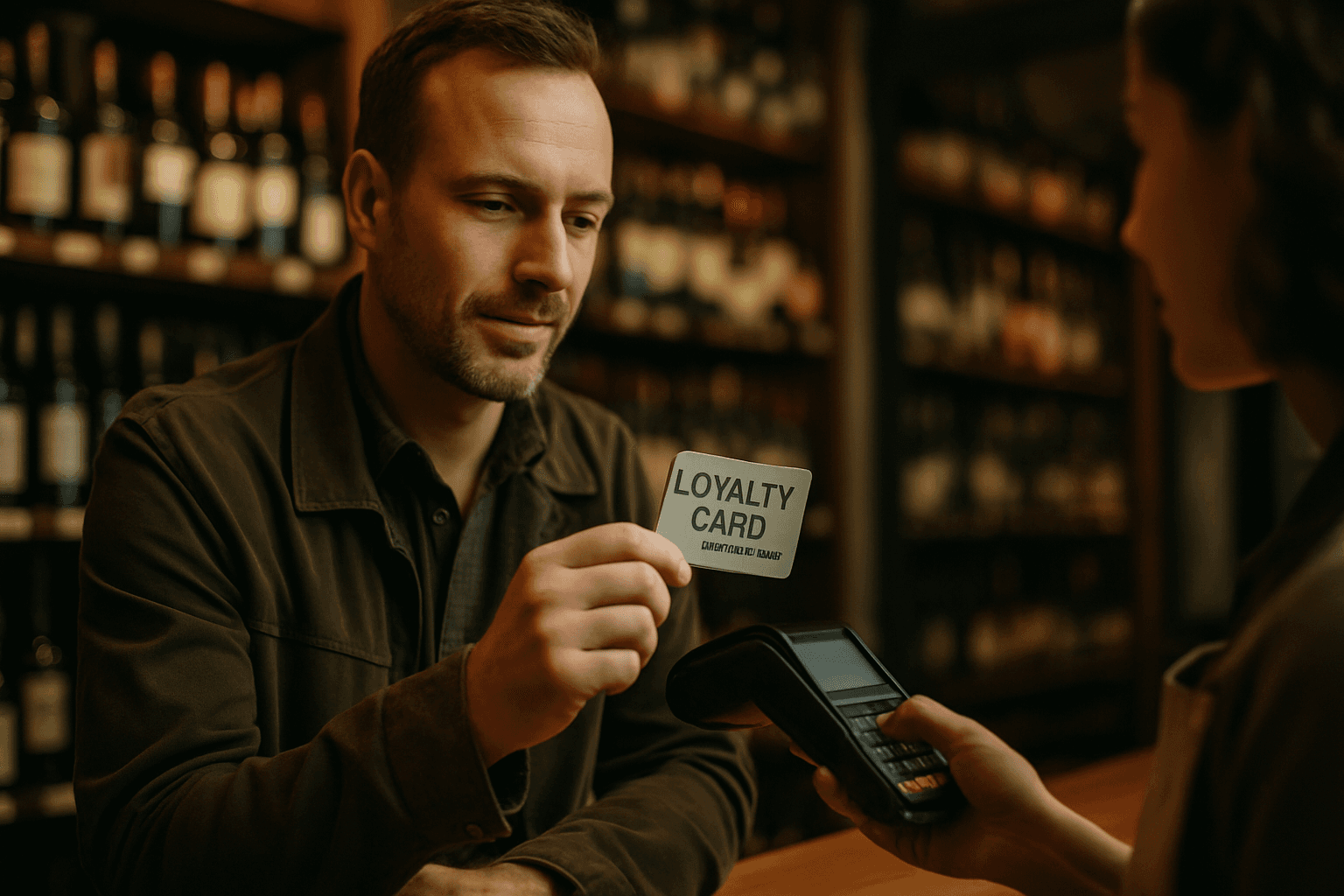
Your regulars already have a favorite shelf they walk to, a go-to bottle they grab without thinking, and a cashier they chat with on Friday afternoons. They're loyal, but they're not locked in. One better incentive from a competitor, one well-timed cash-back offer from a convenience chain, and that Friday routine shifts to someone else's register. A liquor store loyalty program is how you make sure it doesn't.
But here's what makes this tricky for independent retailers: the loyalty playbook that works for a 200-location chain doesn't translate to a single-store operation running on tighter margins and stricter local regulations. Copy the wrong model and you'll either bleed profit or run afoul of your state's alcohol promotion laws, neither of which is a recoverable mistake. You need a program built for your economics, your compliance environment, and your customers.
That's exactly what this guide delivers. We'll walk through program structures, margin-safe reward rates, compliance landmines, tech setup, and promotion strategies, with real numbers and real examples from stores that have made this work for years, not months. Whether you're launching your first program or rebuilding one that fizzled out, this is the roadmap.
Let's cut to it: your customers are already trained to expect rewards when they buy alcohol. Total Wine's &MORE Rewards, Spec's Key Club, and other big-chain programs didn't just build loyalty programs, they built expectations. Every time a customer walks into your store and doesn't earn something for their purchase, they notice.
But the big chains aren't your only competition anymore.
In late 2025, 7-Eleven rolled out alcohol cash-back loyalty deals across more than 10,000 locations nationwide. Read that again. Convenience stores are now running structured rewards programs designed to pull your repeat customers away, not with better selection, but with better incentives.
Discover proven liquor store customer retention tactics to build loyalty, increase profitability through repeat custo...
Meanwhile, independents like Hazel's in Boulder, CO have proven that a well-run loyalty program has serious staying power. Their Frequent Flyer program has been running continuously since 2012, over 13 years. That's not a gimmick. That's a customer retention engine.
The message is clear: if you're not giving customers a reason to come back to your store specifically, someone else will.
Here's where independent owners push back, and honestly, they're right to. A standard 10% rebate (giving customers $10 back for every $100 spent) sounds competitive, but when your margins sit between 20–30%, that reward structure can devour half your profit on every transaction. That math doesn't work.
This is exactly why most point-based programs fail at independent stores. They copy big-chain structures without accounting for independent-store economics.
But here's the good news: you can build a program that drives repeat visits without wrecking your bottom line. The key is smarter program design, strategic tier structures, and tools like scan data programs that let supplier funding subsidize your rewards.
Learn how email segmentation for liquor stores drives repeat sales with a 4,200% ROI. List-building tactics, purchase...
Let's break down exactly how.
Before you pick a platform or print a single loyalty card, you need to answer one question: how will customers earn rewards? Your structure determines everything, your margins, your customer experience, and whether this program is still running three years from now or quietly abandoned. Let's break down the three most common models.
A point-per-dollar model (e.g., 1 point per $1 spent, 100 points = a reward) is the most common structure for a reason. Customers get it immediately. Your POS tracks it automatically. No one needs a PhD to figure out their balance.
The catch? You need to run the math before you launch. Decide what each point is worth in real dollars and back-test it against your actual transaction data. A program that sounds generous at the counter can quietly eat your margins if you haven't modeled redemption rates.
You've seen this everywhere: spend $100, get $10 back. It's clean, it's motivating, and at a 10% giveback it can be genuinely unsustainable for stores operating on typical independent margins.
Learn how to build a liquor store loyalty program that drives repeat sales. Covers program structures, state legal ru...
If you like the simplicity of this model, consider dialing the rebate to 5–7% or restricting redemption to specific categories (accessories, mixers, or featured bottles with better margin). You can also explore scan data programs, where manufacturer incentives effectively subsidize your rewards through supplier funding, letting you offer more without absorbing the full cost. More on that below.
Tiered programs, think bronze, silver, gold, let you concentrate your best perks on high-value customers who already have high lifetime value. This is how Total Wine structures its &MORE Rewards program, and it's the large-chain benchmark independents are competing against. The advantage? You reduce blanket discounting and make top spenders feel genuinely special.
Hazel's Frequent Flyer program takes a different approach, offering instant savings rather than delayed point redemptions, which reduces friction and keeps customers engaged visit after visit. That kind of 13-year longevity proves a well-structured program is sustainable long-term.
Our recommendation? Start simple with one structure. Layer in complexity only after you have 90 days of enrollment and redemption data to analyze. The data will tell you what your customers actually respond to, and that's worth more than any best-practice guide.
Once you've chosen a structure, the next critical question is how to pay for it. A liquor store loyalty program only works if your business survives long enough to run it. That sounds obvious, but too many retailers set generous reward rates without doing basic math first, and end up quietly killing the program six months later.
Let's walk through it. Say your average margin is 25%, and you offer 10% back to loyalty members. That drops your effective margin to 15%. On $500K in annual revenue from loyalty members, you're handing back $50,000 in rewards. That's real money for an independent store. That might be a part-time employee. That might be your entire marketing budget.
A smarter starting point? Target a 3–5% effective reward rate. This keeps your program competitive without bleeding you dry. Then adjust. Track redemption patterns, not every point gets redeemed, and factor in customer lifetime value. A customer who visits weekly for three years can justify a higher reward rate than a once-a-month buyer.
Here's the game-changer most independent retailers overlook: scan data programs. The concept is simple, brands pay retailers for anonymized purchase data on qualifying products. Platforms like Loyal-n-Save connect you to these manufacturer incentives, and that revenue directly offsets your reward costs. You're turning a cost center into a partially supplier-funded marketing channel.
Beyond scan data, protect margins with creative perks that cost less than straight discounts:
You've got the strategy, the margins, and the legal framework. Now let's talk about the system that ties it all together. Your program is only as good as the tech running it. Pick the wrong setup and you'll spend more time managing the program than benefiting from it.
The best liquor store POS systems in 2025–2026, platforms like Bottle POS, KORONA POS, and mPower Beverage, come with built-in loyalty features, age verification, and granular inventory tracking. That inventory data feeds directly into reward personalization, so you can target offers based on what customers actually buy rather than guessing.
But here's the bigger reason POS integration matters: it eliminates manual tracking, reduces errors at checkout, and gives you clean data on which products drive loyalty redemptions. That data is critical for negotiating scan data deals with suppliers. Without POS integration, you're leaving that money on the table.
For enrollment, phone-number-based lookup at checkout is the lowest-friction method. Customers don't download anything, don't carry anything, and sign up in seconds. Dedicated apps work for high-volume operations competing against Total Wine's tier system, but for most independents, they're expensive overkill.
Physical punch cards still work for very small operations, they're simple and familiar. But they offer zero data. No purchase history, no product preferences, no way to measure retention over time.
And data is where the real ROI lives. A digital point system tells you who redeems, what they redeem on, and when they stop coming back. You can't optimize what you can't measure.
A perfectly designed program means nothing if nobody knows about it. This is where execution meets strategy, and where many otherwise solid programs stall out.
Your program is only as strong as the team behind the counter. Staff buy-in is everything, train every cashier to mention the program at checkout. If your team doesn't ask, customers won't sign up. Period. Make it a habit, not an afterthought.
Back them up with signage at the register, on shelves near high-margin products, and at the entrance. Keep messaging dead simple: "Join free. Earn rewards. It takes 10 seconds."
Email and SMS are your highest-ROI channels for keeping members active. Send personalized offers based on purchase history, things like "Your favorite bourbon is back in stock" or "Double points on wine this weekend." This is where a data-driven point system pays for itself.
But avoid over-communicating. Two to four messages per month is the sweet spot. More than that and opt-outs spike.
Track four metrics to know if your program is working: enrollment rate, active member percentage, redemption rate, and average visit frequency for members versus non-members.
All of the strategy above comes down to execution. Here's the step-by-step sequence to take this from plan to live program.
The goal isn't spending less on loyalty. It's spending smarter.
With your structure set and your funding model in place, there's one more layer that separates liquor retail from every other industry: regulation. Compliance is the single biggest differentiator between a liquor store loyalty program and a generic retail rewards program. Get this wrong, and you're not just risking a fine, you're risking your license. And a license violation makes local news fast. That's not just legal exposure; it's brand damage you can't undo with a marketing campaign.
State-specific rules vary dramatically. Some states allow cents-off-per-bottle rewards. Others restrict any price reduction on alcohol, period. There's no federal standard here, which means the program that works beautifully in Colorado might be flatly illegal in your state.
Before you launch anything, consult your state's ABC (Alcoholic Beverage Control) regulations. Better yet, invest in a compliance attorney or contact your state retail association. The cost of a legal review, typically a few hundred dollars, is a rounding error compared to the cost of a license suspension.
Every loyalty program in this industry must incorporate age verification at enrollment, not just at checkout. Your POS system should flag this automatically when a new member signs up. If it doesn't, that's a gap you need to close before day one.
Operating in a state that prohibits direct alcohol discounts? You still have options. Consider non-alcohol rewards that drive repeat visits:
These creative structures can actually build deeper loyalty than a straight discount. They give customers reasons to choose your store that competitors can't easily replicate, even chains with massive rewards budgets.
Compliance isn't a barrier to a great program. It's the foundation of one.
Intentionally Creative specializes in loyalty programs strategies that drive real results. Let us show you what's possible.
Schedule a CallBuilding a liquor store loyalty program isn't about copying what the big chains do, it's about designing something that fits your margins, your state's regulations, and the customers who already walk through your door. The stores that get this right don't just retain customers; they make switching feel like a loss. That's the real power of a well-built program.
You don't need to launch something perfect. You need to launch something sustainable, a program you can afford to run, your staff can explain in one sentence, and your customers actually want to use. Start with a 3–5% reward rate, verify your state's compliance rules, and let 90 days of real data guide your next move. Hazel's has been doing this since 2012. You can start today.
Your first step: check your state's ABC regulations and confirm what reward structures are legal in your market. Everything else builds from there. And if you want help thinking through program design, scan data opportunities, or the tech stack that makes it all run, reach out to our team. We help independent liquor retailers build loyalty programs that actually last.