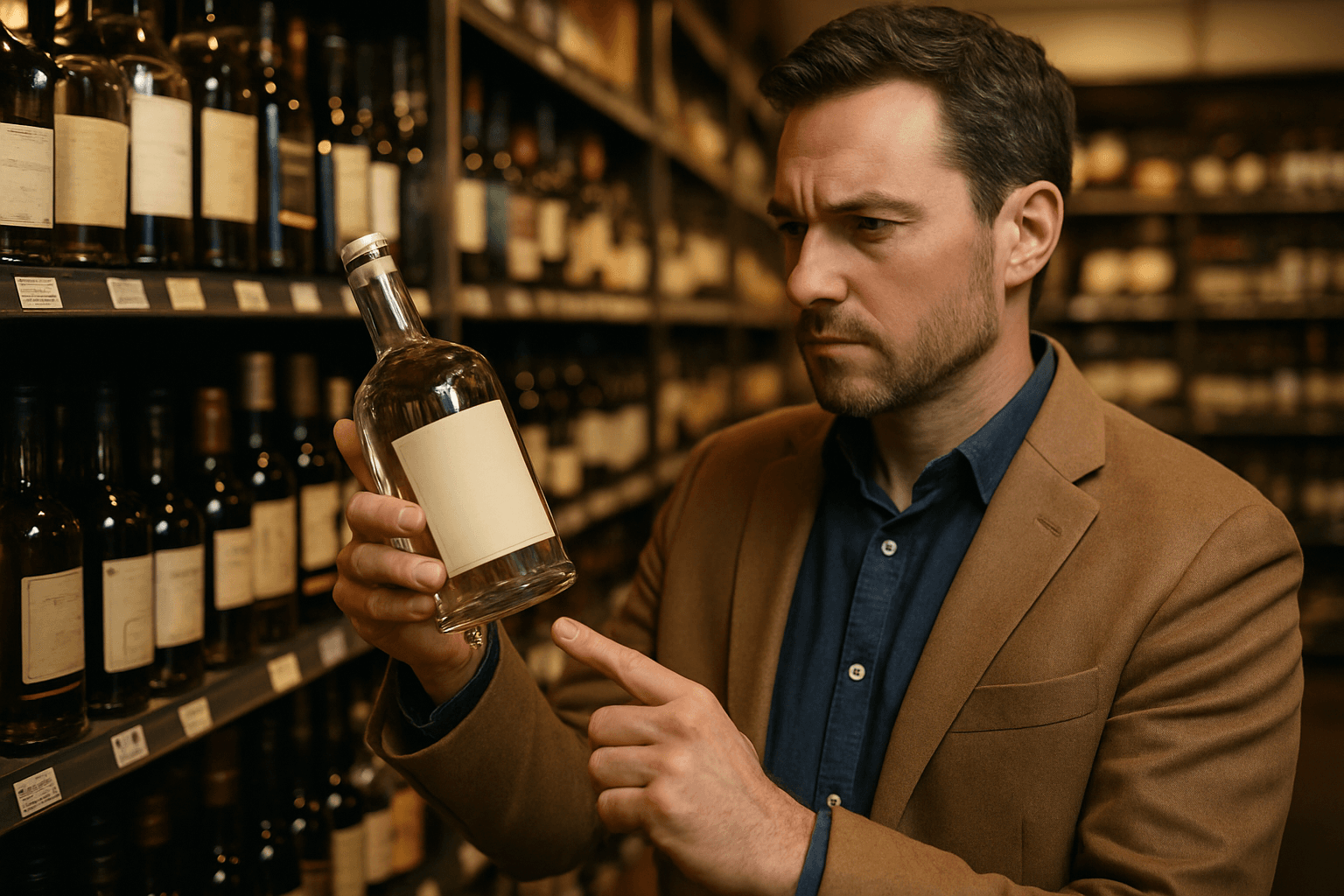
Methanol Poisoning Headlines Keep Making News: How to Use Product Authenticity and Safety Messaging to Build Customer Trust in Your Store's Spirits Selection
By Intentionally Creative, Editorial Team11 min read
Listen to this article14:57
Schedule a free strategy call and Intentionally Creative will build a custom plan for you.
Schedule Your Free Strategy CallFree audit. No commitment.
Get a Free Audit. No commitment.
Learn liquor store product authenticity marketing strategies that build customer trust, address spirits safety concerns, and set your store apart from competitors.
Every few weeks, another methanol poisoning story breaks, Turkey, India, Mexico, the Dominican Republic, and every time, it ripples through your customer base in ways you might not immediately see. They don't mention it at the register. They don't ask you directly. But the next time they're eyeing an unfamiliar bottle on your shelf, that headline is sitting in the back of their mind, quietly steering them toward whatever brand name feels safest. That hesitation is costing you sales on your most interesting, highest-margin products.
Here's the opportunity most independent liquor retailers are missing: liquor store product authenticity marketing isn't just a defensive play against bad press, it's one of the most powerful trust-building strategies available to you right now. While big chains rely on name recognition to paper over safety concerns, you can do something they never will: look your customers in the eye and show them exactly why every bottle on your shelf earned its spot.
This guide breaks down how to turn product authenticity and safety messaging into a genuine competitive advantage, from leveraging compliance you're already doing, to staff training, shelf signage, and digital content that positions your store as the informed, reliable choice in your market. No fear-mongering required. Just smart retail strategy built on transparency.
Methanol poisoning stories aren't just international news anymore, they're landing in your customers' social media feeds. From mass poisonings in Turkey and India to tainted spirits seized in Mexico and the Dominican Republic, these headlines travel fast. And your customers don't distinguish between "over there" and "right here" when they're standing in your store deciding between two unfamiliar bottles.
Learn how email segmentation for liquor stores drives repeat sales with a 4,200% ROI. List-building tactics, purchase...
Here's the thing: this concern isn't irrational. The global fortified wine market alone is valued at $18.92 billion in 2025 and projected to hit $41.88 billion by 2034 [VERIFY]. That's a massive segment where adulteration and methanol risks have historically been more prevalent. Add in the explosion of new product formats, the canned alcoholic beverages market is growing at roughly 19% CAGR [VERIFY], and customers are encountering more unfamiliar brands than ever before. Unfamiliar breeds uncertainty.
Big-box retailers rely on sheer brand recognition to handle safety concerns passively. Customers assume the big names do the vetting. Research consistently shows that brand familiarity reduces perceived risk, and that familiarity advantage belongs to the chain, not to you.
That's actually your opening. Liquor store product authenticity marketing lets you do what the big chains won't: proactively address spirits safety head-on. This isn't fear-mongering. It's smart positioning that builds genuine customer trust by showing people you've done the homework they don't have time to do themselves.
Learn how to run compliant, high-performing Google Ads for liquor stores. Covers campaign setup, bidding strategies, ...
The stores that lean into authenticity messaging now won't just protect customers, they'll earn the kind of loyalty no chain can replicate.
Let's cut through the buzzword fog. Product authenticity in your store means four concrete things: verified sourcing (you know where it came from), legitimate supply chains (it passed through licensed distributors), proper labeling (it meets TTB regulations, including the federally required health warning on every beverage ≥0.5% ABV), and transparent brand stories that hold up under scrutiny.
That's it. It's not a vibe, it's a verifiable standard.
12 wine and spirits content marketing ideas for liquor stores that drive foot traffic, boost engagement, and move inv...
Your customers are already thinking about this stuff. Every methanol poisoning headline chips away at baseline trust, even when those incidents happen overseas. Familiar brands get the benefit of the doubt. Your curated lesser-known picks? They need extra trust signals, shelf talkers, sourcing details, your personal recommendation, to earn the same confidence.
Holland & Knight has flagged authenticity in alcohol labeling as a growing legal and consumer concern [VERIFY], noting brands increasingly walk a tightrope between "all-natural" claims and regulatory compliance. Your customers notice when something feels off.
New canned cocktails, RTDs, and unfamiliar imports are flooding shelves faster than consumers can evaluate them. Combine that with premiumization trends, shoppers willingly paying more for verified, high-quality spirits, and your curation becomes the value-add. Safety messaging isn't fear-mongering. It's the service that builds lasting customer trust and sets your store apart from the shelf-stuffers.
Here's something almost every liquor store owner knows but virtually none talk about publicly: federal law requires health warning statements on all beverages with ≥0.5% alcohol content sold in the US. The TTB (Alcohol and Tobacco Tax and Trade Bureau) mandates specific labeling before any bottle legally reaches your shelf.
You already comply with this. So why aren't you saying it?
Every product in your store has already passed federal regulatory scrutiny. That's not nothing, especially when methanol poisoning headlines keep rattling consumers and unfamiliar formats are appearing on shelves faster than ever. Customers see new brands and wonder: Can I trust this?
Your answer should be easy and immediate.
Beyond federal requirements, the Distilled Spirits Council (DISCUS) publishes safety and risk management guidelines that give retailers an additional credibility layer. Aligning your store with these standards, even referencing them in staff training or signage, strengthens your authenticity positioning without inventing anything from scratch.
Start simple. A small shelf sign or one line on your website: "Every product in our store meets federal TTB labeling and safety requirements." It costs nothing. It signals professionalism. It builds trust in seconds.
Compliance is table stakes, it's the floor, not the ceiling. But effective safety messaging starts with this foundation. When customers recognize your store as the trusted filter, you've built the same kind of brand equity that major labels spend millions to create.
Here's something most liquor store owners already know but rarely say out loud: every bottle on your shelf is an implicit endorsement. You chose it. You're selling it. Your name is behind it.
So make that endorsement explicit. That's the foundation of effective liquor store product authenticity marketing, positioning yourself as a curator, not just a retailer.
Customers default to familiar brands because recognition feels safe. The real differentiation comes from how you present your lesser-known selections. With new products and formats flooding shelves across every category, from canned cocktails to small-batch imports, consumers need someone they trust to sort through it all.
Your buying decisions are your first line of safety messaging. But they only land with customers when you make your vetting process visible.
Provenance sells. Origin stories, hands-on production details, and distillery heritage create deeper consumer connections and signal product legitimacy.
Here's what this looks like in practice:
Customers paying premium prices expect transparency. Give it to them, and they'll reward you with loyalty and higher average tickets.
You don't need a marketing department to make this work. You need a prioritized list and the willingness to start with one thing this week.
Here's your playbook, ranked by effort and impact:
The ROI framing is simple: customers who trust your curation buy more confidently, trade up more often, and come back to you instead of defaulting to the nearest chain. This playbook scales whether you run one location or ten. But don't try to launch everything Monday morning. Pick one tactic, execute it this week, and build from there.
You already have a federal health warning on every bottle in your store. But your customers stopped reading that label years ago. And they've mostly tuned out "Drink Responsibly" too.
Research from Johns Hopkins found that industry "drink responsibly" messages in alcohol ads function more as product promotion than genuine public health communication [VERIFY]. Your customers aren't stupid, they can feel the difference between a brand covering its bases and a retailer who actually cares about what's on the shelf.
Generic slogans don't address authenticity concerns. Specificity does.
Effective authenticity marketing isn't a poster by the register. It looks like this:
The Bartender Spirits Awards recommends involving customers directly in the safety process, displaying awareness visibly in-store and showing genuine enthusiasm about your protocols. That's the key distinction: you're not scaring people, you're educating them. Think knowledgeable friend, not warning label.
Your messaging should build familiarity and trust around your store as the filter. You've already vetted the selection. Now let customers see the work.
Intentionally Creative specializes in digital marketing strategies that drive real results. Let us show you what's possible.
Schedule a CallBest part? This strategy costs time, not money, perfect for independents competing against chains on expertise rather than price. That's a fight you can win.
Methanol poisoning headlines aren't fading. With new brands and formats flooding every category, from fortified wines to canned cocktails to small-batch imports, product authenticity concerns will only intensify.
Here's what matters: liquor store product authenticity marketing isn't about scaring customers, it's about positioning your store as the informed, reliable choice. The same psychology that makes consumers reach for familiar brands at a premium? You can harness that for your store brand.
Customer trust compounds. Every authenticity touchpoint, shelf signage, staff knowledge, sourcing transparency, builds equity competitors can't replicate. The store that earns the reputation as the place that knows what's on its shelves doesn't just survive the next wave of scary headlines, it thrives because of the trust it built before those headlines broke.
Pick one tactic from this playbook and implement it this week. A single shelf sign. One staff training session. A sourcing page on your website. Start small, stay consistent, and watch trust become your strongest differentiator. And if you want a tailored strategy that turns authenticity positioning into measurable revenue, reach out to Intentionally Creative ↗. We'll build the plan together.