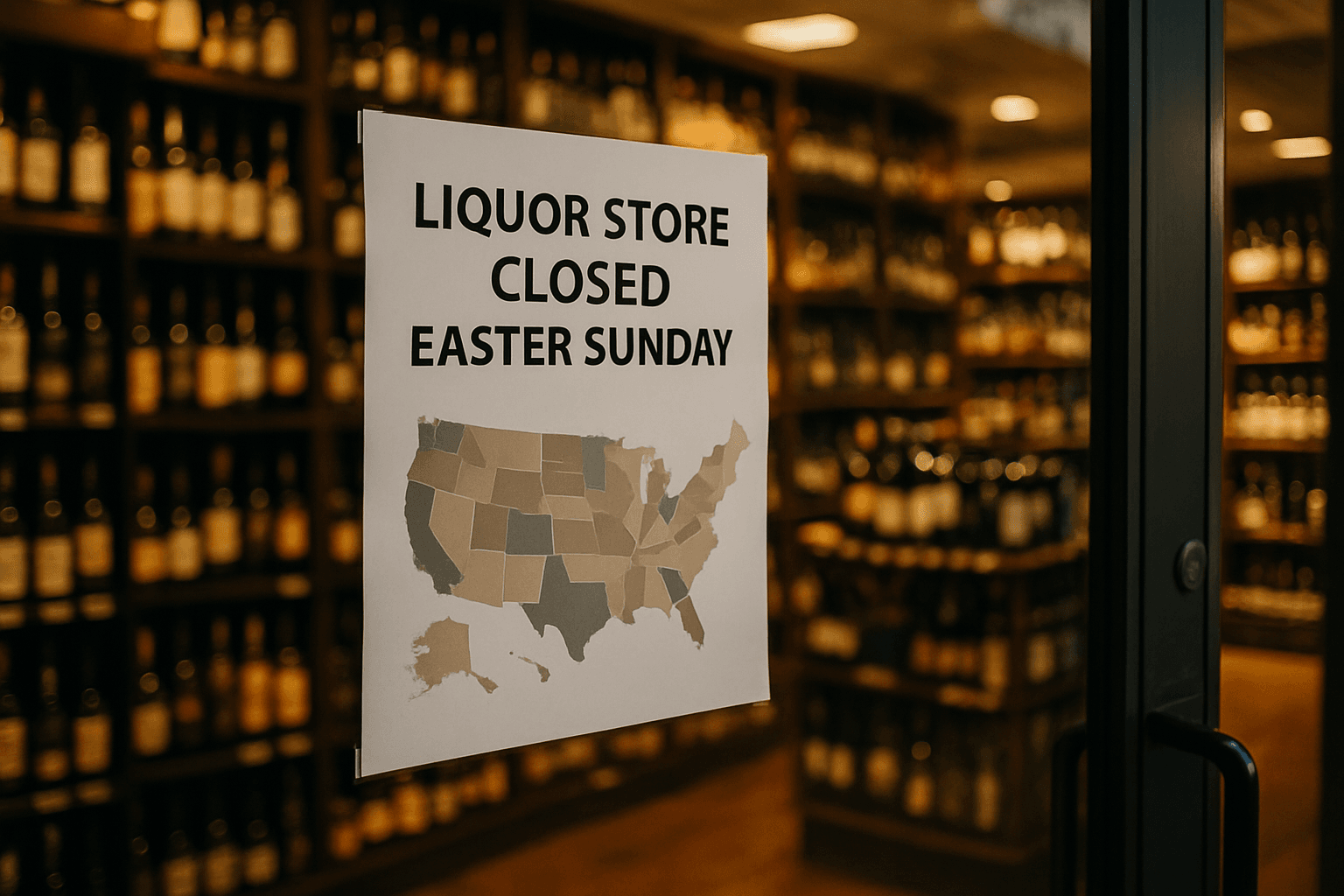
Every year, liquor store owners across Texas watch the calendar creep toward Easter and feel the same knot in their stomach. It's not the holiday itself — it's the forced shutdown that comes with it. Your shelves are full, your registers are dark, and your customers are buying beer and wine from the grocery store down the street.
But here's what most operators miss: that mandatory closure isn't just a Texas problem, and it isn't just a problem at all. When you look at liquor store holiday closures by state, you'll find a messy patchwork of blue laws, Sunday bans, and holiday shutdowns stretching from Oklahoma to Pennsylvania — each one compressing consumer demand into a tighter buying window. And compressed demand, if you know how to work it, is one of the most powerful sales drivers in retail.
This post breaks down exactly what those closures look like state by state, why they exist, and — most importantly — how to turn every single one of them into a pre-holiday sales surge that more than makes up for the days your doors are locked.
The Easter Dry Spell: What Texas Holiday Closures Actually Look Like
If you run a liquor store in Texas, Easter isn't just a holiday — it's a blackout.
Breaking Down the Timeline
Texas liquor store hours are tightly regulated year-round: 10 AM to 9 PM, Monday through Saturday, closed every Sunday. No exceptions. But Easter stretches that weekly Sunday closure into something more painful.
Learn how email segmentation for liquor stores drives repeat sales with a 4,200% ROI. List-building tactics, purchase...
Your registers shut down at 9 PM Saturday night. Sunday is a mandatory closure (as it is every week).
Regardless of the exact duration, it's one of the longest forced dry spells on the Texas calendar. Texas mandates closures on major holidays — Easter Sunday, Thanksgiving, Christmas, and New Year's Day — but the Easter weekend's collision with the standing Sunday ban makes it uniquely disruptive.
Liquor Stores vs. Grocery and Convenience Stores: Who Can Still Sell What
Here's the part that stings: your customers aren't actually going without alcohol during the closure. Beer and wine remain available at grocery and convenience stores throughout the Easter weekend, including Sunday from 10 AM to midnight under standard sales rules.
The only thing completely off the market? Distilled spirits. Your product. Your category. Gone while beer and wine competitors stay open for business.
Wine shops are becoming experience destinations by adding tastings, classes, and events. See how real retailers are d...
That gap also creates something valuable: a concentrated pre-holiday buying surge. Every customer who wants whiskey, tequila, or vodka for Easter brunch has exactly one option — buy it from you before Saturday at 9 PM.
The question is whether your marketing makes sure they remember that.
Beyond Texas: The Patchwork of State Liquor Store Holiday Laws Across the U.S.
Texas gets a lot of attention for its Easter closure, but it's far from the only state that shuts liquor stores down on holidays. Understanding liquor store holiday closures by state matters — especially if you operate near a border or manage locations across multiple markets.
State-by-State Snapshot
The variation is staggering:
Learn how to run compliant, high-performing Google Ads for liquor stores. Covers campaign setup, bidding strategies, ...
- Oklahoma maintains one of the more restrictive frameworks in the country for spirits retailers.
- Pennsylvania operates state-controlled stores (Fine Wine & Good Spirits) that close on all state holidays, giving private competitors in neighboring states a built-in demand advantage.
- Kansas mandates retail liquor store closures on Christmas Day, Easter, and Thanksgiving.
- Tennessee
- New York
That contrast tells you everything. Holiday closure laws aren't standardized — they're a patchwork, and the gaps between them create real opportunities and real risks.
If you operate in multiple states or sit near a state border, understanding these differences isn't optional. It's the difference between lost revenue and captured demand. A customer who can't buy bourbon in one state on a holiday will drive to the nearest open option — and that could be you, or it could be your competitor across the line.
Blue Laws: The Historical Roots Behind Modern Holiday Closures
Most of these restrictions trace back to blue laws — Sunday restriction statutes originally designed to enforce religious observance. While many states have repealed or relaxed them for general retail, alcohol remains the last category where blue laws still have real teeth. Enforcement varies dramatically: some states actively fine violators, others barely monitor compliance.
But the laws remain on the books. And for liquor retailers, they remain on the calendar — which means they belong in your marketing plan.