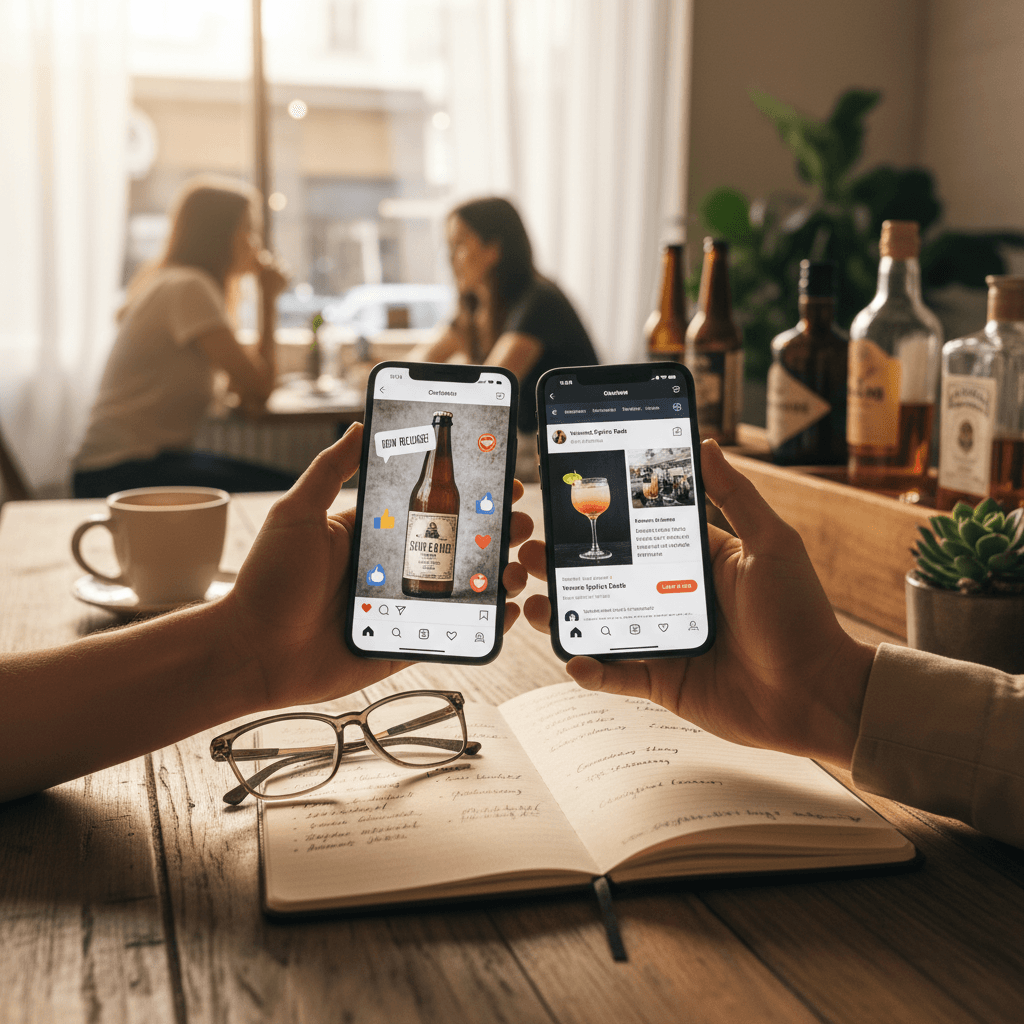
5 Social Media Strategies Liquor Retailers Should Steal from Top Craft Brands
By Intentionally Creative12 min read
Listen to this article14:58
Schedule a free strategy call and Intentionally Creative will build a custom plan for you.
Schedule Your Free Strategy CallFree audit. No commitment.
Get a Free Audit. No commitment.
Discover proven social media strategies for liquor retailers inspired by top craft brands. Boost engagement, stay compliant, and drive foot traffic in 2025.
Craft spirits brands are punching well above their weight on social media — and it's not because they have bigger budgets. From small-batch bourbon distillers on Instagram to artisan gin makers blowing up on TikTok, these brands have figured out how to turn followers into loyal customers without relying on traditional advertising. The secret? They prioritize authenticity, community, and smart platform choices over flashy promotions and price-driven posts.
For liquor retailers watching from the sidelines, there's a massive opportunity hiding in plain sight. The same tactics fueling craft brand growth can be adapted for your store — often with even greater impact, since you already have the foot traffic, the product variety, and the local relationships that most brands would kill for. The challenge is knowing which social media strategies for liquor retailers actually move the needle and which ones waste your time.
We studied what the top craft brands are doing right, cross-referenced the latest industry data and compliance developments, and distilled it all into five actionable strategies you can start implementing today. Whether you're running a single independent shop or managing a regional chain, these tactics will help you boost engagement, stay on the right side of advertising regulations, and turn your social channels into a genuine revenue driver.
Scroll through Instagram or TikTok and you'll notice something: craft spirits brands consistently outperform major liquor retailers in engagement. They're not spending more — they're just playing a smarter game.
Craft brands have cracked the code on alcohol brand social media by leaning into lifestyle and experience-focused content instead of direct product promotion. They share the story behind the still, the hands pulling grain, the sunset cocktail on someone's porch — not a price tag.
10 proven liquor store social media content ideas to connect with customers, boost brand visibility, and drive both i...
This approach isn't just creative preference. It's strategic. In May 2025, three major drinks companies were reprimanded by the UK's Advertising Standards Authority for irresponsible social media ads that breached alcohol advertising codes [VERIFY]. The violations included content that appealed to minors and lacked responsible drinking messaging. Craft brands, by focusing on authenticity over hard sells, naturally sidestep these regulatory landmines while building genuine community.
The retail landscape has shifted dramatically. Deloitte's 2025 Holiday Retail Survey [VERIFY] found shoppers increasingly turning to discounts and digital conveniences — a clear signal that digital-first marketing isn't optional anymore. Platforms like Looma are already bridging the gap, launching in-store retail media across 600 Kroger Wine and Spirits departments [VERIFY].
Liquor retailers can no longer rely solely on weekly flyers and in-store promotions. Social media is where brand loyalty and purchase decisions are being shaped right now.
That's why we've distilled five proven strategies — borrowed directly from the craft brand playbook. These aren't abstract theories. They're actionable, adaptable tactics any liquor store can start using today.
Discover 7 proven TikTok marketing strategies for liquor stores that build real engagement and bring customers throug...
Here's a truth that separates thriving craft brands from forgettable ones: people don't scroll through Instagram to look at bottle labels. They stop for stories.
Visual storytelling is one of the most effective social media strategies for liquor retailers — and the brands doing it best aren't just posting pretty product shots. They're building worlds around their bottles.
Top craft brands understand that their social media presence lives and dies on narrative. Instead of static product photos, they create content around the maker's story, the distilling process, ingredient sourcing, and the culture behind the bottle. A small-batch bourbon maker filming sunrise over their grain fields. A gin distillery walking viewers through their botanical selection. These posts consistently outperform standard product shots because they give audiences something to feel.
You don't need a distillery backdrop to tell compelling stories. Retailers already have rich content opportunities hiding in plain sight. Film behind-the-scenes footage of tastings. Capture the moment new inventory arrives and gets unboxed. Let staff share personal picks with genuine narratives about why they love a particular bottle. Showcase seasonal display setups coming together in real time.
Discover how to promote your liquor store on Instagram with proven strategies. Learn to create engaging content that ...
The growing adoption of in-store retail media — like Looma's platform now active in Kroger Wine and Spirits departments — proves that visual storytelling works both digitally and on the retail floor.
Actionable tip: Invest in a simple content creation kit — a ring light, smartphone tripod, and a basic editing app like CapCut or Canva. Then commit to a consistent visual style across every platform. This single step elevates your content from amateur to professional without a massive budget.
With your visual storytelling foundation in place, the next question becomes: where should you actually be telling those stories?
One of the smartest moves a liquor retailer can make on social media is also one of the simplest: stop trying to be everywhere at once. Top craft brands don't scatter their energy across every platform. They go deep where it matters.
Successful craft brand social media marketing starts with a clear-eyed question: Where are our people actually hanging out?
The answer shapes everything. Instagram remains the visual hub for craft spirits — think cocktail reels, moody bottle flat-lays, and behind-the-scenes distillery content. TikTok drives discovery among younger legal-drinking-age consumers who crave authenticity over polish. Facebook still excels for local community engagement, event promotion, and reaching an older demographic that's ready to buy.
With shoppers increasingly gravitating toward digital-first experiences, meeting your audience on the right platform isn't optional — it's essential. And the recent ASA enforcement actions against major drinks companies remind us that where and how you show up matters just as much as showing up at all.
Before expanding, audit where your existing customers already engage. Here's a simple framework:
Opportunistic marketing — capitalizing on trending topics, current events, and cultural moments — is one of the most effective ways to boost organic reach in 2025. When done right, it makes your brand feel timely, relevant, and plugged into the conversations your customers already care about.
Craft brands have mastered the art of tying content to the cultural moment. Think holiday cocktail season posts, summer patio drink roundups, or awards season watch party pairings. This approach works because it meets audiences where their attention already is. When a trending topic aligns naturally with your product, the algorithm rewards that relevance with reach.
Your audience is already scrolling and searching for seasonal inspiration. The brands that show up with the right content at the right moment win.
Here's a practical tip: build a quarterly cultural calendar. Map out major holidays, local events, sporting events, award shows, and seasonal shifts. This gives you a framework for pre-planning reactive content instead of scrambling last minute.
Actionable tip: Create a library of "evergreen reactive templates" — pre-designed social posts you can quickly customize when a relevant trend emerges. This cuts your turnaround time from days to hours, keeping your content strategy agile and your posts consistently timely.
Timely content gets people engaged online — but the ultimate goal for any retailer is getting them through your doors.
The smartest craft brands don't treat social media and in-store experiences as separate worlds — they weave them together into a seamless customer journey. This omnichannel approach is quickly becoming one of the most impactful social media strategies for liquor retailers looking to stand out.
In-store retail media is no longer a future concept — it's here. Platforms like Looma are blending digital content directly into the physical shopping experience across hundreds of retail locations, signaling a massive shift: the line between your social feed and your store shelf is dissolving.
Craft brands have been doing this instinctively for years. They use Instagram to tease a limited release, then drive followers to a specific retailer to grab it. Liquor retailers can mirror this approach by using their own social channels to promote in-store tastings, exclusive drops, and loyalty program perks — creating a loop where online engagement drives foot traffic and vice versa.
Today's shoppers expect digital conveniences and personalized experiences. For immediate impact, start building customer profiles that inform both your in-store merchandising and your social content. When you know what your audience buys, you can serve them content they actually care about.
Actionable tip: Place QR codes on shelf talkers and in-store displays that link to your social profiles, cocktail recipe content, or exclusive online offers. Every in-store visit becomes a digital touchpoint — and every digital touchpoint becomes a reason to visit your store.
10+ years helping liquor retailers and beverage brands grow through data-driven digital marketing. Learn more
This focused approach is what separates brands that grow from brands that just post.
Once you've locked in the right platforms, it's time to amplify your reach through the right partnerships. But in the alcohol industry, influencer collaborations come with unique risks.
Influencer marketing is one of the most powerful social media strategies for liquor retailers — but it's also one of the riskiest if you get it wrong. Craft brands have figured out how to make these partnerships work. Here's what you can learn from them.
Top craft brands don't just send free bottles and hope for the best. They build structured collaborations with detailed contracts covering content descriptions, posting timelines, brand mentions, visual aesthetics, and — critically — full compliance with alcohol advertising codes.
This level of detail matters. The 2025 ASA enforcement actions showed that even major companies can stumble when influencer content lacks proper oversight. It's a cautionary tale that applies to every alcohol brand's social strategy, regardless of market.
You don't need celebrity partnerships to see results. The smartest influencer marketing in the spirits space happens at the local level — and that's exactly where liquor retailers have an advantage.
Partner with local food bloggers, cocktail enthusiasts, and lifestyle creators for tasting events, recipe collaborations, and behind-the-scenes store tours. These authentic, community-rooted partnerships drive foot traffic and build trust far more effectively than big-budget national campaigns.
Actionable tip: Before any influencer post goes live, create a simple brief template that includes mandatory compliance language, age-gating requirements, responsible drinking messaging, and a clear content approval workflow. This single document protects your brand and keeps every collaboration on the right side of regulations.
Partnerships give you credibility. But to truly break through the noise, you need to show up at the exact moment your audience is already paying attention.
Intentionally Creative specializes in social media strategies that drive real results. Let us show you what's possible.
Schedule a CallYou've seen how top craft brands win online. Now it's time to apply these strategies to your own business.
Start with one strategy this month, measure results, then layer in additional tactics over the next quarter:
Compliance isn't optional. The 2025 ASA enforcement actions against major drinks companies are a clear reminder that every piece of content should be reviewed against local and national alcohol advertising codes before publishing. Build a review step into your content workflow — it protects your brand and keeps your creative ambitions on solid ground.
The gap between craft brands thriving on social media and liquor retailers struggling to keep up isn't about resources — it's about approach. Craft brands win because they tell better stories, show up on the right platforms, build genuine community partnerships, stay culturally relevant, and seamlessly connect their digital presence to real-world experiences. Every one of those advantages is available to you.
You don't need to overhaul everything overnight. Pick the strategy that resonates most with where your business is right now, execute it consistently for 30 days, and measure what happens. The social media strategies for liquor retailers outlined here aren't theoretical — they're drawn from what's actually working in 2025. The only question is whether you'll adapt them before your competitors do.
Ready to build a social media plan that actually drives foot traffic? Connect with Intentionally Creative for a customized strategy tailored to your liquor retail business.