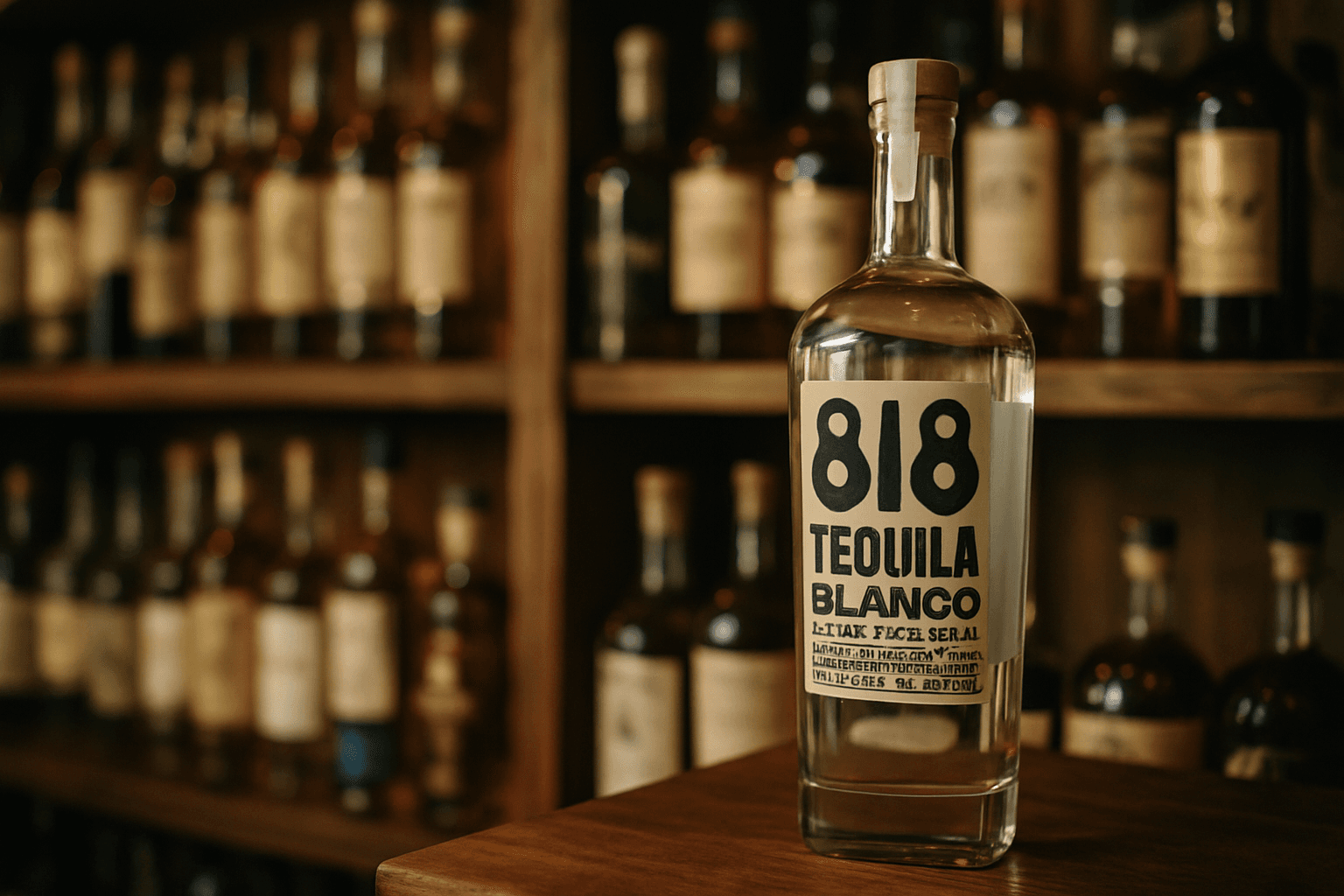
818 Tequila's Sazerac Deal Is a Wake-Up Call for Liquor Retailers: What the Kendall Jenner Partnership Means for Your Shelf Strategy
By Intentionally Creative10 min read
Listen to this article13:56
Schedule a free strategy call and Intentionally Creative will build a custom plan for you.
Schedule Your Free Strategy CallFree audit. No commitment.
Get a Free Audit. No commitment.
818 Tequila's Sazerac deal signals big changes in celebrity spirits. Learn how to adjust your shelf strategy for the celebrity tequila boom.
Walk into any well-stocked liquor store today and you'll notice something that's impossible to ignore: celebrity names are everywhere. From the top shelf to eye-level placement, celebrity tequila brands have claimed prime real estate that traditional craft distilleries once occupied. What started as occasional novelty launches has evolved into a full-fledged category—one that major spirits companies are actively acquiring proven brands within.
For independent liquor retailers, this shift raises a critical question: should you embrace the celebrity spirits wave, or wait it out? The answer isn't simple. The continued growth of partnerships between celebrities and established spirits companies makes one thing abundantly clear: the era of celebrity spirits as a passing trend may be over. This represents a structural shift in how spirits brands are built, marketed, and acquired.
This post breaks down what's actually happening in the celebrity tequila market, which partnerships have real staying power versus flash-in-the-pan appeal, and—most importantly—how to build a shelf strategy that works for your store. We'll look at what major retailers are doing differently, what critics are saying about quality versus hype, and the four questions you should ask before adding any celebrity spirit to your inventory.
The continued growth of celebrity spirits partnerships isn't just another brand announcement—it's a signal that this market is maturing fast. For independent liquor retailers, these developments deserve your attention because they reshape the competitive dynamics you'll face on your shelves.
When established spirits giants acquire or partner with celebrity-backed brands, it represents a significant vote of confidence in the celebrity spirits space. Major companies—one of the largest privately held spirits companies in North America—isn't just distributing a product; they're betting on the long-term viability of brands with established consumer loyalty.
This deal follows a pattern where established spirits giants are acquiring celebrity-backed brands. When Diageo acquired George Clooney's Casamigos for a reported $1 billion, it demonstrated the formula's viability. Now, other major players are moving to strengthen similar brands, and you're seeing that strategy repeat.
Celebrity tequila brands continue to attract significant investment. Dwayne "The Rock" Johnson's Teremana Tequila has gained significant retail visibility, while Mark Wahlberg's involvement in Flecha Azul Tequila adds to the roster of high-profile backing in this category.
For your liquor retail strategy, this means the competitive landscape for celebrity spirits shelf space is intensifying—and the brands that win will have both star power and institutional backing. The retailers who understand this shift will be better positioned to negotiate, stock strategically, and capture the customer base these partnerships bring.
The celebrity spirits category has grown substantially, and for independent retailers, understanding who's winning—and why—can directly impact your shelf strategy and your bottom line.
George Clooney's Casamigos set the blueprint when Diageo acquired the brand for a reported $1 billion, proving that celebrity spirits can achieve serious mainstream retail penetration and massive exit valuations. This deal signaled to the entire industry that celebrity-backed spirits could be legitimate, scalable businesses.
Dwayne "The Rock" Johnson's Teremana Tequila has become another dominant force, demonstrating that authentic brand positioning matters more than the celebrity name alone. Johnson isn't just lending his face to a bottle—he's built a narrative that resonates with consumers seeking genuine connection with the brands they buy.
Meanwhile, Mark Wahlberg's investment in Flecha Azul Tequila and Kevin Hart's partnership with Juan Domingo Beckmann—an 11th-generation tequila-maker and Jose Cuervo CEO—show that the most strategic celebrity spirits partnerships pair star power with deep industry expertise. This model reduces the "flash without substance" perception that can sink lesser brands.
The trend has grown beyond tequila. In 2024, Beyoncé collaborated with Moët Hennessy to launch SirDavis, a premium American rye whisky, marking a significant category expansion for celebrity spirits partnerships.
For your liquor retail strategy, this diversification signals that the celebrity effect on spirits demand isn't limited to one category. Understanding which brands have genuine market positioning versus those simply riding a fame wave will become increasingly important for smart inventory decisions.
Not every celebrity spirits partnership delivers on quality—and industry evaluators have taken notice. Understanding where the skeptics are looking can help you separate the winners from the also-rans before you commit valuable shelf space.
Critics have identified that celebrity backing doesn't automatically equate to quality or value. Some celebrity-owned brands have faced skepticism from connoisseurs who question whether star power translates to genuine craftsmanship.
The distinction matters for your inventory decisions. For every George Clooney, who built Casamigos before selling it to Diageo for a reported $1 billion, there are brands where the celebrity name carries more weight than the liquid inside the bottle. Your customers are increasingly savvy about this distinction.
Here's the reality: celebrity endorsement is a marketing asset, not a quality guarantee. Dwayne "The Rock" Johnson's Teremana Tequila and Mark Wahlberg's investment in Flecha Azul Tequila have achieved significant retail visibility, but visibility doesn't always equal taste test scores or industry awards.
Brands that succeed long-term pair star power with legitimate production credentials and transparent sourcing. Kevin Hart's partnership with Juan Domingo Beckmann—an 11th-generation tequila-maker and Jose Cuervo CEO—demonstrates how celebrity influence can complement authentic distilling heritage rather than replace it.
For liquor retailers, the takeaway is clear: stock celebrity tequila brands strategically, but build your reputation on educating customers about what's actually in the bottle. When the marketing buzz fades, quality and sourcing transparency are what keep customers coming back.
Celebrity tequila brands are commanding shelf space—and consideration from retailers. But a famous face on the bottle doesn't guarantee a spot in your store. Before you commit to any celebrity spirits partnership, run it through these four filters.
The quickest way to lose a customer after the launch hype fades? Stocking a bottle with no substance behind the star power. Before adding any celebrity spirit, ask: Does this brand have production credibility beyond the celebrity name?
Look for partnerships with established distillers or tequila-making families. For example, Kevin Hart teamed up with Juan Domingo Beckmann, an 11th-generation tequila-maker and Jose Cuervo CEO, for his brand. That kind of lineage gives customers a reason to come back after the initial buzz settles.
Celebrity launches generate buzz—initial sales often spike. But what's your realistic turnover expectation? Sustained sales require repeat customers who value the product itself, not just the name on the label.
Build your margin projections on repeat business, not launch-week excitement. If the brand can't stand on quality alone, you're left holding inventory at full price when the novelty wears off.
Does your customer base match the brand's target demographic? Urban, younger, and aspirational shoppers are drawn to celebrity spirits, but your specific community may have different preferences.
And here's the question many retailers overlook: What story can your staff tell? Your team becomes an important touchpoint when a customer picks up the bottle. Retailers often find success with celebrity-backed spirits when staff can speak to the brand's origin, production, or celebrity connection. These ads aim to resonate with consumers, but your in-store team can build the connection that drives purchase decisions.
The continued growth of celebrity spirits partnerships makes one thing clear: this appears to be an established category shift. The question isn't whether to engage with this market—it's how to engage strategically.
Look for brands with staying power. George Clooney's Casamigos sold to Diageo for a reported $1 billion, proving that authentic involvement combined with quality production creates lasting value. When evaluating celebrity tequila brands for your shelf, prioritize partnerships where the celebrity brings genuine expertise or deep involvement, not just a name. Kevin Hart's collaboration with Juan Domingo Beckmann—an 11th-generation tequila-maker and Jose Cuervo CEO—demonstrates the kind of production credibility that survives beyond initial buzz.
Quality that justifies premium pricing matters more than name recognition alone. If the liquid doesn't deliver, repeat purchases will dry up faster than the launch excitement.
Resist the temptation to stock every new launch. A curated selection with knowledgeable staff recommendations will outperform a wall of celebrity bottles competing for attention. Your liquor retail strategy should focus on fewer, better-represented brands—giving each the space to tell its story and train your team to sell with confidence.
Strategic restraint builds credibility. Your customers will trust your curation over your competitor's crowded shelves.
The best move you can make right now? Audit your current celebrity spirits selection with the four questions above. Keep what earns its place, rotate out what doesn't, and commit to knowing every brand on your shelf better than the next store does. That's how independent retailers win in the age of celebrity spirits.
10+ years helping liquor retailers and beverage brands grow through data-driven digital marketing. Learn more
Major retailers have recognized that simply stocking celebrity spirits isn't enough—the difference between a successful shelf and a cluttered one comes down to curation and storytelling.
Major retailers aren't just stocking celebrity tequila brands—they're building discovery experiences. Total Wine & More and ABC Fine Wine & Spirits have begun actively curating and ranking celebrity spirit offerings, creating dedicated sections that help customers navigate the crowded landscape. These aren't simple shelf placements; they're structured for exploration.
Specialized online retailers are following suit. The reasoning is straightforward: as celebrity spirits partnerships multiply, customers may seek guidance. From Dwayne "The Rock" Johnson's Teremana Tequila to Mark Wahlberg's investment in Flecha Azul Tequila, the shelf space for celebrity-backed liquor has grown dramatically. Retailers recognize that thoughtful curation builds trust and drives sales.
This curated approach reflects a broader shift in tequila brand marketing—one where discovery and storytelling matter as much as the product itself.
For independent liquor stores, this trend signals a clear opportunity. Big-box retailers are proving there's demand for guided exploration of celebrity spirits partnerships. You can capitalize on that demand by applying the same principle with a different advantage: local expertise and personalized service.
Rather than competing on breadth, position your shelf around expertise. Train staff to speak to the stories behind brands like George Clooney's Casamigos—which was sold to Diageo for a reported $1 billion—and help customers find the right fit for their palate and occasion. Kevin Hart's collaboration with Juan Domingo Beckmann, an 11th-generation tequila-maker and Jose Cuervo CEO, offers another conversation starter that connects celebrity appeal with craft credibility.
The takeaway for your liquor retail strategy is simple: curation differentiates. Independent stores can't match total shelf space, but they can outperform on knowledge, recommendations, and the discovery experience.
Intentionally Creative specializes in branding strategies that drive real results. Let us show you what's possible.
Schedule a Call