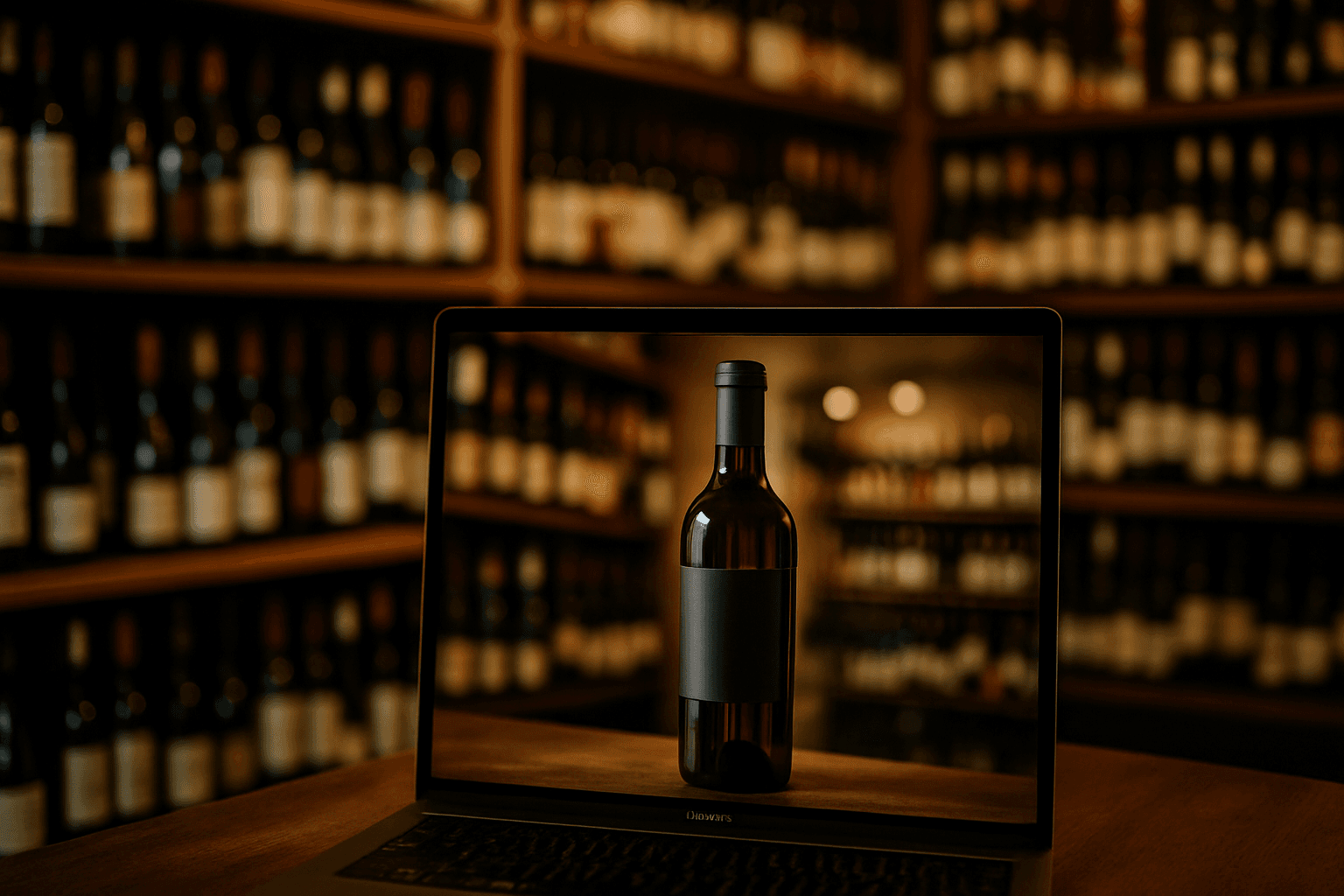
AI Product Photography for Liquor Stores: What Outshinery Lite's 4 Million Bottle Images Mean for Your Business
By Intentionally Creative10 min read
Listen to this article13:38
Schedule a free strategy call and Intentionally Creative will build a custom plan for you.
Schedule Your Free Strategy CallFree audit. No commitment.
Get a Free Audit. No commitment.
AI product photography is transforming liquor store e-commerce. Learn how tools like Outshinery Lite help independent retailers compete with pro-level images.
The way your bottles look online is now the way your store looks to most customers. And if you're still relying on a smartphone propped against a case of Bud Light to photograph your inventory, you're competing with one hand tied behind your back. AI-generated product photography has quietly crossed a tipping point in liquor retail — and the numbers prove it. One platform alone, Outshinery Lite, has generated over 4 million bottle image configurations. That's not a tech demo. That's an industry rewriting its playbook in real time.
Here's what makes this moment different from every other "the future is here" pitch you've heard: the tools are affordable, the quality is genuinely good, and regulators have already weighed in with clear rules of the road. Whether you're running a single-location shop or managing a growing chain, the gap between your product images and what customers now expect is either closing — or widening. Which direction depends on what you do next.
This post walks you through everything you need to know: what AI-generated bottle photography actually is, why it matters for your bottom line, what the TTB says about it, and exactly how to get started without blowing your budget. Let's get into it.
Four million. That's how many bottle image configurations Outshinery Lite has generated — and the number keeps climbing. That's not a novelty. That's an industry shift with direct implications for how you run your store's online presence.
Discover 7 proven Instagram content ideas for liquor stores that boost engagement and drive sales. Learn how to promo...
AI product photography for liquor stores isn't some future-state concept anymore. It's the current state. Brands, distributors, and retailers across beverage alcohol are adopting AI-generated bottle images at scale because the math works: faster turnarounds, consistent quality, and a fraction of the cost of traditional studio shoots.
When a single platform crosses 4 million configurations, it signals that adoption has passed the early-adopter phase. This is mainstream. Outshinery Lite images are showing up on brand websites, retail platforms, and marketing materials everywhere — which means the visual standard your customers expect has already shifted.
And it's not just Outshinery. Google is investing in AI-powered product photography tools , and competitors like BottleShots.ai, Lumenor AI, and PromeAI are all competing in the same space. The tools are multiplying. The barrier to great visuals is dropping to near zero.
10 proven liquor store social media content ideas to connect with customers, boost brand visibility, and drive both i...
Here's the uncomfortable part. Albertsons is already using Preferabli's AI-driven product discovery software for its Vine & Cellar Reserve DTC wine platform . Enterprise players are pairing AI visuals with AI-powered recommendations. That's your competition.
If your e-commerce listings still feature inconsistent, poorly lit bottle photos — or worse, no photos at all — you're leaving money on the table. Customers make purchase decisions in seconds, and image quality directly impacts whether they click "add to cart" or bounce.
Here's the short version: you upload a label image or punch in some basic product details, and AI generates a polished, professional bottle photo. No camera. No lighting rig. No photographer charging you $25–50 per SKU .
Discover proven liquor store customer retention tactics to build loyalty, increase profitability through repeat custo...
That's the core promise — and the technology has matured fast. When multiple companies are racing to serve one niche, that's a market signal, not a gimmick.
Let's be clear: this isn't slapping a filter on a blurry phone photo. AI-generated bottle images are built from scratch — the tool understands bottle shapes, label placement, lighting physics, and reflections to create something that looks like it came out of a real studio.
That said, today's tools also handle enhancement. Already have existing product photos that are just okay? AI can auto-fix lighting, remove backgrounds, and sharpen details — giving you a low-effort path to better visuals without starting from zero.
Either way, the quality gap between your store and the big chains just got a lot smaller.
Product photography is the single biggest trust signal in online retail. When a customer is deciding between two bottles of bourbon — one with a crisp, well-lit image and one with a blurry cell phone photo against a cluttered shelf — the choice is obvious. Inconsistent or low-quality images actively hurt conversion rates, especially for higher-priced spirits and wines where shoppers expect a premium presentation.
If you're running online ordering through Drizly, Instacart, or your own website, consistent and attractive product images across every listing aren't a nice-to-have. They're table stakes. AI product photography for liquor stores closes that gap fast — and for many common bottles, the image you need may already exist in a platform's library, ready to go.
Your content calendar is hungry, and it never stops eating. Between posts, stories, ads, and seasonal promotions, you need a steady stream of on-brand visuals. Scheduling a new photo shoot every month? That's not realistic for most independent operators.
AI-generated bottle images give you a library you can pull from whenever you need — no photographer, no lightbox, no delays. Getting comfortable with these tools now puts you ahead of the curve.
Here's one most store owners don't think about: high-quality product images are a foundational element that powers AI recommendation engines. The same kind of technology that personalizes shopping and boosts customer loyalty on major retail platforms depends on clean, consistent visual data.
You don't need a six-figure tech budget to get started. Here's a practical three-step approach.
Pull up your online store right now. Then your Google Business listing. Then your social media. Be honest: how many products have no image at all? How many have blurry, poorly lit, or wildly inconsistent photos?
That's your priority list. Consumer expectations for polished visuals are already set by the big players — and your store is being measured against them whether you realize it or not.
Tool selection matters more than you'd think. Outshinery Lite is purpose-built for beverage alcohol, with millions of configurations behind it — meaning it understands label placement, glass refraction, and the nuances that generic AI tools miss. Google and other tech companies are also rolling out AI photography features that offer free or low-cost alternatives .
Evaluate each option on four criteria: output quality, compliance features, ease of use, and cost per image.
Make AI-generated bottle images part of your standard operating procedure. When a new product hits your shelf, generating an image should be as routine as entering it into your POS system.
Start by batch-processing your top 50 sellers, then work through your catalog in phases. And don't overlook AI enhancement tools for photos you already have — today's auto-fix capabilities can upgrade lighting, backgrounds, and consistency on decent-but-not-great images without starting from scratch.
Product photography doesn't have to be a bottleneck anymore. The tools exist. The workflow is simple. The only question is whether you start now or keep losing clicks to competitors who already did.
Here's where things get interesting beyond pretty pictures. AI product photography is just one layer of a much bigger shift in liquor retail. On-device AI image recognition tools like StayinFront are already transforming how retailers manage their floors — scanning shelves in real time to flag out-of-stocks, check planogram compliance, and spot merchandising gaps before they cost you sales.
That library of AI-generated bottle images you build? It doesn't just serve your Instagram. Those same assets feed your e-commerce store, delivery app listings, in-store digital displays, and AI-powered recommendation engines. One investment, multiple returns across every customer touchpoint.
Stop thinking of product photography as a marketing line item. It's digital infrastructure — and the foundation is ready for you to build on.
The industry has moved. Outshinery Lite's 4 million bottle image configurations isn't a vanity metric — it's proof that AI product photography for liquor stores has gone mainstream.
10+ years helping liquor retailers and beverage brands grow through data-driven digital marketing. Learn more
Those AI-generated bottle images aren't just pretty pictures. They're data that helps recommendation systems work better, connecting your customers with products they'll actually love and come back for.
When you hear "AI product photography" and "liquor store" in the same sentence, your next thought might be: Is this even legal?
Short answer: yes. But there are rules.
The Alcohol and Tobacco Tax and Trade Bureau has addressed the use of AI-generated imagery in alcohol beverage advertising . That alone tells you how fast this space is moving — regulators don't weigh in on things nobody's doing.
The core principle is straightforward: AI-generated bottle images must not misrepresent the appearance, color, or characteristics of the product. No making bourbon look darker than it is. No "improving" a bottle's shape. No swapping in a label that doesn't match what's sitting on your shelf. The image needs to accurately represent what the customer will receive.
Compliance here isn't complicated — it just requires intention:
This isn't a reason to avoid AI-powered product photography. It's a reason to use tools built specifically for beverage alcohol — tools that understand these constraints from the ground up.
Intentionally Creative specializes in digital marketing strategies that drive real results. Let us show you what's possible.
Schedule a CallLook at what's happening around you: enterprise retailers are deploying AI-driven product discovery on DTC platforms. Major tech companies are making studio-quality AI-generated images accessible to virtually anyone. The TTB has already addressed AI-generated imagery in alcohol advertising — meaning regulators see this as permanent, not a fad.
The tools are here, they're affordable, and they're compliant.
Independent stores that upgrade their product photography now — even starting with their top 20 SKUs — will see measurable gains in conversions, social engagement, and customer trust. Those who wait will keep losing ground to competitors who didn't.
Start a free trial of an AI product photography tool this week. Outshinery Lite is a strong starting point for beverage alcohol. Your bottles deserve better than a smartphone photo on a folding table — and your customers are already shopping like they agree.