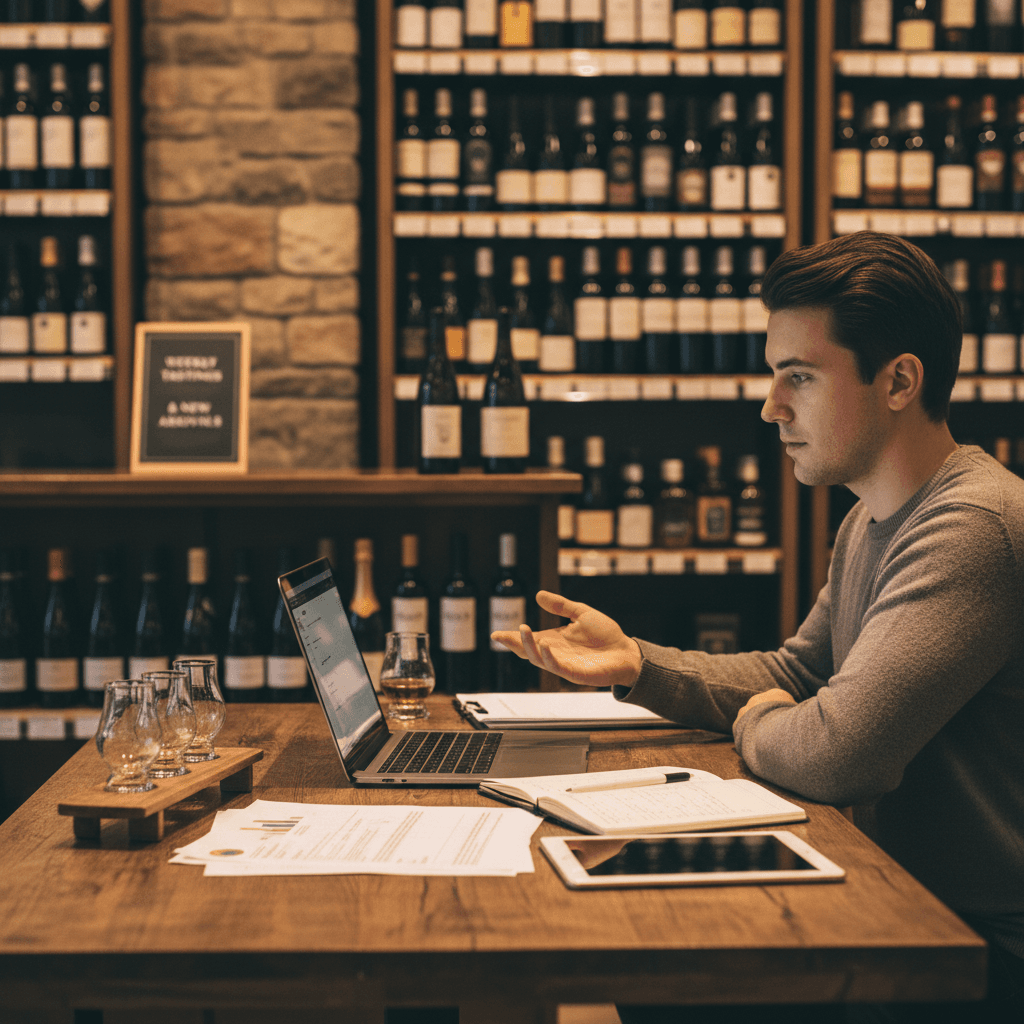
How to Use Google Business Profile Posts to Promote Weekly Tastings, New Arrivals, and Store Events Without Violating Alcohol Ad Policies
By Intentionally Creative14 min read
Listen to this article17:55
Schedule a free strategy call and Intentionally Creative will build a custom plan for you.
Schedule Your Free Strategy CallFree audit. No commitment.
Get a Free Audit. No commitment.
Learn how to use Google Business Profile posts for liquor stores to promote tastings, new arrivals, and events while staying compliant with alcohol ad policies.
You're running tastings, bringing in limited-release bottles, and building a store that regulars actually care about — but none of that matters if nobody finds you online. Here's the thing: there's a free tool sitting inside your Google Business Profile right now that most liquor store owners either don't know about or are too nervous to touch. Google Business Profile posts let you show up directly in Search and Maps results with event announcements, new arrival spotlights, and store updates — no ad budget required. And no, Google won't shut you down for using them. You just need to know the rules.
The fear is understandable. Google's alcohol advertising policies sound intimidating, and nobody wants their profile suspended over a poorly worded tasting announcement. But the reality is far more workable than most owners assume. The stores that figure this out — the ones posting consistently with the right framing — are quietly pulling ahead in local search while their competitors leave their profiles blank and wonder why foot traffic is flat.
This guide breaks down everything you need to know: what Google actually prohibits (and what it doesn't), which post types to use for which promotions, how to write compliant content that still sounds like a human being, and the posting cadence that turns your profile into a genuine foot traffic engine. Let's get into it.
Google Business Profile posts let you share announcements, offers, updates, and event details directly on Search and Maps — completely free. When someone searches "liquor store near me" or "wine tasting this weekend," your GBP post can show up right there in the results, no ad spend required.
For independent liquor stores competing against big-box retailers and delivery apps, this is one of the few level playing fields left. And the shelf life is better than you'd think: Update-type posts stay visible for up to six months before archiving [VERIFY — confirm current GBP post visibility duration against latest Google documentation]. That's months of passive visibility from a post that takes five minutes to write.
Learn how to optimize your Google Business Profile for liquor stores with tips on photos, posts, reviews, and categor...
So why do most stores ignore them? Two reasons. Many owners don't know these posts even exist. Others assume any alcohol-related content will get flagged immediately. That hesitation is understandable — Google Merchant Center policies do prohibit promotions targeting minors and content encouraging excessive consumption — but it doesn't mean you can't post. It means you need to know the rules. (We'll cover those next.)
Event-based promotions like tastings are proven foot traffic drivers for liquor retailers — particularly as on-premise consumption has rebounded post-pandemic. GBP posts are the fastest way to get those events in front of local searchers actively looking for something to do.
Google clearly wants to support retail. During the pandemic, they added curbside pickup badges to local business listings [VERIFY — confirm exact rollout timeline] — a signal that the platform is building features specifically for stores like yours. Every GBP feature you're not using is visibility your competitor down the road might be capturing instead.
The stores willing to post consistently and learn the compliance guardrails aren't gaming the system. They're just showing up where their customers are already looking.
Learn how to run a liquor store website SEO audit that fixes page speed, schema markup, and technical errors killing ...
Now that you know why these posts matter, let's talk about the elephant in the room — Google's alcohol policies and what they actually mean for your store.
Before you start crafting posts, you need to understand the rules of the road. The good news: they're more reasonable than you probably think.
Google Merchant Center alcohol policies explicitly prohibit three things: promotions targeting minors, content encouraging excessive consumption, and ads in countries where alcohol advertising is restricted. Google also restricts the promotion of alcoholic beverages across its advertising platforms, including Google Ads and Shopping.
That sounds broad. But here's the key distinction most store owners miss: Google doesn't ban liquor stores from using GBP. It bans specific types of content and targeting.
Learn liquor store Google Business Profile optimization — audit your photos, categories, attributes & posts to rank h...
You can absolutely promote your store, your events, and your expertise. You can talk about your Friday night bourbon tasting or that new mezcal line you just brought in. You just need to frame it correctly — more on that in the sections ahead.
Even non-post GBP features have triggered compliance flags. Local SEO practitioners have reported issues when adding alcohol items to the menu section of a liquor store's profile, which tells you Google's moderation extends well beyond paid ads. That's worth knowing before you test boundaries.
Here's where it gets nuanced. GBP posts are technically a non-paid surface. Google's formal alcohol advertising rules were written for paid placements. But those policies set the tone for all Google surfaces — and treating them as universal guidelines is the smartest way to avoid takedowns or suspensions.
Think of it this way: when you promote events through GBP, you're writing for a responsible adult audience, not selling alcohol directly through the post. Frame your content around the experience — the education, the community, the discovery — rather than pushing product consumption.
The bottom line: compliance isn't about avoidance. It's about smart framing.
With the policy landscape clear, let's get practical. Here are the three post types you should be rotating through — and exactly when to use each one.
Google Business Profile supports three distinct post types — Updates, Offers, and Events — and each one serves a different purpose. The biggest mistake we see? Store owners picking one type and using it for everything. Smart retailers match the post type to the promotional goal. Here's how to think about each one.
If you're hosting weekly tastings (and you should be — event-based promotions are one of the strongest foot traffic drivers in liquor retail), Event posts are your best friend. They include a date, time, and event title that display prominently right on your profile. Better yet, they automatically expire after the event date passes, so your profile stays clean without you lifting a finger.
The key to using Event posts well — and staying compliant — is framing. Lead with the experience, not the product. Instead of "Half-Price Bourbon Night," try something like: "Join our sommelier for a guided tasting of four Italian reds — learn about the regions, the producers, and what makes each bottle unique." You're promoting an educational event, not pushing alcohol. That distinction matters for compliance and for attracting the right customers.
Update posts have the longest shelf life of any GBP post type — they stay visible for months before Google archives them, making them ideal for evergreen content. New arrivals, seasonal selections, staff picks, store hours changes — this is where all of that lives.
For new arrivals specifically, lead with the story. Talk about the distillery, the region, the limited allocation you secured. You're sharing expertise and news, not running a liquor ad. This framing is more compliant and more engaging — your customers want to feel like insiders, not targets. Google Business Profile posts for liquor stores work best when they read like recommendations from a knowledgeable friend, not a billboard.
Here's the uncomfortable truth: GBP posts are temporary by design. Event posts disappear after the event date passes. Update posts eventually get archived. If you're not posting consistently, your profile goes silent — and your competitors who are posting regularly start pulling ahead in local search results.
The good news? Consistency doesn't require a ton of time.
Aim for this minimum cadence:
That's roughly nine to ten posts per month. Sounds like a lot until you batch them. Set aside 30 minutes on Monday morning, write all four weekly posts at once, then publish or schedule them throughout the week. You're done before your second cup of coffee.
Track results in GBP Insights. Which posts generate the most profile views and direction requests? Double down on those. Cut what doesn't move the needle.
The same seasonal thinking that drives smart paid campaigns should directly inform your GBP posting calendar. Think:
Google Business Profile posts for liquor stores work best as part of a fully optimized profile — not in isolation. Think of your GBP like a second storefront. Posts are the window display, but the whole store needs to look good for people to walk in.
Regularly updated photos, prompt review responses, and a complete Q&A section reinforce the credibility and visibility that posts alone can't achieve. These features also let you highlight events and expertise without triggering compliance issues — a well-answered Q&A about your Friday tasting series is informational, not promotional.
A few quick wins:
If your store offers curbside pickup, enable it in your profile. The badge appears directly on your listing and gives customers a concrete reason to choose you over competitors. Same goes for any other applicable attributes — wheelchair accessibility, veteran-owned, women-owned — every completed field strengthens your profile's visibility.
With your full profile working together, there's only one thing left to do — start.
10+ years helping liquor retailers and beverage brands grow through data-driven digital marketing. Learn more
Offer posts come with built-in start and end dates plus a "View Offer" call-to-action button — perfect for creating urgency. But here's where you need to be careful. Google's alcohol policies restrict certain promotional formats, so use Offer posts strategically for non-alcohol promotions: glassware bundles, gift basket specials, compliant event registrations, or accessories.
This isn't a limitation — it's an opportunity. A "Holiday Gift Basket: 20% Off This Week" Offer post can drive foot traffic just as effectively, while keeping your profile in good standing.
Knowing which post type to use is half the battle. The other half? Writing copy that promotes your store without getting flagged. Here's how to nail it every time.
Getting your posts right means walking a line — you want to drive foot traffic without tripping Google's content filters. The good news: it's not that hard once you know the rules. Here's the breakdown.
DO focus on experience, education, and community. A post like "Learn about bourbon aging techniques with our resident expert" is both compliant and compelling. Mention specific products by name when they're part of a story or educational context — that's how you spotlight your inventory without sounding like an ad for consumption.
DON'T use language that encourages excessive drinking. Phrases like "drink specials," "happy hour deals," or "all-you-can-taste" are red flags. Google's alcohol policies explicitly prohibit content encouraging excessive consumption or targeting minors, and those same principles guide how GBP posts get reviewed. Also avoid listing prices for alcoholic beverages or framing posts as direct-to-consumer alcohol sales.
One easy habit: always include "21+" or "Must be of legal drinking age" in event posts. It's not legally required on most GBP posts, but it signals responsibility to Google's review systems — and that matters.
Use photos of your store, your team, event setups, or product displays in a retail context. Avoid images showing active consumption, intoxicated individuals, or anything that could appeal specifically to minors. A well-lit shelf display or your spirits buyer setting up a tasting table works perfectly.
Compliant example: "This Saturday, 2–5 PM: Explore four single-origin mezcals with our spirits buyer, Jake. He'll walk you through the production process and flavor profiles. Space is limited — stop by or call to reserve your spot. Must be 21+."
This works because it emphasizes education, names a real team member, and includes an age gate. As an Update post, it keeps working for you long after the event — building credibility for your store as a destination.
Flaggable example: "TEQUILA TUESDAY! $5 shots of our new arrivals. Come get your drink on!"
This combines price promotion, encouragement of consumption, and casual language that invites moderation problems. It hits multiple compliance violations at once.
Your GBP posts are a free tool to capture local demand — just write them like an educator, not a bartender on a Friday night.
You've got the content framework. Now let's talk about the rhythm that turns occasional posts into a reliable traffic machine.
Intentionally Creative specializes in digital marketing strategies that drive real results. Let us show you what's possible.
Schedule a CallBut don't stop at national holidays. Tie your posts to local moments — college game days, neighborhood block parties, food truck festivals, or the annual downtown art walk. These hyper-local connections signal relevance to Google and resonate with the actual humans searching nearby.
Google has already shown its willingness to support retail-specific local features — like the curbside pickup badges added to business listings during the pandemic. The platform rewards stores that actively use its tools. Your posting cadence is how you stay in that conversation.
Of course, posts are just one piece of the puzzle. A few other GBP features deserve your attention too.
You don't need a marketing agency or a compliance lawyer to start using Google Business Profile posts for liquor stores effectively. You need 30 minutes, a smartphone, and the willingness to show up consistently where your customers are already searching.
Here's your checklist:
That's it. Six steps to start promoting your store with consistency and confidence.
Google Business Profile posts aren't complicated, risky, or time-consuming — they're just underused. The liquor stores that commit to a simple weekly cadence, frame their content around education and experience, and treat Google's alcohol policies as guardrails rather than roadblocks will consistently outperform competitors who leave their profiles silent. You already have the tastings, the new arrivals, and the expertise. Now put them where your customers are actually looking.
Need help building a GBP strategy that drives foot traffic and stays compliant? That's exactly what we do. Get in touch with Intentionally Creative →