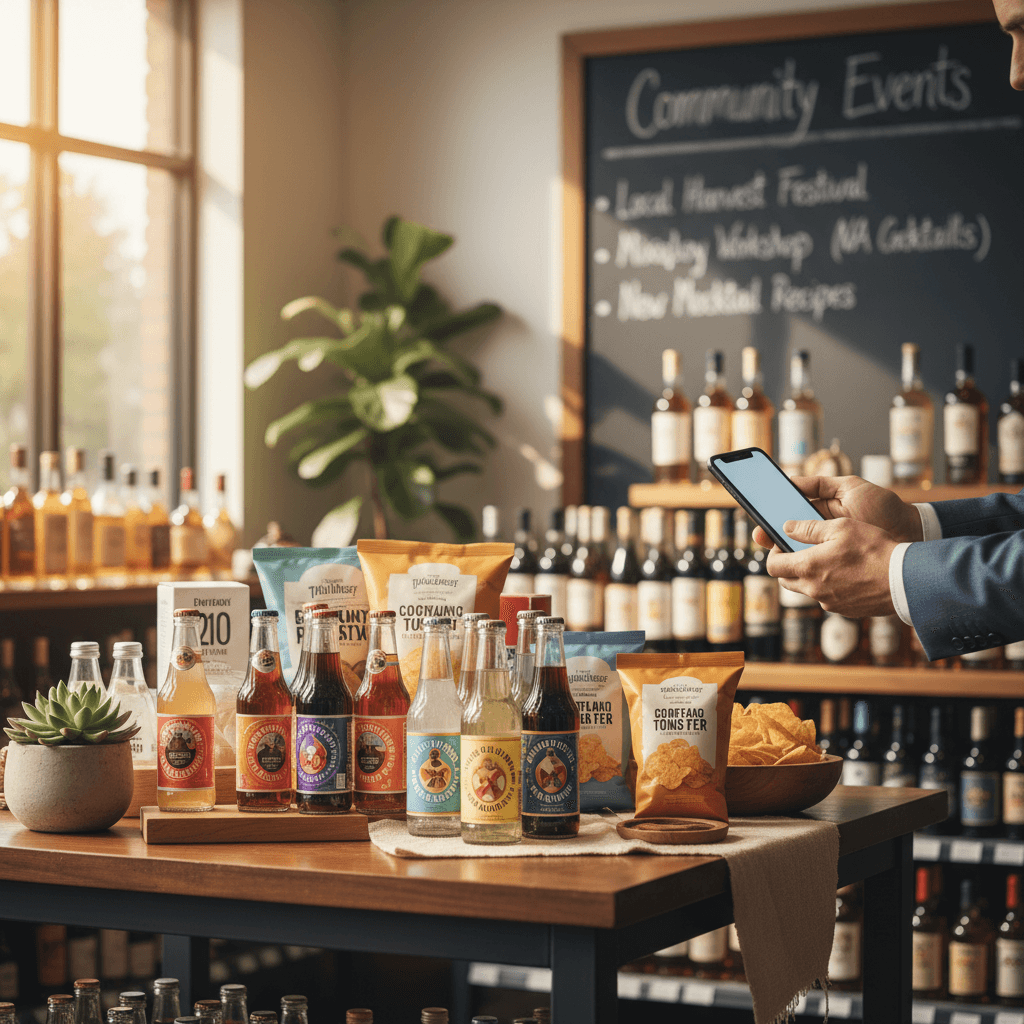
Organic Social Media for Liquor Stores: What to Post When You Can't Promote Alcohol
By Alden Morris, Founder & Principal Strategist39 min read
Listen to this article50:08
Schedule a free strategy call and Intentionally Creative will build a custom plan for you.
Schedule Your Free Strategy CallFree audit. No commitment.
Get a Free Audit. No commitment.
Discover compliant, creative social media strategies for liquor stores. Learn what to post, how to engage your audience, and how to build a loyal following without violating alcohol advertising restrictions.
Alcohol has been sold with storytelling for centuries. The compliance rules are new. The tension is not.
Bourbon distillers in 1800s Kentucky didn't need a terms-of-service agreement to sell their product. They had reputation, word of mouth, and a good barrel. Fast forward to 2025, and liquor store owners face a genuinely strange problem: they operate in one of the most culturally rich, story-dense product categories on earth, and the most powerful marketing channels available actively restrict how they can talk about it.
That's the central paradox of liquor store social media compliance. Meta, TikTok, and Google all carry age-gating requirements, content restrictions, and ad policies that can get your account flagged, limited, or banned without warning.
Social media marketing is uniquely difficult for liquor stores because the platforms that reach the most customers also carry the strictest restrictions on alcohol-related content. Federal regulations under the TTB, state-level ABC rules, and platform-specific ad policies from Meta, TikTok, and Google create a three-layer compliance challenge that most retailers never fully map out. Liquor stores cannot directly target users under 21, cannot make certain health-related claims, and face algorithmic suppression on paid promotions even when content is technically legal. According to research published by DPF Law, alcohol beverage marketers in 2026 face increasing scrutiny around influencer disclosures, age-gating failures, and platform policy violations that carry real legal exposure. The result: your competitors who understand these rules build audiences and drive foot traffic while others post into the void, wondering why organic reach keeps shrinking.
Discover 7 proven Instagram content ideas for liquor stores that boost engagement and drive sales. Learn how to promo...
This article maps the full compliance picture, what the rules actually are, where retailers get tripped up, and how to build an audience without triggering a platform strike.
At Intentionally Creative, we work exclusively with retail liquor clients. This isn't theoretical. Start here, and you'll finish with a working framework.
Here's what actually happens when you post a whiskey deal on Instagram without understanding the rules: nothing. Until it does. Then your account gets flagged, your ad account gets suspended, and in a worst-case scenario, your state ABC board gets involved. That's not hypothetical, it's the pattern we see repeatedly with liquor stores that treat social media like any other retail business.
10 proven liquor store social media content ideas to connect with customers, boost brand visibility, and drive both i...
So what exactly are you supposed to follow?
Social media compliance for liquor stores means adhering to federal, state, and platform-level rules that govern how alcohol can be promoted digitally. Three distinct authorities have jurisdiction over your posts: the TTB (Alcohol and Tobacco Tax and Trade Bureau), your state's ABC (Alcoholic Beverage Control) board, and the platform itself, Meta, TikTok, Instagram, X. Each operates independently. Each can penalize you independently. According to DPF Law's 2026 breakdown of alcohol beverage marketing pitfalls, the most common compliance failures happen precisely because retailers treat these as a single ruleset when they're actually three overlapping ones.
The paid vs. organic distinction matters here. Paid alcohol advertising on Meta requires age-gating and falls under restricted ad categories, you can't just boost a post about a bourbon sale the way a shoe store boosts its clearance rack. Organic content carries more flexibility, but "more flexible" doesn't mean unregulated.
Discover 7 proven TikTok marketing strategies for liquor stores that build real engagement and bring customers throug...
Non-compliance consequences are real and tiered: platform suspension, FTC scrutiny, state fines, and license risk.
Standalone answer for featured snippet:
Social media compliance for liquor stores means following a specific set of federal, state, and platform rules that govern how alcohol can be advertised and promoted online. At the federal level, the TTB prohibits false representations, health claims, and any content that could appeal to minors. State ABC boards layer additional restrictions on top, some prohibit price advertising entirely, others restrict promotional language like "best deal" or "cheapest in town." Platforms like Meta, Instagram, TikTok, and X enforce their own policies through restricted ad categories and age-gating requirements for paid promotion. Organic content has more room to operate, but it still carries rules. Violating any of these layers can result in account suspension, FTC action, state fines, or, at the most serious end, jeopardizing your retail license. Compliance isn't one rule. It's three simultaneous frameworks you have to understand before you post anything.
Before you schedule a single post, you need to understand how these three layers stack on top of each other:
Ignoring any one layer doesn't just create a gap, it creates liability.
Here's what actually happens when you post a bottle of Pappy Van Winkle on Instagram without configuring your age gate first, Meta's systems flag your account, your organic reach tanks, and you've handed your competitors an open lane while you sort out the compliance mess.
Each platform runs its own rulebook. Understanding the mechanics before you post a single piece of content isn't just smart, it's the difference between a sustainable social presence and an account that gets restricted mid-campaign.
Facebook and Instagram permit organic alcohol content, but the prerequisite is non-negotiable: your business page must have age restrictions enabled before you publish anything product-related. This is a 60-second configuration inside Page Settings that most liquor store operators skip entirely.
Paid ads operate under a separate framework. Meta doesn't universally ban alcohol advertising, it restricts targeting parameters and content execution. You can run ads for a whiskey tasting event. You cannot target users under 21, and your creative cannot depict consumption in ways that suggest excess or irresponsibility. The distinction matters because many operators assume alcohol ads are completely off-limits and abandon paid social entirely, leaving real revenue on the table.
Organic posts that consistently perform well and stay compliant: product education (tasting notes, production methods, regional origin), staff spotlights, store events, and community content that positions your shop as a neighborhood institution. What you avoid is gratuitous consumption imagery, think education over celebration.
Here's what actually happens when you assume "common sense" is enough to guide your liquor store's social media content: you post something that feels completely harmless, a meme about needing wine after a rough Monday, and six months later you're explaining it to your state alcohol control board.
The myth worth killing immediately: compliance violations only happen when stores do something obviously reckless. The reality is that most violations come from posts that felt fine in the moment.
Liquor stores are prohibited from posting social media content that makes health claims about alcohol, targets or features minors, glamorizes irresponsible consumption, or misrepresents alcohol content, origin, or production method. Federal regulations enforced by the TTB (Alcohol and Tobacco Tax and Trade Bureau) prohibit implying that alcohol enhances athletic performance, sexual success, or professional achievement. State-level restrictions add another layer, some states ban price advertising on social media entirely. Platform community standards layer on top of all of that, prohibiting drinking games, excessive consumption content, and alcohol-as-prize giveaways. According to DPF Law's 2026 alcohol marketing compliance guide, using influencers without proper age verification and disclosure is one of the fastest-growing compliance risks for retail alcohol accounts. Every single one of these rules applies regardless of follower count or post intent.
These aren't gray areas. They're documented violations with documented consequences.
Here's what actually happens when you post random content without a plan: your engagement flatlines, your reach shrinks, and your audience stops caring. The fix isn't posting more, it's posting smarter.
Creative social media post ideas for liquor stores span four proven content categories: behind-the-scenes documentation (unboxing new arrivals, buyer trips to distilleries, staff training panels), serialized recurring formats (weekly series like "Spirit of the Week" or "Producer Spotlight Friday"), seasonal and event-driven content tied to occasions rather than promotions, and user-generated community spotlights. Each category serves a distinct purpose, education, habit-building, cultural relevance, or social proof, while keeping posts compliant by focusing on process, story, and expertise rather than direct purchase calls. Research from the Distilled Spirits Council confirms that educational and storytelling content consistently outperforms promotional posts across alcohol beverage social channels. The most effective stores treat their feed like a curriculum, not a catalog.
Start with this specific example: film a 60-second vertical video of your buyer opening a shipment of allocated bourbon that just arrived. No price. No "buy now." Just the story of what it is, where it came from, and why you sought it out. That single post format, "What just arrived at the store", routinely drives more saves and shares than any promotional graphic.
The principle behind this comes from chef and cocktail technician Dave Arnold: the process is as interesting as the product. Show the work. Your customers don't just want a bottle, they want to understand what separates your selection from the grocery store shelf down the street. Buyer trips to distilleries and wineries, documented in real time, answer that question viscerally. A photo of your buyer standing in a rickhouse in Kentucky tells a sourcing story no product description can match.
Staff training sessions and tasting panels work particularly well when framed as education. "Our team is learning about the production differences between pot still and column still rum" is compliant, credible, and genuinely interesting. It positions your staff as experts, which is exactly what your customers want before they spend $80 on a bottle they've never tried.
Founder and Principal Strategist at Intentionally Creative. 10+ years in three-tier beverage industry marketing, 3 patents pending, CityHive partner. Runs growth for independent liquor retailers and DTC brands.
TikTok's community guidelines explicitly prohibit content that promotes alcohol to minors, and the platform's algorithm actively suppresses alcohol-adjacent content regardless of audience verification. This isn't speculation, operators running compliant accounts routinely report significantly lower organic reach on product-forward posts compared to lifestyle or educational content. The algorithm doesn't reward you for following the rules; it simply penalizes you less.
The strategic pivot for TikTok is brand personality. Behind-the-scenes content, staff expertise, the story of how your shop sources unusual bottles, this content builds audience without triggering suppression. Age verification for business accounts matters here: without it, you have no defensible compliance position if a post gets flagged.
X allows alcohol advertising with age-targeting enabled and applies relatively permissive rules to organic content. Pinterest restricts alcohol ads but organic pins featuring cocktail recipes and lifestyle content perform well, the platform's search-driven discovery model makes it underrated for liquor retailers. YouTube permits alcohol content with channel-level age restrictions activated.
According to DPF Law's 2026 alcohol marketing compliance guidance, the general principle holds across every emerging platform: the newer the platform, the less defined the enforcement. Document your compliance rationale in writing before you post. If a platform's policy is ambiguous, default to the stricter interpretation and keep records showing you made a deliberate, reasoned decision.
What are the social media platform rules for alcohol content? Social media platforms each enforce their own alcohol content policies, and compliance requires understanding them individually. Meta (Facebook and Instagram) allows organic alcohol content and restricted paid advertising, but requires age-gating on business pages before any alcohol-related posts go live. TikTok permits alcohol content for verified adult-audience accounts but algorithmically suppresses it and prohibits any promotion directed at minors. X (formerly Twitter) allows alcohol ads with age-targeting parameters in place. Pinterest restricts paid alcohol advertising but permits organic lifestyle and recipe content. YouTube allows alcohol content when channel-level age restrictions are enabled. The universal standard across all platforms: no content that targets minors, no depictions that glamorize excessive consumption, and age verification settings activated before publishing. Organic educational content, product origin, tasting notes, staff expertise, carries the lowest compliance risk across every major platform.
Here's what actually happens when you post random product shots with prices on Instagram: your reach drops, your engagement flatlines, and the algorithm quietly buries you. Stores that build structured content pillars see 3x higher organic engagement than those posting without a strategy, according to research from Hangar-12. The difference between a liquor store account people follow versus one they ignore comes down to this: are you giving them a reason to care beyond the transaction?
What types of content can liquor stores post on social media?
Liquor stores can post a wide range of compliant content on social media by focusing on education, community, lifestyle, and product discovery rather than direct promotional advertising. Compliant content includes distillation process explainers, spirit category histories, food and cocktail pairing guides, producer and distillery spotlights, staff expertise features, tasting notes framed as informational content, seasonal entertaining guides, local event partnerships, behind-the-scenes store operations, and new arrival announcements written as educational posts rather than sales pitches. Mocktail recipes and food pairing content perform particularly well because they engage audiences who may not drink while remaining relevant to the store's identity. This approach satisfies platform age-gating requirements, avoids triggering alcohol advertising restrictions, and builds genuine audience trust, which converts to foot traffic and sales more reliably than promotional posts alone.
The intellectual curiosity angle is underused. Consumers genuinely want to understand why their favorite bourbon tastes the way it does. Dave Arnold built an entire following by treating food and drink as science worth explaining, liquor stores can apply the same logic.
Post ideas that work: distillation process explainers ("Here's why pot still rum tastes nothing like column still rum"), terroir breakdowns for single-origin spirits, and category history posts like "What actually makes bourbon bourbon?" or "The real difference between mezcal and tequila." These aren't just interesting, they're shareable. An "Ask Our Buyer" series or spirits specialist feature gives your staff a platform and positions your store as an authority, not just a shelf with prices. Trust built through education converts. Customers who learn from you buy from you.
Your store exists inside a neighborhood. Post like it.
Highlight partnerships with local restaurants, feature neighborhood stories, and connect your inventory to local events and sports seasons. Behind-the-scenes content, receiving a rare allocation, unpacking a new shipment, a team introduction, performs well because it's human. User-generated content works here too, with one rule: encourage customers to share experiences without depicting irresponsible consumption. A photo of a dinner table setup beats a photo of someone mid-drink every time, both for compliance and for reach.
Lifestyle content outperforms direct product posts in organic reach on most major platforms. The reason is structural: pairing and recipe content gets saved, shared, and searched. A cocktail recipe post lives on. A price promotion dies in 24 hours.
Food and beverage pairing content sidesteps direct promotion entirely while staying completely relevant to your business. Cocktail recipes, mocktail alternatives, wine-and-cheese pairing guides, seasonal entertaining setups, these position your store inside the moments your customers actually care about. Dinner parties. Holidays. Game days. Gift season. Try this yourself: post one cocktail recipe using a spirit you're currently well-stocked on, tag the recipe with the spirit name, and watch how differently it performs compared to a straight product shot.
There's a meaningful difference between promoting a product and informing about one. Platforms and regulators treat them differently. Your audience responds to them differently.
A new arrival post that reads "20% off this weekend" is promotion. A post that reads "We just received this small-batch release from a 200-year-old Oaxacan distillery, here's what makes it interesting" is information. Same product. Completely different compliance profile and engagement outcome. Tasting notes work the same way, flavor profiles, finish descriptors, and production details are informational content. Producer spotlights go even further: tell the story of the distillery, the winemaker, or the brewery. The product sells itself when the story is right. According to Brand Movers, brands that lead with storytelling over direct promotion see measurably stronger long-term audience retention across social channels.
Intentionally Creative specializes in social media strategies that drive real results. Let us show you what's possible.
Schedule a CallFacebook and Instagram enforce their own alcohol advertising policies on top of federal and state law. Violations here can result in account suspension before any regulator even gets involved.
This is where most violations actually originate. The content isn't obviously wrong. It just wasn't reviewed carefully.
Memes and humor. A post joking about drinking to forget your problems feels relatable. Regulators and platforms read it as glamorizing alcohol misuse. The intent doesn't change the outcome.
Reposted customer content. A customer tags your store in a photo from their party. You repost it without vetting. If that photo shows someone visibly intoxicated, you now own that content.
"Tag a friend" campaigns. These organically extend your reach to people you haven't age-gated. That's a compliance exposure, not just a marketing tactic.
Stock imagery. Age ambiguity in stock photos is a known compliance risk. If you can't confirm the subject appears 25 or older, don't use it.
What to do instead:
The stores that get in trouble aren't reckless. They're just moving fast without a system. Build the system first.
Serialized content is the closest thing to guaranteed engagement on social media. Here's why: humans are pattern-seeking creatures. When your audience knows "Producer Spotlight Friday" drops every week, they come back for it. According to research from Hangar-12's alcohol marketing analysis, consistent content cadence builds habitual platform behavior, your followers start visiting your profile proactively rather than waiting for the algorithm to serve them your posts.
Practical series worth building right now:
Q&A formats deserve more credit than they get. Answer real customer questions about storage, gifting, food pairing, and spirit categories. This content doubles as SEO-friendly material if you repurpose it to your website or Google Business profile.
The holiday gift guide is the single highest-traffic content opportunity of the year for retail liquor stores, and most stores waste it by posting product photos with prices. Flip the frame. "How to choose a whiskey for someone who doesn't drink whiskey" is a searchable, shareable, genuinely useful piece of content that drives traffic without triggering platform ad restrictions.
Tie seasonal cocktail content to ingredients and occasions, not SKUs. "What to make with fresh citrus this January" is a content hook. "Buy our Aperol" is an ad. The distinction matters both for compliance and for audience trust.
National observance days, National Bourbon Day (June 14), World Whisky Day (third Saturday in May), Negroni Week, give you built-in editorial hooks. Use them for education and cultural commentary, not flash sales.
UGC is powerful, but it requires a compliance-aware workflow. When soliciting customer content, avoid prompts that encourage showing consumption. "Tell us about the bottle you brought to your wedding" generates storytelling content, the memory, the occasion, the meaning, without becoming a platform for drinking imagery.
Local producer and supplier spotlights serve double duty: you build genuine community relationships and generate content your followers actually want to read. Staff picks framed as expertise sharing ("Our whiskey buyer has been recommending this bottle to everyone who asks for something peaty under $60") build credibility without crossing into promotional territory.
Here's what actually happens when you skip age gating on your social profiles: a 16-year-old follows your store, engages with your content, and that digital paper trail exists the moment a compliance investigator or licensing board starts asking questions. Before age gating, your store is essentially an open billboard with no filter. After, you've created a documented, defensible compliance posture.
How do liquor stores verify age on social media?
Liquor stores verify age on social media primarily through platform-native age restriction tools. On Facebook Business Pages, store owners can set a minimum age requirement, typically 21 in the U.S., through the Page Settings under "Age Restrictions," which prevents users below that threshold from viewing the page. Instagram allows age-gating via the connected Facebook Business account, though enforcement relies on self-reported user birthdays, which limits reliability. YouTube offers content-level age restrictions under channel settings for video uploads. Beyond platform tools, compliance-conscious stores regularly audit follower demographics through native analytics, require influencer partners to submit audience age breakdowns, and frame organic content to naturally deter underage engagement. These measures together form a layered verification approach, no single tool is foolproof, but the combination demonstrates good-faith compliance effort to licensing authorities.
Most liquor store owners set up their Facebook Business Page and never touch the age restriction settings. That's a liability sitting in plain sight.
Here's the actual setup path on Facebook: Go to your Page → Settings → General → Age Restrictions → set to 21+. Takes four minutes. Skipping it is not an option if you're serious about compliance.
Instagram age restrictions pull from your linked Facebook Business account. Users self-report their birthdate, which means a determined 17-year-old can bypass it. That limitation matters. Age gates are a floor, not a ceiling.
YouTube channel-level age gating lives under Settings → Channel → Advanced Settings. Enable "Content declaration" and mark content as made for adults. For individual videos, restrict under the Audience settings tab.
Age verification on social is imperfect by design, platforms weren't built for alcohol compliance. But regulators don't care about platform limitations. They care whether you made a documented effort.
— Alden Morris, Intentionally Creative
Organic posts are trickier than paid. You can't apply demographic targeting to a standard feed post the way you can with a boosted ad. But you're not powerless.
Facebook's Audience Optimization tool (available through Creator Studio) lets you set preferred audiences and restrict visibility by age for organic posts, use it. Instagram doesn't offer equivalent organic targeting controls, which is exactly why your content framing does heavy lifting.
Content framing means writing and designing posts that signal adult context without being explicit about it. Tasting notes, food pairings, price-per-ounce value comparisons, these naturally attract adult buyers and don't appeal to underage audiences the way flashy party imagery does.
Audit your audience demographics monthly. Pull your Facebook Page Insights and Instagram Insights, look at the age breakdown. According to research from the Distilled Spirits Council (distilledspirits.org), responsible marketing standards specifically require that alcohol advertisers confirm at least 71.6% of their audience is of legal drinking age. If your numbers don't reflect that, you have a real problem.
If you discover a significant underage segment in your followers, act immediately: restrict your page, adjust your content strategy, and document the corrective steps you took. That documentation protects your license.
Influencer partnerships amplify your reach, and your risk. A single non-compliant post from a partner can create licensing exposure for your store, even if you didn't write the caption.
Require every influencer or content partner to submit two things before any collaboration begins: proof they are 21+ (government-issued ID), and a current audience demographics report showing their follower age breakdown skews 21+. No exceptions. No "they seem older."
FTC disclosure requirements apply to every gifted bottle, sponsored post, and paid partnership. The influencer must disclose the relationship clearly, #ad, #sponsored, or "gifted by [your store name]" in the first line of the caption, not buried in hashtags. This isn't optional; the FTC has issued enforcement actions in the alcohol category specifically.
According to DPF Law's 2026 alcohol marketing compliance guide (dpf-law.com), written agreements with influencers should include explicit compliance clauses covering FTC disclosures, platform age-gating requirements, and content approval rights before posting.
Here's what actually happens when you strip promotions out of your content strategy: your engagement rate goes up.
That sounds backwards until you understand the algorithm logic. Promotional content, "Buy this now," "Sale ends Sunday", triggers passive scrolling. Educational and conversational content triggers responses. Responses signal relevance. Relevance drives reach. The math is simple, even if the execution takes discipline.
As we move into a period where platforms are tightening alcohol advertising policies across the board, organic engagement isn't just a compliance workaround, it's a smarter long-term growth strategy.
Think of your content calendar the way Dave Arnold thinks about cocktail experimentation: as a two-way experiment where you test variables, measure responses, and iterate based on real data. Not gut feeling. Data.
The lowest-effort, highest-return tactic? Ask questions that cost your audience nothing to answer. "Rye or bourbon for a Manhattan?" takes three seconds to post and generates the kind of comment thread that tells the Instagram algorithm your account is worth showing to more people. Low stakes for your audience. High signal for the platform.
Instagram Stories polls and LinkedIn question prompts work on the same principle. You're not broadcasting, you're opening a loop that people want to close.
One non-negotiable: respond to every comment. Every single one. Comment quality matters more than comment quantity for algorithmic performance, a five-comment thread where you've replied to each one outperforms a twenty-comment thread with zero replies. The algorithm reads conversation depth, not headcount.
Answering the Core Question Directly
Liquor stores can grow social media engagement without promotions by shifting from broadcast content to conversation-based content. This means posting opinion questions ("Rye or bourbon for a Manhattan?"), using Instagram Stories polls to invite quick audience interaction, and sharing educational content, tasting notes, food pairings, spirits history, that gives followers a reason to engage beyond a discount. Responding to every comment, even briefly, deepens conversation threads and signals relevance to platform algorithms. Research from Hangar-12's 2026 alcohol marketing analysis confirms that educational and community-driven content consistently outperforms promotional posts in organic reach for beverage alcohol brands. Branded hashtags that anchor a store's community identity, combined with platform-appropriate formatting (vertical video for Reels and TikTok, square imagery for feed posts), allow a single compliant content idea to reach audiences across multiple platforms without a single promotional claim.
Hashtags fall into four categories worth building around: spirits education (#whiskyeducation, #cocktailscience), cocktail culture (#classiccocktails, #bartenderlife), local community (#[yourcity]drinks, #[yourcity]eats), and food pairing (#cheeseboard, #dinnerpairing). Each category connects you to an audience that's already interested, without signaling promotional intent.
That last point matters more than most store owners realize. Hashtags like #sale, #deal, or #discount can flag your content for platform review under alcohol advertising policies. You don't need them. They attract bargain hunters, not loyal customers.
Build one branded hashtag for your store, something ownable and specific, like #[StoreName]Selects or #DrinkWith[StoreName]. Use it consistently. Over time, it becomes a content archive your audience can browse.
Worth noting on platform mechanics: Instagram's own internal data has shown declining hashtag reach as the algorithm shifts toward interest-based content recommendation. On Instagram, your caption quality and engagement velocity now drive discovery more than hashtag volume. On TikTok, hashtags still carry meaningful weight. Adjust your effort accordingly.
A single compliant content idea, say, a breakdown of what makes a peated Scotch taste smoky, can live in five places without five separate productions.
Here's the format breakdown that actually matters:
Your content calendar should work backwards from one idea per week, then branch into platform-specific formats. Tools like CapCut handle video reformatting efficiently. Canva's Magic Resize handles static assets. A workflow that takes 90 minutes of production time can generate a week of compliant, cross-platform content.
According to research from Outshinery's 2026 alcohol marketing trends report, brands that maintain consistent cross-platform presence with format-native content see significantly higher audience retention than those posting identical content everywhere.
Documentation isn't paperwork. It's your proof of intent when a regulator comes knocking.
Here's what actually happens when you get flagged for an alcohol marketing violation: the first thing investigators ask for is your approval trail. Not the post itself, the trail. Who approved it, when, and what criteria they used. Stores without documentation have no defense. Stores with it can often demonstrate good-faith compliance and avoid the harshest penalties.
A written internal policy is your first line of defense. Full stop.
Your policy doesn't need to be a 40-page legal document. It needs three core components: a content approval workflow (who reviews what, in what order), a prohibited content list (no cartoon characters, no pricing that implies intoxication, no posts targeting under-21 audiences), and a platform-specific rules summary that distills Instagram's, Facebook's, and TikTok's alcohol policies into plain language your staff can actually use.
The approval chain should include your store owner or manager, and if you're working with an outside marketing partner, they should be embedded in that workflow, not operating independently of it. According to DPF Law's 2026 alcohol marketing pitfalls analysis, most compliance failures trace back to unclear internal authority: someone posted something because no one explicitly told them not to.
Review your policy quarterly. Platform rules shift without announcement. What Instagram permitted last spring may violate their updated alcohol advertising guidelines today.
A checklist turns compliance from a judgment call into a repeatable system.
Structure yours in layers: federal rules first (TTB guidelines, no false or misleading claims), then state-specific rules (your ABC's advertising restrictions), then platform rules, then an imagery review (no minors in frame, no irresponsible consumption imagery), then audience targeting review (geo-targeting confirmed to 21+ markets, interest-based targeting excludes youth-skewing categories).
That layered format also works as a staff training tool. Walk a new social media manager through the checklist on their first post, and you've transferred institutional knowledge in 15 minutes.
Document every approval. Screenshot it. Log it with a timestamp and the approver's name. A simple Google Sheet works. The discipline of logging creates accountability and gives you an audit trail that demonstrates systematic compliance, not accidental compliance.
When you're unsure, don't post. Escalate. Build that escalation path explicitly into your policy so staff know exactly who to call when a piece of content sits in a gray area.
Liquor stores should document their social media compliance process by maintaining a written internal policy, using a layered pre-publication checklist, and logging every post approval with a timestamp and approver name. The policy should define a clear content approval workflow, a prohibited content list, and a summary of platform-specific alcohol advertising rules. Each post should clear federal TTB guidelines, state ABC restrictions, platform policies, imagery standards, and audience targeting criteria before publishing. Approvals should be saved as screenshots or logged in a shared document, not stored in someone's memory. This documentation serves two purposes: it creates internal accountability and provides evidence of good-faith compliance if a regulatory body ever reviews your marketing activity. Stores that can produce a documented approval trail are far better positioned to avoid or mitigate penalties than those that rely on informal processes. Review and update your policy at least quarterly as platform rules evolve.
Most general marketing agencies don't know what a tied-house violation is. That's a problem.
The beverage alcohol system operates under a regulatory framework that most marketers have never encountered. TTB guidelines, state ABC familiarity, tied-house laws, and platform-specific alcohol policies are not intuitive, they require direct, repeated exposure to get right. An agency that markets restaurants and liquor stores interchangeably is not equipped to protect you.
At Intentionally Creative, compliance is built into every content workflow before a single post goes live. That means every piece of content clears federal, state, and platform requirements as a standard step, not an afterthought. Alden Morris and the team bring firsthand experience across all three tiers of the beverage alcohol system, which means they've seen how violations happen and specifically how to prevent them.
The ROI argument is straightforward: a single compliance failure can result in fines, license suspension, or ABC scrutiny that follows your store for years. Professional marketing support costs a fraction of that exposure.
Here's what actually happens when you track the wrong metrics for your liquor store's social media: you spend months chasing follower counts and reach numbers, feel like nothing is working, and quietly abandon your strategy. The problem isn't your content. It's your scoreboard.
Are you measuring social media success the same way a beverage brand with a $2M ad budget measures it? That's the first mistake most liquor store owners make.
Compliant organic social operates by different rules. Your reach will be smaller than an alcohol brand running paid campaigns. That's not failure, that's the reality of playing by the rules. What matters is the quality of the audience you're actually building.
Liquor stores should track these four KPIs above all others:
The right KPIs for a compliance-first strategy tell you two things simultaneously: whether your content is legally sound and whether it's commercially effective. Those goals aren't in conflict, they're the same goal measured from different angles.
Most liquor store owners look at their social analytics the way they look at their utility bills, only when something feels wrong. A structured monthly report changes that.
Liquor stores tracking social media metrics should monitor: engagement rate by content pillar, follower age demographic breakdown (as a compliance checkpoint), profile visits, link-in-bio clicks, and week-over-week follower growth rate. Cross-reference these against in-store traffic patterns and point-of-sale data from the same period. If your "new arrivals" discovery posts spike on Thursdays and your Friday foot traffic jumps, that's causation worth testing deliberately.
A useful monthly report for a liquor store owner doesn't require a data analyst. It requires four columns: what you posted, how it performed, what the compliance indicators showed, and what you're changing next month. That's it. The goal is a decision-making document, not a vanity dashboard.
One honest benchmark to set early: organic social for retail liquor is a 6-to-12-month game before you see compounding returns. According to data from Brand Movers' 2026 alcohol marketing analysis, brands that maintain consistent organic content strategies for 12+ months see significantly higher customer retention rates than those cycling in and out of activity. Consistency beats virality every time in this category.
Think about the liquor store on the corner that's been there for thirty years. The owner knows your name, remembers that you prefer Burgundy over Bordeaux, and once steered you away from an overpriced bottle toward something genuinely better. That store didn't build its reputation through promotions. It built it through trust, expertise, and genuine care for its community. Your social media presence should do exactly the same thing.
Compliant social media marketing matters for liquor stores long-term because it builds the kind of trust that converts casual followers into loyal customers, and protects the business from regulatory penalties that can end a brand's digital presence overnight. According to DPF Law's 2026 alcohol marketing compliance guide, violations on platforms like Instagram and Facebook can trigger state licensing reviews, not just platform bans. Stores that treat compliance as a creative constraint, rather than a bureaucratic obstacle, consistently produce more authentic, community-driven content. That content performs better, attracts engaged audiences, and mirrors what the best wine writers have always understood: authority comes from honesty, not from selling.
The stores building lasting digital audiences right now aren't the loudest ones. They're the most trusted. Compliance isn't the ceiling on your creativity, it's the foundation under it. Ready to build a social media strategy that's both compliant and genuinely compelling? Connect with Intentionally Creative and let's build something worth following.