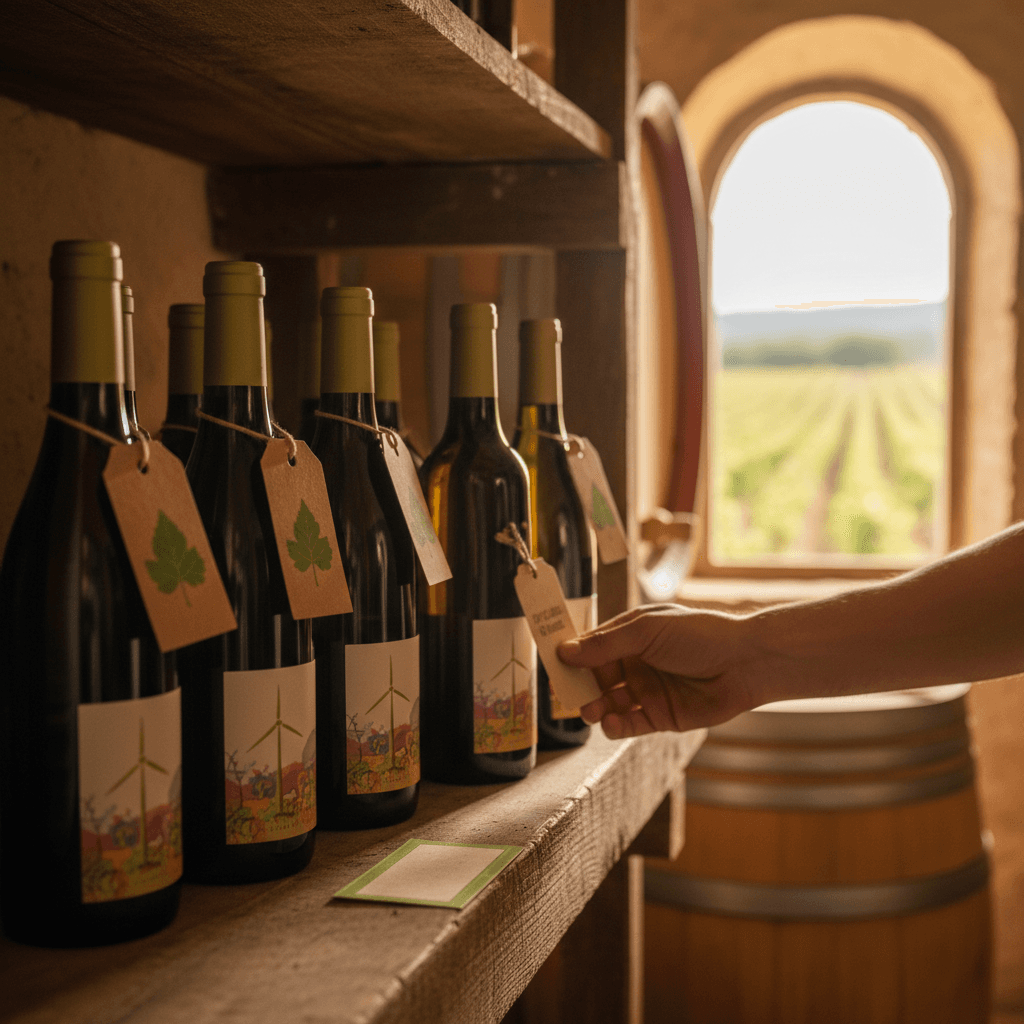
Sustainability as a Shelf Tag: How Wind-Powered Wine Production Reflects Growing Consumer Demand for Eco-Certified Beverages
By Intentionally Creative11 min read
Listen to this article15:05
Schedule a free strategy call and Intentionally Creative will build a custom plan for you.
Schedule Your Free Strategy CallFree audit. No commitment.
Get a Free Audit. No commitment.
Eco-certified beverages marketing is reshaping liquor retail. Learn how sustainability sells, from shelf tags to wind-powered wine, and boost your store's ROI.
Your customers are already voting with their wallets — and increasingly, they're voting green. What was once a niche preference reserved for farmers' market regulars and Whole Foods devotees has become a mainstream purchasing pattern that's reshaping every aisle in your store, including the one with the wine. If you haven't built eco-certified beverages marketing into your retail strategy yet, you're not early anymore. You're behind.
Here's the reality: a winery in Monterey County is powering its production with wind turbines, slapping verifiable sustainability credentials on every bottle, and giving retailers a story that practically sells itself. Meanwhile, nearly three-quarters of consumers say they'll pay more for products with sustainable packaging. That's not ideology — that's margin. And the gap between stores that capitalize on this shift and stores that ignore it is widening fast.
This piece breaks down exactly what's happening, why it matters to your bottom line, and — most importantly — what you can do about it this month. No greenwashing. No guilt trips. Just the data, the strategy, and a clear path to turning sustainability into one of your most profitable shelf-level plays.
Here's a number worth memorizing: 74% of consumers say they'd pay more for products in sustainable packaging. That's not from a tree-hugging nonprofit — it's from the Trivium Packaging Buying Green Report, and it represents real dollars walking through your door every single day.
This isn't a feel-good trend. It's a revenue opportunity you're either capturing or leaving on the shelf for someone else.
The natural food and beverage sector hit $73 billion [VERIFY: confirm 2025 figure and source] and is still climbing, with eco-friendly label claims acting as a measurable growth driver. Alcohol is riding the exact same wave. Europe's wine market alone is projected to grow at a 5.47% CAGR through 2034 [VERIFY: confirm source and figure], with sustainability credentials fueling a significant share of that momentum.
What's happening is simple: eco-friendly retail trends in the liquor aisle aren't emerging — they've arrived. Consumers are scanning labels, Googling certifications, and making purchasing decisions based on environmental claims before they ever consider a second bottle. Green branding in the beverage space isn't aspirational anymore. It's expected.
Let's be clear about what this article is and isn't. This isn't about saving the planet (though that's a nice side effect). It's about understanding what your customers are already telling you with their wallets — and how smart sustainability merchandising can drive real margin growth.
That's why we're looking at Scheid Family Wines. Wind-powered production. Verifiable sustainability claims. A brand story that practically sells itself from the shelf. Industry groups like Vineyard Team already recommend dedicated sustainable wine sections and shelf hangers as proven merchandising tactics.
The infrastructure for this opportunity exists. The question is whether you're building it into your store.
Let's cut through the noise. Sustainable wine means minimizing environmental impact at every stage — from how grapes are farmed, to how carbon emissions are reduced during production, to whether that bottle ends up in a landfill. It's the full picture, not just one feel-good detail.
When it comes to eco-certified beverages marketing, three certifications carry real weight:
These are the trust signals your staff should recognize and your shelf tags should highlight.
Here's where sustainable wine marketing separates the serious players from the pretenders. A brand like Scheid, which powers production with wind energy, backs its claims with specifics. That's part of a broader industry shift — away from empty language and toward receipts.
The retailer takeaway is simple: a recognized certification on a bottle does the selling for you. A vague "eco-friendly" claim with nothing behind it? Your savviest customers will walk right past it. Verifiable always outsells vague.
Scheid Family Wines doesn't just talk about sustainability — they generate it. The Monterey County producer powers its winemaking operations with wind energy [VERIFY: confirm whether Scheid's wind turbines power all or a portion of operations], turning a concrete operational decision into one of the more compelling sustainability stories in the U.S. wine market right now.
And for retailers, that distinction between doing something and saying something matters more than you might think.
Scheid installed wind turbines to power vineyard and production operations, offsetting significant energy costs while reducing their carbon footprint in a measurable, verifiable way. This isn't a carbon offset purchased from a third party or a vague "committed to the planet" tagline. It's infrastructure. It's real. And it gives every bottle a story that your floor staff can actually tell with confidence.
That story has legs. The natural food and beverage sector is growing precisely because consumers respond to specific, credible label claims. Scheid's approach fits squarely into this movement — and into the broader shift reshaping how bottles earn shelf space.
Here's where things get interesting for store owners: specificity sells. When nearly three-quarters of consumers say they'd pay more for sustainably packaged products, they're not responding to a generic green leaf icon. They're responding to claims they can believe.
"Powered by wind energy" beats "eco-friendly" every time. It's verifiable. It differentiates on the shelf. And it supports premiumization — the same dynamic driving growth in European wine markets, where sustainability positioning is cited as a key differentiator for premium pricing.
That dynamic is already playing out in U.S. retail. Brands with real sustainability stories give you a reason to recommend them — and a reason to charge (and earn) more per bottle. Scheid doesn't need you to greenwash for them. They just need you to tell the truth about how their wine gets made.
Here's the thing about consumers who care about sustainability in wine: they don't stop caring when they walk three feet to the left and look at bourbon.
Eco-conscious purchasing trends are showing up everywhere — craft distilleries running on renewable energy, breweries eliminating plastic rings, RTD brands building entire identities around carbon-neutral production. The growth in natural food and beverage spending is category-agnostic, and spirits and beer are riding that same wave.
This means your sustainability strategy can't live in one corner of the store. Consumers apply the same purchasing lens across every category they browse. When a customer picks up a wind-powered Pinot Noir, they're already primed to notice (and buy) the organic gin two aisles over.
Sustainable retail practices extend well beyond what's inside the bottle. Local sourcing, reduced shipping footprints, and recyclable packaging all matter to the same customer who's reading your wine shelf tags.
Now, let's be real: you don't need to rebrand your entire store as an eco-paradise by next Tuesday. Skepticism is healthy. But the sustainability movement in the alcohol industry is accelerating, not plateauing. Retailers building the infrastructure now — staff training, curated sections, smart shelf tags — will be positioned when this shifts from differentiator to table stakes.
Ignoring the data doesn't make it go away. It just means your competitor down the road gets there first.
You don't need a rebrand or a six-figure marketing budget. You need about two hours and a willingness to look at what's already on your shelves.
Here's your five-step checklist:
Remember: the demand already exists. Your job isn't to create it — it's to remove friction. Make these products findable, and the customers who are already looking for them will reward you for it.
Your tone matters enormously. Lead with quality and story, not guilt.
"This wine is made with 100% wind power — and it tastes incredible" will always outsell "Buy this to save the earth."
Your customers want to feel smart, not scolded. That's the difference between effective eco-certified beverages marketing and a turned-off shopper walking past your end cap.
10+ years helping liquor retailers and beverage brands grow through data-driven digital marketing. Learn more
Here's the thing about eco-certified beverages marketing: it only works if customers can actually find the products. You can stock every SIP Certified, USDA Organic, and wind-powered wine on the market, but if they're scattered across your shelves with no differentiation, you're leaving money on the table.
Industry groups like Vineyard Team recommend that retailers create dedicated sustainable wine sections or add shelf hangers with sustainability information directly below bottles. This isn't a fringe idea from Portland's hippie wine bar scene — it's an emerging best practice backed by real purchasing data.
Think of a shelf tag or hanger as a point-of-sale trust signal. A small tag that reads "SIP Certified Sustainable" or "Made with 100% Wind Power" does something powerful: it answers the question a growing number of shoppers are already asking before they reach for a bottle.
You're not creating demand. You're removing friction from demand that already exists.
You don't need a renovation. Start here:
Run it for 60 days. Track velocity and margin against comparable non-tagged products. Let the data decide.
What retailers are finding is straightforward: sustainability merchandising at the shelf level doesn't just attract values-driven buyers — it drives stronger margins and repeat visits. It builds loyalty because it signals that your store gets it.
This is a margin play, not just a marketing play. And it starts with a shelf tag.
Intentionally Creative specializes in digital marketing strategies that drive real results. Let us show you what's possible.
Schedule a CallLet's cut to it: sustainability at the shelf level isn't a feel-good sidebar — it's a mainstream revenue driver. The consumer willingness to pay more for verifiable green credentials is well-documented. The natural food and beverage sector's explosive growth proves the demand is real. And producers like Scheid Family Wines are handing retailers a story worth telling.
The real takeaway for your store: your customers already care. The question is whether your shelves make it easy to act on it. Visibility converts intent into sales.
Start small. Tag a few bottles on one end cap. Track what moves. Let the data make your case. Sustainability as a shelf strategy isn't ideology — it's inventory that sells.
Your next step: Pick one action from the playbook above and do it this week. Audit your inventory. Print a shelf tag. Build that end cap. The demand is already in your store — you just need to make it easy to find. And if you want help identifying which eco-certified products your distributor already carries, start that conversation today. The retailers who move first on this don't just capture a trend. They capture the customers who come with it.