Sustainable Packaging Is Reshaping Alcohol Supply Chains: What rPET and Eco-Labeling Mean for Retail Shelf Appeal
By Intentionally Creative11 min read
Listen to this article14:31
Schedule a free strategy call and Intentionally Creative will build a custom plan for you.
Schedule Your Free Strategy CallFree audit. No commitment.
Get a Free Audit. No commitment.
Sustainable packaging in the alcohol industry is changing retail shelves. Learn what rPET and eco-labeling mean for your liquor store's appeal and bottom line.
Walk your liquor store floor right now and count the bottles made from recycled materials, the labels touting carbon footprint reductions, the cardboard carriers replacing plastic rings. If the number surprises you — whether it's higher or lower than you expected — that's exactly why this conversation matters. The sustainable packaging alcohol industry transformation isn't a someday story. It's already changing what your distributors offer, what your customers reach for, and what your competitors are betting on.
Here's the reality: a global packaging market racing toward $105 billion doesn't move on good intentions alone. It moves on consumer dollars, regulatory mandates, and hard-nosed brand strategy. And right now, all three are pushing in the same direction — toward recycled materials, smarter labeling, and supply chains built to prove their environmental credentials. For independent liquor retailers, this shift creates real questions about shelf strategy, margin protection, and staying relevant to a customer base that's paying more attention to packaging than ever before.
This post breaks down what's actually happening — no greenwashing, no hype — so you can make informed decisions about your store. We'll cover the materials reshaping your product mix, the labeling trends influencing purchase behavior, the supply chain disruptions headed your way, and the concrete merchandising moves that turn all of this into a competitive advantage.
Here's a number worth paying attention to: the global alcohol packaging market is projected to reach USD 105.78 billion by 2032, according to industry forecasts. [VERIFY: A separate analysis values the broader packaging market at USD 57.9 billion by 2035 with a 2.3% CAGR, though this figure uses a narrower scope and different methodology.] Regardless of which projection you reference, the direction is unmistakable — this market is expanding, and sustainable packaging is one of the primary engines behind that growth.
We're not talking about a niche trend. Major players across the beverage world — Coca-Cola, Pepsi, and Asahi among them — have committed to rPET bottles for key product lines. [VERIFY: Asahi has adopted rPET for select brands in certain markets; confirm scope of commitment.] Outside of alcohol, Califia Farms made the switch to 100% rPET in March 2024 [VERIFY], signaling that recycled packaging has crossed from experiment to industry standard across the broader beverage sector. The sustainable alcohol supply chain is being built right now, pulling the entire packaging ecosystem with it — from recycled glass and plastic to cardboard formats and refillable growlers.
If you're running an independent liquor store, it's tempting to file this under "big brand problems." Don't.
This shift will directly affect what lands on your shelves, what your customers ask for at the register, and what your margins look like over the next five years. Consumer demand for eco-friendly packaging isn't just showing up in boardroom presentations — it's showing up in purchasing decisions at stores like yours.
When brands invest in recycled packaging or add credible eco-labels, those products start competing differently on your shelf. They catch eyes. They justify price points. They create conversations. Understanding this wave is how you stay ahead of it.
If you've been flipping through distributor catalogs lately, you've probably noticed more bottles carrying recycled content labels and more brands leading with sustainability claims. A material called rPET keeps coming up. Here's what it actually means for your shelves — and your bottom line.
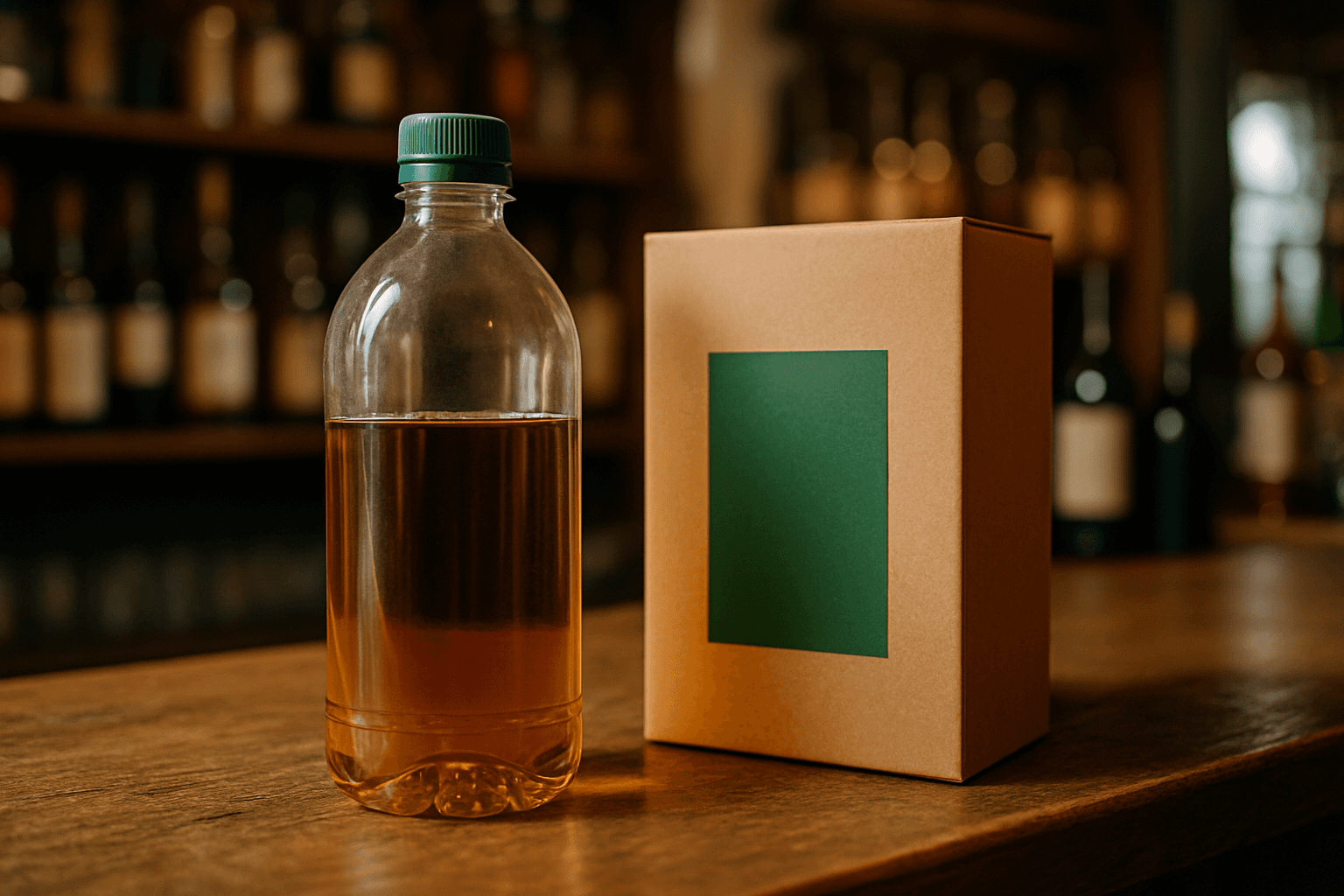
rPET stands for recycled polyethylene terephthalate. In plain English? It's plastic packaging made from recycled plastic instead of brand-new (virgin) materials. It looks the same. It performs the same. Your customers won't notice a difference in weight, clarity, or durability. But it carries significantly stronger sustainability credentials — and in a market where packaging choices increasingly influence buying behavior, that story is becoming a competitive differentiator.
Think of rPET as the same bottle your customers already trust, just with a better backstory.
The biggest names in beverages have already made commitments. Coca-Cola and Pepsi have rolled out rPET across major product lines, and Asahi has adopted it for select brands [VERIFY: confirm specific product lines]. These aren't niche experiments — they're production-scale commitments from companies that don't move without serious market data behind them.
Now the spirits industry is catching up. Wine and beer producers have led the eco-friendly packaging movement for years with recycled glass, cardboard containers, and refillable growlers. According to NIQ, these formats — alongside recycled plastic — represent the most sustainable alcohol packaging types currently in use. Spirits brands are joining them, and rPET is part of that wave.
Here's the strategic angle most retailers miss: state mandates and federal proposals are pushing beverage brands to increase recycled plastic content, creating real competition for rPET supplies. Brands that secure sourcing early gain a supply chain advantage. Retailers who stock those brands gain one too.
Early adoption isn't just environmentalism. It's positioning.
Eco-labeling in the sustainable packaging alcohol industry isn't about slapping a green leaf on a bottle and calling it a day. Today's eco-labels include third-party certifications, recycled-content callouts (like rPET percentage), carbon footprint disclosures, and clear recyclability instructions. Each of these elements influences the split-second purchase decisions happening at your shelves every day.
Here's what your customers actually register when they see credible eco-labeling: quality. Research consistently shows shoppers associate sustainable packaging with a better product inside. That perception is your pricing leverage.
For liquor retail operators, this means products with clear, well-designed sustainability messaging can command premium shelf positioning — and justify the price tag to match. Stocking formats with recognized eco-credentials — recycled glass, rPET bottles, cardboard packaging — becomes a merchandising strategy, not just an environmental one.
The tension is real: sustainability messaging needs to coexist with the visual appeal that drives impulse purchases. That's why paperization — replacing plastic label elements with paper-based alternatives — and optimized label design are among the top packaging trends shaping the industry through 2026.
The best eco-labels do double duty. They sell the product and the values behind it. For your shelves, that means recycled-material packaging customers actually want to pick up — because it looks premium and feels responsible.
Sustainable packaging isn't waiting for you to finish reading this article before it starts affecting your business. The money flowing into new materials and formats is already reshaping what shows up on your loading dock.
The sustainable packaging alcohol industry shift isn't just a supply chain story — it's a merchandising opportunity sitting right in front of you. The brands filling your shelves are investing heavily in eco-friendly materials. The question is: are you making that investment visible to your customers?
Here's a low-cost move that punches above its weight: create a dedicated sustainable or eco-friendly section in your store. Group products with credible eco-credentials — rPET bottles, recycled glass, cardboard packaging, refillable growlers — into a curated endcap or shelf section. This signals to environmentally conscious shoppers that you stock what they're actively searching for, and it gives you a real differentiation angle against big-box competitors who rarely bother with this kind of curation.
Don't stop at grouping products together. Add shelf talkers and signage that explain what rPET actually means and why it matters. Most shoppers have no idea. The retailer who translates recycled packaging into plain language earns trust — and closes the sale.
Think beyond bottles. rPET applications now include clamshells, gift boxes, and display trays that are sturdy, crystal-clear, and visually communicate a brand's sustainability commitment without saying a word.
Seasonal gift packaging made from recycled materials is an especially smart play. Holiday and occasion-driven purchases — the bread and butter of liquor retail — are prime moments where sustainable packaging can justify premium pricing and attract new customer segments who might not otherwise walk through your door.
We get it — you've seen trends come and go. But this one has structural forces behind it that aren't going away.
A market projected to surpass $100 billion by 2032 isn't built on hype alone. Regulatory pressure, consumer preference data, and major brand adoption all confirm this is a structural shift, not a fad.
The real risk? It's not adopting too early. It's losing relevance with shoppers who factor eco-labeling into buying decisions.
Stock smart. Avoid products with vague sustainability claims. Look for specific certifications, recycled-content percentages, and transparent sourcing language. Your credibility depends on it — and so does your customers' trust.
The good news? You don't need to overhaul your entire operation overnight. A few focused moves can get you started this week.
The sustainable packaging alcohol industry shift isn't coming — it's here. The brands filling your shelves are already making moves. The question is whether you're positioning your store to benefit.
Sustainable packaging isn't just an environmental story. For independent liquor retailers, it's a shelf appeal story, a margin story, and increasingly, a competitive survival story.
10+ years helping liquor retailers and beverage brands grow through data-driven digital marketing. Learn more
PET and rPET bottles offer tangible operational wins that go beyond the green marketing angle. They're lighter than glass (which cuts your shipping costs), more durable (goodbye, breakage losses eating into your margins), and give brands serious design flexibility. They check both the functional and marketing boxes.
Not every sustainable format handles the same way. Glass, recycled plastic, cardboard containers, and refillable growlers each have different implications for your storage, shelving, and handling workflows. A cardboard format stacks differently than a glass bottle. Growlers need return logistics. Understanding these differences helps you plan inventory smarter and avoid scrambling when a top-selling product suddenly shows up in a completely new container.
Competition for rPET is intensifying fast. State mandates are pushing higher recycled-content requirements, and brands across every beverage category are fighting over the same limited supply of recycled material.
What does this mean for your shelves? Expect some brands to shift packaging timelines. You may see short-term availability gaps as producers reformulate their sourcing strategies. The retailers who track packaging transitions from their key brands and stay ahead of these shifts won't get caught flat-footed — they'll be the ones with full shelves while competitors are still figuring out what happened.
Intentionally Creative specializes in digital marketing strategies that drive real results. Let us show you what's possible.
Schedule a CallThe transition to sustainable packaging rewards retailers who move early and measure everything. Start small, stay data-driven, and let your customers' buying behavior guide the next step.
The sustainable packaging shift in alcohol is a rare case where doing the right thing and doing the profitable thing point in the same direction. Recycled materials cut breakage and shipping costs. Eco-labeling drives premium perception and justifies stronger price points. And customers — your customers — are increasingly making purchase decisions with packaging in mind.
You don't need to transform your store overnight. You need to start paying attention, ask your distributors better questions, and run a small test that gives you real data from your real customers. That's it. The retailers who treat sustainability as a merchandising strategy rather than a moral obligation are the ones who'll come out ahead.
The shelves are changing. Make sure yours are changing with them.
Ready to rethink your shelf strategy? Start with step one on the checklist above — audit what you already carry — and build from there. The data will do the rest.