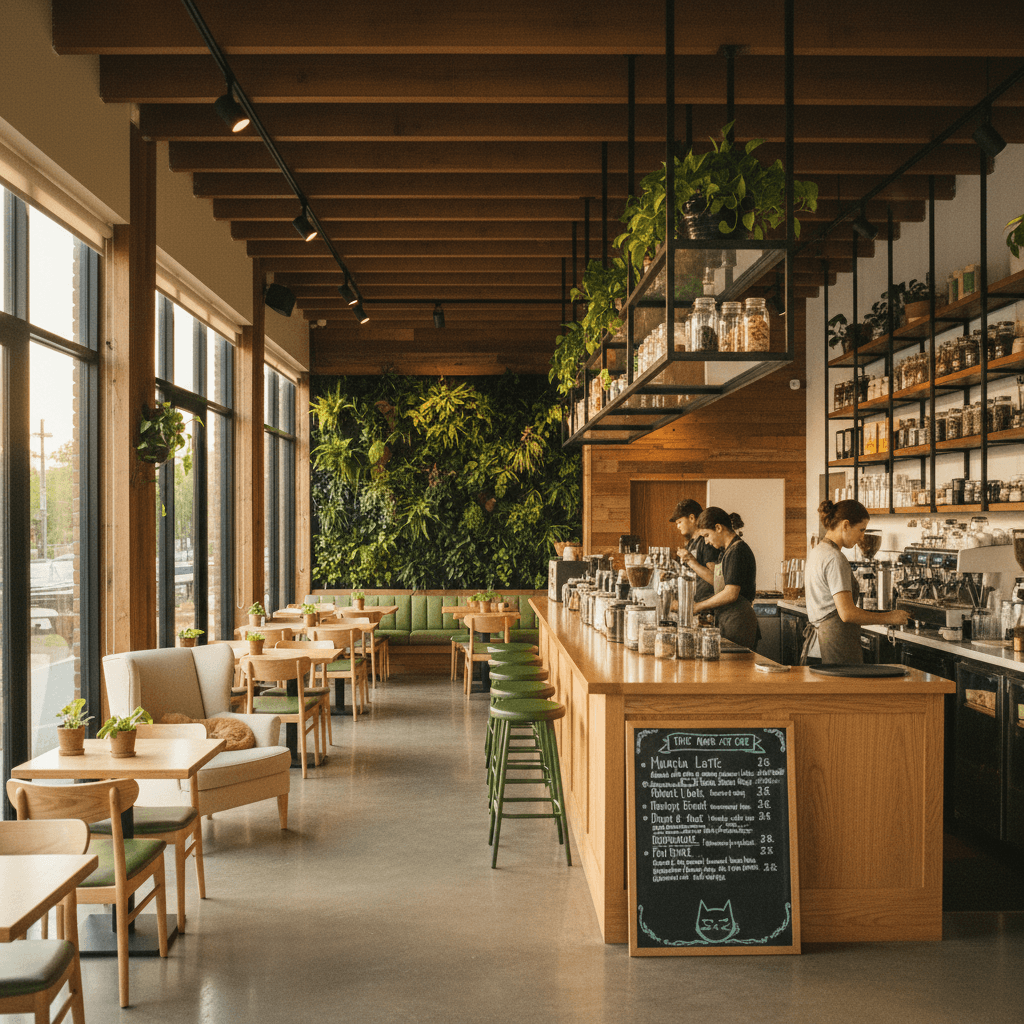
The Green Cat Cafe at The Weston Hotel: How Farm-to-Table Trends Influence Beverage Retail
By Alden Morris29 min read
Listen to this article27:59
Schedule a free strategy call and Intentionally Creative will build a custom plan for you.
Schedule Your Free Strategy CallFree audit. No commitment.
Get a Free Audit. No commitment.
Discover how The Green Cat Café at The Weston Hotel connects farm-to-table dining to craft beverage retail. Expert analysis of farm-to-cup coffee, cocktails, and why the beverage program — not just the pastries — is the true competitive moat.
A 50-acre working farm in southern Vermont is rewriting the rules of hotel dining — and the most interesting move isn't happening in the restaurant.
The Weston Hotel in Weston, Vermont, has spent years building its culinary identity around agricultural authenticity. Its property includes a quarter-acre cultivated area, a 20x100-foot greenhouse, and a 100x150-foot outdoor farming space where the team grows over 50 crop varieties using pesticide-free, ecologically restorative techniques. Two acclaimed dining venues — The Farm and The Left Bank — already anchor the hotel's reputation. On March 27, 2026, a third concept joins them, and it's the strangest one yet.
The Green Cat Café is a bakery, café, gourmet grocer, and culinary classroom operating under one roof, open Friday through Sunday, 8:30 AM to 3:30 PM. Led by Pastry Chef Mary Pisanelli, a Johnson & Wales graduate, the operation produces 11-plus varieties of bread daily and runs immersive workshops in a dedicated Demonstration Kitchen. According to FB101 ↗, the café completes what the hotel calls its "gastronomic trio" — a three-venue ecosystem where a single farm feeds a fine-dining restaurant, a European-style bistro, and now a retail-hybrid concept that lets guests take the experience home.
This isn't another farm-to-table restaurant hanging reclaimed wood on the walls. It's a hospitality property betting that the future of guest loyalty lives in a bag of sourdough and a well-sourced cup of coffee.
The Green Cat Café at The Weston Hotel is a bakery-café, gourmet grocer, and culinary classroom opening March 27, 2026, in Weston, Vermont. Part of The Weston Hotel's "gastronomic trio" alongside The Farm and The Left Bank restaurants, it draws from the property's 50-acre working farm, where over 50 crop varieties grow using pesticide-free, ecologically restorative methods. Pastry Chef Mary Pisanelli leads the kitchen, producing more than 11 varieties of bread daily alongside seasonal pastries, prepared foods, and curated retail goods. The café also features a Demonstration Kitchen for hands-on culinary workshops. Open Friday through Sunday from 8:30 AM to 3:30 PM, The Green Cat Café blurs the line between hospitality and retail — functioning as both a weekend destination for visitors and a provisioning stop for locals who want farm-sourced ingredients without a dinner reservation.
That hybrid model matters because consumer expectations have shifted hard toward provenance. People want to know the name of the farm, the method of cultivation, the person who baked the loaf. As The Weston's own dining philosophy ↗ makes clear, this property treats its agricultural operation as the brand's core identity, not a marketing footnote.
Here's the contrarian take this article will explore: The Green Cat's beverage program — its sourcing, its preparation method, its connection to the farm — may prove more consequential than its pastry case for the future of farm-to-table retail. Bread gets attention. Drinks drive margin, repeat visits, and daily habit.
The sections ahead will examine what works in this model, what's overhyped in the broader farm-to-table movement, and what operators running cafés, hotels, or small food businesses can steal from The Weston's playbook. Pour yourself something good — we're going deep.
Can a quarter-acre of cultivated land reshape how you think about your morning coffee or Friday afternoon glass of wine?
Farm-to-table beverage retail is the practice of sourcing drink ingredients — herbs, fruits, botanicals, honey, even water — from local or on-site farms and integrating them into coffee, cocktail, and curated drink programs sold in hospitality or retail settings. It extends the provenance promise of farm-to-table dining into what consumers drink, not just what they eat.
The distinction between "farm-to-cup" and "farm-to-table" matters here. Farm-to-cup typically describes direct-trade coffee sourcing — a roaster's relationship with a specific grower in Colombia or Ethiopia. Farm-to-table beverage retail goes wider. It pulls in craft beer selections from regional breweries, wine from producers you can drive to visit, and cocktail ingredients grown in a greenhouse fifty feet from the bar. The sourcing philosophy touches every liquid on the menu, not just the espresso.
The farm-to-table movement started behind white tablecloths. Blue Hill at Stone Barns charged prix fixe prices for hyper-local tasting menus. Chez Panisse built a religion around California terroir. That model worked — but it stayed exclusive. The real disruption is happening at the café counter.
Three forces are driving this shift:
The Green Cat Café at The Weston Hotel in Weston, Vermont — opening March 27, 2026 — is a sharp example of this migration. According to The Weston's dining page ↗, the café operates Friday through Sunday, 8:30 AM to 3:30 PM, selling bread (11+ varieties baked daily), coffee, beer, wine, and farm produce directly to consumers. It's not a restaurant. It's a retail-forward café backed by a 50-acre farm growing over 50 crop varieties in a 20x100-foot greenhouse and 100x150-foot outdoor plot, all cultivated pesticide-free using ecologically restorative techniques. That's a grocery store with a thesis statement.
The farm-to-table movement influences beverage retail by collapsing the distance between ingredient source and point of sale, forcing café and retail operators to build supply chains that prioritize provenance over convenience. Consumers now evaluate a cup of coffee or a bottle of wine the same way they judge a farm-fresh tomato — by origin, growing method, and the story behind it. This shift rewards operators like The Green Cat Café, where a 50-acre working farm supplies the café counter directly, and penalizes generic sourcing. The result is a new retail format — part café, part grocer, part tasting room — where every beverage carries verifiable local credentials. Specialty and craft beverage spending confirms the trend: buyers pay more, return more often, and evangelize brands that deliver transparent sourcing. The old model separated the farm from the shelf. The new one puts them in the same building.
The answer is direct: farm-to-table didn't just change restaurant menus. It rebuilt the café business model from the soil up — and The Green Cat, with its bakery-grocer-classroom hybrid format, is the clearest proof that beverage retail's future tastes like the farm it came from.
Picture Mary Pisanelli at 4 AM, hands deep in prefermented dough, coaxing a bialy interpretation she calls The Fat Cat into its final shape. This is not a rustic hobby baker romanticizing sourdough on Instagram. Pisanelli trained at Johnson & Wales, one of the most rigorous culinary programs in the country, and she runs The Green Cat's bakery program with the precision of a classically trained pastry chef — because that's exactly what she is.
Pisanelli produces over 11 varieties of bread daily, each with a specific purpose on the menu. The Fat Cat — her signature bialy interpretation — delivers a chewy, malty crumb with a caramelized onion well that hits you with savory depth before you even think about what to spread on it. The best artisan bakeries in Vermont would be proud to claim it. Daily rotisserie chickens sell in limited quantities, and when they're gone, they're gone. That scarcity isn't a supply chain failure; it's a deliberate quality signal.
Here's the contrarian truth most farm-to-table advocates won't tell you: proximity to a farm doesn't make your bread better. Dozens of farm-adjacent bakeries have cratered because they let whatever happened to grow that week dictate the menu. Pisanelli flips that equation. Her culinary vision dictates what The Weston's 50-acre farm grows. Classical training is the differentiator, not zip code.
The Green Cat Café at The Weston Hotel operates as a bakery, café, gourmet grocer, and culinary classroom under one roof, opening March 27, 2026 in Weston, Vermont. Led by Johnson & Wales–trained Pastry Chef Mary Pisanelli, it offers 11-plus varieties of bread daily, limited-run rotisserie chickens, and direct farm-to-consumer sales of pesticide-free seasonal produce from The Weston's 50-acre farm. Over 50 specialty crop varieties — including salsify and Black Strawberry Tomatoes — grow across a quarter-acre cultivated area featuring a 20x100-foot greenhouse and 100x150-foot outdoor farming space. The café also houses a Demonstration Kitchen hosting immersive culinary workshops, including sommelier-led beverage sessions. Open Friday through Sunday, 8:30 AM to 3:30 PM, it collapses the supply chain to zero miles between harvest and plate.
Most people assume "farm-to-table" is a sourcing decision. It's not. It's a structural shift in how beverages get made, sold, and experienced — and it's rewriting the rules for every café, tasting room, and retail bottle shop in the country.
Farm-to-table trends are reshaping beverage retail in five measurable ways: origin-story branding now drives purchase decisions more than flavor alone; seasonal rotating menus replace static offerings, creating urgency and repeat traffic; education through tastings and workshops converts casual buyers into loyal advocates; hybrid café-grocer-classroom formats collapse traditional retail categories to maximize revenue per square foot; and hyper-local supply chains — like The Weston's 50-acre on-site farm in Vermont — create competitive moats that no marketing budget can replicate. These shifts move beverage retail from transactional commodity sales toward experience-driven, provenance-verified purchasing, where the story behind the drink matters as much as what's in the glass.
Origin sells. Consumers now pick a cold-pressed juice or a single-origin espresso based on where it came from before they ever taste it. But most "locally sourced" claims are vague at best, misleading at worst. The Green Cat Café, opening March 27, 2026 at The Weston Hotel in Weston, Vermont, sidesteps this problem entirely. According to The Weston's own dining program ↗, the farm isn't a supplier — it's the backyard. A quarter-acre cultivated area, a 20x100-foot greenhouse, and a 100x150-foot outdoor growing space produce over 50 crop varieties using pesticide-free, ecologically restorative methods. Provenance here isn't a label. It's latitude and longitude.
Fixed beverage menus signal stagnation. Rotating menus driven by harvest cycles create scarcity, which creates demand. The valid criticism: seasonal menus sacrifice the consistency customers expect. Pastry Chef Mary Pisanelli — a Johnson & Wales graduate leading The Green Cat's kitchen — mitigates this through deliberate crop selection and technique-driven consistency. The result? Eleven-plus varieties of bread daily, and beverages that shift with the season without losing their identity. Repeat visits become the business model.
Try The Fat Cat — a signature pastry from Mary Pisanelli's repertoire at The Green Cat Café — and you'll immediately taste the difference between farm-to-table as marketing and farm-to-table as craft. This is not a dessert born from "we had extra strawberries." This is classical technique meeting intentional agriculture.
Here's the uncomfortable truth most farm-to-table evangelists won't tell you: the model fails more often than it succeeds. A café grows beautiful heirloom tomatoes, so suddenly every drink, every pastry, every salad features tomatoes — whether the pairing works or not. The farm drives the menu. The chef becomes a short-order cook for the harvest schedule. And the guest? They get a lavender-beet scone nobody asked for because the lavender bolted early.
The biggest problems with farm-to-table dining stem from a fundamental inversion of priorities. Chefs who build menus around whatever the soil produces — rather than cultivating ingredients to serve a culinary vision — deliver inconsistent quality, forced flavor pairings, and products that feel experimental rather than refined. The ideology sounds noble, but execution demands discipline. Cafés avoid these pitfalls by reversing the equation: decide what belongs on the menu first, then grow or source those specific ingredients. This requires a trained palate, classical technique, and the restraint to say "no" to available produce that doesn't serve the guest experience. Proximity to a farm means nothing without a chef who treats ingredients as tools, not constraints. The distinction between farm-to-table as philosophy and farm-to-table as practiced discipline separates forgettable cafés from destinations worth driving to.
The Weston's approach flips the script. According to PR Newswire ↗, their 50-acre property includes a 20x100-foot greenhouse and a 100x150-foot outdoor growing space — modest by agricultural standards, but that's the point. They're not running a produce operation. They're running a curated ingredient program, growing over 50 diverse crop varieties including salsify and Black Strawberry Tomatoes, each selected because it serves a specific menu application.
10+ years helping liquor retailers and beverage brands grow through data-driven digital marketing. Learn more
That zero-mile supply chain deserves emphasis. According to The Weston's official site ↗, the farm uses ecologically restorative growing techniques — no pesticides, deliberate crop rotation, soil health as a first principle. The 50-plus specialty crops aren't surplus dumped at a farm stand. Black Strawberry Tomatoes and salsify appear on this counter because Pisanelli requested them for specific dishes. The retail grocer component means you walk in for a cortado and leave with heirloom produce you can't find at any conventional market in southern Vermont. This is retail integration done right: the café doubles as a farm stand, and neither function feels like an afterthought.
The smartest move The Green Cat makes is monetizing expertise through its Demonstration Kitchen. Immersive culinary workshops — including sommelier-led beverage sessions — transform casual visitors into invested participants in The Weston's broader ecosystem. As reported by FB101 ↗, the café functions as one leg of a "gastronomic trio" alongside The Farm and The Left Bank. The workshops aren't a side hustle. They're a customer acquisition engine, converting a weekend brunch crowd into guests who book dinners, buy produce subscriptions, and return seasonally. A sommelier teaching you to pair Vermont-grown herbs with natural wines isn't just education — it's brand building with a pour.
Beverage margins in café settings run 65–80%. Baked goods? 30–40%. That gap alone explains why The Green Cat Café's drink program — not its eleven-plus varieties of daily bread — represents its hardest-to-replicate competitive asset.
Here's the contrarian read: farm-to-table food has become table stakes. Every boutique hotel within a hundred miles of a working farm now trumpets its "locally sourced menu." But farm-to-cup coffee and cocktails built from on-site botanicals? That remains genuinely rare. The Weston Hotel understands this distinction. Their investment in a La Marzocco espresso machine — the same platform you'll find at top-tier specialty roasters in Portland and Melbourne — signals a beverage program engineered for serious extraction, not Instagram aesthetics. A La Marzocco isn't a décor choice. It's a declaration that the pull matters as much as the pastry.
According to The Weston's own culinary team ↗, the 50-acre farm operates using pesticide-free, ecologically restorative techniques across a quarter-acre of cultivated growing space, a 20x100-foot greenhouse, and a 100x150-foot outdoor plot producing over 50 diverse crop varieties. Most farm-to-table operations funnel that harvest straight to the kitchen. The sharper play is routing mint, lavender, and seasonal fruits to the bar and the espresso station.
A sourdough loaf, no matter how excellent, tastes like sourdough. A cocktail muddled with mint cut thirty minutes ago from a greenhouse fifty yards away? That tastes like a place. The sensory gap between hyper-local beverages and their commodity equivalents is wider than the gap between local bread and supermarket bread — and guests register that difference immediately on the palate.
The Green Cat Café's beverage program functions as its single biggest differentiator because it converts The Weston's 50-acre farm into a sensory experience no competitor can replicate at scale. While farm-to-table food concepts have become standard across boutique hospitality, farm-to-cup drinks built from on-site botanicals — greenhouse-grown lavender in a latte, just-harvested mint in a craft cocktail, seasonal fruits pressed into shrubs and sodas — remain genuinely novel. The café's La Marzocco espresso system paired with over 50 crop varieties grown using pesticide-free methods creates beverages that taste unmistakably like southern Vermont, not like a recipe any barista could reproduce elsewhere. This combination of agricultural proximity, equipment investment, and botanical variety produces drinks with flavor profiles that are literally unreplicable outside The Weston's property, giving the café pricing power and repeat-visit magnetism that baked goods alone cannot deliver.
The curated beer and wine selection extends this same philosophy. As reported by FB101 ↗, The Green Cat operates as bakery, café, gourmet grocer, and culinary classroom combined — and the grocer angle matters here. Bottles on the shelf carry farm-pairing narratives: this Grüner pairs with the spring pea shoots, that barrel-aged stout echoes the roasted root vegetables from the outdoor plot. Standard cafés sell drinks. The Green Cat sells context.
A $7 lavender latte made with house-grown lavender tells a story worth a $2 premium over the same drink at a conventional café. That's not a guess — it's the math of experiential pricing. The customer pays for provenance, and the operator pockets a margin north of 70% on a beverage that cost pennies more to produce than its commodity twin.
Compare that to bread. Even with eleven daily varieties and a Johnson & Wales-trained pastry chef running the program, a $6 loaf at 35% margin generates $2.10 in gross profit. A $7 botanical latte at 75% margin generates $5.25. Multiply across a Friday-through-Sunday service window running 8:30 AM to 3:30 PM, and the beverage program's economic superiority becomes stark.
The retail upsell compounds this advantage. A guest who falls for a lavender-honey cortado is primed to grab a bottle of local wine with a handwritten pairing card on the way out. That layered transaction — drink, then retail — creates revenue density per square foot that a bakery-only model simply cannot match. When The Green Cat opens on March 27, 2026, the bread will draw visitors in. The beverages will drive the P&L.
Intentionally Creative specializes in digital marketing strategies that drive real results. Let us show you what's possible.
Schedule a CallA customer who understands why your cold brew tastes different pays more for it. The Weston's Demonstration Kitchen runs immersive culinary workshops that function as both education and sales channel. As FB101 reports ↗, The Green Cat operates as part of a "gastronomic trio" alongside The Farm and The Left Bank — each reinforcing the other's credibility.
The Green Cat is a bakery, café, gourmet grocer, and culinary classroom in one space. You buy bread, grab produce from the farm, attend a workshop, and drink a latte — all in a single visit, Friday through Sunday, 8:30 AM to 3:30 PM. That's four revenue streams per square foot where a traditional café has one.
Here's the moat no competitor can copy quickly: 50 acres of working farmland takes years of soil investment, labor infrastructure, and agricultural knowledge to build. Anyone can print "locally sourced" on a menu. Only an operation like The Weston can say "we grew it, 200 feet from your table." That distinction — between a claim and a capability — is the real competitive barrier in beverage retail.
What to do instead of chasing the farm-to-table label:
Pisanelli, a Johnson & Wales graduate with deep classical training, produces 11+ varieties of bread daily. That number tells you everything. She isn't baking "farm bread" — she's executing a bakery program where technique dictates the lineup and the quarter-acre cultivated plot supplies what her recipes demand. Salsify doesn't end up in a croissant because it was harvested Tuesday. It ends up on the menu because Pisanelli designed a preparation worthy of it.
Does the farm's pesticide-free, ecologically restorative growing method matter? Yes — but less than you think. A mediocre baker with perfect organic flour still produces mediocre bread. A skilled pastry chef with conventional ingredients will outperform them every time. The Weston bets on both: elite technique plus exceptional raw materials. That's the real advantage, and when The Green Cat opens March 27, 2026 for its Friday-through-Sunday, 8:30 AM–3:30 PM service, expect that combination to produce some of the best baked goods in southern Vermont. Skip the places that lead with their farm story and can't back it up at the counter. Go where the pastry chef came first and the garden followed.
Before: Your menu says "locally sourced." Your walk-in tells a different story — cases stamped with distributor codes, one jar of local honey on a shelf, and a staff that can't name a single farm. Your customers photograph everything. They will find out.
After: The Weston Hotel grows over 50 crop varieties on-site across a 20x100-foot greenhouse and 100x150-foot outdoor farming space, and every item on The Green Cat Café's menu traces back to that quarter-acre of cultivated ground or a named regional producer. That's not marketing. That's a verifiable supply chain — and it's the only kind that survives a tagged Instagram post.
Here's the hard truth: if your "locally sourced" claim amounts to a Sysco truck and one local honey on the shelf, you're lying to your customers — and they know it. Provenance theater gets dismantled on social media daily.
Your fix is three steps, starting today:
According to The Weston's own sourcing framework ↗, their 50-acre farm uses pesticide-free, ecologically restorative techniques — and they back that claim with open workshops in a Demonstration Kitchen. That's the standard now.
Beverage margins fund everything else. Full stop. A serious coffee and cocktail program pays for itself faster than any food offering you'll ever launch. If you have limited capital, put it into espresso equipment, local botanical sourcing, and staff training — not another bread oven.
The Green Cat's investment in La Marzocco equipment and sommelier-led workshops isn't a luxury perk. As reported by FB101 ↗, that café functions as bakery, gourmet grocer, and culinary classroom — but the beverage program is the profit engine powering all of it. Drinks move fast, cost less to produce, and scale without additional kitchen labor.
Café and beverage operators implement farm-to-table strategies by first defining their identity — what they want to be known for — then sourcing or growing specifically to support that identity. You do not let a supplier's availability dictate your brand. Start by selecting five to ten signature ingredients you can source transparently, whether that means growing herbs in a window box for your cocktail program or partnering with a single named dairy like Green Dirt Farm ↗. Invest in staff training so every team member can articulate the origin of key menu items. Prioritize beverage programs, where margins are highest and storytelling lands hardest. Audit your supply chain quarterly, remove any "local" claims you cannot document, and publish your sourcing partners by name. The Weston chose over 50 crops intentionally across their quarter-acre growing operation. You can start with five herbs — but start with intention, not accident.
The Green Cat Café opens March 27, 2026 — Friday through Sunday, 8:30 AM to 3:30 PM. Go taste what disciplined farm-to-cup execution looks like when every claim on the menu has dirt under its fingernails to prove it.