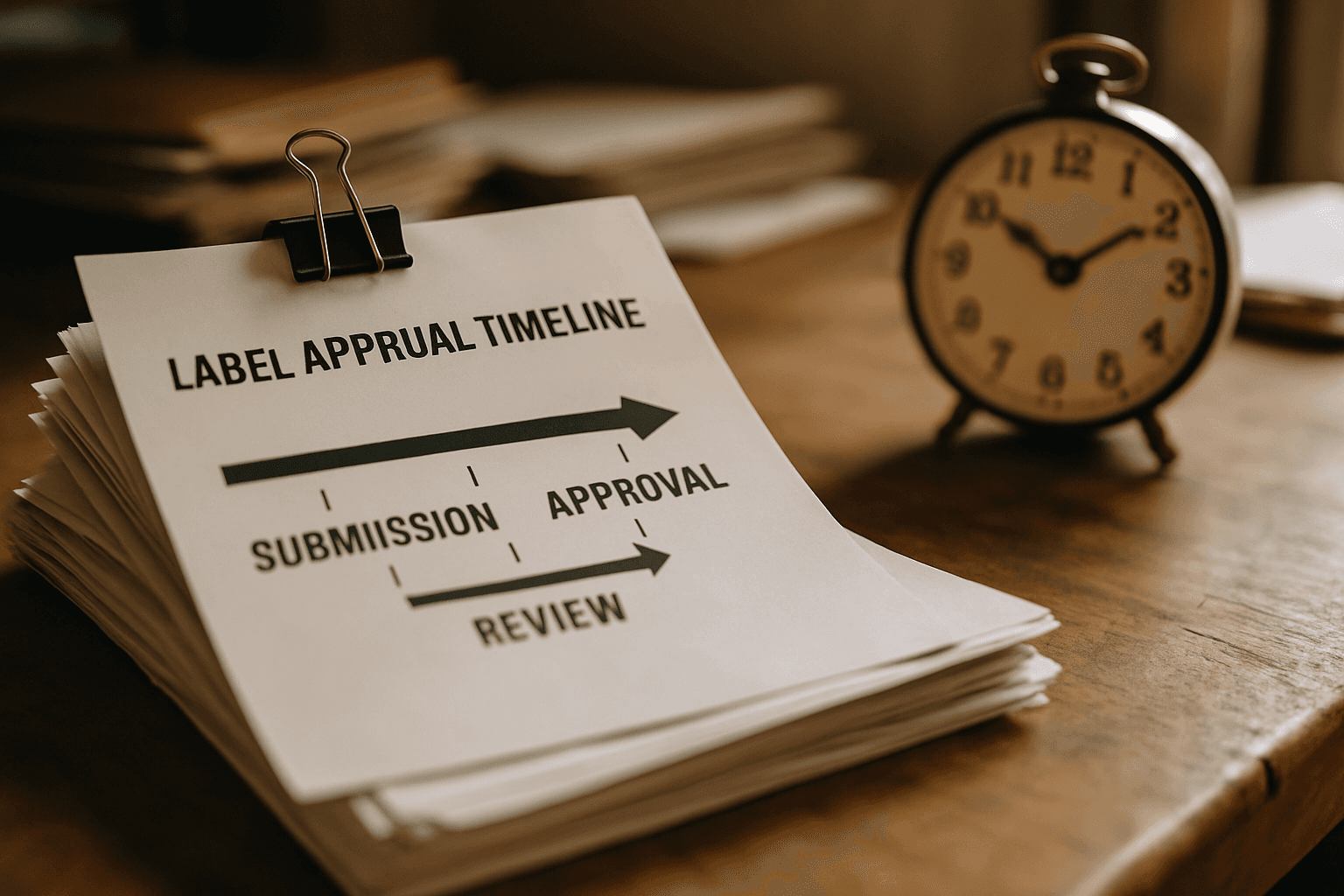
TTB Label Approval Timelines Are Getting Longer: How to Plan Your Seasonal and Limited-Release Inventory Around Regulatory Delays
By Intentionally Creative, Editorial Team11 min read
Listen to this article14:49
Schedule a free strategy call and Intentionally Creative will build a custom plan for you.
Schedule Your Free Strategy CallFree audit. No commitment.
Get a Free Audit. No commitment.
TTB label approval timeline delays can derail seasonal launches. Learn how to plan your limited-release inventory around COLA processing times and regulatory uncertainty.
You've got the shelf space mapped out, the marketing plan locked in, and a killer limited-release bourbon lined up for the holiday rush. There's just one problem: the bottle doesn't exist yet, at least not legally. Somewhere between your supplier's production line and your store's front door, a federal label approval is sitting in a queue. And that queue is less predictable than it's been in years.
The TTB label approval timeline has become one of the most underestimated variables in liquor retail planning. On paper, median processing times look fast. In practice, government shutdowns, staffing cuts, pending rule changes, and plain old application errors are creating delays that can blow up a seasonal launch. If you're ordering around holidays, building hype for a limited drop, or committing real dollars to products that haven't cleared compliance yet, this is the risk you need to understand, and plan for.
Here's what's actually happening with TTB approvals right now, why it matters for your business, and exactly how to protect yourself.
If you glance at TTB's published processing data, you might think label approvals are a non-issue. As of April 2026, the median processing time for distilled spirits labels sits at just 2 days. [VERIFY: Confirm this figure against TTB's published data at time of publication.] That sounds great, until you understand what "median" actually means and why it's a terrible number to plan your business around.
A median of 2 days means exactly one thing: half of applications are processed in 2 days or less. The other half take longer, sometimes much longer.
Navigate alcohol advertising rules across TV and online platforms. Learn TTB, FTC requirements and platform-specific ...
Processing times range from 2 to 15 days depending on the beverage type and application complexity. Malt beverage and wine labels often sit in the queue longer than spirits. And if there's a correction needed, a formula issue, a missing statement, a graphic that doesn't meet requirements, the clock resets.
Here's the part that should concern you: TTB does not publicly report worst-case timelines. There's no data on the 90th percentile, no transparency around how long the slowest 10% of applications actually take. You're planning around a number that only tells you half the story.
If you're planning seasonal inventory around a holiday window or a limited drop, the tail end of the distribution is the only number that matters. A 2-day median is meaningless if your supplier's label gets stuck for two weeks.
Your timeline is only as reliable as the slowest step in the supply chain. And right now, label approval is frequently that step. When you're counting on a limited-release product hitting shelves by Black Friday or Valentine's Day, "probably fast" isn't a plan, it's a gamble.
Avoid TTB violations and Google Ads suspension with this guide to alcohol advertising rules for liquor stores. Expert...
Smart retailers aren't looking at the median. They're building buffers around the worst case.
Three compounding forces explain why worst-case timelines are getting harder to predict.
The fall 2025 government shutdown stalled TTB operations entirely. [VERIFY: Confirm that a government shutdown occurred in fall 2025 and that TTB operations were stalled.] Not slowed, stalled. Product launches were frozen. Sales timelines collapsed. Many small producers lost their seasonal windows completely.
On top of that, federal workforce reductions in 2025 shrank TTB's staff at exactly the wrong moment. [VERIFY: Confirm that DOGE-related or other federal downsizing specifically reduced TTB staffing.] You now have a triple threat: shutdowns that halt everything overnight, a smaller workforce trying to clear the backlog once operations resume, and a regulatory overhaul adding complexity to every application.
Discover the 10 most costly alcohol marketing compliance mistakes liquor stores make and actionable strategies to mai...
In early 2024, TTB kicked off a long-term revision of its labeling rules. [VERIFY: Confirm the timing and scope of TTB's labeling modernization rulemaking.] On the table: mandatory disclosure of alcohol content, major allergens, nutritional information, and ingredients. These changes aren't finalized yet, but any transition period will almost certainly introduce new compliance requirements, and new reasons for applications to get flagged, kicked back, or delayed.
Even the anticipation of rule changes creates uncertainty. Producers submitting COLAs (Certificates of Label Approval, the federal sign-off every label needs) right now are making educated guesses about what will and won't pass review next quarter.
This is the force that's entirely within the industry's control, and still causing slowdowns. TTB issued specific guidance back in May 2021 urging a "get it right the first time" approach, but mistakes continue clogging the pipeline.
Every rejected application goes back to the end of the line. That's your seasonal launch window evaporating because of a formatting error or a missing data field.
These three forces don't just add up. They compound each other.
Here's where approval delays stop being your supplier's problem and start being yours.
If you've committed shelf space, end caps, or marketing dollars to a seasonal or limited-release product, you're exposed to regulatory risk whether you realize it or not.
Pumpkin-spiced whiskey that arrives November 15th instead of October 1st is dead inventory. Holiday gift sets that miss the first week of December lose their best sales days. Summer RTD cocktails need to hit shelves by Memorial Day, not after the Fourth of July. These windows don't flex. A two-week delay can mean missing the shelf entirely.
Limited-release products generate buzz through scarcity and timing. That's the entire model. If a label approval delay pushes your supplier's launch past the hype window, past the social media buildup, past the influencer posts, past the email blasts, you lose sales you simply cannot recover. The bottle eventually shows up, but the moment is gone.
Here's the uncomfortable truth: retailers who assume their suppliers have compliance handled are absorbing risk they may not even see. Your rep might be confident. The brand might be optimistic. But confidence isn't a COLA approval.
Ask your reps directly: has the COLA been approved yet? Not "is it in process." Not "we expect it any day." Approved. Until you get that answer, don't finalize your buy, and definitely don't spend marketing dollars promoting a product that hasn't cleared compliance.
Here's how to protect your business from the reality behind those posted medians.
This isn't about grilling your reps. It's about protecting your shelf space and your cash flow. Suppliers who have their compliance dialed in will actually appreciate these questions, it tells them you're a serious partner.
Get clear answers on these five questions:
Watch for these warning signs:
Here's something worth watching: the federal workforce reductions that caused so much chaos in 2025 actually forced TTB's hand on technology adoption. A June 2025 report indicated that staffing losses pushed TTB to implement automated processing and digital workflows it could have rolled out years ago. [VERIFY: Identify and confirm the source of this June 2025 report.]
The results are starting to show, that 2-day median for spirits labels is genuinely fast by historical standards. But automation doesn't solve everything. It doesn't prevent shutdowns. It doesn't eliminate application errors. And it won't smooth the transition if sweeping new labeling requirements take effect.
The tech upgrades are cautiously good news. But until the dust settles, keep those extra weeks in your TTB label approval timeline estimates.
TTB's posted median processing time feels reassuring, and that's exactly the problem. The TTB label approval timeline you should plan around isn't the median. It's the worst realistic scenario.
Right now, that scenario includes potential government shutdowns, reduced staffing, a major labeling rules overhaul, and the ever-present risk of application errors pushing processing times from days to weeks.
Build a minimum 4-to-6-week regulatory buffer into your seasonal buying calendar. Every time. Even when things are running smoothly.
Why that long? Because delays compound fast. Processing times range from 2 to 15 days before a label gets kicked back for revision. Add resubmission time, and you're easily looking at three to four weeks. Factor in the possibility of another government shutdown or a mid-cycle rule change, and six weeks starts to feel prudent rather than paranoid.
For seasonal planning, this buffer is non-negotiable. Negotiate flexible delivery windows with your distributors whenever possible. And before you commit to large pre-orders on new or seasonal SKUs, ask your supplier one simple question: What's the COLA approval status? If they can't give you a clear answer, hold back.
Pro tip: Track processing times yourself. The TTB COLA Online system is publicly accessible, use it to verify current speeds rather than relying solely on supplier assurances.
Limited-release compliance is unpredictable, so plan for three scenarios:
Having all three tiers mapped out before you place the order means you're making calm, strategic decisions instead of scrambling.
Intentionally Creative specializes in digital marketing strategies that drive real results. Let us show you what's possible.
Schedule a CallThink of this as trust-but-verify. The suppliers worth partnering with will have answers ready before you even ask.
Seasonal inventory planning in 2026 demands a regulatory-aware approach:
The retailers who plan around regulatory reality, not the posted median, are the ones with the right bottles on the shelf when customers show up to buy.
Start today: Pull up your seasonal buying calendar for the next six months. Identify every SKU that depends on a new or revised label approval. Add your buffer. Ask your reps the five questions above. And bookmark TTB's processing time page ↗ so you're working with current data, not assumptions. The approval timeline won't wait for you, but with the right plan, you won't need it to.