Wine Club Retention Tech Is Getting Smarter: What Gamification and Loyalty Visualization Tools Mean for Liquor Retailers Considering Subscription Models
By Intentionally Creative11 min read
Listen to this article14:34
Schedule a free strategy call and Intentionally Creative will build a custom plan for you.
Schedule Your Free Strategy CallFree audit. No commitment.
Get a Free Audit. No commitment.
Wine club retention technology is evolving fast. Learn how gamification, loyalty visualization, and AI tools can help liquor retailers build subscription models that stick.
Getting someone to sign up for a subscription box is a win. Getting them to stay for month six, month twelve, month twenty-four — that's where the actual money is. And right now, wine club retention technology is evolving faster than most liquor retailers realize, powered by gamification mechanics, AI-driven churn prediction, and loyalty visualization tools that turn passive subscribers into engaged, long-term members.
Here's why this matters even if you've never sold a single bottle of wine by subscription: the retention playbook that wineries have spent a decade refining works for bourbon clubs, tequila boxes, whiskey subscriptions — any recurring revenue model in the spirits world. The psychology is the same. The math is the same. The tools are increasingly the same. And if you're running a subscription program (or thinking about launching one), ignoring what the wine industry has already figured out means solving problems that already have proven solutions.
This isn't theoretical. National subscription players are already deploying these strategies, industry conferences are dedicating entire sessions to AI-powered retention, and targeted approaches can meaningfully boost subscriber longevity. Below, we'll break down exactly what's happening, which tools and tactics translate directly to liquor retail, and what you can do about it — starting today.
Here's the uncomfortable math most liquor retailers don't run until it's too late: subscription churn doesn't just cost you a sale — it costs you a compounding revenue stream. And as liquor store subscription models expand well beyond wine into bourbon, whiskey, scotch, and tequila boxes, the stakes per lost subscriber keep climbing.
Discover 7 proven Instagram content ideas for liquor stores that boost engagement and drive sales. Learn how to promo...
Wine clubs have been battling churn for over a decade. They've tested, failed, iterated, and built retention systems that actually work. Vintigal Labs reports that five specific retention strategies can drive up to a 40% increase in wine club retention — a number that should make any spirits retailer sit up straight.
That tech is now mature enough to borrow. Gamification mechanics, loyalty visualization dashboards, and AI-driven churn prediction aren't locked behind vineyard gates. They're directly transferable to any retailer running a subscription program.
The industry agrees this isn't a fringe conversation anymore. The 2026 Wine Sales Symposium is dedicating sessions specifically to AI and retention strategy , signaling that retention tech has graduated from "nice to have" to top-tier strategic priority.
Avoid TTB violations and Google Ads suspension with this guide to alcohol advertising rules for liquor stores. Expert...
Consider the price points in play. Tasters Club charges $54.99/month for tequila and $84.99/month for their Pro tier . Flaviar runs $60–$110/month . Lose just 20 subscribers at $85/month and that's $20,400 in annual revenue walking out the door.
Meanwhile, platforms like PourMore and Blind Barrels already use three-tier membership structures — essentially gamification by another name, giving subscribers visible upgrade paths that incentivize sticking around.
The thesis is straightforward: a new wave of retention technology — gamification, loyalty visualization, churn prediction — gives any liquor retailer running a subscription model a proven playbook. A loyalty program for liquor retailers doesn't need to be invented from scratch. It just needs to be adapted from the people who've been refining it longest.
Learn how email segmentation for liquor stores drives repeat sales with a 4,200% ROI. List-building tactics, purchase...
Let's cut through the buzzwords. Wine club retention technology is simply software and strategies designed to keep subscription members active, spending, and engaged — instead of canceling. That's it. The goal isn't complicated; the execution is where it gets interesting.
Five years ago, "retention" meant a spreadsheet and a phone call when someone hadn't ordered in a while. Today, purpose-built platforms use behavioral data, predictive analytics, and engagement mechanics to intervene before a member churns.
The retention technology landscape breaks into three buckets:
These tools were built for wineries, but the underlying logic — predict who's leaving, reward who's staying, personalize the experience — applies directly to any liquor store subscription model.
The honest take: most independent retailers don't need enterprise software. Not all effective retention strategies require expensive platforms. But understanding what's available helps you decide which features actually matter for your store — before a vendor decides for you.
Let's strip away the buzzword. Gamification just means borrowing mechanics from games — points, levels, unlockable rewards, visible progress — and applying them to your customer experience. The goal is simple: make people want to stay and engage more, not just forget to cancel.
And it's working. Awtomic Moments, for example, lets wineries visualize and gamify the entire retention journey — mapping subscriber milestones, triggering rewards at key moments, and turning what used to be a passive monthly charge into something members actively participate in.
Think progress bars showing how close a member is to their next reward. Badges for trying new categories. Exclusive access unlocked after a certain number of months. These micro-experiences are replacing the old playbook of large, generic pickup parties. In 2026, tech-enabled personalization is overtaking mass engagement — and gamification tools help deliver those personalized touches at scale.
Here's the thing: most subscription services are already gamified whether they call it that or not. PourMore runs three tiers — Intro, Explorer, Enthusiast. Blind Barrels does the same. Flaviar and Tasters Club both offer tiered pricing that creates natural upgrade paths.
The insight for anyone building a liquor store subscription model: structuring tiers with clear upgrade incentives isn't just pricing strategy — it's retention strategy. A loyalty program for liquor retailers doesn't need to be complicated. Gamification tech just makes the progression visible, rewarding, and harder to walk away from.
Vintigal Labs claims that five specific strategies can increase wine club retention by up to 40%. That's a vendor claim, so take the exact number directionally rather than as gospel — but the underlying levers are worth understanding because they apply far beyond wine.
Here are the five:
These aren't wine-only tactics. A bourbon club with flexible tiers, personalized selections, and proactive outreach uses the exact same playbook — and represents a viable liquor store subscription model for independent retailers. The tech just makes it scalable.
Personalization and flexibility beat rigidity. With liquor subscription price points ranging from roughly $55 to $110/month across major platforms, even modest retention improvements represent meaningful revenue. Your results will depend on your starting point, your execution, and your customer base — but the principle holds: give people choices, stay in touch meaningfully, and catch problems early.
The national players aren't sitting still. Subscription services across the spirits world are investing heavily in keeping members engaged — and their approaches are worth studying closely.
Flaviar, Tasters Club, PourMore, and Blind Barrels all use tiered membership structures with clear upgrade paths. That's not accidental — it's a form of gamification baked right into the business model. Members feel progression. They unlock better bottles. They stay longer.
This matters because the liquor subscription market is expanding fast beyond wine into whiskey, tequila, and mezcal. Retention strategies born in the wine world are being adopted and adapted across every spirits category.
Here's the good news: you have something Flaviar never will. Local relationships. In-store tastings. Actual knowledge of what your customers drink on Tuesday nights. A loyalty program for liquor retailers built on wine club retention technology doesn't replace those advantages — it amplifies them.
But here's the risk. As national boxes engineer smarter, more engaging experiences, a liquor store subscription model that relies solely on good products and convenient delivery will bleed subscribers to competitors who simply feel more engaging.
The tech isn't optional anymore. It's the differentiator.
10+ years helping liquor retailers and beverage brands grow through data-driven digital marketing. Learn more
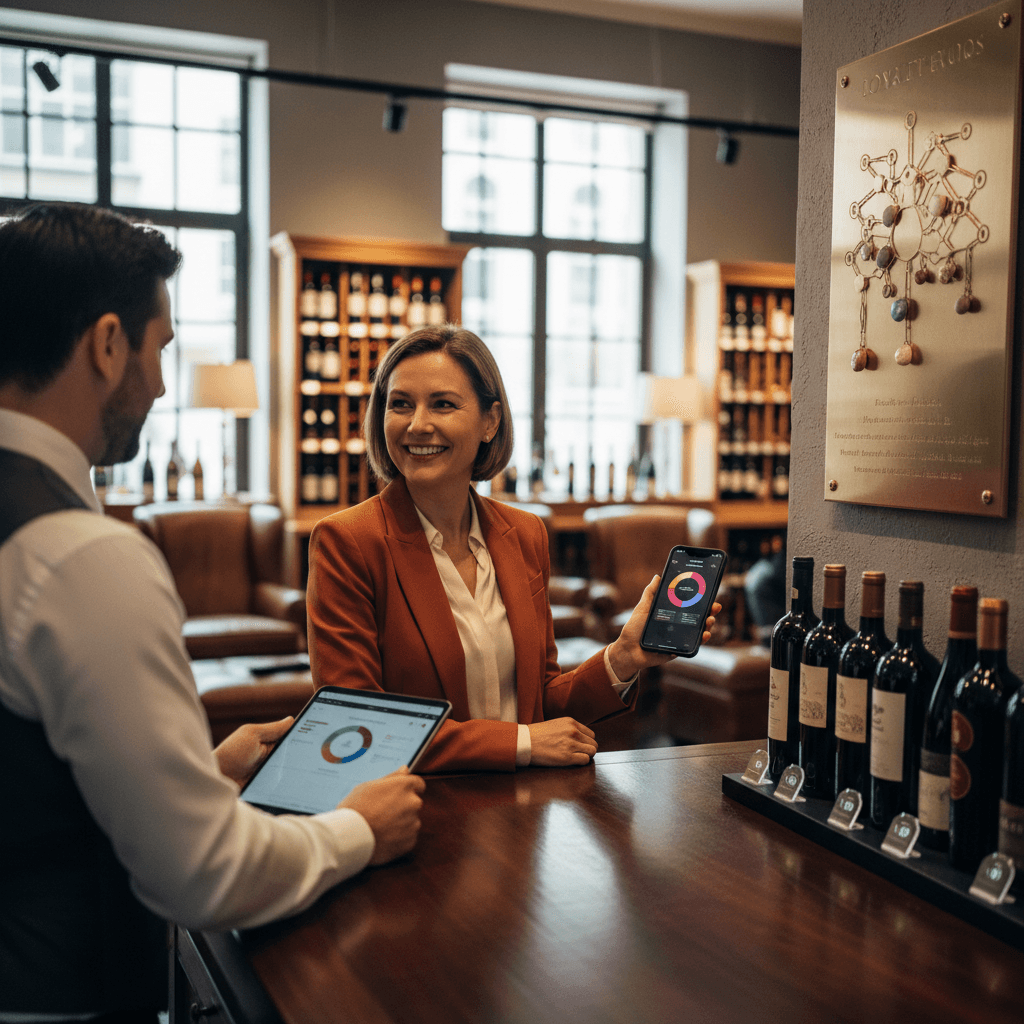
Here's the simplest way to think about loyalty visualization: it's dashboards and customer-facing displays that make the invisible visible. Membership milestones, engagement history, reward progress, churn risk — all the stuff that used to live in spreadsheets (or nowhere at all) now shows up in real time, for both you and your subscribers.
For your customers, visualization tools show how far they've come, what they've unlocked, and what's next. That matters more than you'd think. When a member can see they're two shipments away from an exclusive tier or a bonus bottle, canceling starts to feel like throwing away progress. It's the same psychology that keeps people grinding toward airline status — and it works.
On the retailer side, platforms like VinSuite now offer churn prediction using behavioral signals, so you can prioritize high-value members who are drifting before they hit "cancel." Meanwhile, CRM platforms like Corksy are integrating loyalty functionality directly into club management — meaning you don't need separate systems to track purchases and reward loyalty. That's a real win for any subscription model where time and resources are tight.
You can't target what you can't see. If you don't know which subscribers are disengaging, you're flying blind until cancellation emails start rolling in.
The practical takeaway? You don't need the fanciest dashboard on the market. But you absolutely need visibility into who your best subscribers are and who's about to walk. That's the baseline. Everything else — gamification, tiered rewards, personalized outreach — builds on top of it.
Intentionally Creative specializes in loyalty programs strategies that drive real results. Let us show you what's possible.
Schedule a CallIf you're already running a subscription, start here: what's your churn rate, and where exactly are members dropping off? Most store owners can't answer that precisely — which is the problem. Tools like VinSuite or Corksy can surface that visibility.
If you're considering a liquor store subscription model, design it with retention baked in from day one. That means tiered structures, personalization options, and a plan for proactive engagement before members ghost you.
You don't need enterprise software tomorrow. Start with strategy: tiers, personalization, proactive outreach. Layer in technology as you grow and as the data justifies the investment.
Here's the bottom line: acquiring a subscriber is the easy part. Keeping them is where the real revenue lives — whether you sell wine, whiskey, or tequila.
The liquor subscription space is no longer a novelty — it's a competitive market where the winners will be the retailers who keep subscribers, not just the ones who attract them. Wine club retention technology has spent years maturing inside the wine industry, and the smartest move you can make right now is to learn from it before your competitors do.
You don't need to overhaul your business overnight. Pick one lever — tiered memberships, better visibility into churn, a simple gamification element — and start there. The tools exist. The strategies are proven. The only question is whether you'll adopt them proactively or reactively.
Ready to explore how retention strategies could work for your store? Start by auditing your current subscriber data. Know your churn rate. Identify where members drop off. Then build from there — one tier, one dashboard, one proactive touchpoint at a time. The subscribers you keep this year will be the compounding revenue that defines your business next year.