AI Sommelier Tools Are Here: What Liquor Retailers Need to Know About AI-Powered Recommendation Engines and How They Could Reshape In-Store Customer Service
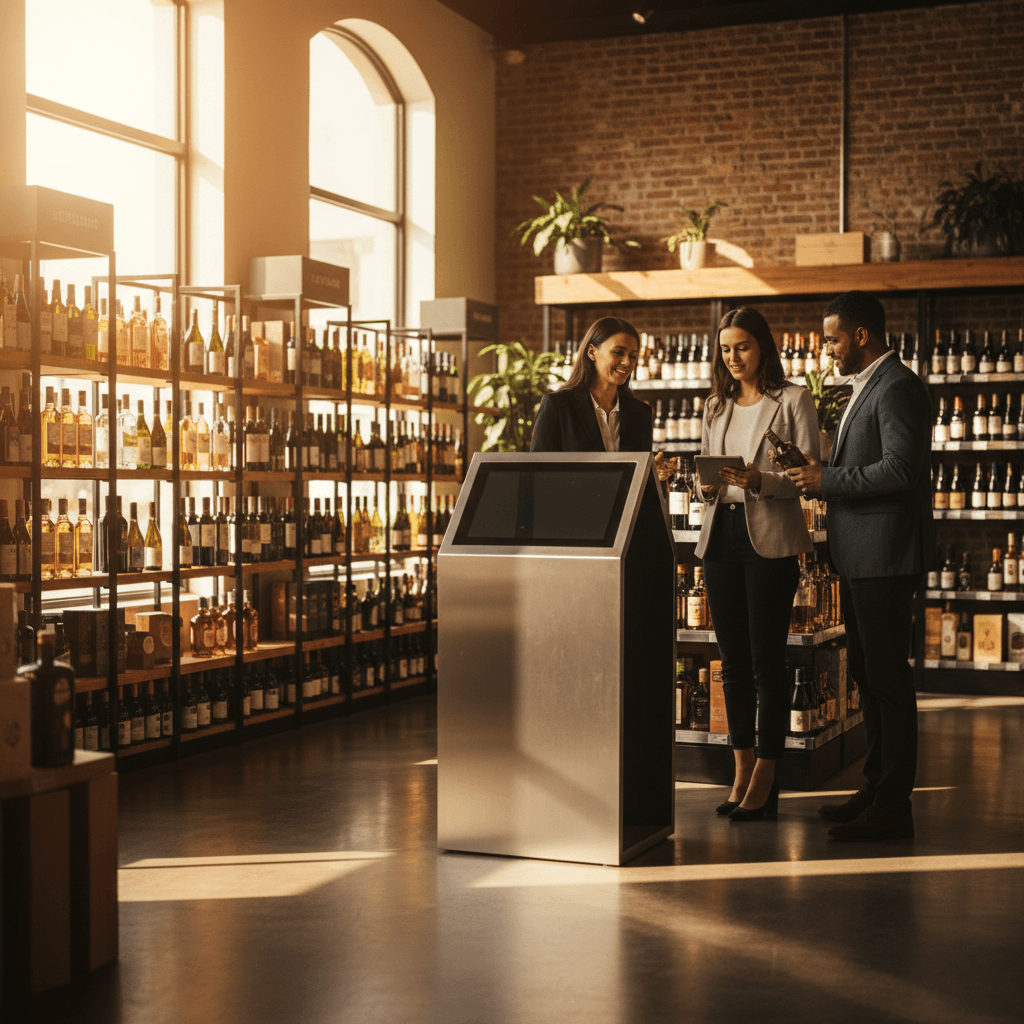
AI recommendation engine liquor retail is reshaping customer service. Learn how AI sommelier tools work, who's building them, and what they mean for your store.
- The AI Sommelier Has Arrived — And It's Not Just Hype
- How AI Recommendation Engines Actually Work in Liquor Retail
- The Numbers That Should Get Your Attention
- Who's Building These Tools — And What Each One Does
- What This Means for Your In-Store Customer Experience
You know that moment when a customer walks in, describes a wine they had at a restaurant three weeks ago — "it was red, kind of smooth, maybe Italian?" — and your best employee nails the recommendation in 30 seconds flat? That's the gold standard of liquor retail. It's also the moment AI is learning to replicate at scale.
The AI recommendation engine in liquor retail isn't a pitch deck fantasy anymore. Purpose-built tools from real companies are already live, already learning your customers' preferences, and already changing how bottles move off shelves and out of digital carts. Whether you run a single independent shop or a growing chain, this technology is reshaping what "good customer service" looks like in beverage retail — and the window for early-mover advantage is closing faster than most owners realize.
This post breaks down exactly how these tools work, who's building them, what the data actually says, and — just as importantly — where they still fall short. No hype. No hand-waving. Just what you need to know to make a smart decision for your store.
The AI Sommelier Has Arrived — And It's Not Just Hype
Let's cut straight to it: AI-powered recommendation tools built specifically for beverage retail aren't some far-off concept. They're here, and they're already changing how customers discover and buy bottles.
Companies like Preferabli, DRINKS (Drinks.com), Bottlecapps, Sommelier.bot, and Aivin have all rolled out dedicated AI sommelier tools designed for this industry. This isn't generic Silicon Valley tech being crammed into your POS system — these platforms understand SKUs, flavor profiles, vintage variations, and the way your customers actually shop.
Learn how scarcity marketing in liquor retail can help you sell allocated bottles faster. Proven psychology tactics f...
And customers are ready. A 2025 DRINKS survey found that consumer enthusiasm for AI-driven drink recommendations is actively growing — not in some theoretical future, but now. Meanwhile, retailers using AI-driven personalization are reporting significantly longer shopping sessions and higher engagement in wine e-commerce [VERIFY: the widely cited "41% longer sessions" stat needs a primary source and methodology check]. With the wine e-commerce market projected to reach nearly $16 billion by 2029 [VERIFY: source and geographic scope needed], the retailers who adopt early stand to capture a disproportionate share of that growth.
Why This Matters Right Now for Independent Retailers
You don't have a 50-person floor staff. You can't be everywhere at once. AI-powered recommendation tools fill that gap — scaling the kind of personalized guidance that used to be your biggest competitive advantage against big-box chains.
What We Mean by 'AI Recommendation Engine' (Plain English Version)
An AI recommendation engine is software that learns what your customers like and suggests products they're likely to buy. Think of it as your most knowledgeable staff member — the one who never forgets a face, remembers every purchase, and always has a perfect suggestion ready. These platforms analyze massive datasets — from purchase history and flavor preferences to surprisingly granular details like label design elements — to match products with individual customer tastes. It's pattern recognition at a scale no human can match.
How AI Recommendation Engines Actually Work in Liquor Retail
An AI recommendation engine in liquor retail isn't just a glorified search bar. These systems process taste profiles, purchase history, price sensitivity, and even visual preferences to generate recommendations that actually move product.
Learn how to launch programmatic display ads for liquor stores—from audience targeting to budget allocation. A beginn...
From Label Art to Purchase History: What the AI Analyzes
Here's where it gets genuinely interesting. Some platforms — DRINKS' PAIR technology is a notable example — go beyond purchase data to analyze wine labels themselves: color palettes, fonts, imagery, and design style. Combined with behavioral data, these signals help the AI predict which products a customer will gravitate toward.
Think about that for a second. The AI identifies that a customer who gravitates toward minimalist, earth-toned labels with sans-serif fonts tends to prefer natural wines from small producers. That's wine recommendation technology working at a level no human staff member could replicate at scale, no matter how knowledgeable they are.
Other platforms take different approaches. Preferabli maps flavor preferences directly, building a taste profile that works across wine, spirits, and beer. Sommelier.bot uses conversational AI to interpret natural-language questions. The underlying principle is the same: collect signals, find patterns, surface the right bottle.
The Two Sides of the Counter: Customer-Facing and Staff-Facing Tools
AI sommelier tools serve a dual purpose, and this is where the practical value really clicks.
DTC spirits brands are reshaping liquor retail competition. Learn how direct-to-consumer models work and what they me...
Customer-facing: A shopper walks up to an in-store kiosk, types in "hosting a dinner party, serving lamb," and gets three wine pairing suggestions with tasting notes and price points. That's personalized service delivered without adding a single labor hour.
Staff-facing: Your floor employee gets asked about a sold-out Malbec. Instead of shrugging or guessing, they pull up AI-suggested alternatives on a tablet — bottles that match the same flavor profile, price range, and even the aesthetic the customer was drawn to. The sale stays alive.
One side removes friction. The other side removes knowledge gaps. Both sides drive revenue.
The Numbers That Should Get Your Attention
Longer Sessions, Bigger Baskets
The core promise of AI personalization in retail is straightforward: customers who receive relevant recommendations browse longer, discover more products, and spend more per visit. In wine e-commerce specifically, retailers using AI-driven personalization report meaningfully longer shopping sessions and higher conversion rates [VERIFY: primary source needed for the 41% figure frequently cited in industry coverage].
For a physical store, the equivalent is a customer who came in for one bottle of Pinot Noir and walks out with that bottle, a food-pairing suggestion, and a lesser-known Burgundy they'd never have picked up on their own.
The Market Opportunity
The wine e-commerce market is projected to approach $16 billion by 2029 [VERIFY: source and geography]. That trajectory, combined with rising consumer comfort with AI-driven recommendations, creates a clear opening for retailers who invest in personalization now.
For independent store owners, frame it simply: these tools mean more products discovered per visit, higher average order values, and more repeat customers. Retailers adopting now aren't experimenting — they're positioning.
Who's Building These Tools — And What Each One Does
The AI recommendation engine liquor retail space is a crowded, fast-moving market with real players shipping real products. Here's who you need to know.
A Quick Rundown of the Major Players
Preferabli built its reputation on taste-matching technology. Their system learns what a customer actually likes — not just what they've bought — and maps flavor preferences across wine, spirits, and beer categories.
DRINKS (Drinks.com) takes a data-heavy approach with their PAIR platform, analyzing label attributes and behavioral data to match products with customers. Label appeal drives more purchasing decisions than most retailers realize, and DRINKS leans into that insight.
Bottlecapps is built specifically for retailers like you. Their app and recommendation platform emphasizes something important: AI product recommendations aren't just glorified upselling. They personalize the shopping experience, build customer loyalty, and help consumers discover bottles they'd never have found browsing the shelf alone.
Sommelier.bot offers a conversational AI sommelier — think ChatGPT trained specifically on wine knowledge. Customers ask questions in plain language and get pairing suggestions, tasting notes, and recommendations back instantly.
Aivin rounds out the field with AI-driven wine recommendation technology focused on matching individual palates to bottles through data modeling.
Online-Only vs. In-Store: Where Each Tool Fits
These tools aren't just for e-commerce anymore. The technology is reshaping in-store customer service too. The Napa Valley Marriott Hotel & Spa, for example, has rolled out AI-powered taste-based wine recommendations through a tech partnership [VERIFY: source and date]. Hospitality is adopting fast. Retail is next.
Here's the good news for time-strapped store owners: not every tool requires a massive tech overhaul. Many plug directly into existing POS systems or e-commerce platforms with minimal setup. AI-powered customer service for your liquor store might be closer — and simpler — than you think.
Let our team show you what's possible.
our team specializes in digital marketing strategies that drive real results. Let us show you what's possible.
Schedule a CallWhat This Means for Your In-Store Customer Experience
AI Doesn't Replace Your Best Employee — It Clones Their Knowledge
Let's address the elephant in the room: no, AI isn't coming for your best staff member's job. That veteran employee who can rattle off the mash bill of every bourbon on your shelf? Still invaluable. Irreplaceable, actually.
But what about the new hire who started Tuesday?
AI sommelier tools act as a force multiplier. They take the deep product knowledge your best people carry around in their heads and make it accessible to every employee on every shift. Your newest team member can pull up tasting notes, food pairings, and similar product suggestions in seconds — offering the kind of informed guidance that normally takes years to develop.
Think of it this way: every customer gets the "regular" treatment, even on their first visit.
Practical Use Cases for a Brick-and-Mortar Liquor Store
This isn't about turning your shop into a tech showroom. It's about practical tools that move product:
- In-store kiosk or tablet where customers input preferences (sweet, dry, under $30) and get curated suggestions matched to your actual inventory.
- A staff-facing app that instantly pulls up tasting notes, flavor-profile matches, and complementary products during customer conversations.
- Automated email recommendations based on purchase history, driving repeat visits and online engagement between store trips.
Here's one use case retailers overlook: AI tools can surface slow-moving inventory by recommending lesser-known bottles to adventurous customers. That case of natural wine gathering dust? An AI engine matches it to the customer who didn't know they were looking for it — turning dead stock into a discovery moment.
The Honest Limitations (Because We're Not Going to Oversell This)
Where AI Sommelier Tools Still Fall Short
An AI recommendation engine in liquor retail is only as good as the data feeding it. If your inventory records are incomplete — missing tasting notes, wrong price points, outdated stock counts — the suggestions your customers get will be equally off-base. Most vendors won't emphasize this during the sales pitch, but data hygiene is the single biggest factor in whether these tools deliver or disappoint.
Wine recommendation technology also can't read a room. It won't notice a customer nervously browsing the gift section or sense that someone wants a Tuesday-night sipper, not a $90 celebration bottle. The best implementations pair AI suggestions with human judgment — your team's intuition remains the final filter.
The Bias and Discovery Problem
Recommendation algorithms tend to reinforce existing preferences. A customer who buys Cabernet Sauvignon gets recommended... more Cabernet Sauvignon. That's great for conversion rates, but it can work against the discovery and exploration that make independent shops special. Look for platforms that balance "safe" recommendations with curated surprises — and make sure your staff knows when to override the algorithm.
Privacy Matters More Than You Think
Customers may hesitate to share preferences or create profiles, especially in-store. Be transparent about what data you collect, how it's used, and who has access. Trust drives adoption — and a clumsy data request can undo the goodwill a great recommendation builds.
Cost, Complexity, and the Learning Curve
Solutions range from turnkey apps with monthly subscription fees to complex integrations requiring ongoing data management and staff training. Costs vary widely — some platforms offer free tiers for small retailers, while enterprise solutions can run into the thousands per month. Budget accordingly, ask for case studies from stores your size, and start small. A pilot program on one channel (your website, your loyalty emails) tells you more than a vendor demo ever will.
How to Decide If AI Recommendation Tools Are Right for Your Store
Not every store needs to jump in tomorrow. But every store should be asking the right questions now.
Three Questions to Ask Before You Invest
- Do you have a digital presence? Whether it's e-commerce, an app, or even a solid email list — AI recommendation tools need a digital surface to deliver value. No website, no starting line.
- Is your product catalog digitized and accurate? AI sommelier tools need reliable descriptions, categories, and pricing to function. Garbage in, garbage out. If your inventory data is a mess, clean that up first — it'll pay dividends regardless of whether you adopt AI.
- Are you losing customers to bigger players? If online retailers offering personalized recommendations are pulling your regulars, matching that experience isn't optional anymore. The expectation for personalization is rising across all of retail, and beverage is no exception.
A Smart Starting Point for Skeptical Retailers
Skip the in-store hardware for now. Trial a single AI-powered tool on your e-commerce site or loyalty program. Low cost, measurable results, easy to walk away from if it doesn't perform.
Here's the grounded truth: AI sommelier tools aren't a silver bullet. But consumer expectations are shifting fast toward personalization, and the retailers who start learning now — even with one small tool — will have a meaningful edge over those who wait until it feels urgent.
The Bottom Line
The AI recommendation engine in liquor retail isn't coming. It's here. The tools are built, the vendors are competing for your business, and your customers — whether they walk through your door or land on your website — are increasingly expecting the kind of personalized experience these platforms deliver.
That doesn't mean you need to overhaul your store tomorrow. It means you need to stop treating this as a "someday" conversation. Start with one question: Where am I losing sales because a customer couldn't find what they wanted? If the answer is "more often than I'd like," an AI sommelier tool deserves a serious look.
Pick one platform. Run a small trial. Measure what happens. The retailers who treat this as a learning opportunity now — not a panic move later — are the ones who'll own the next chapter of this industry.
Ready to explore how AI-powered tools fit into your retail strategy? [Subscribe to the Intentionally Creative newsletter] for more no-nonsense breakdowns of the technology reshaping liquor retail.
10+ years helping liquor retailers and beverage brands grow through data-driven digital marketing. Learn more