American Whiskey Eyes Singapore: What Independent Liquor Stores Can Learn From Export Market Pivots
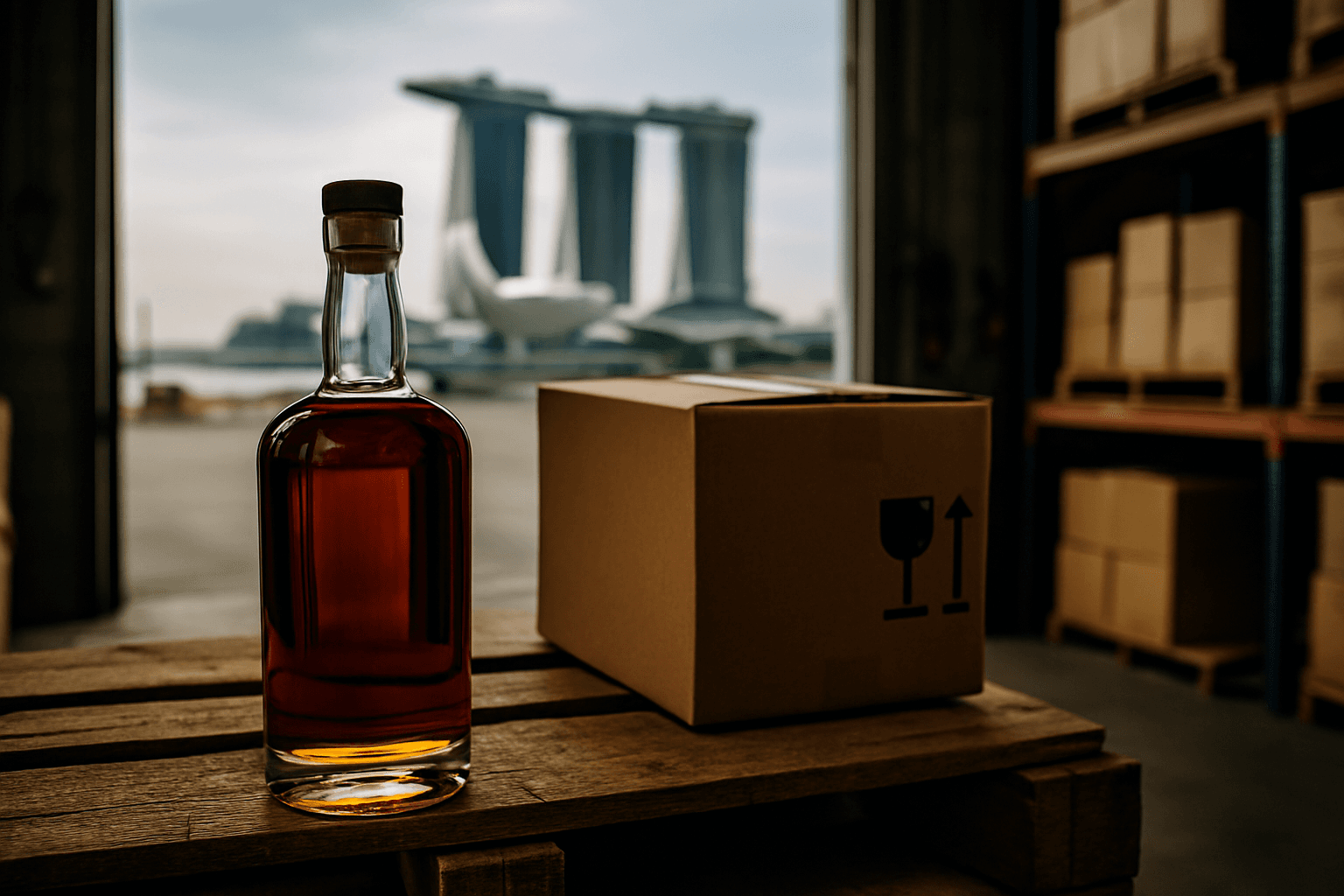
As American whiskey exporters pivot to Singapore, independent liquor stores can apply these export-driven lessons to fuel domestic growth.
- The Pivot Nobody Saw Coming: Why American Whiskey Is Looking East
- Singapore: More Than a Pit Stop — A Strategic Springboard
- Why Asia Is Becoming the Next Great Frontier for American Spirits
- What Singapore's Rise Tells Us About Smart Market Diversification
- What Independent Liquor Stores Can Do With This Information Today
You've built your whiskey section around what works: reliable Bourbons, a few well-loved Irish standbys, maybe a Scottish single malt or two. Your bestsellers are predictable. Your reorder cycles are smooth. And then—without warning—an entire export market gets sideswiped by tariffs, and suddenly your suppliers are scrambling, your allocation shifts, and the whiskey that flew off your shelves last month is suddenly hard to find.
Sound familiar? This is the reality American whiskey distillers are living right now. And the moves they're making in response offer a playbook that independent liquor store owners can borrow—not to mention, anticipate.
The surge in American whiskey shipments to Singapore is creating new dynamics as distillers redirect supply chains in search of growth. What they're doing teaches us something valuable about resilience, positioning, and spotting opportunity before the crowd does. Whether you're running a shop in Columbus or Portland, the signals coming from Singapore today are pointing toward your shelves tomorrow.
The Pivot Nobody Saw Coming: Why American Whiskey Is Looking East
Canada's Door Closed, Europe Is Uncertain
Canadian tariffs effectively closed one of American whiskey's most reliable export markets, forcing distillers to act fast. Europe isn't much better—the outlook for U.S. spirits remains murky due to ongoing trade policy uncertainty. The result? A strategic rethink that's sending American whiskey makers halfway around the world.
Learn how email segmentation for liquor stores drives repeat sales with a 4,200% ROI. List-building tactics, purchase...
While U.S. spirits exports have quintupled since 2000, rising from $478 million (Distilled Spirits Council ↗), maintaining that growth trajectory now requires new geography. That geography appears to be Singapore.
Tariffs and Trade Tensions Reshaping the Export Map
Singapore is emerging as a springboard market for American whiskey makers looking east. The country recorded nearly 43% growth in U.S. spirits exports in 2025, with exports reaching US$27 million as American distillers rerouted shipments amid trade tensions.
For independent liquor store owners, this isn't just distant industry news. These disruptions mirror conditions you know well: external forces can upend your best-performing whiskey export strategies overnight. When Canada shuttered and Europe grew uncertain, distillers pivoted quickly—because they had to.
Wine shops are becoming experience destinations by adding tastings, classes, and events. See how real retailers are d...
Your store faces the same reality. A supplier issue, a regulatory change, or shifting consumer preferences can derail your top-performing category without warning. The distillers finding opportunity in Singapore are doing what the most resilient independent liquor stores do: treating disruption as a signal to act, not an excuse to wait.
Agility isn't optional in liquor retail marketing insights. It's your competitive edge—and right now, American whiskey is betting big that the next frontier looks east.
Singapore: More Than a Pit Stop — A Strategic Springboard
A Dramatic Shift in Trade Flows
American whiskey distillers are recalibrating their global strategies, and Singapore has become the focal point of that pivot. The country is recording nearly 43% growth in U.S. spirits exports in 2025, signaling a dramatic shift in trade flows away from traditional Western markets. U.S. distilled spirits exports to Singapore reached US$27 million—a figure that reflects not just volume but strategic intent.
Learn how to run compliant, high-performing Google Ads for liquor stores. Covers campaign setup, bidding strategies, ...
Why Singapore Plays Differently Than Canada or the UK
For years, Canada and the UK served as reliable backstops for American whiskey exporters. But shifting trade winds have those markets looking uncertain. Singapore is emerging as a springboard market for American whiskey makers looking to expand eastward, offering something those mature Western markets cannot: room to grow.
Unlike saturated markets where American whiskey competes for shelf space against established players, Singapore represents early innings for American spirits. That dynamic should sound familiar to independent store owners. Think of it like opening in an emerging neighborhood—you're not fighting for existing customers, you're building demand alongside the market itself.
For whiskey export strategies and broader liquor retail marketing insights, the lesson is clear: watching where big distillers stake their early claims can reveal where consumer demand is heading next. The American whiskey Singapore export market pivot offers a blueprint for identifying growth opportunities before they become crowded.
Why Asia Is Becoming the Next Great Frontier for American Spirits
Premiumisation Amid Tariffs: A Global Pattern
The surge in American whiskey shipments to Singapore isn't happening in isolation—it's a response to a pattern every liquor retailer can recognize: customers trading up when the landscape shifts. When Canada shuttered markets and Europe grew uncertain, distillers looked east. Singapore has emerged as a springboard market for American whiskey makers looking to expand eastward. The numbers validate the move—U.S. spirits exports to Singapore recording nearly 43% growth in 2025, reaching US$27 million.
For independent stores watching their own shelves, this same premiumisation trend plays out weekly: customers gravitating toward higher-margin, premium expressions when value options feel uncertain. The global whiskey export strategies reshaping supply chains echo what's already happening in your aisle.
Opening Markets Across the Region
Singapore matters because it's a gateway to something bigger. Asia overall is being identified as a key frontier for American spirits growth, with American distillers expanding their export reach to over 130 countries (Distilled Spirits Council ↗). Growth opportunities are particularly concentrated in India and Southeast Asia—markets with emerging whiskey consumption booms that could define the next decade of the industry.
What does this mean for independent liquor store growth? When global producers invest in Asian infrastructure, they make decisions about allocation, pricing, and product availability that ripple downstream. Understanding these whiskey export strategies helps you anticipate shifts in what hits your shelves—and position your store accordingly.
The lesson isn't just about watching distant markets. It's recognizing that premiumisation is a global force, and the same customer psychology driving the American whiskey Singapore export surge is working in real time on your sales floor.
What Singapore's Rise Tells Us About Smart Market Diversification
The surge in American whiskey shipments to Singapore isn't about abandoning traditional markets—it's about adding strategic hedges. Major distillers are following the same principle smart independent retailers apply to their shelves: never rely on a single best-seller to carry your category.
Don't Put All Your Stock in One Category
When you look at the whiskey export strategies working for large distillers right now, one pattern stands out: diversification. Singapore is recording nearly 43% growth in U.S. spirits exports in 2025, reaching US$27 million. But these same distillers haven't left Canada or Europe—they've added Singapore as another pillar.
For independent liquor stores, this translates directly to your supplier relationships. If one brand faces production delays or tariff disruptions, a diversified portfolio means your whiskey aisle doesn't suffer. Think of it as category depth: multiple suppliers, multiple price points, multiple regional styles.
The Export Playbook Independent Stores Can Steal
The surge in American whiskey shipments to Singapore offers three actionable lessons for liquor retail marketing insights:
- First, watch where demand is growing, not just where it's been. Singapore's boom was visible in trade data before it hit mainstream news—the same data you can use to spot emerging local trends.
- Second, premium positioning matters more than volume when navigating uncertainty. American distillers are targeting Singapore's high-net-worth consumers because they're less elasticity-sensitive. Apply this to your inventory: a focused premium selection often outperforms a scattered mid-tier approach.
- Third, open your shelf to new origins. Opening markets helped U.S. distillers export to over 130 countries (Distilled Spirits Council ↗). Your store's "130 countries" is your selection breadth.
The lesson isn't to copy what big distillers do exactly—it's to think like they do when building your independent liquor store growth strategy.
Let our team show you what's possible.
our team specializes in digital marketing strategies that drive real results. Let us show you what's possible.
Schedule a CallWhat Independent Liquor Stores Can Do With This Information Today
The surge in American whiskey shipments to Singapore is sending clear signals. The question is whether you're listening—and more importantly, whether you're acting on what you hear.
Singapore's emergence as a springboard market for American whiskey makers looking east offers real intelligence for independent operators. U.S. spirits exports to Singapore reached US$27 million, with nearly 43% growth in 2025 alone. That's not just a statistic—it's a leading indicator you can use right now.
Leverage Export Trends to Inform Your Inventory Mix
Pay attention to which American whiskey expressions are gaining traction in Singapore. These markets often signal what will trend domestically in 12-18 months. Consider stocking similar offerings before they go mainstream in your market. Being early to a trend beats being late.
Use Global Premiumisation as a Local Pricing Signal
If international demand is pulling top-shelf American whiskey toward Asia, your domestic shelves may see relative scarcity on select expressions. That's a pricing and allocation opportunity. When demand outpaces supply locally, your margins can benefit—if you've positioned yourself correctly.
Build Supplier Conversations Around Market Intelligence
Strike conversations with your distributors about which brands are prioritizing export markets and how that may affect your allocation or pricing. Suppliers respect buyers who speak their language.
Singapore's success demonstrates the power of positioning. Even a small independent store can position itself as the go-to destination for American whiskey varieties gaining international buzz. That's a whiskey export strategy that works in reverse—bringing global momentum home.
The Road Ahead: What the Singapore Pivot Means for Your Store's Future
Asia's Influence Will Reach Your Shelves
When major distillers commit resources to new markets, product innovation follows. Exclusive expressions, limited releases, and marketing investments tend to cascade outward—and that includes back to domestic shelves. The same American whiskey making its way to Singapore today will eventually show up in your inventory, often with stories attached. Your job is to be ready when those stories arrive.
Being a Student of Global Markets Is a Local Advantage
U.S. spirits exports have quintupled since 2000, rising from $478 million to reaching over 130 countries, according to the Distilled Spirits Council ↗. That expansion didn't happen by accident—distillers identified gaps and pivoted. Independent retailers can apply the same logic to their whiskey export strategies. Tracking where the industry is investing now gives you a roadmap for what your customers will be asking about next.
Your shoppers may not know Singapore's export numbers, but they'll feel the effects—in product availability, pricing, and the conversations your staff can lead about what they're drinking and why it matters. Think beyond your four walls. That's where independent liquor store growth lives.
The surge in American whiskey shipments to Singapore isn't just a story about distant trade flows and tariff workarounds. It's a case study in what happens when smart operators refuse to wait out disruption and instead use it as a catalyst for repositioning. Distillers didn't abandon their growth targets when Canada closed and Europe wobbled—they found new territory and built from there.
Your store can do the same. The signals are already on the table: premiumisation is accelerating, diversification protects against disruption, and watching where demand is heading (not just where it's been) creates a real edge.
So start paying attention to those export headlines. Strike up conversations with your distributors about where supply is flowing. Audit your whiskey selection with fresh eyes. And position your store as the place that sees what's coming before it arrives.
Because in liquor retail, as in global spirits exports, the operators who act on disruption—not just endure it—are the ones who come out ahead.
10+ years helping liquor retailers and beverage brands grow through data-driven digital marketing. Learn more