Bottega Launches Italian Whisky and New Cartizze Prosecco at Vinitaly 2026: Cross-Category Brand Extensions Worth Watching
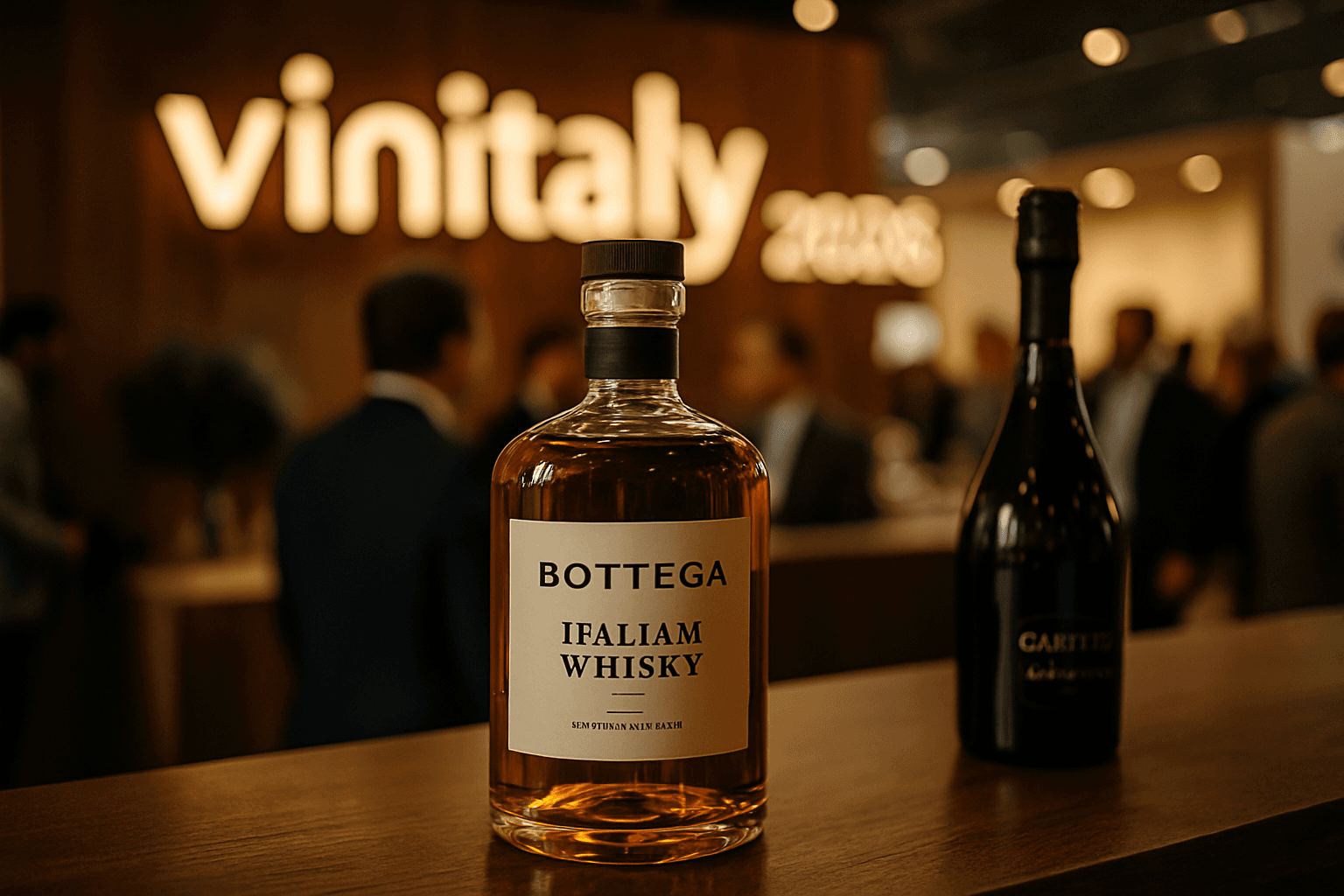
Bottega debuts Italian whisky at Vinitaly 2026 alongside a premium Cartizze Prosecco. Here's what this cross-category brand extension means for liquor retailers.
- Alexander Whisky: What's Actually in the Bottle
- The New Cartizze Prosecco: Premiumization in Bottega's Core Category
- The Strategy Behind the Dual Launch
- What This Means for Independent Liquor Retailers
- Bigger Trends This Launch Reflects
A Prosecco brand just bet €1.5 million that Italy can make world-class whisky. Whether you think that's brilliant or delusional, it's a move you need to understand — because it's heading for your shelf.
Bottega Italian whisky debuted at Vinitaly 2026 alongside a new premium Cartizze Prosecco, and together these launches represent one of the most deliberate cross-category brand extensions the liquor industry has seen in years. This isn't a celebrity slapping their name on a bottle. It's an established wine house with global distribution infrastructure making a calculated leap into spirits — while simultaneously doubling down on the high end of its core category.
For independent liquor retailers, that combination raises real questions. Does brand trust in Prosecco translate to whisky credibility? Is Italian whisky a category with legs, or a novelty that fizzles? And when a brand launches across two categories at once, does that signal strength or overreach? Let's break it down.
Alexander Whisky: What's Actually in the Bottle
If you know Bottega, you know the gold bottle. The brand has been a Prosecco shelf staple for years — recognizable, giftable, and consistently moving units. So when Bottega unveiled a full single malt whisky line at Vinitaly 2026 (April 12–15, Verona) , it turned heads across the trade floor.
Three Expressions, One Serious Commitment
The line is called Alexander Whisky. Three expressions, each aged five years, all bottled at 40% ABV. And here's the number that matters: Bottega reportedly invested €1.5 million into development . That's not a celebrity vanity label or a limited-edition PR stunt. That's real capital behind a calculated category entry.
What's worth paying attention to is the branding: Spiritoautoctono. In plain language, that translates roughly to "indigenous spirit." Bottega is making a deliberate argument — that Italy can produce world-class whisky with the same terroir-driven philosophy that built its wine reputation. Think of it as the same logic behind Japanese whisky's rise: a country with deep fermentation and aging expertise applying those skills to a new category.
For retailers evaluating cross-category launches, this is the kind of story that sells bottles. Consumers already trust Bottega's quality through their Prosecco portfolio. That trust transfers — or at least, that's the bet.
The Travel Retail Angle Retailers Should Note
Here's where it gets strategic for your store. Bottega already has established duty-free distribution for its wines and liqueurs across international airports . The plan is to push Alexander Whisky through that same infrastructure — meaning global visibility and marketing spend that you don't have to fund.
Why does that matter domestically? Because travelers who discover the brand at 35,000 feet come home looking for it on local shelves. That awareness pipeline works in your favor.
Italian whisky is still an emerging niche. The category isn't crowded yet. Early-adopter retailers who stock it now get the novelty-driven sales window — the same window that rewarded shops who jumped on Japanese whisky before everyone else caught on. That window doesn't stay open forever.
The whisky grabbed the headlines — but the other half of Bottega's dual launch may actually be the more immediately actionable product for most stores.
The New Cartizze Prosecco: Premiumization in Bottega's Core Category
What Makes Cartizze Different from Standard Prosecco
Here's the number that tells the story: 108 hectares . That's the entire Cartizze vineyard zone — a tiny hilltop area within the already-prestigious Conegliano Valdobbiadene Prosecco Superiore DOCG. For context, the broader Prosecco DOC region covers roughly 24,000 hectares . Cartizze represents less than half a percent of that.
This isn't another $12 bottle competing on price. Bottega Cartizze Prosecco comes from what's essentially the grand cru of the Prosecco world — steep slopes, specific microclimates, and yields that can't scale. Limited supply plus genuine prestige equals real pricing power.
Bottega's Pattern of Trading Up
This move follows a clear playbook. Before jumping into spirits, Bottega spent years systematically moving upmarket within sparkling wine. Their Prosecco Premium Vintage Collection — featuring four distinct vintages — was an early signal. Vintage-dated Prosecco was practically unheard of from a brand at Bottega's scale.
The pattern: establish credibility at higher price points in your core category, then extend outward. It's textbook brand building.
For your store, the practical takeaway is straightforward. Premium Prosecco is a proven margin driver, and a Bottega's Cartizze fills a real gap between everyday bubbles and Champagne. That's the product with the clearest path to your register. Just point to those 108 hectares and let scarcity do the selling.
The Strategy Behind the Dual Launch
Bottega didn't stumble into launching a whisky and a premium Prosecco at the same event. This was calculated — and it's worth understanding why, because the same logic applies to every brand extension that lands on your shelf.
Why Launching Both at Vinitaly Was Intentional
Vinitaly is where Bottega has maximum credibility. They're a respected Italian wine house, surrounded by trade buyers who already know and trust their portfolio. Debuting Alexander Whisky in that context — rather than at a spirits-focused event where they'd be an unknown — was a smart play.
The simultaneous Cartizze launch wasn't a distraction. It was reinforcement. By showcasing a pinnacle wine product at the exact moment they're entering whisky, Bottega reminded every buyer in the room: we're serious winemakers first. That credibility is the foundation the spirits launch stands on.
What "Brand Permission" Means for Your Shelf
"Brand permission" is a simple concept: consumers and buyers are more willing to try something new from a brand they already trust in a related category. Bottega's wine reputation is essentially a permission slip for whisky.
You've seen this work before. Beer brands launched seltzers and won. Wine producers rolled out canned cocktails and found eager buyers. Cross-category extensions succeed when the parent brand carries genuine authority.
But not every extension deserves shelf space. The signals that separate serious moves from vanity projects? Multiple SKUs (not one tentative release), meaningful aging or production timelines, distribution infrastructure that demands scale, and real capital investment. Bottega checks those boxes.
What This Means for Independent Liquor Retailers
Bottega's dual launch is a textbook cross-category play. But should you actually stock these products? That depends on your store, your customers, and your appetite for risk.
The Case for Stocking Now
Novelty drives foot traffic. Period. An Italian whisky from a recognized Prosecco house is a story that practically sells itself — and stories move bottles off shelves faster than shelf talkers ever will.
If you already carry Bottega wines, the cross-merchandising opportunities are obvious. Think whisky endcap near your Prosecco section. Think gift pairing sets — a bottle of Cartizze alongside one of the Alexander expressions. Think tasting events where you pour both categories side by side and let customers connect the dots. These are the kinds of experiences that turn a Tuesday evening into a margin-building event.
The Case for Waiting
Here's the reality check: Italian whisky is unproven as a consumer category in the U.S. and most international markets. Five years of aging is respectable, but it won't turn heads in a whisky world where Scottish, Japanese, and American producers have decades of brand equity baked in. If your customers aren't already exploring world whisky beyond those big three, Alexander may collect dust.
The practical play: If your store already performs well with Bottega products, the whisky is a low-risk add. Order conservatively, position it as a discovery item, and let it prove itself. If you don't carry Bottega at all, this probably isn't your entry point.
The Cartizze is the safer bet for most stores. Premium Prosecco has established demand, and Bottega's Cartizze fills a real gap between everyday bubbles and Champagne. That's the product with the clearest path to your register.
Let our team show you what's possible.
our team specializes in branding strategies that drive real results. Let us show you what's possible.
Schedule a CallBigger Trends This Launch Reflects
Bottega's moves don't exist in a vacuum. They fit into a set of larger industry shifts visible across the Vinitaly trade floor — and across the industry more broadly — that will shape your buying decisions for the next several years.
Established wine producers are pushing into spirits. Bottega isn't alone here. As margins tighten in wine and consumer interest in craft spirits grows, expect more wine houses to leverage their production expertise and distribution networks into adjacent categories.
Premiumization continues accelerating across every category. From craft whisky to single-vineyard Prosecco, consumers are trading up — and they're willing to pay for provenance and story. The Cartizze launch is a pure expression of this trend.
Travel retail is increasingly where brands build cachet before driving domestic demand. Bottega's plan to push Alexander Whisky through its existing airport channels means the brand may arrive on your customers' radar before it arrives on your shelf. Being ready matters.
The practical takeaway? Watch for U.S. distribution announcements and pricing on these releases. That's when the real stocking decision happens — and being early matters.
The Bottom Line: How to Evaluate Any Cross-Category Brand Extension
Not every new product deserves your shelf space. Here's the framework: look for real investment (not just a label slap), multi-SKU commitment, a clear distribution strategy, and brand credibility in an adjacent category.
Bottega Italian whisky at Vinitaly 2026 checks all four boxes. Real R&D capital behind the product. Three expressions signaling they're building a range, not testing a gimmick. Distribution infrastructure that already spans global markets. And credibility in premium Italian wine that gives them a legitimate bridge into spirits.
Whether Italian whisky becomes a full category or stays a curiosity, this is how serious brand extensions are built — and knowing the difference saves you dead inventory.
The brands making moves like this will keep coming — from Vinitaly, from ProWein, from every major trade show on the calendar. The retailers who win aren't the ones who stock everything or ignore everything. They're the ones with a framework for deciding quickly and confidently.
Want help identifying which new products actually deserve shelf space and marketing dollars? That's exactly the kind of data-driven decision-making we help liquor retailers make every day. Get in touch with Intentionally Creative and let's talk about your product strategy.
10+ years helping liquor retailers and beverage brands grow through data-driven digital marketing. Learn more