Constellation Brands Acquires Hopwtr: What the Non-Alcoholic Beverage Boom Means for Your Liquor Store's NA Section
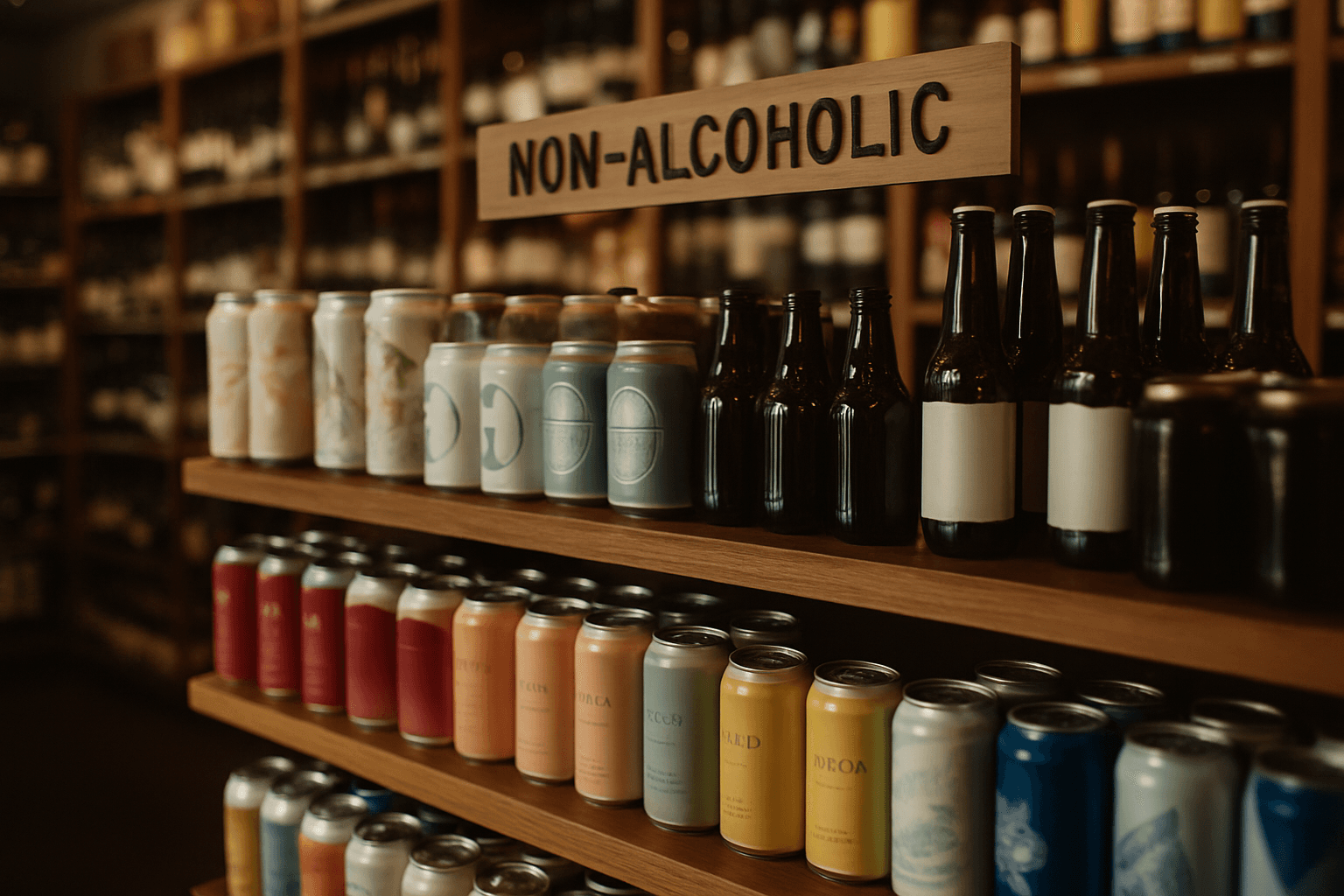
Constellation Brands acquired Hopwtr — here's what the growing non-alcoholic beverages liquor store category means for your sales, shelf space, and strategy.
- A $570 Billion Industry Just Got a Wake-Up Call
- The Non-Alcoholic Beverage Market Growth You Can't Afford to Ignore
- What This Means for Your Liquor Store's NA Section
- How Smart Liquor Stores Are Already Adapting
- How to Build (or Improve) Your Non-Alcoholic Beverage Section
One of the biggest alcohol companies on the planet just went all-in on a product with zero alcohol in it. If that doesn't get your attention as a liquor store owner, the sales data will.
Constellation Brands — the company behind Corona and Modelo — completed its full acquisition of HOPWTR in March 2026, after first investing in the brand back in 2021. [VERIFY: Confirm 2021 initial investment date and March 2026 acquisition completion.] This isn't a startup chasing a hashtag. It's a Fortune 500 company making a calculated, public bet that non-alcoholic beverages belong in the future of the drinks business. And if they belong in the future of the drinks business, they belong on your shelves.
The question for independent liquor retailers isn't whether non-alcoholic beverages in your liquor store make sense anymore. That debate is over. The question is whether you'll capture this revenue — or watch it walk down the street to a grocery chain, a specialty NA shop, or an online retailer that already has.
Here's what the Constellation-HOPWTR deal means for your store, your strategy, and your bottom line.
Coors launches its first non-alcoholic beer. Learn what this means for independent liquor stores and how to capitaliz...
A $570 Billion Industry Just Got a Wake-Up Call
What Happened: The Constellation Brands HOPWTR Acquisition
On March 27, 2026, Constellation Brands (NYSE: STZ) announced it was acquiring the remaining interest in HOPWTR — a non-alcoholic sparkling hop water brand it first backed roughly five years earlier. [VERIFY: Confirm specific date of March 27, 2026.] That's half a decade of watching, learning, and then going all-in. Not impulse buying — due diligence at scale.
Why a Beer and Spirits Giant Is Betting on Zero-Proof
Constellation isn't a scrappy startup chasing trends on Instagram. It's a publicly traded conglomerate whose portfolio moves billions in revenue. When a player of that size makes a full acquisition in the NA space, it signals that non-alcoholic beverages have graduated from niche curiosity to strategic growth category.
The product itself tells you something important. HOPWTR sits at the intersection of craft beer culture and the wellness/sobriety movement — hops-flavored sparkling water that appeals to beer drinkers who want the flavor without the alcohol. That positioning matters if you're a liquor store owner trying to figure out who your NA customer actually is. Spoiler: it's often the same person buying your craft IPAs.
Discover 7 proven Instagram content ideas for liquor stores that boost engagement and drive sales. Learn how to promo...
The global alcohol industry is valued at approximately $570 billion, and the non-alcoholic segment is actively chipping away at that market share. Dedicated online retailers already carry dozens of NA brands across multiple subcategories, which gives you a sense of just how broad this product landscape has become.
This acquisition is one more data point confirming the trend is structural, not seasonal. If you're still treating your NA section as an afterthought, the biggest companies in your industry are telling you — loudly — that you're leaving money on the shelf.
So the big players are making their moves. But what does the broader market actually look like? The numbers paint a picture that's hard to argue with.
Avoid TTB violations and Google Ads suspension with this guide to alcohol advertising rules for liquor stores. Expert...
The Non-Alcoholic Beverage Market Growth You Can't Afford to Ignore
The Numbers Behind the NA Boom
The non-alcoholic beverage market has been quietly accelerating for years — and the smart money has noticed. Constellation's five-year journey from minority investor to full acquirer of HOPWTR is the headline example, but they're far from alone. Investors across the board are pouring capital into the zero-proof space.
Major publications are now reviewing NA products with the same rigor they give craft spirits — recent roundups have featured 14+ recommended canned mocktails and NA spirits alone. The Drinks Business called the Constellation-HOPWTR deal "a shrewd move," [VERIFY: Confirm this specific quote and attribution.] and industry analysts broadly view NA as a durable growth category, not a fad.
This Isn't Just a Dry January Thing Anymore
Here's the proof that the category has legs: dedicated NA retail shops are proliferating. The Zero Proof, Boisson, ProofNoMore, Orangily — these are entire businesses built on non-alcoholic beverages alone. If there's enough demand to sustain standalone retail concepts, traditional liquor stores ignoring their NA section are simply creating space for competitors.
Non-alcoholic drink trends through 2025 and into 2026 show the category maturing fast across NA beer, NA spirits, canned mocktails, hop waters, and functional beverages. The product landscape is now deep enough to fill a real section in your store — not just a lonely shelf next to the O'Doul's.
The market data is clear. But data on a screen doesn't pay your rent — what matters is how this plays out inside your four walls.
What This Means for Your Liquor Store's NA Section
Here's the bottom line: when a Fortune 500 beverage company spends half a decade evaluating a brand before fully acquiring it, that decision is backed by market data you and I don't have access to. And it should change how you think about your floor space.
The Customer Walking Into Your Store Has Changed
Your customer base isn't splitting neatly into "drinkers" and "non-drinkers." That binary is dead. What you're actually seeing is a spectrum.
Many of the people buying non-alcoholic beverages in your liquor store are the same customers buying your wine and spirits. They're moderating, not quitting. Monday through Thursday they want hop water. Friday and Saturday they want an IPA. A smart NA section captures both occasions from the same shopper.
The sober-curious movement, moderation trends, and health-conscious drinking habits aren't social media noise — they're driving real purchasing behavior. And if you're not stocking for it, you're sending those customers to grocery stores, specialty NA shops, or online retailers that have already built out deep NA catalogs.
That's your revenue walking out the door. Or more accurately, never walking in.
NA Products Aren't Replacing Alcohol — They're Adding to the Basket
This is the part that skeptics miss. Stocking NA products isn't about cannibalizing your existing sales — it's about expanding your average ticket. When a customer grabs a six-pack of craft beer AND a four-pack of hop water for weeknights, you just rang up two transactions' worth of product in one visit.
Non-alcoholic beverages are no longer a courtesy shelf near the cooler door. They're a category that demands intentional merchandising — the same way craft beer did ten years ago. The retailers who treated craft seriously early won that margin. The same opportunity is sitting in front of you right now.
If the "why" is convincing, the natural next question is "how." Some of your peers have already figured that out — and their playbooks are worth stealing from.
How Smart Liquor Stores Are Already Adapting
While Constellation was running its multi-year evaluation of HOPWTR, some independent retailers didn't wait for billion-dollar signals to make their move. They read the room — and rearranged the floor.
Front-of-Store Displays and Dedicated NA Sections
Fleming Place Wine & Spirits in Topeka did something simple but smart during Dry January: they built front-of-store NA displays, putting non-alcoholic beverages where every customer would see them walking in. [VERIFY: Confirm this case study — store name, location, and details.] Not tucked behind the mixers. Not buried on a bottom shelf near the cooler. Right up front.
That's a deliberate merchandising choice — and it paid off. When customers see a curated NA section in a liquor retail setting, it signals that the category is real, not an afterthought. Your customers already know these products exist. The question is whether they're finding them at your store or somewhere else.
Building a Business Model That Includes Zero-Proof
A bottle shop in Bellingham, Washington took it further, building a significant portion of its entire business model around non-alcoholic options. [VERIFY: Confirm this case study for accuracy.] NA became a traffic driver — bringing in new customers who might not have walked through the door otherwise.
These aren't theoretical case studies. They're independent retailers — your peers — who recognized the shift and acted.
The lesson is straightforward: you don't need to overhaul your store. You need a dedicated, visible NA section with enough variety to show customers you take the category seriously. Staff who can talk about the products help too. Start there, and you're already ahead of most of your competition.
Ready to move from inspiration to execution? Here's a practical framework for building an NA section that actually performs.
Let our team show you what's possible.
our team specializes in branding strategies that drive real results. Let us show you what's possible.
Schedule a CallHow to Build (or Improve) Your Non-Alcoholic Beverage Section
Constellation's approach to HOPWTR — patient, strategic, data-driven — is actually a decent model for how you should think about building out your own NA section. Here's how to get it right.
Start With the Right Product Mix
Curate across subcategories — NA beer, NA spirits (think gin, whiskey, and tequila alternatives), canned mocktails and RTDs, hop waters like HOPWTR, and functional beverages. Dedicated NA retailers now stock 30+ brands across these subcategories, which gives you a sense of how deep the product landscape runs. You don't need to carry everything, but aim for breadth. Customers should see a real selection, not a token gesture tucked between the tonic water and grenadine.
Merchandising and Placement That Actually Drives Sales
Placement matters enormously. Put your NA section near the entrance or in a high-traffic area — not in the back corner next to the mixers. Visibility signals legitimacy and catches customers who weren't planning to browse NA products but are curious.
Then think seasonally. Dry January is the obvious play, but Sober October, summer wellness promotions, and holiday hosting season (designated drivers, pregnant guests, health-conscious attendees) all create natural opportunities to feature NA products front and center. The growth in this category isn't a one-month trend — promote accordingly.
Staff Training: Your Team Needs to Know This Category
Train your staff to talk about NA products with the same confidence they bring to bourbon or craft beer. Customers exploring this category often have questions and genuinely appreciate knowledgeable recommendations. If your team dismisses or ignores it, those customers will find a store that doesn't.
Finally, track your NA sales data monthly. Know what's moving, what's collecting dust, and where the growth is. You can't afford to manage this category on assumptions. Treat it like every other section in your store: with data.
Of course, there's a flip side to every opportunity — and in this case, the cost of inaction is getting steeper by the month.
The Competitive Threat If You Do Nothing
Here's the uncomfortable truth: while you're debating whether to add a few NA options to your shelves, entire businesses are being built on the bet that you won't.
Standalone NA Shops and Online Retailers Are Coming for Your Customers
Dedicated non-alcoholic retail shops are proliferating across the country. Brands like Boisson, ProofNoMore, and Orangily have built entire businesses around one premise: traditional liquor stores won't take NA seriously. Online retailers have assembled catalogs spanning dozens of brands across every NA subcategory. Every customer they win is one you lost by default — not because you couldn't serve them, but because you chose not to.
Grocery Chains Have the Shelf Space — But You Have the Expertise
Grocery chains are rapidly expanding their NA sections with aggressive shelf placement and marketing budgets most independent stores can't match. But here's what they can't replicate: your expertise and curation. Stocking non-alcoholic beverages in your liquor store positions you as the knowledgeable guide customers actually trust — but only if you act on that advantage.
The window to become your market's local NA destination is open now. As competition stiffens, early movers will lock in the customer relationships, product knowledge, and supplier connections that latecomers will spend years trying to build.
The Bottom Line: Constellation Saw the Future — Will You?
When a Fortune 500 beverage company spends five years evaluating a category before pulling the trigger on a full acquisition, that's not trend-chasing. The Constellation Brands HOPWTR acquisition tells you exactly where the market is heading.
Non-alcoholic beverages in your liquor store aren't a threat to your core business — they're an expansion of it. The product landscape is deep enough to build a credible NA section right now. The stores that do will capture incremental revenue, attract new customer segments, and future-proof against a market that's clearly shifting.
You don't need to become an NA-only shop. You need to be the store in your market that takes the category seriously before your competitors do. Start with a dedicated section. Stock it with variety. Let the sales data tell you what your customers actually want — because the non-alcoholic beverage market isn't slowing down, and Constellation just bet their reputation on it.
10+ years helping liquor retailers and beverage brands grow through data-driven digital marketing. Learn more