Dry Molded Fiber Bottles Are Coming: How Diageo's Sustainable Packaging Push Could Change What Lands on Your Shelves — and How to Market It
Diageo is testing paper-based spirit bottles. Here's what sustainable packaging in the liquor industry means for your store shelves, customers, and marketing.
- A Paper Bottle for Johnnie Walker? Yes, Seriously.
- The Numbers Behind the Shift: Why Sustainable Packaging in the Liquor Industry Is Accelerating
- What Is Dry Molded Fiber and Why Should You Care?
- What This Means for Your Store: 3 Practical Realities to Prepare For
- How to Market Sustainable Spirits Packaging to Your Customers
The next time you restock your shelves, one of those bottles might feel different in your hand. Lighter. Not glass. Made from paper. That's not a hypothetical — it's already happening in bars across the UK, and it's heading your way. The sustainable packaging liquor industry shift has been talked about for years, but Diageo just made it real by putting Johnnie Walker in a paper-based bottle and handing it to bartenders on a Friday night.
For liquor store owners and operators, this isn't just an environmental headline to scroll past. It's a preview of how your product mix, your merchandising, and your customer conversations are about to change. The brands you carry are rethinking what their bottles are made of — and the biggest spirits company on the planet is leading the charge.
This post breaks down exactly what's happening, why the numbers say it's not going away, and — most importantly — how you can turn it into a competitive advantage before everyone else catches on.
A Paper Bottle for Johnnie Walker? Yes, Seriously.
What Diageo Actually Announced
Here's a sentence you probably didn't expect to read today: Johnnie Walker now comes in a paper bottle.
In 2024 [VERIFY exact year], Diageo — the world's largest spirits company — launched the first-ever 70cl paper-based bottle trial in the on-trade channel (bars and restaurants). This isn't a mockup sitting in a design studio. Real bartenders poured from it, handled it during busy shifts, and put it through the kind of punishment that only a Friday night rush can deliver.
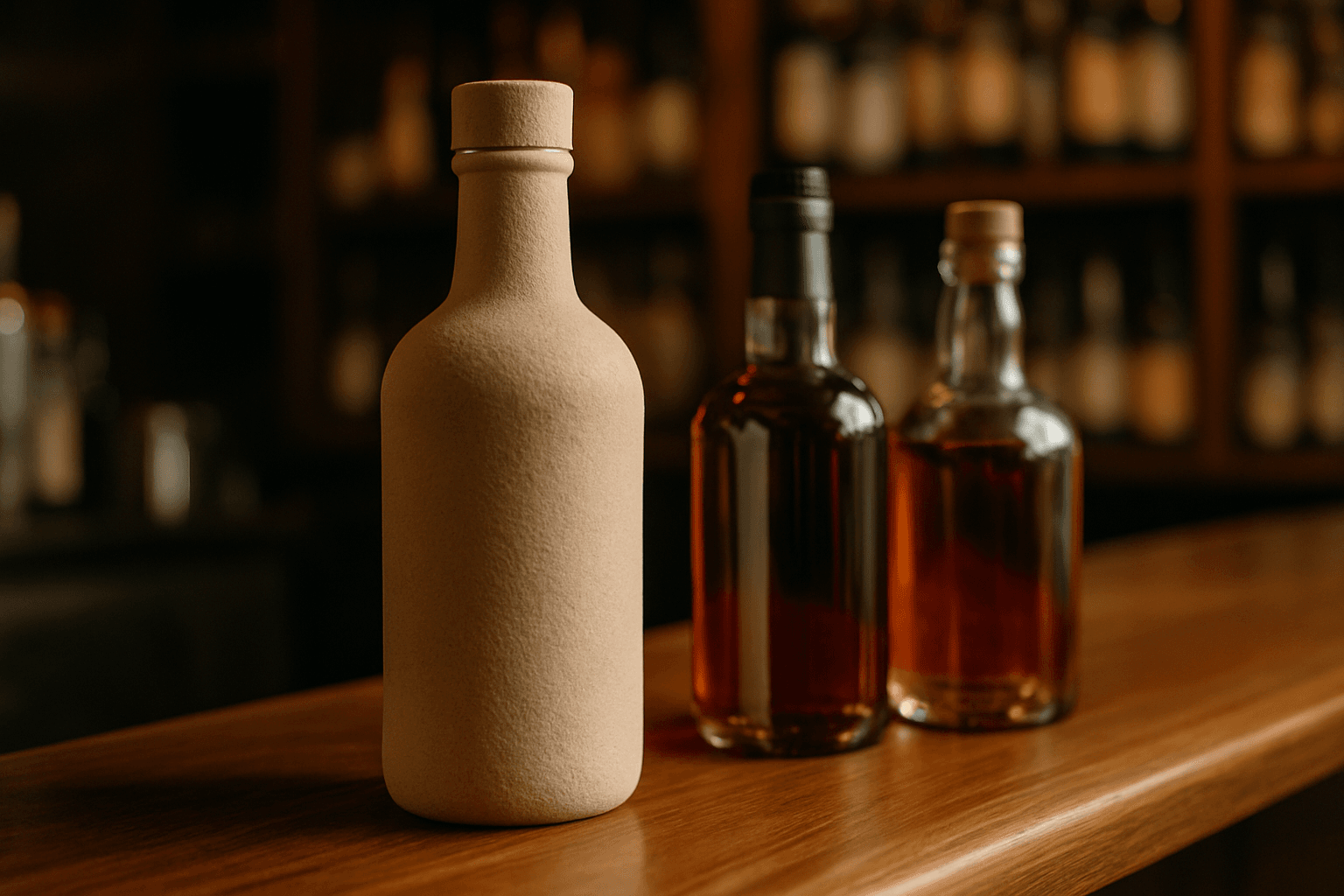
The technology behind it is called Dry Molded Fiber, or DMF. Think of it this way: paper pulp gets pressed into a strong, lightweight bottle shape — no water needed in the molding process. That's a big deal compared to older wet fiber methods, which used significant water and energy. The result is a recyclable, paper-based container sturdy enough to hold spirits.
Diageo didn't develop this alone. They joined The Bottle Collective in 2023 alongside PA Consulting and PulPac, pooling resources to make DMF bottles a commercial reality rather than a trade show curiosity.
Why This Isn't Just a PR Stunt
Right now, glass accounts for over 90% of spirits packaging [VERIFY source — commonly attributed to IWSC, but confirm]. With the global alcohol packaging market projected to reach $105.78 billion by 2032 (Market Research Intellect), even a small shift toward alternative materials represents enormous volume.
That on-trade trial wasn't about Instagram photos. It tested real-world viability — pouring accuracy, grip, durability, customer perception. Diageo is stress-testing this technology before scaling it.
Here's why this matters to you: when the biggest player in the industry invests this heavily in sustainable packaging, it signals where consumer expectations are heading. Understanding what's coming — and how to position it — gives you a real advantage before these bottles land on your shelves.
The Numbers Behind the Shift: Why Sustainable Packaging in the Liquor Industry Is Accelerating
Let's talk numbers — because this shift isn't built on hype. It's built on money, market data, and momentum that's impossible to ignore.
Glass Still Dominates — But the Market Is Moving
That 90%+ glass dominance means nearly every bottle in your store looks, feels, and weighs the same way it has for decades. Now imagine even 5–10% of that shifting to fiber-based or other eco-friendly packaging over the next few years. That's a noticeable change in your retail experience — and your customers' expectations.
When companies like Diageo start trialing paper-based bottles in live bar environments, they're not tweaking around the edges. They're signaling a structural shift in the supply chain.
The Money Flowing In
The investment tells the story. That $105+ billion market projection isn't driven by nostalgia for glass — sustainable innovations are a primary growth driver. Key 2026 packaging trends reinforce this: "paperization," premium aesthetics, and optimized labeling are all gaining traction. Every one of those trends aligns directly with the opportunity that DMF bottles represent.
The bottom line for your store: the brands you stock are going to start looking different. The question isn't if — it's when and how fast.
What Is Dry Molded Fiber and Why Should You Care?
Glass is heavy, fragile, and expensive to ship. Dry Molded Fiber (DMF) is a manufacturing process that presses plant-based fibers into rigid, bottle-shaped containers — without using water or heavy energy inputs.
Think of it as the next generation of paper-based packaging, engineered specifically for liquor bottles.
DMF vs. Wet Fiber: The Quick Breakdown
Traditional wet fiber molding (the stuff your egg cartons are made from) requires large amounts of water and energy to shape pulp into form. DMF skips the water entirely and cuts energy consumption significantly. The result is a lighter, lower-footprint bottle that still holds 70cl of your customers' favorite spirit.
The Bottle Collective exists to commercialize this technology at scale. That's real corporate infrastructure backed by PA Consulting, PulPac, and Diageo — not a Kickstarter campaign.
Recyclability That Actually Works
Here's the skeptic's question: Can customers actually recycle these things?
Yes. DMF bottle prototypes have passed the CEPI test method [VERIFY specific test name and that Diageo's bottles passed it], meaning they're suitable for processing in standard paper mills. No special bins. No dedicated programs. They go right into existing recycling streams your customers already use.
For anyone tracking the sustainable packaging liquor industry evolution, that's the detail that matters most. Eco-friendly packaging that works with current infrastructure — not against it — is the version that actually gets adopted. You can explain it in one sentence at the register: "Toss it in with your cardboard."
What This Means for Your Store: 3 Practical Realities to Prepare For
The shift toward sustainable packaging in the liquor industry is picking up real momentum. Here's what that means at the store level.
1. Your Shelf Experience Is Going to Change
DMF bottles don't look like glass. They don't feel like glass. They're lighter, textured, and carry a completely different visual weight on the shelf. That's not a problem — it's a merchandising decision you'll need to make.
Do you integrate eco-friendly packaging alongside traditional glass bottles? Or do you create a dedicated sustainable spirits display? There's no single right answer yet, but the retailers who think about this before the products arrive will have an edge over those scrambling to figure it out on delivery day.
2. Customer Questions Are Coming — Be Ready
"Is this real whisky in a paper bottle?" Your staff is going to hear some version of that question. Probably a lot.
The answer is simple: yes. The liquid inside meets the same quality standards. The packaging is what's different — designed to reduce environmental impact without compromising what's in the bottle. Train your team with confident, plain-language responses. Skepticism is normal. A well-informed employee turns that skepticism into a sale.
3. Supply Chain and Pricing Unknowns
Your storage, shelving, and breakage math is built around glass. Lighter bottles could mean lower shipping costs and fewer losses — real savings. But during early rollout phases, availability will likely be limited.
On pricing, it's too early to call. Watch how Diageo prices the Johnnie Walker rollout closely — that'll be your signal for whether sustainable packaging becomes a premium play or a standard offering.
The bottom line: You don't need to overhaul your store tomorrow. But start thinking now about how these products fit into your merchandising strategy and staff training. The stores that prepare early won't just adapt — they'll lead.
Let our team show you what's possible.
our team specializes in digital marketing strategies that drive real results. Let us show you what's possible.
Schedule a CallHow to Market Sustainable Spirits Packaging to Your Customers
This shift isn't just a supply chain story — it's a sales opportunity. But only if you market it right.
Lead with the Story, Not the Lecture
Here's a marketing principle that never fails: customers respond to stories, not guilt trips.
Nobody walks into your store wanting to be scolded about their carbon footprint. But tell them they're holding "Johnnie Walker in the world's first paper-based spirits bottle" and you've got their attention. That's not environmentalism — that's innovation. It's compelling, it's new, and it makes them feel like they're part of something.
Frame DMF bottles as a feat of engineering, not an obligation. When The Bottle Collective launched, it wasn't pitched as guilt relief. It was pitched as the future. Your marketing should follow that lead.
In-Store and Digital Marketing Tactics That Work
In-store, create a dedicated "Sustainable Picks" endcap or shelf section. Use simple signage: "This bottle is made from plant-based fiber and recyclable in standard paper mills." One sentence. That's all you need. And let customers pick it up — the tactile difference between a DMF bottle and glass is a conversation starter that sells itself.
Digitally, this is where it gets interesting. Short-form video of your staff explaining the packaging performs well on Instagram and TikTok. Email newsletters announcing new sustainable products build authority with your existing customer base. And here's the real opportunity: SEO content around sustainable spirits packaging is still low-competition. Retailers creating blog content now can own local search visibility before the chains even notice.
The shift is early. Early means opportunity.
Use Sustainability as a Differentiator, Not a Gimmick
If you're an independent store competing against chains, being first in your market to spotlight sustainable packaging positions you as a curator — not just a shelf-stocker. That perception drives loyalty.
But here's the non-negotiable: avoid greenwashing. Only promote verified claims. Recyclable in standard paper mills? Say that. Reduced manufacturing energy? Great. Vague "eco-friendly" language with nothing behind it? Skip it. Younger demographics especially can smell inauthenticity instantly — and they'll take their dollars to whoever feels real.
Stick to what's true, tell the story well, and you won't just stock the future. You'll sell it.
Which Brands to Watch Beyond Diageo
Diageo's DMF bottles grab headlines, but the real story is bigger than one company.
The Bottle Collective and Industry Momentum
The Collective exists specifically to bring DMF technology across the broader spirits world. With the financial incentive of a $100+ billion packaging market, expect other major players to announce sustainable packaging trials within 12–24 months.
And this "paperization" trend won't stop at bottles. Gift boxes, secondary packaging, and point-of-sale displays are all shifting toward eco-friendly materials.
Smaller Brands May Move Faster
Here's what matters for your shelves: craft and indie brands often adopt new packaging faster than the majors. They have less legacy infrastructure and their customers expect this kind of story.
Your move: Ask distributors and brand reps directly about their sustainable packaging roadmap — today. Retailers who ask first get early allocations and the marketing support that launches with them.
The Bottom Line: This Is a Business Opportunity, Not Just an Environmental One
Diageo's dry molded fiber bottle trial isn't a press release stunt. It's the most concrete signal yet that the sustainable packaging liquor industry shift is moving from concept to commerce.
Here's what that means for your bottom line: lighter bottles mean lower shipping costs. Paper-based packaging means reduced breakage. And marketing sustainable spirits gives you a genuine differentiator in a crowded market — especially with millennials and Gen Z customers who spend with their values.
So start the conversation now. Where do these products fit in your store layout? Your marketing calendar? Your customer conversations? The retailers who treat this as strategy — not a passing trend — will capture the upside first.
The paper bottle isn't replacing your entire inventory tomorrow. Glass still dominates. But the transition is underway, and the window to get ahead of it is right now.
Talk to your distributors. Brief your staff. Start planning that endcap. Because the store owners who move first won't just be stocking new products — they'll be the ones their customers trust to lead them into what's next.
10+ years helping liquor retailers and beverage brands grow through data-driven digital marketing. Learn more