Fifth Circuit Strikes Down Federal Home Distilling Ban: What It Means for Your Liquor Store's Competitive Landscape
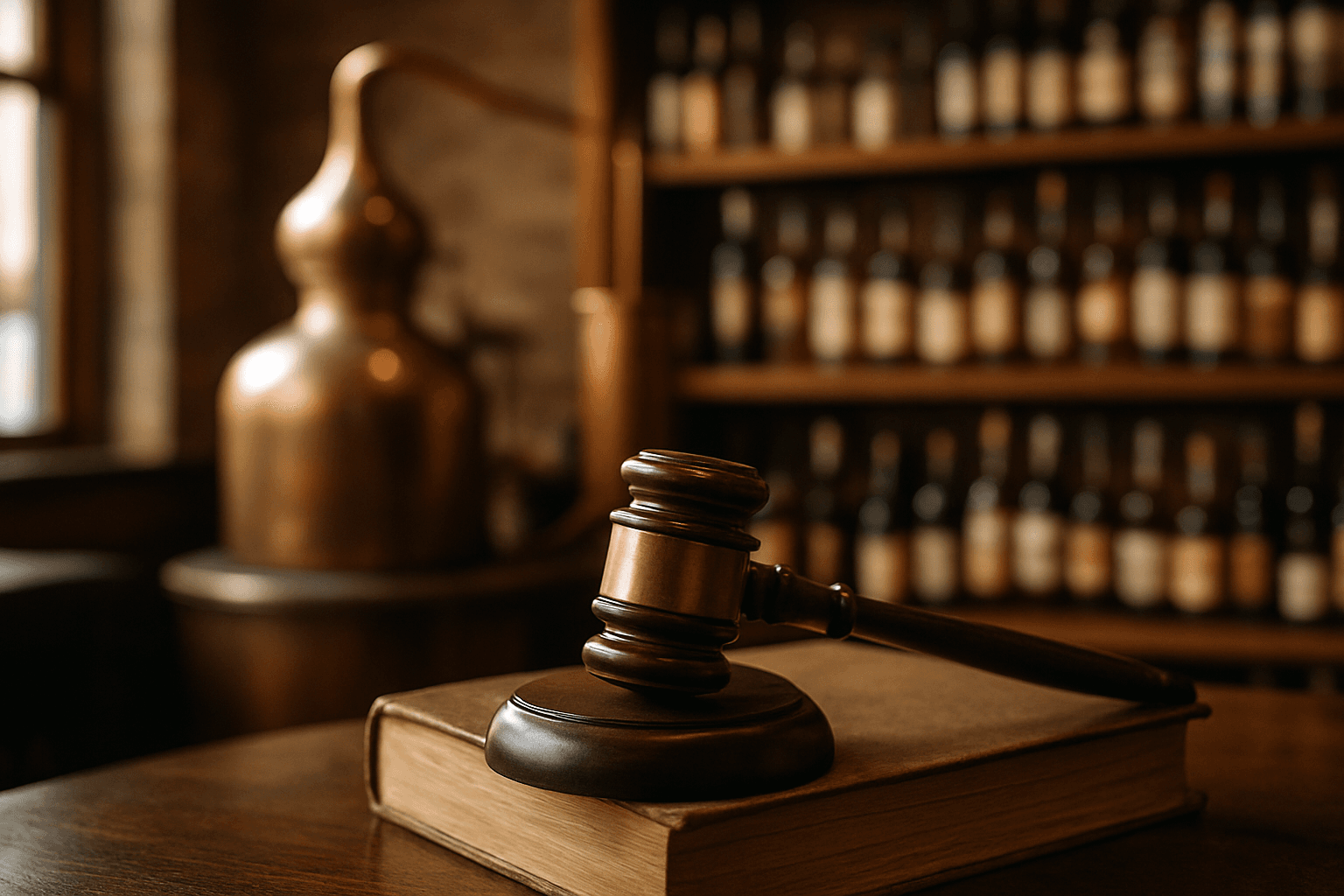
The federal home distilling ban ruling just shook the spirits industry. Here's what liquor store owners need to know about the Fifth Circuit decision and your next moves.
- A Long-Standing Law Just Got Struck Down — Here's What Actually Happened
- Pump the Brakes: What This Ruling Does NOT Do
- The Homebrewing Precedent: What 1978 Can Teach Us About What Comes Next
- Real Talk: How Could Home Distilling Legalization Impact Your Store?
- What to Watch: The Legal Road Ahead and TTB's Next Move
If you run a liquor store, you've probably already seen the headlines — and maybe felt your blood pressure tick up a few points. A federal appeals court just struck down the ban on home distilling, a law that's been on the books since the Reconstruction era [VERIFY exact origin date]. The federal home distilling ban ruling is real, it's significant, and yes, you need to understand it.
But here's the thing: understanding it and panicking about it are two very different moves. One is smart business. The other costs you money and sleep for no good reason.
We dug into the court opinion, the legal precedents, and decades of retail data from the last time the government loosened the rules on homemade alcohol. What we found should actually make you cautiously optimistic — if you play it right. Here's the full breakdown: what happened, what it means, what it doesn't mean, and exactly what you should do next.
A Long-Standing Law Just Got Struck Down — Here's What Actually Happened
Let's cut through the noise. This is a significant legal shift — but it's one you can navigate. Here's what actually went down and why it matters for your store.
The Fifth Circuit's April 2026 Ruling, Explained in Plain English
On April 10, 2026 [VERIFY date], the Fifth Circuit Court of Appeals — which covers Texas, Louisiana, and Mississippi — declared the federal ban on home distilling unconstitutional. The case (No. 24-10760 [VERIFY case number]) was brought by the Hobby Distillers Association [VERIFY party name], a group that's been fighting this battle for years.
Their core argument? Simple fairness. Homebrewing beer and wine has been perfectly legal at the federal level since 1978. That's a 48-year gap in how the government treated homemade alcohol depending on whether you were fermenting or distilling. The HDA argued that gap made no sense — and the court agreed.
This doesn't mean your neighbor can start selling moonshine at the farmers market tomorrow. But it does mean the legal ground has shifted, and the Fifth Circuit home distilling decision is already sparking conversations about what comes next for craft spirits retail nationwide.
Why the Court Said the Ban Exceeded Congressional Authority
Here's where it gets interesting. The ban was originally designed to prevent liquor tax evasion. The government's defense leaned heavily on Congress's taxing power and the Necessary and Proper Clause.
The court wasn't buying it. Their reasoning? The ban actually reduced tax revenue rather than raising it [VERIFY this specific legal finding]. When your justification for a law is "we need this to collect taxes" and the law demonstrably fails to do that, you've got a problem. The court found the government essentially undermined its own argument.
Now, before you start war-gaming worst-case scenarios — remember that this ruling is binding in only three states, and enforcement, appeals, and state-level regulations all stand between this decision and any real change on the ground. Context over panic. That's the play here.
Pump the Brakes: What This Ruling Does NOT Do
Before you start rethinking your entire inventory strategy, let's talk about what the federal home distilling ban ruling actually changed — and more importantly, what it didn't.
Geographic Limits — Only Three States Are Affected (For Now)
The Fifth Circuit's jurisdiction covers exactly three states: Texas, Louisiana, and Mississippi. That's it. This decision does not immediately legalize home distilling nationwide. If your store operates anywhere else, the ruling has zero direct legal effect on your market — at least right now.
Think of it like a regional test case, not a national policy shift.
State Laws Still Apply, and Most States Still Ban Home Distilling
Here's the layer most headlines skip: even within the Fifth Circuit's territory, state-level laws still govern home distilling. Many states maintain their own prohibitions that remain fully in effect regardless of what happens at the federal level. A federal ban being struck down doesn't automatically override state criminal codes.
There's also a significant legal loose end. The court specifically did not address whether the Commerce Clause could independently justify the ban [VERIFY] — leaving the government a major avenue for appeal. And make no mistake, an appeal is expected. This case could land before the full Fifth Circuit en banc or even the U.S. Supreme Court, meaning the retail impact remains genuinely uncertain.
The bottom line for store owners: nobody is legally setting up a still in their garage tomorrow. A law this old doesn't unravel overnight. This is a legal process playing out in real time — not a reason to panic this quarter.
The Homebrewing Precedent: What 1978 Can Teach Us About What Comes Next
If you want to predict what this ruling means for your store, look at what actually happened with beer.
How Homebrewing Legalization Actually Affected Beer Retail
When President Carter signed the homebrewing legalization bill in 1978, plenty of beer distributors and retailers worried about the same thing you might be thinking right now: Why would anyone buy what they can make at home?
Here's what actually happened — the craft beer industry didn't shrink. It detonated. Homebrewers became craft beer's most passionate evangelists and highest-spending customers. Study after study shows that people who brew at home develop sharper palates and deeper appreciation for quality. They spend more on commercial craft beer, not less, because they understand the skill behind a great product.
That 48-year gap between homebrewing legalization and this ruling gives us decades of hard retail data. The pattern is clear: hobbyists become enthusiasts, and enthusiasts become your best customers.
Why Spirits Are a Different Animal Than Beer and Wine
But let's be honest — the craft spirits retail impact won't mirror beer exactly. Distilling is a fundamentally different beast. It requires specialized equipment, serious technical knowledge, and carries real safety risks like methanol separation and explosion hazards that brewing simply doesn't.
The barrier to entry is dramatically higher. Most curious consumers will try it, realize how demanding it is, and walk back into your store with a newfound respect for what's on your shelf — and a willingness to pay for it.
That's not speculation. That's the homebrewing playbook, with an even steeper learning curve working in your favor.
Real Talk: How Could Home Distilling Legalization Impact Your Store?
Let's be honest about the fear first. When you hear about this ruling, your gut reaction is probably: Great, now everyone's going to make their own whiskey and stop buying mine.
Take a breath. Based on every parallel we have, that's not what happens.
The Competitive Threat Is Smaller Than You Think
When homebrewing was legalized in 1978, the craft beer apocalypse for retailers never materialized. Instead, the opposite happened — craft beer exploded into a multi-billion-dollar retail category. And that was for brewing, which is dramatically easier than distilling.
Home distilling is time-intensive, equipment-heavy, and produces inconsistent results — especially for beginners. We're talking about a process that requires careful temperature control, proper cuts between heads, hearts, and tails, and aging that can take years to yield something genuinely good.
Your store offers variety, convenience, consistency, and discovery. A copper pot still in someone's garage cannot replicate walking into a well-curated spirits wall and walking out with something new ten minutes later.
The vast majority of consumers will never distill at home, just as most people never homebrewed after 1978. Even in the three affected states, we're talking about a tiny fraction of spirit buyers.
The Opportunity Most Retailers Will Miss
Here's what excites me about the craft spirits retail impact: it creates enthusiasts.
If home distilling legalization grows the enthusiast culture the way homebrewing did, a new segment emerges — people deeply curious about spirits, eager to learn, and willing to spend on premium and craft products to benchmark their own experiments. They'll buy that single-barrel bourbon because they're trying to understand what makes it special.
Smart retailers position themselves as the go-to resource. Curated craft selections. Tasting events. Staff who can talk mash bills and barrel char levels. Educational content that builds loyalty.
Stores already leaning into craft spirits and knowledgeable staff have a natural advantage. This ruling, if it holds, widens the moat for specialty retailers — and narrows it for stores competing on price alone.
Don't fear the home distiller. Serve them.
Let our team show you what's possible.
our team specializes in digital marketing strategies that drive real results. Let us show you what's possible.
Schedule a CallWhat to Watch: The Legal Road Ahead and TTB's Next Move
The federal home distilling ban ruling grabbed headlines, but here's what every liquor store owner needs to understand: this fight is far from over.
Appeal Scenarios and Timeline Expectations
The federal government is widely expected to appeal. Two paths are on the table:
- En banc review — asking the full Fifth Circuit (not just the three-judge panel) to rehear the case
- Supreme Court petition — escalating the case to the highest court in the land
Either route adds years to the timeline. If the Supreme Court takes it, a decision could reshape alcohol regulation nationwide. If they decline, the Fifth Circuit's ruling applies only to Texas, Louisiana, and Mississippi — creating a messy patchwork where home distilling is legal in three states and a federal crime everywhere else.
There's also a congressional wildcard. Lawmakers could codify the ban under Commerce Clause authority or — going the other direction — create a federal home distilling exemption modeled on the 1978 homebrewing law.
How TTB Regulations Could Evolve
The Alcohol and Tobacco Tax and Trade Bureau (TTB) enforces the current ban. Any regulatory shift means building entirely new frameworks — licensing, safety standards, volume limits. Historically, that's a years-long process.
The bottom line for your business: the realistic timeline for any meaningful retail impact is 2–5 years minimum. The home distilling shakeup you're worried about isn't arriving tomorrow.
You have time to prepare. Use it.
5 Things Smart Liquor Store Owners Should Do Right Now
The federal home distilling ban ruling is historic. But historic doesn't mean panic-worthy. Here's your playbook.
- Stay informed, don't overreact. The Fifth Circuit's decision currently applies to Texas, Louisiana, and Mississippi. Appeals are likely. If you operate in those states, watch your state legislature's response closely. Everyone else: monitor, don't spiral.
- Double down on craft spirits. If home distilling legalization grows enthusiast culture the way homebrewing did after 1978, demand for quality craft spirits goes up, not down. Curate a selection that makes your store the destination. Don't just stock — storytell.
- Invest in staff knowledge. Your team's ability to discuss distilling processes, mash bills, and flavor profiles is the one thing a hobby still can't replicate. Train them.
- Host educational events. Tastings, distiller meet-and-greets, spirits education nights — these turn your store into a community hub. The retailers who build relationships will outperform those who just ring up transactions.
- Watch local regulations like a hawk. The federal ruling is one domino. Your state liquor control board's response will hit your bottom line more directly than any court opinion.
The Bottom Line: This Ruling Is a Signal, Not a Crisis
The Fifth Circuit home distilling decision is historically significant — striking down a Reconstruction-era law always is. But for liquor store owners, this is a signal to watch, not a reason to panic.
Here's what history actually tells us: every major shift in alcohol regulation — from Prohibition's repeal to homebrewing legalization in 1978 — has ultimately grown the market. More enthusiasts means more customers walking through your door looking for premium bottles, comparison products, and expert recommendations.
The craft spirits retail impact will favor stores that lean into curation, education, and community. That should be you.
The ruling currently applies only to Texas, Louisiana, and Mississippi, and appeals are almost certain. This story is far from over.
We'll continue tracking this case and its implications for home distilling legalization and liquor stores nationwide. Bookmark this page — we'll update it as the legal landscape evolves.
Want to stay ahead of the shifts reshaping liquor retail? Subscribe to the Intentionally Creative newsletter for actionable insights delivered straight to your inbox — no hype, no fluff, just the strategy you need to run a smarter store.
10+ years helping liquor retailers and beverage brands grow through data-driven digital marketing. Learn more