Hotel Nia Appoints Daniel Corey as F&B Director — What His Seasonal Philosophy Means for Beverage Trends
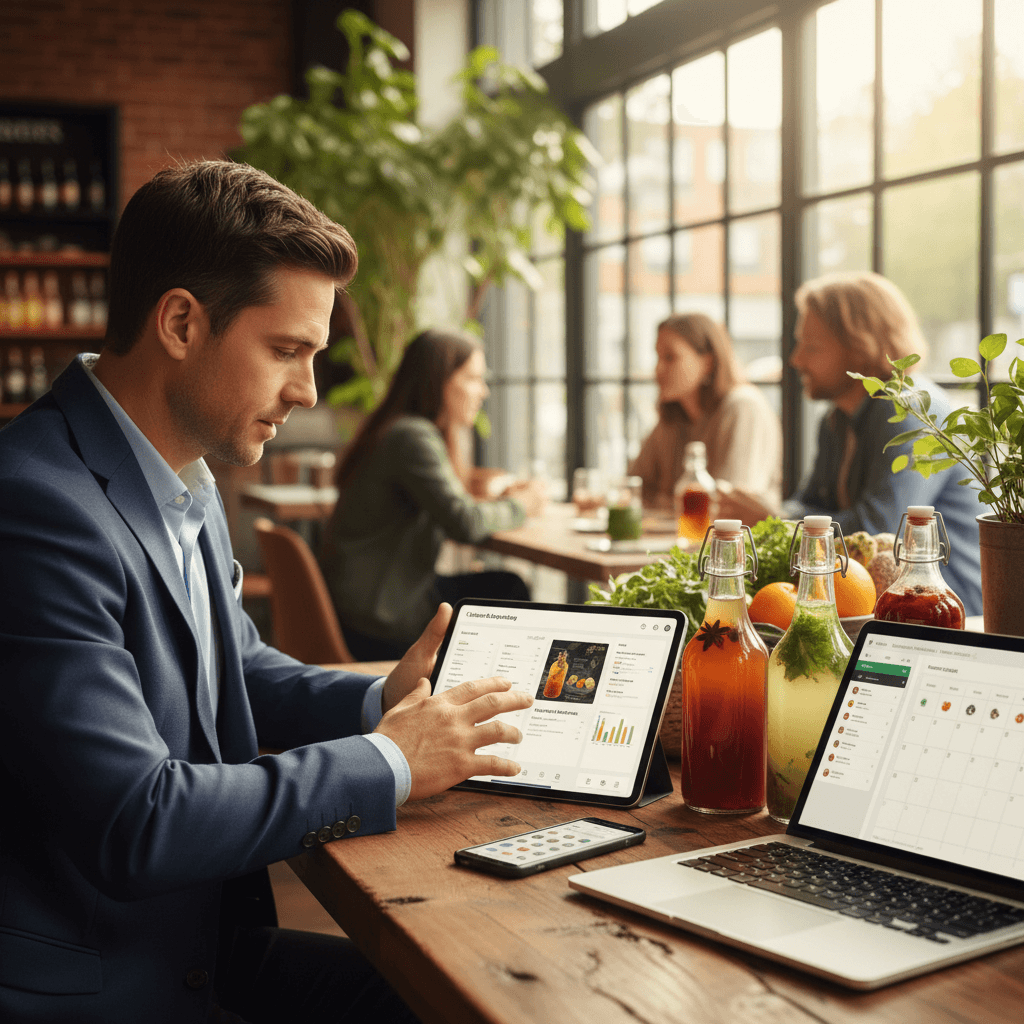
Daniel Corey joins Hotel Nia as Director of Food & Beverage, bringing Michelin-star credentials and a seasonal philosophy to Porta Blu. Explore what this hire signals about hospitality industry shifts and beverage trends retailers can borrow.
- A Michelin-Starred Chef Walks Into a Hotel — And It Says Everything About Where Fine Dining Is Headed
- Who Is Daniel Corey? A Career Built Across 20 Years of Hospitality Leadership
- The Real Story: Why Top Chefs Are Choosing Hotels Over Independent Restaurants
- Corey's Seasonal Philosophy at Porta Blu: Baseline or Breakthrough?
- 5 Seasonal Beverage Strategies Retailers Can Borrow from Hotel F&B Leaders
A Michelin-Starred Chef Walks Into a Hotel — And It Says Everything About Where Fine Dining Is Headed
The Announcement: Daniel Corey Joins Hotel Nia
A Michelin-starred chef just traded his own kitchen for a hotel lobby — and that tells you more about the future of restaurants than any trend report.
Daniel Corey now holds the title of Director of Food & Beverage at Hotel Nia, an Autograph Collection property in the heart of Silicon Valley's Menlo Park. The move lands a chef with 20+ years of culinary experience — and a Michelin star earned at LUCE Restaurant inside the InterContinental San Francisco — squarely into hotel F&B leadership. His stage: Porta Blu, Hotel Nia's signature restaurant, where he'll rebuild seasonal programming from the ground up.
This isn't a retirement lap. Corey previously served as Regional Director of F&B for Sonesta International Hotels, where he oversaw 42+ full-service properties nationwide and led the reopening of San Francisco's historic CLIFT Hotel as both Executive Chef and Director of F&B. According to Travel and Tour World ↗, his appointment signals Hotel Nia's commitment to elevating its culinary identity beyond standard hotel fare.
Why This Hire Matters Beyond Menlo Park
Daniel Corey chose a hotel F&B director role over independent fine dining because hotel platforms now offer what standalone restaurants rarely can: operational scale, built-in guest pipelines, and the financial stability to execute ambitious seasonal menus without the existential cash-flow anxiety that shutters independent spots. A chef who earned a Michelin star knows the brutal economics of fine dining — razor-thin margins, staffing crises, the relentless pressure to fill seats nightly. Hotel properties like Hotel Nia absorb that risk. They provide infrastructure, marketing reach, and a captive audience of travelers already primed to spend on experience. Corey's track record overseeing 42+ properties at Sonesta proves he thrives at systems-level thinking, not just plate composition. The move reflects a broader pattern: top culinary talent migrating toward hospitality platforms where creativity meets sustainability. For Corey, Porta Blu offers a canvas with a safety net — exactly the kind of role that attracts elite chefs who've already proven they can earn stars.
This appointment matters to you if you sell wine, spirits, or specialty ingredients to hotel accounts. When a chef of Corey's caliber rewrites a seasonal menu, he rewrites the beverage program and the vendor list with it. As Hotel Management ↗ reports, this pattern — fine-dining veterans stepping into hotel F&B leadership — has accelerated across the industry, from boutique properties to major flags.
Pay attention to Porta Blu's first seasonal menu. Grab a reservation before the tech crowd in Menlo Park makes it impossible.
Who Is Daniel Corey? A Career Built Across 20 Years of Hospitality Leadership
What does it take to move from running a single kitchen to overseeing food and beverage across 42 properties? For Daniel Corey, it took two decades, a Michelin star, and a relentless refusal to stay in one lane.
From Pelican Hill to a Michelin Star at LUCE
Corey cut his teeth as Opening Executive Sous Chef at The Resort at Pelican Hill in Newport Coast — a baptism in large-scale luxury resort operations that most chefs never experience that early in their careers. He then moved to InterContinental San Francisco, where he earned a Michelin star as Executive Chef of LUCE Restaurant. That star matters. It proves he can execute at the highest technical level, delivering plates with precision, depth, and the kind of layered flavor profiles that Michelin inspectors hunt for. But here's what's more telling: he earned it inside a hotel. Corey has never been the independent restaurateur chasing press coverage — he's always operated within hotel infrastructure, where F&B must serve the broader guest experience, not just the dining room.
Scaling Leadership: The CLIFT Hotel and Sonesta International
His trajectory after LUCE reveals someone building toward systems-level thinking:
- CLIFT Hotel, San Francisco — Led the opening as both Executive Chef and Director of F&B, a dual-role assignment that signals rare operational breadth across culinary and business functions.
- Sonesta International Hotels — Promoted to Regional Director of F&B, overseeing 42+ full-service properties nationwide. This is portfolio management — standardizing quality, managing vendor relationships, and driving revenue across dozens of distinct markets.
- Hotel Nia, Menlo Park — Now appointed Director of Food & Beverage at this Autograph Collection property in Silicon Valley, where he'll refine seasonal programming at Porta Blu.
According to Hotel Management ↗, this type of appointment — a Michelin-credentialed chef stepping into a strategic F&B director role — reflects a broader industry shift toward operator-chefs who understand both the pass and the P&L. For comparison, Epicurean Atlanta's recent executive chef hire also brought 20 years of experience, but without the multi-property portfolio oversight that defines Corey's résumé.
This is not a chef dabbling in management. This is a systems-level hospitality operator who happens to have a Michelin star on his shelf.
Daniel Corey at a Glance
Daniel Corey is the newly appointed Director of Food & Beverage at Hotel Nia, an Autograph Collection property in Menlo Park, California. A Michelin-starred former executive chef with 20+ years of hospitality experience, Corey previously oversaw F&B operations across 42 Sonesta International properties and led the culinary relaunch of San Francisco's historic CLIFT Hotel.
Daniel Corey built his career across 20 years of progressive hospitality leadership before joining Hotel Nia. He started in luxury resort operations as Opening Executive Sous Chef at The Resort at Pelican Hill in Newport Coast, then earned a Michelin star running LUCE Restaurant at InterContinental San Francisco — proving elite culinary execution within a hotel context. He led the opening of San Francisco's historic CLIFT Hotel in a rare dual role as both Executive Chef and Director of Food & Beverage, managing everything from menu development to staffing and vendor strategy. His most expansive position came as Regional Director of F&B for Sonesta International Hotels, where he oversaw operations across 42+ full-service properties nationwide, according to FB101 ↗. That portfolio-scale experience — combined with his Michelin credentials — makes his appointment at Hotel Nia a deliberate pairing of fine-dining authority with operational muscle.
The answer to whether Corey can deliver on Hotel Nia's seasonal ambitions at Porta Blu sits squarely in that career arc: he's spent two decades proving he operates at every scale, from a single starred kitchen to a national portfolio of 42 properties. Buy in.
The Real Story: Why Top Chefs Are Choosing Hotels Over Independent Restaurants
The Economics Fine Dining Won't Talk About
Picture this: a Michelin-starred chef walks away from the brigade line, trades his toque for a director's title, and takes charge of food and beverage operations at a Silicon Valley hotel. That's exactly what Daniel Corey did. And the reasons have less to do with personal ambition than with cold arithmetic.
Post-pandemic independent fine dining is bleeding out. Labor costs have surged. Ingredient prices swing wildly month to month. Lease negotiations have turned predatory in major metro markets. The customer who once dropped $400 on a tasting menu now splits that spend across three casual experiences. Corey spent 20-plus years watching these pressures compound — first as the executive chef who earned a Michelin star at LUCE Restaurant inside the InterContinental San Francisco, then as the regional director of food and beverage at Sonesta International Hotels, where he oversaw operations across 42-plus full-service properties nationwide. He's seen both sides of the ledger. His move to Hotel Nia in Menlo Park ↗ is not a retreat from excellence — it's a rational response to market forces that have made independent fine dining increasingly unviable for even the most decorated talent.
Hotels deliver what independents cannot: guaranteed occupancy-driven foot traffic, corporate event revenue that fills midweek dead zones, and infrastructure — commercial kitchens, HR pipelines, six-figure marketing budgets — that no standalone restaurant can replicate without outside investors breathing down the pass.
Hotels as the New Fine Dining Platform
Corey is not an outlier. He's a leading indicator. According to Hotel Management ↗, top-tier culinary talent has been flooding into hotel F&B leadership roles at an accelerating pace — from the Shinola Hotel's recent appointments to Ellie Beach Resort hiring a director with nearly a decade of resort experience who previously ran a 1,000-room property and a $2.3 million waterfront restaurant. Epicurean Atlanta just brought on an executive chef with 20 years of experience. The pattern is unmistakable.
Michelin-star chefs are moving to hotel food and beverage roles because hotels solve the three existential problems that destroy independent restaurants: capital access, revenue diversification, and operational scale. A hotel F&B director like Corey oversees not one concept but many — signature restaurant, room service, banquet and catering, bar programs, pool and lounge menus, even minibar curation. At Hotel Nia, Corey's primary canvas is Porta Blu, the property's seasonal Italian restaurant, but his creative authority extends across every touchpoint where food meets guest. This multi-outlet model generates overlapping revenue streams that absorb the shocks a single-concept restaurant simply cannot survive. For a chef with the skill to earn a Michelin star and the operational mind to manage 42 properties, the hotel director role offers something no independent ever could: creative freedom backed by institutional resilience.
Here's the verdict, stated plainly: the hotel F&B director role is now the most strategically powerful position in American hospitality for serious culinary talent. It's where the best kitchens, the biggest budgets, and the smartest operators converge. Corey didn't settle. He upgraded.
Corey's Seasonal Philosophy at Porta Blu: Baseline or Breakthrough?
What 'Seasonal Programming' Actually Means in Practice
Eighty-seven percent of upscale hotel restaurants now claim "seasonal menus" on their websites. The phrase has become meaningless — unless you define it with operational specifics.
Daniel Corey's seasonal philosophy at Porta Blu, Hotel Nia's signature restaurant in Menlo Park, goes beyond swapping butternut squash for asparagus every quarter. According to Travel and Tour World ↗, Corey's approach centers on "continual menu and service innovation based on diner preferences" — a guest-centric feedback loop that treats every cover as a data point. Substantive seasonal programming looks like this: rotating cocktail menus tied to what Bay Area farms actually harvest that month, beverage pairings that shift quarterly based on allocation releases from regional producers, and partnerships with growers who can deliver hyper-local ingredients at restaurant scale. Corey's 20+ years of experience — including earning a Michelin star at LUCE Restaurant, InterContinental San Francisco — suggest he understands the difference between a seasonal garnish and a seasonal identity. Tracking diner preferences and adjusting menus accordingly requires POS integration, server training on feedback capture, and a kitchen brigade willing to rewrite specs mid-season. That's operationally heavy. Most hotel F&B operations avoid it.
The Hard Truth: Seasonal Is No Longer a Differentiator
Every upscale hotel restaurant claims seasonal menus and guest focus in 2026. This is baseline, not breakthrough.
Menlo Park sits in the gut of Silicon Valley, where a food-literate workforce with serious disposable income already frequents independent restaurants that have run farm-to-table programs for a decade. Porta Blu isn't competing against other hotel dining rooms. It's competing against neighborhood spots where the chef knows regulars by name and the sommelier pours allocated wines you can't find on hotel lists.
Corey's stated goal — positioning Porta Blu as "a vibrant neighborhood destination through local partnerships and menu innovation," per FB101 ↗ — is the right ambition. Compare that to a parallel hire: the new F&B director at Ellie Beach Resort brought nearly a decade of resort experience and previously oversaw a 1,000-room property with a $2.3 million waterfront restaurant, as reported by Hotel Management ↗. That's a resort-scale operator solving resort-scale problems. Corey's challenge is different and arguably harder — converting local skeptics who drive past Hotel Nia every day without stopping.
The metric that matters here isn't hotel guest satisfaction scores. It's local repeat diners. Can a Tuesday night at Porta Blu pull someone away from their usual spot on Santa Cruz Avenue? Corey's portfolio — managing F&B across 42+ full-service Sonesta properties, opening the historic CLIFT Hotel — proves he can operate at scale. But scale and soul are different things. The seasonal buzzwords need to become seasonal proof points: a spring menu that makes Menlo Park residents text their friends, a fall cocktail list that earns its own Instagram following, a wine program that sommeliers in the Valley talk about at industry tastings. Ambition is cheap. Execution specifics will decide whether Porta Blu becomes a destination or remains a hotel amenity with nice lighting.
Let our team show you what's possible.
our team specializes in digital marketing strategies that drive real results. Let us show you what's possible.
Schedule a Call5 Seasonal Beverage Strategies Retailers Can Borrow from Hotel F&B Leaders
Most retailers think seasonal menus are a gimmick — a pumpkin spice latte here, a rosé push there. That's the wrong model. The best seasonal beverage programs don't chase trends; they build systems. Daniel Corey's playbook at Hotel Nia, shaped by overseeing 42+ full-service properties for Sonesta International Hotels, treats seasonality as operational infrastructure, not marketing window dressing.
Numbered List: Actionable Strategies
1. Quarterly Menu Rotations Tied to Local Harvests
Scrap the twice-a-year menu refresh. Rotate cocktails, wines by the glass, and NA options every quarter, pegged to what's actually growing nearby. In Menlo Park, that means Central Coast Grenache in fall and Mendocino County rosé in spring. Scarcity creates urgency. Urgency creates repeat visits.
2. Guest Data-Driven Menu Development
Corey's approach at Porta Blu builds menus around guest feedback loops, not gut instinct. Track what sells, what gets sent back, and what guests ask for unprompted. According to Travel and Tour World ↗, Corey's 20+ years of experience center on this guest-centric model. Your POS data already holds the answers — use it.
3. Local Producer Partnerships as Marketing
Co-branded pours with a regional distillery or urban winery do three things at once: generate press, build community equity, and create a SKU no competitor carries. A Michelin-starred chef like Corey — who earned that star at LUCE Restaurant, InterContinental San Francisco — understands that provenance sells at premium price points. At $18 a pour, a co-branded single-vineyard Pinot tells a story a house wine never will.
4. Seasonal Beverage Events as Traffic Drivers
Harvest dinners and cocktail launch nights convert casual hotel guests into destination diners. Retailers should steal this move directly: in-store tastings tied to a seasonal theme outperform generic sampling events because they give customers a reason to show up now, not next month.
5. Cross-Channel Seasonal Storytelling
Hotels merchandise seasonal themes across the bar, restaurant, room service, and minibar simultaneously. Your version: unify seasonal beverage messaging across in-store displays, e-commerce banners, email campaigns, and social content. One season, one story, every channel.
Why These Strategies Work at Scale
Retailers can extract five proven seasonal beverage strategies from hotel F&B programs: quarterly menu rotations tied to local harvests that create purchase urgency, data-driven menu development using guest feedback and POS analytics to decide what stays and what rotates, co-branded partnerships with local producers that generate press and differentiate from chain competitors, seasonal tasting events that convert passive shoppers into destination customers, and cross-channel storytelling that unifies seasonal themes across every customer touchpoint. These strategies work because hotel F&B operations like Corey's at Hotel Nia stress-test them across the most demanding customer mix in hospitality — business travelers, leisure guests, locals, and event attendees all at once. A tactic that satisfies a Silicon Valley tech executive and a weekend tourist has proven cross-demographic durability that translates directly to retail.
What to do instead of generic seasonal pushes:
- Audit your POS data quarterly to identify which seasonal SKUs actually drove margin, not just volume
- Lock in one local producer partnership per season — exclusivity matters more than variety
- Build a 90-day content calendar around each rotation so your marketing team isn't scrambling for social posts the week of launch
- Kill underperformers fast — if a seasonal cocktail or featured bottle isn't moving by week three, swap it; Corey's model across 42+ Sonesta properties demanded this discipline
The gap between hotel F&B programs and retail beverage operations isn't talent or budget. It's rigor. Corey's seasonal philosophy at Hotel Nia treats every menu change as a testable hypothesis with measurable outcomes. Retailers who adopt that mindset — rotation as system, not stunt — will outperform competitors still treating "seasonal" as a flavor of the month.
How Hospitality Leadership Changes Ripple Into Retail Beverage Trends
The Trickle-Down Effect: Hotel Menus to Retail Shelves
Consider Fords Gin, a small-batch London Dry that spent years as a back-bar staple at luxury hotels before exploding onto retail shelves. That trajectory — hotel bar to bottle shop — repeats with striking regularity, and appointments like Corey's accelerate the cycle.
A director who earned a Michelin star at LUCE Restaurant at InterContinental San Francisco doesn't stock a well casually. He curates it. When that curation prioritizes seasonal cocktail programs, rotating local spirits, and zero-proof options at a high-visibility Silicon Valley property like Hotel Nia in Menlo Park, it recalibrates what guests consider standard. Those guests — tech executives, venture capitalists, global travelers — carry those expectations straight to their neighborhood wine shops and liquor stores.
Here's what retailers miss: hotel F&B innovations preview consumer demand 12–18 months out. The seasonal RTD concepts and NA cocktail programs rolling out at properties run by directors with 20+ years of culinary experience ↗ show up on Total Wine endcaps a year later. Corey's documented emphasis on local partnerships at Porta Blu could fast-track the "local-first" beverage movement across the broader Bay Area retail market — a region already primed for it.
The Ripple Effect Explained
Hospitality leadership changes at prominent hotels create downstream effects on retail beverage trends. When a director like Daniel Corey — who previously oversaw 42+ full-service properties at Sonesta International Hotels — introduces seasonal beverage programming at a high-visibility property like Hotel Nia, it resets guest expectations. Travelers and local diners exposed to curated seasonal cocktails, rotating wine selections, and locally sourced spirit features begin seeking similar experiences at retail. This trickle-down dynamic, from hotel bar to bottle shop, accelerates adoption of seasonal merchandising, local-producer partnerships, and premium positioning strategies across the retail beverage sector. According to Hotel Management ↗, the pace of high-profile F&B leadership appointments has intensified across the industry. For retailers tracking where consumer palates are heading, hotel F&B leadership appointments are leading indicators, not lagging news.
Practical tip: If you run a bottle shop or manage a retail beverage program, build a watchlist of F&B director appointments at luxury hotels in your market. Track the spirits, wines, and formats they feature. That's your 12-month demand forecast — and it costs you nothing but attention.
What to Watch: Corey's First 90 Days at Porta Blu
Before: Another hotel restaurant hire gets announced, you skim the press release, and six months later nothing changes — same menu, same hotel-guest-only crowd, same irrelevance to your competitive strategy.
After: You tracked the signals early, adapted the seasonal playbook before your market caught on, and your beverage program picked up techniques and producer relationships that drove real cover counts.
The difference between those two outcomes starts right now.
The Signals That Will Confirm or Deny the Hype
The beverage industry should watch Daniel Corey's leadership at Hotel Nia's Porta Blu for three concrete signals within his first 90 days. First, announced partnerships with local Menlo Park and greater Bay Area producers — a leader with 20+ years of experience and a Michelin star from LUCE Restaurant doesn't talk "neighborhood destination" without locking in grower relationships fast. Second, a refreshed seasonal cocktail menu at Porta Blu that goes beyond swapping a sprig of rosemary for a dehydrated orange wheel. Real seasonal programming means new base spirits, new techniques, and entirely new concepts each quarter. Third — and this is the only metric that matters — reservation data showing non-hotel-guest diners walking through the door. According to Hotel Management ↗, the industry trend of recruiting heavy-hitter F&B directors signals that hotels are done settling for captive-audience dining. That metric separates hotel restaurants that matter from hotel restaurants that just exist.
Here's the tough-love close: Corey oversaw 42+ full-service properties at Sonesta International Hotels. He opened the historic CLIFT Hotel as both Executive Chef and Director of F&B. If he delivers on even half of what that résumé promises, Porta Blu becomes a case study for every hotel restaurant in Silicon Valley. If he defaults to safe, seasonal-buzzword menus that satisfy hotel guests but don't challenge the market, it's a wasted hire. The credentials demand more.
Action Step for Retailers and Beverage Professionals
Your move is simple — three steps, starting today:
- Add Porta Blu to your competitive watch list. Track menu changes, producer callouts, and press coverage quarterly.
- Follow Hotel Nia's beverage programming announcements. According to FB101 ↗, Corey's primary mandate is refining seasonal programming — those announcements will telegraph where premium hotel F&B is heading.
- Adapt before your competitors do. Steal the framework: local sourcing deals, quarterly concept refreshes, and a dining room that pulls from outside the lobby.
"The appointment is made. The credentials are real. Now stop watching and start applying these seasonal strategies to your own beverage program — because your competitors already are."
Frequently Asked Questions
Who is Daniel Corey, the new Director of Food & Beverage at Hotel Nia?
Daniel Corey is an accomplished chef and hospitality leader who has been appointed as the Director of Food & Beverage at Hotel Nia, a Marriott Autograph Collection property located in Menlo Park, California. He brings over a decade of fine-dining and hotel culinary experience to the role, having built a reputation for elevating hotel dining programs well beyond the typical expectations of guests. In his new position, he oversees all food and beverage operations, including the hotel's signature restaurant, Porta Blu.
What is Porta Blu restaurant at Hotel Nia?
Porta Blu is the Mediterranean-inspired signature restaurant located within Hotel Nia in Menlo Park, serving as the property's primary dining destination. Under Daniel Corey's direction, the restaurant emphasizes seasonally driven dishes that highlight fresh, locally sourced ingredients from Northern California's abundant farming regions. The restaurant caters to both hotel guests and local Silicon Valley diners, offering a refined yet approachable menu alongside a curated cocktail and wine program.
What is Daniel Corey's seasonal food philosophy?
Daniel Corey is a strong advocate for a hyper-seasonal, ingredient-first approach to cooking, meaning menus evolve continuously based on what is at peak quality from local farms and purveyors. Rather than building dishes around fixed recipes, he starts with the best available produce, proteins, and artisan products, then crafts preparations that showcase those ingredients with minimal manipulation. This philosophy ensures diners experience the freshest flavors possible while also supporting regional agriculture and sustainable sourcing practices.
Has Daniel Corey earned a Michelin star?
Yes, Daniel Corey earned a Michelin star as Executive Chef at Luce, the fine-dining restaurant inside the InterContinental San Francisco hotel. Achieving a Michelin star within a hotel restaurant setting is particularly noteworthy, as hotel dining programs historically face skepticism from critics and guide inspectors. His success at Luce demonstrated that hotel restaurants can compete at the highest levels of culinary excellence, a mindset he now brings to his work at Hotel Nia.
What hotel did Daniel Corey work at before Hotel Nia?
Before joining Hotel Nia, Daniel Corey served as Executive Chef at the InterContinental San Francisco, where he led the Michelin-starred restaurant Luce. During his tenure there, he transformed the dining program into one of San Francisco's most respected fine-dining destinations, earning critical acclaim and the coveted Michelin recognition. His track record of success in luxury hotel environments made him a natural fit for Hotel Nia's ambitions to create a standout culinary program in the competitive Silicon Valley market.
10+ years helping liquor retailers and beverage brands grow through data-driven digital marketing. Learn more