How to Price and Position Premium Alsace Rieslings in Your Liquor Store: Shelf Placement, Staff Education, and Margin Strategy
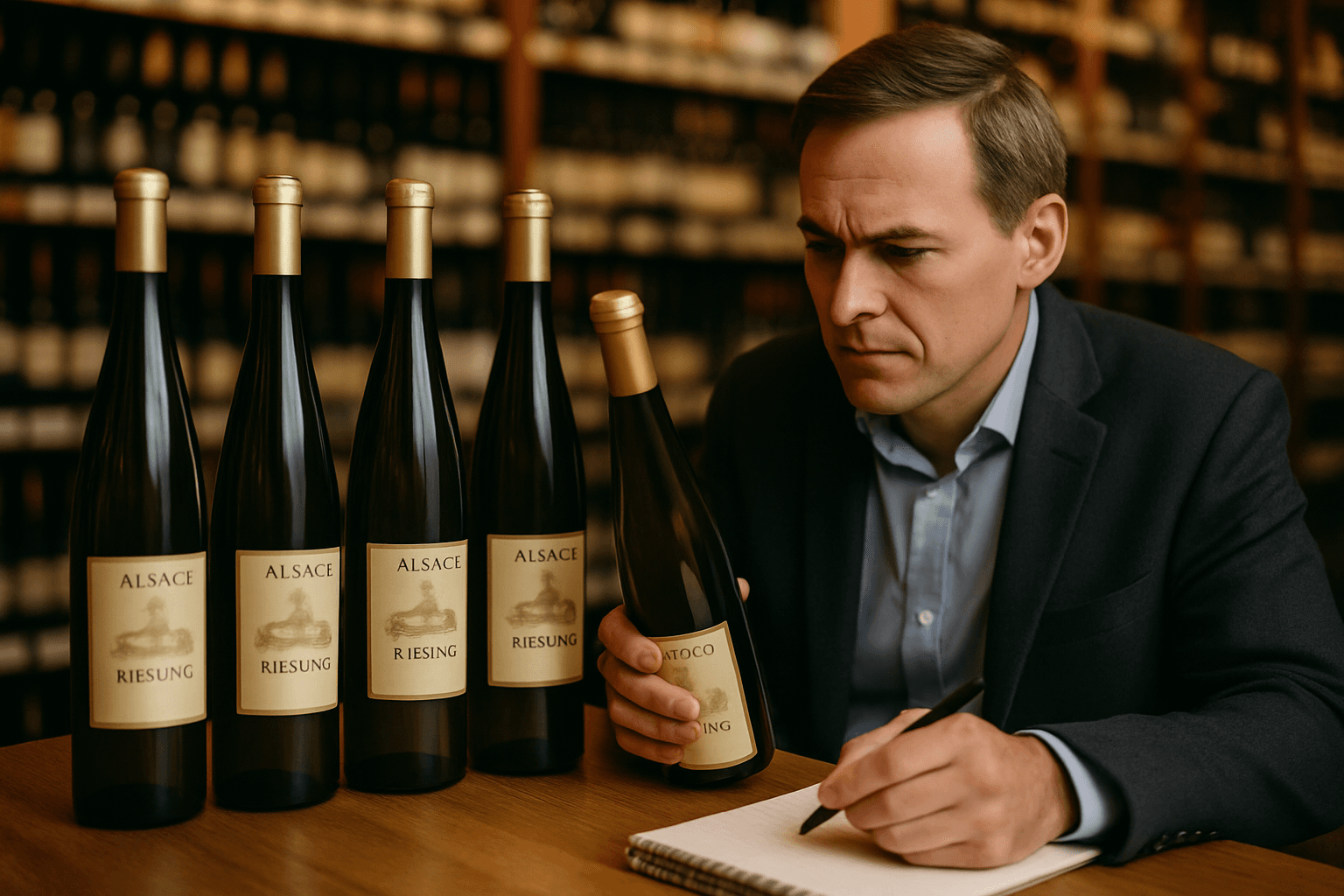
Learn how to price premium Alsace Riesling in your liquor store with proven shelf placement, staff training, and margin strategies that move bottles.
- Why Alsace Riesling Is a Margin Opportunity Hiding in Plain Sight
- Building Your Alsace Riesling Pricing Framework: From Entry-Level to Grand Cru
- Shelf Placement Strategy: Making Tall Bottles Work in Your Planogram
- Staff Education: Turning Your Team Into Alsace Riesling Sellers
- In-Store Storytelling and Merchandising Tactics That Drive Trial
You've got a white wine section full of the same Pinot Grigio and Sauvignon Blanc bottles as every other store in town. Your margins are fine — not great. And somewhere on your shelf, or maybe not even on it yet, sits a category that could change both of those things. Alsace Riesling is one of the most critically acclaimed, food-versatile, and underpriced fine wine categories in the world — and one of the most undersold. That gap between quality and market awareness isn't a problem for you. It's a profit opportunity.
What follows is a complete, practical guide: how to structure your pricing tiers, where to place those tall flute bottles so they actually get noticed, what your team needs to say (in 60 seconds or less), and how to build a planogram that balances turnover with margin. No theory without application. Let's get into it.
Why Alsace Riesling Is a Margin Opportunity Hiding in Plain Sight
Here's a quote that should make every independent liquor store owner's ears perk up: "We are not good at selling Alsace." That's not some random blogger — that's the Alsace wine region talking about itself (Wine Lover's Guide, January 2025). [VERIFY: exact source name and publication date]
Read that again. An entire world-class wine region is admitting it has a marketing problem. For you, that's a wide-open lane.
Stop leaving online sales on the table. Here are the 10 most costly e-commerce mistakes liquor stores make and how to...
The Category Nobody's Selling Well (Yet)
Big-box retailers aren't touching this category with any real effort. They don't have the shelf strategy, the staff knowledge, or frankly the motivation to figure it out. But independent operators like M&R Liquors and Maximum Wine + Liquors are already proving the demand exists — actively merchandising Alsace Rieslings in the $10–$25 retail range and moving bottles. A wine like Trimbach's 2021 Riesling, sitting around $25 with a 92-point James Suckling score [VERIFY: vintage and score], practically sells itself once a customer picks it up.
What the Numbers Tell Us About the Opportunity
Compare that $10–$25 core band against premium German Riesling comparables — Grosses Gewächs and Eiswein bottlings — hitting $43–$45 at retail. There's enormous perceived-value headroom in Alsace that your Sauvignon Blanc and Pinot Grigio shelf-fillers simply can't match.
Here's the thesis: with the right pricing framework, a smart shelf placement strategy, and a little staff know-how, this category delivers stronger margins than your usual white wine lineup — and positions your store as a destination for serious wine buyers. Let's break down exactly how.
Discover the top SEO mistakes liquor stores make and proven fixes. Learn local SEO tactics to boost visibility and dr...
Building Your Alsace Riesling Pricing Framework: From Entry-Level to Grand Cru
Knowing the opportunity exists is one thing. Capturing it requires structure. If you want to know how to price premium Alsace Riesling in your liquor store without guessing, you need a framework — not a gut feeling. Niche Old World categories don't sell themselves the way bourbon or rosé might. As Provi's pricing guide puts it plainly: independent stores need deliberate markup structures, not ad hoc pricing. That's doubly true for a category most of your customers haven't explored yet.
Anchor Your Set Around the $25 Sweet Spot
Start with your anchor bottle. F.E. Trimbach Riesling retails at roughly $25/750ml (ex-tax, per Wine-Searcher), and it's the benchmark producer most wine-aware customers will recognize. That 92-point Suckling score is a shelf talker waiting to happen. This bottle sets the expectation for the entire category. Everything else in your set gets priced relative to it.
Create a Three-Tier Pricing Structure
Spread matters. Don't price your entire Alsace set within a $3 range — that kills any reason to trade up and leaves your staff with zero upsell path. Instead, build three distinct tiers:
Discover why BevNET Live NYC 2026 (June 10-11) is the must-attend event for liquor store owners. Learn about the 1:1 ...
- Entry tier ($10–$18): Everyday Alsace Rieslings that compete directly with New Zealand Sauvignon Blanc. This is your gateway.
- Core tier ($19–$30): Anchored by Trimbach, Hugel, and Zind-Humbrecht. This is where most of your volume and margin strategy lives.
- Premium tier ($35–$50+): Grand Cru, single-vineyard, and late-harvest bottlings. Here's your key insight — customers already paying $43–$45 for premium German Rieslings will absolutely pay the same for top Alsace when it's positioned correctly on the shelf.
That upper ceiling isn't theoretical. It's already established in your customers' buying behavior.
How to Set Markups That Actually Protect Your Margins
Target 33–40% margins on core tier bottles and 40–50% on premium tier where perceived value supports it. Grand Cru Alsace with critical scores and vineyard provenance can carry those higher markups — your $15 entry bottles can't.
The three-tier structure gives you pricing architecture that protects margins and creates a natural trade-up conversation for your team. That's the whole point.
Shelf Placement Strategy: Making Tall Bottles Work in Your Planogram
With your pricing tiers locked in, the next question is where these bottles actually go. And that starts with a physical reality most store owners overlook until the bottles are already in the building.
The Alsace Flute Bottle Problem (and How to Solve It)
Alsace flute bottles are taller and slimmer than your standard Bordeaux or Burgundy shapes. That means they often won't fit standard shelf heights without adjustment. If you've ever watched a stocker try to wedge a Trimbach into a row of Chardonnays, you know the frustration.
The fix is straightforward: dedicate a section with taller shelf spacing, or adjust one shelf on an existing gondola. It's a small change that prevents the bigger problem — hiding these bottles sideways in a bin where nobody discovers them.
Where on the Shelf Premium Alsace Riesling Should Live
Placement and pricing work together. Your core-tier bottles ($19–$30) belong at eye level or just below. That's your impulse-discovery zone for "drink tonight" shoppers. Premium and Grand Cru bottlings? Place them slightly higher. The reach-up signals prestige — and justifies the price tag.
Grouping Strategy: Region vs. Varietal vs. Price
Don't scatter Alsace across your general Riesling section. Instead, build a mini-destination: a dedicated "Alsace" or "Old-World Whites" block of 4–8 SKUs. This creates visual impact and tells a story customers can follow. Add a small shelf sign — "Alsace, France — The Original Riesling" — and include a shelf talker noting the Trimbach score and price.
One more move worth making: place your Alsace set adjacent to your German Riesling section, not buried within it. Customers shopping one will naturally discover the other — and at the core tier, the price comparison works decisively in Alsace's favor. That cross-discovery drives trade-up without a single upsell conversation from your staff.
Staff Education: Turning Your Team Into Alsace Riesling Sellers
Smart pricing and sharp shelf placement get bottles noticed. But the sale often happens — or doesn't — in a 30-second conversation on the floor. Here's the uncomfortable truth: most floor staff can't explain what makes Alsace Riesling different from a German Riesling — or why a customer should spend $25 on Trimbach instead of grabbing a $12 domestic white. That's not a knock on your team. It's a training gap, and it's costing you margin dollars every shift.
When you're figuring out how to price premium Alsace Riesling in your liquor store, the sticker only does half the work. Your people do the rest.
The 60-Second Alsace Pitch Every Employee Should Know
Drill this until it's automatic:
"Alsace is a French region that makes dry, food-friendly Rieslings — more mineral and structured than the fruity German styles most people picture. It's honestly one of the best-value fine wine regions in the world. If someone likes Chablis or dry Chenin Blanc, hand them a Trimbach and let the bottle do the talking."
That's it. No sommelier vocabulary required. Sixty seconds, and your customer feels guided instead of sold to.
Three Selling Points That Actually Move Bottles
Have your team memorize these:
- "It's dry." Most customers associate Riesling with sweetness. Alsace Rieslings are almost always dry. That one sentence overcomes the biggest objection in the category.
- "It goes with everything." Sushi, roast chicken, Thai takeout — versatility is a massive selling point for the customer who doesn't want to think too hard about pairing.
- "Critics love it, and it's underpriced." A 92-point wine for $25 is serious value — especially when comparable German bottlings run nearly double that.
Using Scores and Shelf Talkers as Sales Multipliers
Print simple shelf talkers: the score, a one-line food pairing, and the price. That's it — keep them clean. Shelf talkers measurably increase conversion on wines customers aren't already seeking out, which is exactly the situation Alsace Riesling sits in for most shoppers.
Educated staff paired with visible, data-backed signage is the combination that moves this category. One reinforces the other. Neither works as well alone.
Let our team show you what's possible.
our team specializes in digital marketing strategies that drive real results. Let us show you what's possible.
Schedule a CallIn-Store Storytelling and Merchandising Tactics That Drive Trial
Your pricing is dialed in. Your shelves are set. Your staff knows the pitch. Now it's about creating moments that get bottles off the shelf and into the bag.
End-Cap and Cross-Merchandising Ideas
Seasonal end-caps work because they solve a problem shoppers didn't know they had. Try "Summer Whites from Alsace" in June or "Thanksgiving Wine That Isn't Chardonnay" in November — Alsace Riesling's food versatility makes it a natural fit for both. Rotate these quarterly and track movement.
If your store carries food, cross-merchandise aggressively. A bottle of Trimbach next to a wedge of Gruyère with a small card reading "Classic French pairing — $25" does more selling than any ad you'll run.
Tasting Events: Low-Cost, High-Conversion
Run monthly or quarterly in-store tastings focused on Alsace. Pour the $15 bottle alongside the $30 bottle side by side — let customers taste the difference. That's how you build trade-up behavior organically. Even a simple Saturday afternoon pour of one SKU can move a case.
One more thing: if you're positioning $40+ bottles as cellar-worthy, store them properly — 55°F, controlled humidity, horizontal when possible. Then make it a selling point: "We store our premium wines right so you're getting them at their best." That kind of care builds trust and justifies premium pricing.
Margin Strategy in Action: A Sample Alsace Riesling Planogram
Here's where everything comes together on an actual shelf. If you're building out how to price premium Alsace Riesling in your liquor store, start with a tight, intentional set — not a sprawling guess.
A 6-SKU Alsace Set That Balances Margin and Turnover
Build your planogram around three tiers:
- Entry Tier (2 SKUs, $10–$18): High-turnover bottles that pull curious buyers into the category. Think reliable co-op producers or négociant labels. These are your gateway.
- Core Tier (3 SKUs, $19–$30): This is your profit engine. Anchor with Trimbach Riesling at ~$25 — the critical acclaim gives your staff an easy selling point and your shelf talkers real teeth. Surround it with two complementary producers to offer variety without clutter.
- Premium Tier (1 SKU, $40+): A Grand Cru or Vendange Tardive. It won't fly off the shelf, but it signals credibility. Serious wine buyers — the ones spending $200 per visit — notice when a store carries bottles like this.
Expected Margins by Tier
| Tier | Price Range | Target Margin | Role |
|---|---|---|---|
| Entry | $10–$18 | 30–35% | Category recruitment |
| Core | $19–$30 | 35–40% | Profit driver |
| Premium | $40+ | 45–50% | Credibility & trade-up |
This structure works because each tier has a job. The entry bottles fund discovery, the core tier funds your business, and the premium bottle funds your reputation.
One critical note: revisit your set quarterly. If an entry-tier SKU isn't turning within 60 days, swap it out — no sentimentality. If your $25 Trimbach is consistently flying, consider adding a second core-tier producer like Hugel or Josmeyer. Let your POS data guide the assortment, not your distributor's latest push. And remember — those tall Alsace flute bottles need slightly more vertical shelf space than standard Bordeaux shapes, so plan your facings accordingly.
The Bottom Line: Alsace Riesling Rewards Retailers Who Do the Work
Here's the opportunity most stores are sleeping on: Alsace Riesling is critically acclaimed, under-marketed, and sits in a $10–$45+ price band that delivers both volume and margin. That's rare.
Figuring out how to price premium Alsace Riesling in your liquor store isn't complicated — it just requires intention. The wins go to operators who place strategically, price deliberately, and train staff to tell a compelling, simple story.
Do the work, reap the reward.
Want help building a merchandising or pricing strategy for niche wine categories like Alsace? We build these playbooks for independent retailers. Let's talk.
10+ years helping liquor retailers and beverage brands grow through data-driven digital marketing. Learn more