Lansing's Proposed Liquor Store Location Limits: What Zoning Restriction Trends Mean for Independent Retailers Nationwide
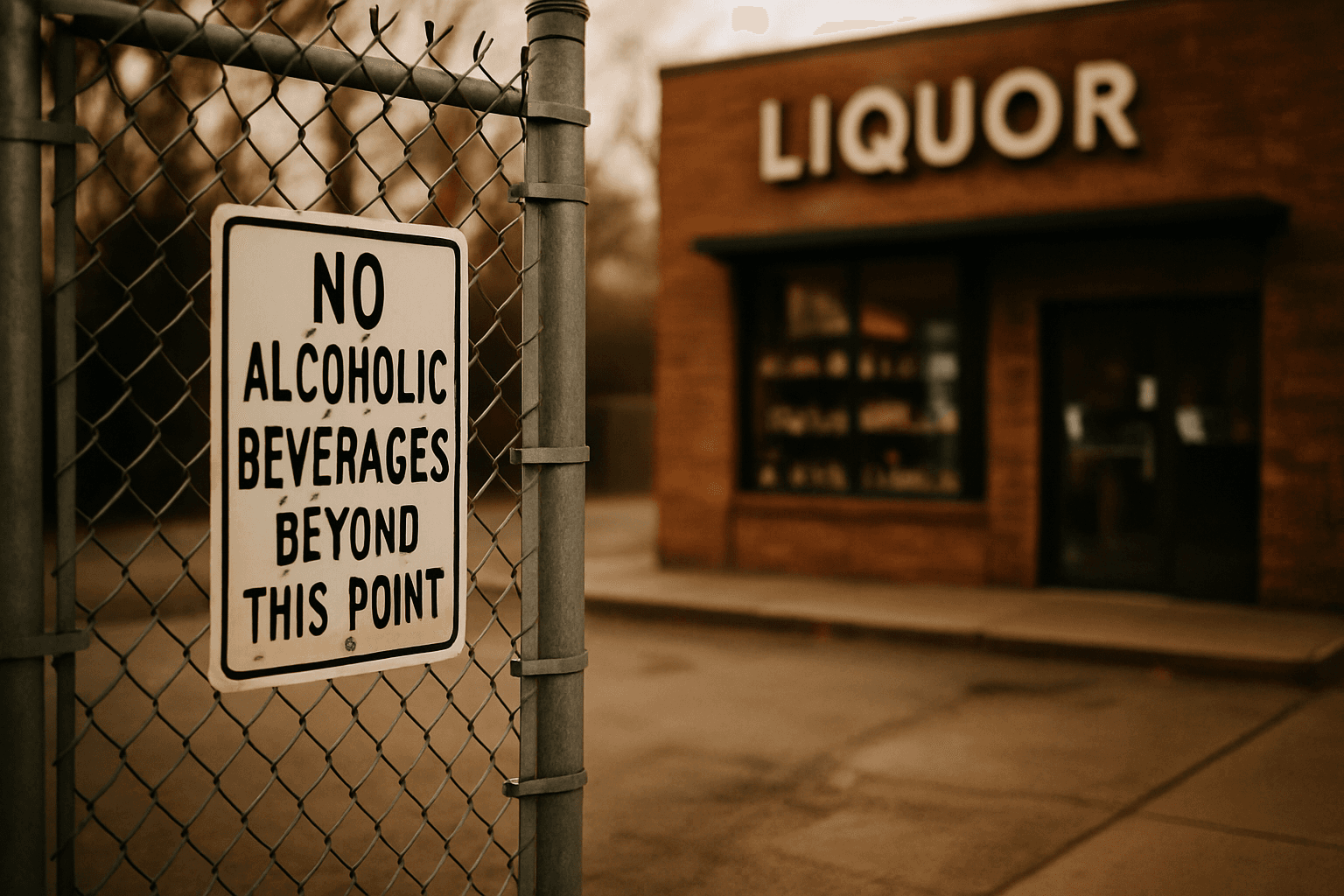
Liquor store zoning restrictions are spreading fast. Here's what Lansing's proposed limits—and similar laws nationwide—mean for independent retail owners.
- Cities Are Drawing Lines Around Liquor Stores — Literally
- A Quick History of Liquor Store Zoning Restrictions in the U.S.
- Why Cities Are Pushing Location Limits Right Now
- It's Not Just Location — Ownership Caps Are on the Table Too
- What This Means for Your Store: A Practical Risk Assessment
Your next competitor might not be a new store across town. It might be a zoning ordinance that quietly rewrites the rules on where you can operate, whether you can expand, and what your business is worth when it's time to sell. Liquor store zoning restrictions are multiplying across the country — and most independent retailers aren't paying attention until it's too late.
From Lansing, Michigan to Fort Worth, Texas to Louisville, Kentucky, cities are imposing new buffer zones, distance mandates, and density limits on liquor retail. The proposals sound reasonable in press releases. They sound a lot less reasonable when they eliminate half the viable real estate in your trade area overnight. And if you think this is a big-city problem that won't reach your market, the data says otherwise.
This isn't a legal briefing. It's a business strategy conversation — one every independent liquor store owner needs to have right now. Here's what's happening, why it's happening, and exactly what you can do about it.
Cities Are Drawing Lines Around Liquor Stores — Literally
If you think location-based zoning restrictions are someone else's problem, Lansing, Michigan would like a word.
The city's proposed ordinance would impose new limits on where liquor stores can open — adding buffer zones between stores and sensitive areas like schools, churches, and residential neighborhoods. It's the kind of regulation that sounds reasonable in a city council meeting but can quietly strangle growth for independent operators already working with razor-thin margins and limited real estate options.
Discover proven liquor store customer retention tactics to build loyalty, increase profitability through repeat custo...
But here's the thing: Lansing isn't an outlier. It's a data point in a trend that's accelerating fast.
What Lansing's Proposal Actually Says
The specifics are still taking shape, but the framework follows a familiar playbook — mandated minimum distances between liquor-licensed businesses and designated community zones. If it sounds like New York's 500 Foot Law, which requires a 500-foot minimum distance between on-premises liquor-licensed establishments, that's because it's cut from the same cloth. These location limits effectively shrink the map of viable retail sites, sometimes dramatically.
This Isn't Just a Lansing Problem
Fort Worth's City Council passed its own zoning ordinance on January 29, 2026 [VERIFY], increasing mandated distances between liquor stores, smoke shops, and credit-access businesses — and they did it despite direct pushback from store owners who showed up to fight it. In December 2025, Louisville planning officials were tasked with studying possible liquor retail zoning laws, including distancing requirements [VERIFY]. When mid-size cities start commissioning studies, legislation usually isn't far behind.
And the scope is widening beyond liquor. Macon-Bibb County, Georgia is pursuing similar buffer-zone restrictions for vape shops in 2026 [VERIFY], signaling that these regulations are part of a broader crackdown on all "vice" retail categories. If your store sells tobacco, vape products, or lottery alongside spirits, you're facing compounding risk from multiple regulatory directions at once.
Learn how to optimize your Google Business Profile for liquor stores with tips on photos, posts, reviews, and categor...
This is a trend you need to understand now — not after it shows up on your doorstep with a public comment period and a 30-day clock.
A Quick History of Liquor Store Zoning Restrictions in the U.S.
To understand where these regulations are headed, it helps to understand where they came from. The current wave of proposals didn't emerge from thin air — it's built on decades of precedent that varies dramatically depending on where you operate.
New York's 500 Foot Law: The Granddaddy of Buffer Zones
New York's "500 Foot Law" is one of the oldest and most well-known location limits in the country. It prohibits the state Liquor Authority from issuing on-premises retail licenses within 500 feet of an existing licensed premises. The state also limits individuals to just one liquor store license — though proposed legislation could raise that cap to two [VERIFY].
Here's the important distinction for independent retailers: New York's restriction isn't a zoning law. It's a liquor authority regulation. That difference matters. Your city might restrict where you operate through its zoning code, through its liquor control board, or both. The American Planning Association has documented that many cities make explicit zoning provisions for liquor outlets, but a substantial number rely exclusively on separate liquor control regulations — creating an inconsistent patchwork nationwide.
Learn how email segmentation for liquor stores drives repeat sales with a 4,200% ROI. List-building tactics, purchase...
Control States vs. License States: Two Ends of the Spectrum
Then there's the other end of the spectrum entirely. Idaho operates as a control state where the State Liquor Division operates or contracts with private businesses for all off-premise distilled spirits locations. That's the most extreme form of location control — the state itself decides every single retail placement.
Most independent operators work in license states, where the market has more say. But even in license states, cities like Fort Worth and Louisville are increasingly pulling the zoning lever to control density.
The bottom line: know which lever your city is reaching for — zoning code or liquor authority rules — because your response strategy depends on it.
Why Cities Are Pushing Location Limits Right Now
So that's the regulatory landscape. But knowing the history doesn't answer the more pressing question: why is this happening right now, and why is it picking up speed?
The short answer: it's politically easy and optically effective. But the longer answer matters more if you're an independent retailer watching these proposals multiply.
Municipalities across the country are increasingly linking liquor store density to property values, public health outcomes, and broader community investment narratives. The data connections aren't always airtight, but they don't need to be — the narrative is compelling enough to win council votes.
The 'Neighborhood Revitalization' Argument
Fort Worth made this explicit. When City Council passed its new distance mandates, officials framed the restrictions squarely as a neighborhood revitalization strategy — essentially positioning fewer liquor stores as a path to stronger neighborhoods. Louisville's planning study follows the same logic. These aren't isolated moves. They're a trend with momentum.
The Compounding Effect of 'Vice' Retail Zoning
Here's where it gets especially tricky. Macon-Bibb County's vape shop buffer-zone push shows that this distance-rule logic is spreading across "vice" categories. If your independent liquor store also sells tobacco or vape products, you could face overlapping restrictions from multiple ordinances — each one narrowing where you're allowed to operate.
Are there legitimate community concerns behind these regulations? Absolutely. Neglected storefronts and problem locations are real. But blanket location limits don't distinguish between those operators and the well-run shop that sponsors Little League teams and drives neighborhood foot traffic. That's the core problem — and it's one good operators need to start addressing before the next council meeting.
It's Not Just Location — Ownership Caps Are on the Table Too
While cities like Lansing and Fort Worth focus on where liquor stores can operate, New York is reminding us that regulators also care about how many you can own. Liquor store zoning restrictions get most of the headlines, but ownership limits are a quieter — and equally powerful — constraint on your business.
New York's One-License Rule and the Push to Change It
New York currently limits any individual or entity to holding just one liquor store license. One location, period. Legislative proposals would raise that cap to two — which sounds like progress until you compare it to virtually every other retail industry, where there's no cap at all.
On top of that, NY off-premises retail licensees can only sell up to six bottles per week to bars and restaurants under the retail-to-retail law [VERIFY]. So even your revenue diversification options are tightly controlled.
What Ownership Limits Mean for Growth-Minded Retailers
Here's the takeaway: even if your current location clears every distance requirement on the books, your ability to grow may still be capped by law. Expansion plans, second locations, wholesale-adjacent revenue streams — all potentially off the table depending on your state.
These ownership caps represent a separate but parallel trend to location-based zoning. Smart operators are tracking both.
Let our team show you what's possible.
our team specializes in digital marketing strategies that drive real results. Let us show you what's possible.
Schedule a CallWhat This Means for Your Store: A Practical Risk Assessment
At this point, the picture is clear: the regulatory walls are closing in from multiple directions. The question is what you actually do about it. Let's get practical.
Here's the uncomfortable truth: most independent liquor store owners don't find out about zoning changes until they're already on the books. By then, your options are limited and your leverage is gone.
Let's fix that.
How to Tell If Your Market Is at Risk
You don't need a lobbyist or a lawyer to spot trouble early. You need a simple monitoring habit. Start checking these sources monthly:
- City council agendas and meeting minutes
- Planning commission records
- Local news outlets
You're scanning for specific language: buffer zone, conditional use permit, distance requirement, or overlay district. Any of these terms showing up in connection with alcohol retail is a signal worth paying attention to.
This isn't hypothetical. Fort Worth's distance mandates and Louisville's planning study both showed up in public agendas and commission discussions months before final action. If your city is talking about it, your city is probably doing it.
The Real Cost of Zoning Restrictions for Independent Operators
Here's what catches most retailers off guard: location limits don't just block new competitors — they can handcuff existing operators too.
When your store becomes "non-conforming" under new zoning rules, you may face restrictions on renovations, expansions, or even ownership transfers. That directly hits your resale value. Buyers don't pay top dollar for a business that can't be modernized or relocated within its trade area.
For multi-category retailers selling liquor, tobacco, and vape products, the risk compounds. Overlapping "vice" zoning ordinances can shrink your list of viable locations to nearly zero.
Now, there's a silver lining worth acknowledging: restrictions that limit new entrants can protect your market position. Fewer new licenses means less competition. But that sword cuts both ways. If you ever need to move, expand, or sell, those same restrictions become your problem.
The smart play? Monitor early, engage local planning processes, and understand exactly how current and proposed rules affect your specific situation — before someone else decides for you.
How Independent Retailers Can Get Ahead of Zoning Trends
Knowing the risks is step one. But the retailers who come out ahead of these trends aren't just watching — they're acting. Here's how to move from awareness to advantage.
Liquor store zoning restrictions aren't going away. They're spreading. The question isn't whether your city will consider them — it's whether you'll be ready when it does.
Show Up Before the Vote Happens
Fort Worth's distance ordinance passed despite pushback from store owners. The takeaway? Showing up at the city council vote is too late. By then, the language is written and the votes are likely locked.
You need relationships with council members and planning staff before proposals hit the agenda. If you're an operator in a city that hasn't acted yet, now is your window. Reach out. Introduce yourself. Offer to be a resource, not a lobbyist.
And seriously — consider joining or forming a local independent retailers' association. Individual store owners get ignored. Organized groups get meetings.
Build the Case That Your Store Is a Community Asset
When location limits come up, they're almost always framed as "neighborhood revitalization." You need data showing your store is revitalization. Document everything: jobs created, local products carried, taxes paid, community events sponsored. When these regulations are debated, hard numbers beat anecdotes every time.
Strengthen Your Digital Presence as a Hedge
If zoning laws constrain where you can physically operate, your brand needs to work harder online. Invest in local SEO, build out your Google Business profile, and launch a customer loyalty program now. A strong digital footprint turns one location into a destination — regardless of what the zoning map says.
The Bottom Line: Zoning Is a Business Strategy Issue, Not Just a Legal One
The trend line is clear. Lansing is weighing new location limits. Fort Worth passed tighter distance requirements in early 2026. Louisville launched a formal planning study in late 2025. New York's 500-foot rule and one-license-per-owner cap have shaped that market for years — with legislators now debating modest expansions.
The American Planning Association has documented the regulatory patchwork across states, and the takeaway is simple: there's no single playbook. Every market is writing its own rules.
This means liquor store zoning restrictions aren't just a compliance checkbox. They directly affect your store's long-term value, your expansion options, and your standing with the community that ultimately influences these decisions.
If you're not tracking local zoning activity this week, you're leaving your business vulnerable to decisions being made without your input. Show up to those planning meetings. Submit public comments. Build relationships with council members before you need them.
And if you want to make your store genuinely harder to regulate away? Invest in positioning, local SEO, and community-facing brand strategy that makes you indispensable to your neighborhood — not just another license on the block. That's exactly what we help liquor retailers build at Intentionally Creative.
10+ years helping liquor retailers and beverage brands grow through data-driven digital marketing. Learn more