New Liquor Store Openings Are Surging in 2026: What Toor Wine & Liquor and Other Indie Launches Reveal About the Competitive Landscape in Your Market
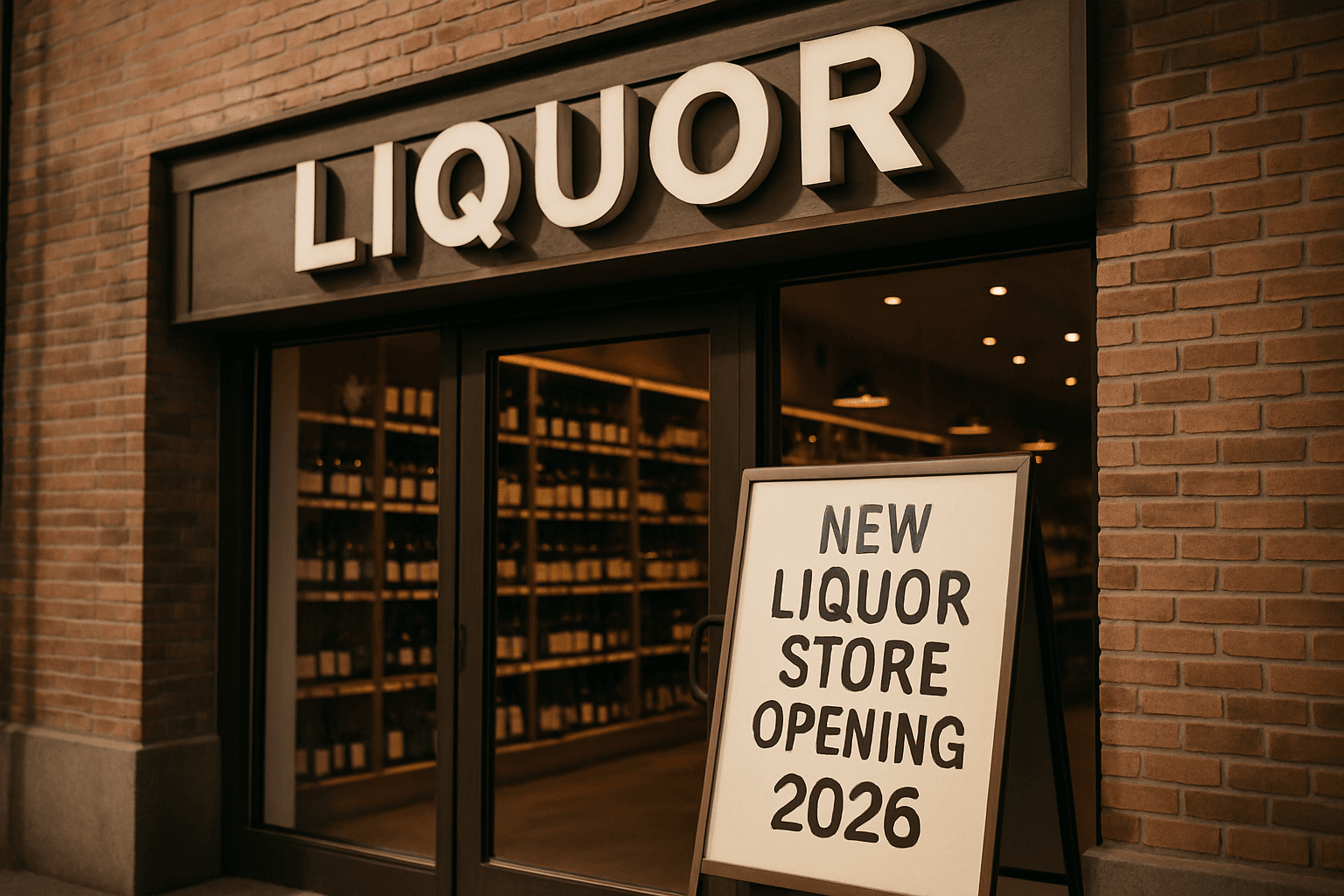
New liquor store openings 2026 are reshaping competition for independents. See what recent indie launches reveal and how to protect your market share.
- The 2026 Liquor Store Boom Is Real — And It's Coming for Your Market
- What the Newest Indie Liquor Store Concepts Tell Us About Where Retail Is Headed
- It's Not Just Other Liquor Stores: The Big-Box and Grocery Threat in 2026
- What This Means for Your Store: Reading the Competitive Signals
- 5 Liquor Store Marketing Strategies to Stay Competitive in a Crowded 2026 Market
If you've been running your liquor store the same way for the last few years and figuring "what works, works" — fair enough. But the ground is shifting under your feet. New liquor store openings in 2026 are accelerating at a pace that should have every independent operator paying attention, and they're not just popping up in the obvious boomtowns. They're showing up in small towns, control states, and markets that most operators assumed were already saturated.
What makes this moment different isn't just the volume of new openings — it's the type of stores launching. We're seeing tasting rooms built into modest square footage, hyper-curated selections designed for Instagram as much as the shelf, and operators who studied what independents like you do well and built their entire concept around doing it slightly differently. That's not a reason to panic. But it is a reason to pay very close attention.
This piece breaks down what's actually happening on the ground — specific openings, legislative shifts, and competitive signals — and translates it into moves you can make this quarter. Consider it your competitive intelligence briefing for the rest of 2026.
The 2026 Liquor Store Boom Is Real — And It's Coming for Your Market
New store launches are accelerating across virtually every type of market in the country. Not just in booming Sun Belt suburbs or trendy urban corridors — we're talking small towns, mid-size cities, and even tightly regulated control states where getting a license approved feels like an act of Congress.
Discover 7 proven Instagram content ideas for liquor stores that boost engagement and drive sales. Learn how to promo...
This isn't a blip. It's a pattern. And if you run an independent liquor store, it's one you need to understand.
New Openings Are Popping Up Everywhere, From Memphis to Moab
Consider the range of what's happening right now:
- Memphis, TN: The Station secured its liquor license from the Tennessee Alcoholic Beverage Commission on a narrow 2-1 vote and set its grand opening for March 21, 2026. That's a new indie launch pushing through one of the tighter regulatory environments in the Southeast.
- Moab, UT: Even in a control state like Utah, a new state-run liquor store is projected to boost both state and local revenue after the previous location closed on January 31. When Utah is expanding retail liquor access, the landscape is shifting.
- South Brunswick, NJ: A proposed 5,520-square-foot liquor store with a built-in tasting room at 2625 Route 130 signals that new entrants aren't just opening shops — they're opening experiences.
- Maryland: Delegate Marlon Amprey (D-Baltimore City) believes 2026 could finally be the year the state legalizes beer and wine sales in grocery stores, which would reshape independent competition overnight.
Why This Wave Feels Different Than Past Cycles
Previous cycles showed new openings clustering in high-growth areas. What makes 2026 different is the diversity of these launches — geographically, regulatory, and in format. New competitors are getting creative with tasting rooms, experiential retail, and sharper positioning.
10 wine club marketing tactics that reduce the 40% year-one cancellation rate and boost member spending at your liquo...
So here's the question this article will help you answer: if new stores are opening in your region — or heading your way — what does that mean for your bottom line, and what's your strategy to stay ahead?
What the Newest Indie Liquor Store Concepts Tell Us About Where Retail Is Headed
The current wave isn't just about more stores — it's about different stores. The concepts launching right now tell a clear story about where independent liquor retail is heading.
Experiential Retail: Tasting Rooms, Delis, and Beyond
Take that South Brunswick tasting room concept. At 5,520 square feet, it's not a massive footprint, but the operator is dedicating a real chunk of it to an experience — not just shelf space. That's a deliberate bet. New indie operators are looking at the big-box chains and saying, "We can't win on volume, so we'll win on why people walk through the door."
10 proven liquor store social media content ideas to connect with customers, boost brand visibility, and drive both i...
This tracks with broader 2026 trends: destinations over transactions. Stores that give customers a reason to linger, taste, and discover are building loyalty that a 10% discount never could.
Curation Over Price: The High-End Indie Playbook
Out in Atascadero in California's SLO County, a new high-end liquor store opened in 2026 with a sharp focus on local wines, premium craft beer, and plans for a deli. No attempt to be everything to everyone. Instead, it's a curated experience — the kind of positioning that turns first-time visitors into regulars and gets people posting on social media without being asked.
These new entrants aren't just opening another store with the same shelves and fluorescent lights. They're building destinations.
Here's the honest question: if your store still looks and feels like it did in 2015, that's a competitive gap — and it's growing.
But here's the good news. You don't need a full buildout to borrow from this playbook. Adding a weekend tasting series, partnering with a local winery or craft brewery for exclusive selections, or carving out a curated "staff picks" section — these are low-cost moves that signal to customers you're evolving. The new operators are raising the bar. Existing stores that adapt will keep pace. The ones that don't will feel the squeeze.
It's Not Just Other Liquor Stores: The Big-Box and Grocery Threat in 2026
When most indie owners picture new competition, they imagine another independent down the road. But some of the biggest competitive pressure in 2026 is coming from directions you might not expect.
Grocery Chains and Convenience Stores Are Going Standalone
Major grocery chains and convenience store operators are increasingly launching standalone liquor operations — directly challenging traditional independent off-sale businesses across the country. This isn't hypothetical. Costco continues expanding its alcohol footprint. And the broader trend toward experiential retail is blurring the line between big-box and boutique.
These players bring massive marketing budgets and built-in foot traffic that most independents simply can't match dollar-for-dollar. Understanding this broader competitive landscape is step one in building a marketing strategy that actually works.
Legislative Changes Could Blow the Doors Wide Open
Then there's the legislative front. Maryland's potential legalization of beer and wine in grocery stores is just one example. In New York, bills to allow supermarkets to sell wine keep resurfacing with growing momentum.
The American Beverage Licensees Association (ABLUSA) has pointed out that industry competition reports consistently fail to address anti-competitive policies that disadvantage independent alcohol retailers at the retail tier. Translation: the deck is already stacked, and these legislative shifts could tilt it further.
Here's the thing, though — this is about knowing your battlefield, not panicking. Independents have survived every previous competitive wave by adapting: better curation, stronger community ties, and smarter marketing. The stores that treat this moment as a wake-up call will be the ones still thriving in 2027.
What This Means for Your Store: Reading the Competitive Signals
New openings aren't just headlines — they're data points. And if you're paying attention, they tell you exactly where your market is headed.
How to Monitor New Openings and Permits in Your Area
Here's the good news: almost all of this information is public record. You just have to know where to look.
Start with your state's Alcoholic Beverage Commission (ABC) website. That's where every liquor license application lands before a store ever opens its doors. In Tennessee, for example, The Station's license approval was public knowledge well before the store started stocking shelves.
Beyond that, check your local planning board agendas and zoning hearing schedules. The South Brunswick concept showed up in planning documents months before any construction began. Local business journals and county filing databases are also goldmines.
Set a calendar reminder. Thirty minutes a month scanning these sources gives you a serious edge in understanding your competitive landscape before new entrants arrive at your doorstep.
And watch the legislative landscape too. Shifts like Maryland's potential grocery store expansion can reshape market dynamics overnight.
The Real Threat Isn't the New Store — It's Complacency
That new store two miles away? It's not your biggest problem. Your biggest problem is assuming your regulars have no reason to walk through their door.
Every new opening — from Moab's replacement store to experiential concepts with tasting rooms — is a reminder that customer loyalty isn't a given. It's earned. Actively. Every week.
Here's your simple competitive audit: visit the new store. Note what they do well. Identify what you already do better. Then double down on your strengths instead of scrambling to copy theirs.
New liquor store openings in 2026 are a signal, not a sentence. The operators who treat them as motivation are the ones who'll still be thriving next year.
Let our team show you what's possible.
our team specializes in digital marketing strategies that drive real results. Let us show you what's possible.
Schedule a Call5 Liquor Store Marketing Strategies to Stay Competitive in a Crowded 2026 Market
With new competitors launching from every angle — indie tasting room concepts, newly licensed operations, potential grocery store expansions — the competition is real and accelerating. Here are five ways to hold your ground.
1. Own Your Local SEO Before Someone Else Does
When someone searches "liquor store near me," Google decides who wins. New stores will optimize their Google Business Profile from day one — fresh photos, updated hours, inventory highlights, glowing reviews. If you've been coasting on a half-finished profile with 2019 photos, you're handing visibility to the new kid on the block. Start collecting reviews this week. Update your hours. Post weekly. This is the single cheapest, highest-ROI move in any liquor store marketing strategy.
2. Build a Loyalty Engine That Actually Works
A simple SMS-based loyalty program or even a well-executed punch card can meaningfully boost repeat visit frequency. That matters enormously when a shiny new competitor opens nearby running grand opening specials. Retaining an existing customer costs a fraction of winning a new one. With more options hitting the market every month, giving people a reason to come back to you is non-negotiable.
3. Lean Into What Chains Can't Do
Host tastings. Partner with the neighborhood restaurant. Sponsor the local softball league. Chains physically cannot replicate genuine community ties — this is your moat, so dig it deeper. Use social media to tell the story behind your curated selections (the Atascadero store is winning on exactly this).
4. Invest a Little in Targeted Digital Ads
Consider allocating even $300–500/month on geo-targeted Google or Meta ads covering your zip codes. That modest spend keeps you top-of-mind while new competitors burn through grand opening budgets that won't last. Target "liquor store near me" searches and promote your tastings, new arrivals, or seasonal picks.
5. Create a "New Arrivals" Cadence That Keeps People Coming Back
One thing the best new stores do well is create a sense of discovery. You can do this without overhauling your inventory. Dedicate an endcap or a small section to a rotating "What's New" or "Staff Picks" display. Promote it weekly via email or SMS. Customers who know there's always something new to find are customers who keep showing up.
The stores thriving in 2026 won't be the biggest. They'll be the most intentional.
The Indie Advantage: Why Independent Liquor Stores Still Win
Speed, Flexibility, and Personal Touch
With competition accelerating from every direction, it's easy to feel outgunned. But here's what the new entrants don't have: you.
Independent liquor stores make decisions in days, not quarters. You can pivot inventory based on a weekend conversation with a regular. You know which neighborhoods want craft mezcal and which want value bourbon. That hyper-local knowledge is a moat no chain or new competitor replicates overnight.
The Data Says Independents Aren't Going Anywhere
Even as states explore expanding alcohol sales into grocery and convenience channels, independent retailers who treat marketing as investment — not expense — and stay plugged into market trends are the ones who thrive through every cycle. A sharp marketing strategy built around your local advantage matters more than ever.
Bottom Line: New Liquor Store Openings in 2026 Are a Wake-Up Call — Act on It
The surge in new liquor store openings in 2026 is real — and it's coming from every angle. Indie concepts adding tasting rooms. States approving new licenses on narrow votes. Legislatures potentially opening grocery stores to beer and wine sales. The competition isn't slowing down; it's shape-shifting.
But the only losing strategy is pretending none of this affects you.
The stores that will own their markets a year from now are the ones making moves today — tightening their local SEO, deepening community ties, tracking new permits before the competition even pours its first bottle, and leaning hard into the advantages that only an independent can offer.
Your move this quarter: Audit your competitive position. Pick one new marketing channel and commit to it. And if you want a no-BS assessment of where your market stands heading into the back half of 2026, reach out ↗ — we'll tell you exactly where you stand and what to do about it.
10+ years helping liquor retailers and beverage brands grow through data-driven digital marketing. Learn more