Passover 2026 Wine Merchandising Guide: How to Build a Kosher Wine Section That Sells Beyond the Holiday
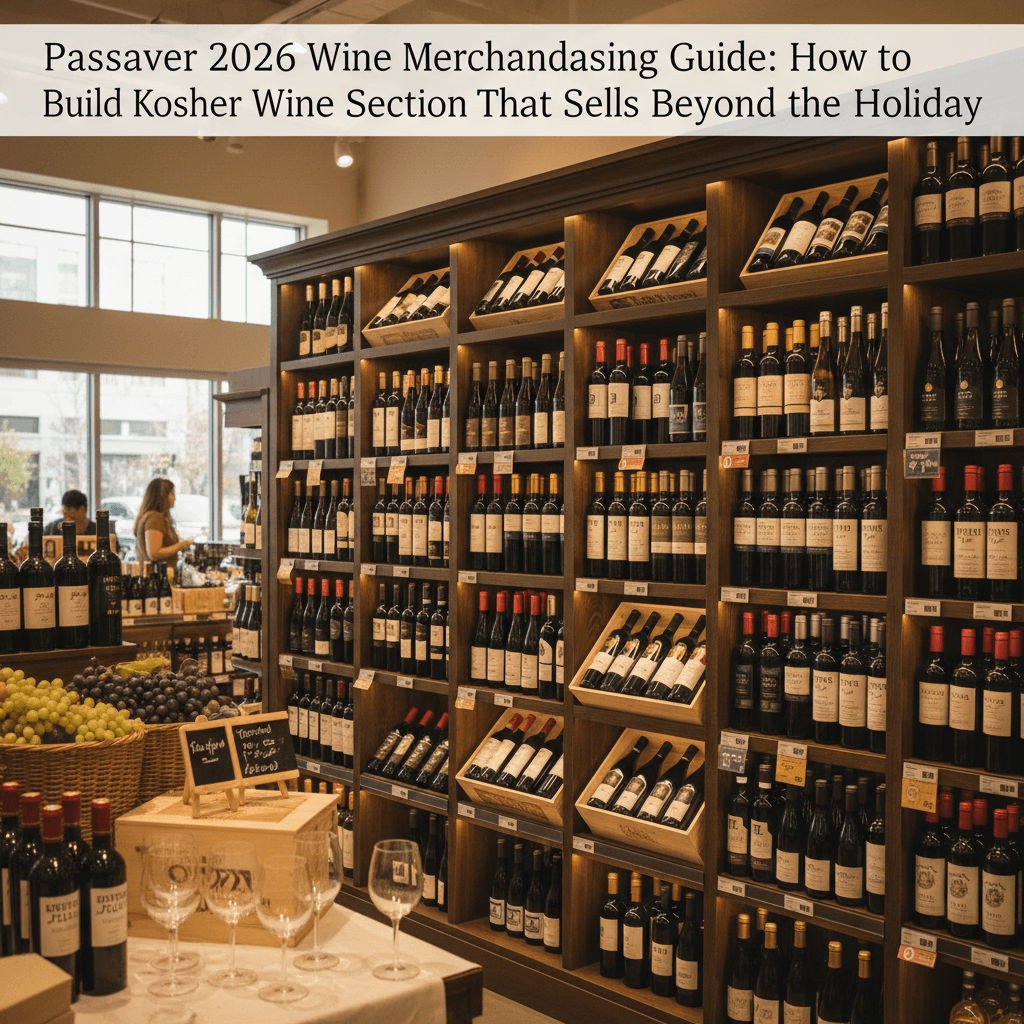
Master kosher wine merchandising for Passover 2026 and beyond. Proven retail strategies to build a kosher wine section that drives year-round sales.
- Beyond Manischewitz: The New Kosher Wine Landscape
- Timing Your Passover 2026 Wine Display for Maximum Impact
- Building a Kosher Wine Section That Works Year-Round
- Educate Your Staff, Elevate Your Sales
- Competing with Online Kosher Wine Retailers
Every April, thousands of liquor stores across the country dust off the same playbook: drag a folding table to the end of an aisle, stack it with sweet reds, and call it a Passover display. Two weeks later, it's gone — and so is any chance of building a real relationship with kosher wine buyers. That approach was never great, but in 2026, it's actively costing you money.
The kosher wine market has transformed. Premium bottles are winning awards, gift sets are commanding $500+ price tags, and the customer base extends far beyond the observant Jewish community. Retailers who've caught on are treating kosher wine not as a holiday obligation but as a year-round category strategy — and their numbers reflect it.
This guide is your complete playbook for Passover 2026 and the fifty-one weeks that follow. We'll cover timing, staff training, competitive positioning against online retailers, emerging trends in premium gifting and non-alcoholic options, and a week-by-week action plan you can clip to your office wall. Whether you're building a kosher section from scratch or upgrading what you've got, every recommendation here is designed to drive measurable, sustainable revenue.
Beyond Manischewitz: The New Kosher Wine Landscape
Here's what most store owners get wrong: they think kosher wine is a niche product for a niche customer. The data tells a different story.
Stop leaving online sales on the table. Here are the 10 most costly e-commerce mistakes liquor stores make and how to...
High-quality domestic and international kosher wines are now a rising category. According to Beverage Dynamics (March 2025), forward-thinking retailers are hosting staff tastings specifically to educate employees on the segment — because the wines are genuinely good enough to warrant it.
The price points tell you everything. Premium kosher wine gift sets now retail between $350 and $615, with luxury collections landing in the $499–$549 range. This is not a budget-only category anymore.
Manischewitz has historically enjoyed significant crossover appeal, with a consumer base that extends well beyond the Jewish community. Your kosher wine section can attract a far broader audience than you'd assume.
Discover the top SEO mistakes liquor stores make and proven fixes. Learn local SEO tactics to boost visibility and dr...
Why This Matters for Your Bottom Line
Smart kosher wine merchandising isn't a seasonal play — it's a year-round revenue strategy. A well-built Passover wine display introduces customers to the category. A permanent, thoughtfully curated section keeps them coming back.
This guide will walk you through exactly how to capitalize on Passover 2026 and build a kosher wine section that sells twelve months a year.
Timing Your Passover 2026 Wine Display for Maximum Impact
Getting your merchandising right isn't just about what you stock — it's about when you move. Passover 2026 begins the evening of April 1, which means your window is already on the calendar. Here's how to use every week of it.
Discover why BevNET Live NYC 2026 (June 10-11) is the must-attend event for liquor store owners. Learn about the 1:1 ...
When to Start Building Your Passover Display
Start your Passover wine display timeline 4–6 weeks out (mid-to-late February). This early phase is about internal prep: brief your staff on kosher wine basics, confirm inventory with distributors, and get signage designed. Your team should be able to answer simple questions like "What makes a wine kosher?" without fumbling — that confidence sells bottles.
By 2–3 weeks before the Seder (mid-March), your full kosher wine section should be built, visible, and shoppable. This is when serious Seder planners are buying — and when those premium gift sets move, so make sure they're front and center.
Cross-Merchandising with Easter and Spring Entertaining
Retailers like ShopRite are already building combined Easter/Passover wine displays, and independent stores should take note. The spring holiday overlap is a natural cross-merchandising opportunity. Pair kosher wines with grape juice for kids' tables, matzo, and Seder plate accessories to increase basket size — think one-stop-shop convenience.
Pro tip: Don't tear down the display April 2. Transition it into a "Discover Kosher Wines" or spring entertaining endcap. Online retailers run discounts and free shipping promotions year-round — proof that demand doesn't vanish after the holiday. Neither should your display.
Building a Kosher Wine Section That Works Year-Round
Here's the mistake most liquor store owners make: they treat kosher wine as a seasonal afterthought. A folding table appears before Passover, disappears two weeks later, and observant shoppers learn to go somewhere else for the other 50 weeks of the year.
Let's fix that.
Permanent Section vs. Seasonal Pop-Up: The Case for Commitment
Passover isn't the only driver here. Come September, Rosh Hashanah and the High Holy Days send kosher wine flying off shelves — it "quickly disappears from grocery store shelves" during that window, according to industry observers. That's two major sales peaks before you even count weekly Shabbat dinners, weddings, and everyday entertaining.
A dedicated 4–8 foot kosher wine section signals something powerful to observant shoppers: this store takes us seriously. That earns repeat visits year-round — not just during holidays.
The demand between holidays is real, too. Kosher wine subscription clubs like Liquid Kosher's quarterly curated program prove consumers treat this as a lifestyle category, not a once-a-year obligation. If people are subscribing to quarterly deliveries, there's clearly a market worth serving in the months between major holidays.
How to Curate Your Selection Across Price Points
Think in tiers — and keep this structure year-round:
- Entry-level ($10–$20): Everyday wines that attract crossover shoppers curious about the category
- Mid-range ($20–$50): Holiday entertaining picks — your bread and butter during Passover and High Holy Days
- Premium ($50+): Gifting and collectors. This is where the real margin lives, especially during holiday peaks
For promotions, online competitors like KosherWine.com typically run gift set discounts of 7–11%, and free shipping on 12+ bottles is a common industry threshold. Use those as your benchmarks when negotiating distributor pricing or building store bundles. A case discount at your Passover display can mirror the online value proposition while keeping customers in your store.
The bottom line: commit to the section, stock it thoughtfully, and the category will reward you well beyond any single holiday.
Educate Your Staff, Elevate Your Sales
You can build the most beautiful Passover wine display in town, and it won't matter if your floor team can't talk about what's on it. The real engine behind effective kosher wine merchandising isn't shelf placement — it's staff confidence.
What Every Floor Employee Should Know About Kosher Wine
Keep it simple. Your team needs three things down cold:
- "Kosher" means process, not flavor. Kosher certification governs how the wine is produced and handled — it says nothing about taste or quality. Many award-winning wines happen to be kosher.
- "Mevushal" is about flexibility. It means the wine was flash-pasteurized, so it can be served by anyone at events. Non-mevushal wines are often considered higher-end.
- Recommend by style, not by aisle. Staff who can suggest a dry Cabernet from the Galilee or a crisp Sauvignon Blanc for the fish course at the Seder build real trust — and increase average transaction value. Just pointing someone toward "the kosher section" is a missed sale.
Consider placing a simple one-page cheat sheet at the register with food pairing suggestions for Seder meals and beyond. It's a low-effort move that pays off every shift.
Running a Staff Tasting That Actually Sticks
Leading retailers are now hosting dedicated kosher wine tastings for employees, and it's working (Beverage Dynamics, March 2025). When your team has actually tasted a quality bottle from the premium tier, they sell it with genuine enthusiasm instead of guesswork.
Block 30 minutes before a shift. Pour four wines across styles — sweet traditional, dry red, crisp white, rosé. Have staff jot one tasting note per wine. That's product knowledge built into your team's memory. No lecture required.
Let our team show you what's possible.
our team specializes in digital marketing strategies that drive real results. Let us show you what's possible.
Schedule a CallCompeting with Online Kosher Wine Retailers
Online kosher wine retailers have built a solid playbook. If you're going to invest in kosher wine merchandising, you need to understand what you're up against — and where you hold the stronger hand.
What E-Commerce Gets Right (and Where You Win)
Sites like KosherWineDirect.com promote free shipping on 12+ bottles with nationwide delivery. That's a compelling offer for a customer stocking up for a Seder. KosherWine.com runs regular promotional discounts on gift sets, and their premium collections prove there's a real luxury segment willing to spend.
So yes, online retailers compete on convenience and price. But here's what they can't do: put a bottle in someone's hand today.
Your advantages are immediate availability (no shipping delays before a holiday with a hard deadline), curated local expertise, and personal recommendations from staff who actually know the product. That's not a small edge — it's a decisive one.
Consider matching online promotional thresholds with your own spin. A 10% case discount or a "Build Your Own Passover Case" promotion mirrors the free-shipping model while keeping margins healthy and driving larger basket sizes.
In-Store Experiences That Online Can't Replicate
Host a pre-Passover kosher wine tasting event 3–4 weeks before the holiday. This single tactic drives foot traffic, builds community relationships, and creates a purchase occasion no website can touch. Your Passover wine display becomes a destination, not just a shelf.
Don't overlook presentation, either. Quality holiday imagery for signage and social media is abundant and affordable. Make your kosher wine section look as polished as any e-commerce competitor's landing page.
The bottom line: online retailers sell products. You sell expertise, immediacy, and experience. Lean into that.
Emerging Trends: Premium Gifting and Non-Alcoholic Kosher Options
The Luxury Kosher Gift Set Opportunity
Premium kosher wine gift sets represent one of the highest-margin opportunities in this category. With collections retailing from $350 up to $615, these aren't impulse buys — but they are impulse-visible buys when positioned correctly.
For your merchandising strategy, position gift sets near checkout or in a dedicated gifting area during Passover and Rosh Hashanah. Online competitors are already discounting them, so price competitively — but remember, in-store you offer something they can't: instant gratification and zero shipping wait.
Non-Alcoholic Kosher Wine: A Small but Growing Niche
The non-alcoholic beverage trend is officially intersecting with kosher retail. Grocers across the country are being pushed to improve their NA merchandising, and liquor stores that get ahead of this in their kosher wine section will capture customers competitors aren't even thinking about.
You don't need a massive investment. Stocking just 2–3 kosher NA wine options signals inclusivity to health-conscious and sober-curious shoppers within the observant community — a small move that builds loyalty well beyond any single holiday.
Your Passover 2026 Kosher Wine Merchandising Checklist
The Action Plan: Week by Week
Clip this to your office wall:
- January: Audit your current kosher wine section. What sold last year? What's collecting dust? Identify gaps — especially in the premium gifting tier.
- February: Schedule a staff tasting. Your team can't sell what they haven't tried. Cover the basics: mevushal vs. non-mevushal, key regions, food pairings.
- Early March: Build your Passover wine display and order gift sets. Price competitively against online discounts (7–11% off is the industry norm). Consider a case discount on 12+ bottles for local delivery or in-store pickup.
- Mid-March: Launch your tasting event and social media push. This category has massive cultural and commercial interest — lean into it.
- April: Don't tear the display down. Transition it. Refresh signage toward Shabbat dinners and everyday entertaining.
Measuring What Matters
Track three numbers to prove your strategy is working:
- Sales velocity: Passover period vs. your non-holiday baseline
- Average transaction value on kosher wine purchases
- Repeat visits to your kosher wine section outside holiday windows
Passover is your on-ramp — but the real revenue lives in year-round demand across Shabbat, Rosh Hashanah, Hanukkah, and casual entertaining. A dedicated kosher wine section in your liquor store isn't a seasonal play. It's a category strategy.
The Bottom Line
The retailers who win at kosher wine merchandising aren't the ones who scramble in March and forget about it in May. They're the ones who treat this like what it is: a legitimate, growing category with multiple sales peaks, a loyal customer base, and premium price points that most liquor stores never bother to capture.
Passover 2026 is your launchpad — but the real opportunity is building something that lasts. Train your staff, commit to a permanent section, compete smartly against online retailers, and track the numbers that prove it's working. The playbook is right here. The only question is whether you'll execute it.
Ready to build a seasonal merchandising strategy that actually drives measurable ROI? Intentionally Creative ↗ works with liquor retailers to turn category opportunities like this into year-round revenue. Let's talk.
10+ years helping liquor retailers and beverage brands grow through data-driven digital marketing. Learn more