RTD Cocktails Are Dominating Shelf Space: How Retailers Should Adjust Their Marketing Mix
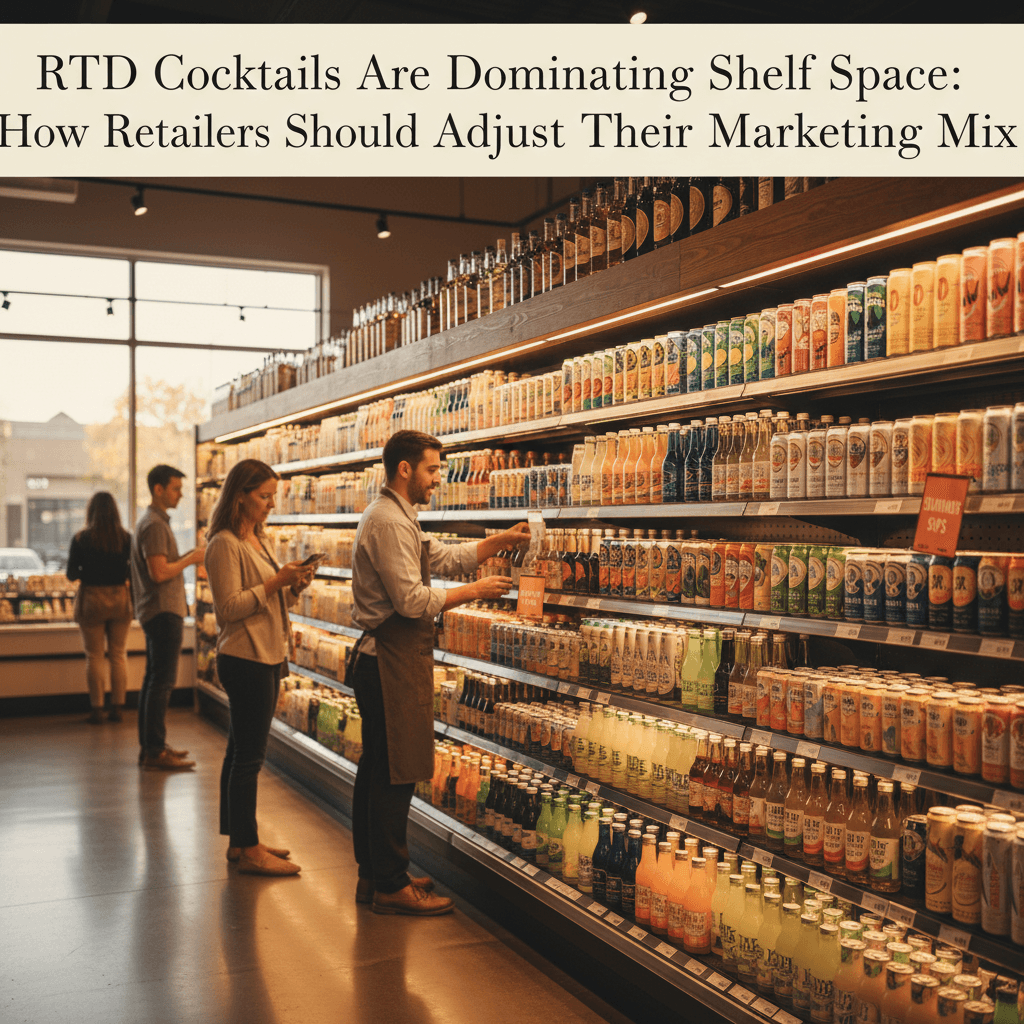
RTD cocktails grew 104% in two years. Learn how to adjust your ready-to-drink cocktails retail marketing mix to capture more sales and stay competitive.
- The RTD Boom Isn't a Trend, It's a Category Takeover
- Your Shelf Space Strategy Needs a Reset
- Think Beyond the Shelf: Occasion-Based Merchandising That Actually Works
- Adjusting Your Ready-to-Drink Cocktails Retail Marketing Strategy
- Don't Ignore the Non-Alcoholic RTD Opportunity
If you run a liquor store and haven't overhauled your approach to ready-to-drink cocktails retail marketing in the past year, this post is your wake-up call, backed by numbers, not hype.
The RTD category isn't emerging anymore. It's arrived, it's massive, and it's growing at a pace that makes every other alcohol segment look flat (because most of them are). We're talking about a $13 billion category that doubled in two years while the broader alcohol market actually shrank. For independent retailers, that creates both a threat and an enormous opportunity, depending on how quickly you move.
What follows is a data-driven playbook for adjusting your shelf strategy, your marketing spend, and your customer engagement around the category that's actively reshaping alcohol retail.
The RTD Boom Isn't a Trend, It's a Category Takeover
Let's get straight to the number: ready-to-drink cocktails have grown 104% over the past two years (BevSource ↗). That makes RTDs the fastest-growing segment in alcohol retail, and it's not particularly close.
If you've been treating that cooler endcap as a "nice to have," it's time to rethink your entire floor plan.
Stop leaving online sales on the table. Here are the 10 most costly e-commerce mistakes liquor stores make and how to...
The Numbers That Should Have Your Attention
The RTD category now generates over $13 billion in annual sales and accounts for 12% of the total alcohol market (Bar and Restaurant ↗). This isn't a niche anymore. It's a major category, one that deserves the same strategic attention you give to spirits, beer, and wine.
Here's the part that should really sharpen your focus: while the overall alcohol market is declining, RTDs are growing at 5%. That growth isn't coming from thin air. Ready-to-drink beverages are actively stealing share from traditional categories, particularly beer and wine. Your shelf space strategy isn't just about adding products. It's about responding to where consumer dollars are actually moving.
Why This Growth Isn't Slowing Down
This isn't a pandemic-era spike that's correcting itself. The canned RTD cocktails market is expected to reach $11.9 billion by 2035, growing at a 15.2% CAGR (Global Market Analysis Report ↗). That kind of sustained trajectory points to a structural shift in how consumers buy alcohol, not a fad that fizzles out next quarter.
Convenience, portion control, brand discovery, and premium quality in a can, these consumer preferences aren't going anywhere.
Discover 10 proven SMS marketing strategies for liquor stores that drive customer loyalty. Learn compliance tips, seg...
So here's the honest question: if your marketing mix hasn't changed in the last 18 months, you're already behind. The stores winning right now are the ones adjusting their strategy to match where the growth actually is.
Your Shelf Space Strategy Needs a Reset
If your shelf allocation doesn't reflect RTDs' 12% market share, you're under-indexed against actual demand. That's a straightforward gap to close.
Southern Glazer's has been vocal that deliberate planogram and promotional adjustments are critical for off-premise retailers to maximize RTD sales. This isn't something you can wing with a few cans tucked next to the hard seltzers.
Start here: Audit your current RTD shelf allocation as a percentage of total alcohol space. If it's below 12%, you have work to do.
Discover the top SEO mistakes liquor stores make and proven fixes. Learn local SEO tactics to boost visibility and dr...
Rethinking Your Planogram for RTD Growth
Convenience stores are already treating RTDs as a major growth priority. With triple-digit category growth, they're dedicating prime real estate to the segment. Traditional liquor retailers who under-merchandise this category are handing traffic to competing channels.
Serving Two Segments: Legacy Brands vs. Craft Newcomers
Your planogram needs to serve two distinct camps. Legacy brands, Jack Daniel's, Bacardi, Absolut, leverage existing brand equity that drives foot traffic and trust. Craft newcomers drive higher margins and the discovery experience that keeps customers exploring.
Smart planning gives both segments room to work. Legacy brands anchor the section. Craft brands surround them, catching the curious shopper who came for something familiar but stays for something new.
Of course, getting the right products on the shelf is only half the battle. How you present them makes all the difference.
Think Beyond the Shelf: Occasion-Based Merchandising That Actually Works
Here's the thing: stocking RTDs isn't a strategy. Merchandising them is.
Industry research from IWSR and leading beverage trade publications consistently shows that RTDs succeed when they're tied to how people actually consume them, not just parked on a shelf by brand name. The retailers winning this race are the ones creating experiences, not just inventory.
Why Occasion-Based Displays Outperform Brand-Based Layouts
Stop organizing solely by brand or flavor. Start building displays around moments: tailgating season, summer patio nights, picnic packs, friends' night in. When customers see a curated occasion, they buy into the whole idea, not just a single can.
Rotate featured brands monthly to keep the section fresh and give emerging labels a shot. That novelty drives repeat browsing.
Cross-Merchandising and Seasonal Display Ideas
Pair ready-to-drink beverages with complementary items, artisan snacks, bags of ice, portable coolers, and watch your basket size climb. You're reinforcing the exact convenience proposition that drives RTD purchases in the first place.
Placement matters too. When Edna's Non-Alcoholic Cocktail Co. landed endcap features across all 526 Whole Foods locations, it signaled priority, not afterthought. Your endcaps and front-of-store real estate should send the same message.
Prime placement plus occasion-based thinking? That's a marketing approach built for where this category is actually heading.
Great merchandising gets customers to pick up the product. But what gets them to come back, and to choose your store over the gas station down the street, is a smarter marketing strategy behind it all.
Adjusting Your Ready-to-Drink Cocktails Retail Marketing Strategy
If your ad spend still skews heavily toward beer and spirits promotions, it's time to rebalance. RTDs deserve a proportional share of your marketing budget, not because they're trendy, but because their growth trajectory and margin potential justify it.
Where to Spend Your Marketing Dollars Now
Digital-first tactics work especially well for this category. Social media content featuring new arrivals, tasting notes, and occasion-based recommendations ("beach weekend starter pack," "game day without the bartender") resonates with the convenience-minded RTD buyer. And in-store sampling events, where legally permitted, are high-conversion because trial is the biggest barrier. Most customers don't know what they like yet in a category this new and crowded.
Leveraging Distributor and Brand Co-Op Opportunities
Here's money most retailers leave on the table: co-op marketing dollars. Both legacy spirits companies and ambitious craft RTD brands are investing heavily in trade marketing right now. Ask your distributor reps specifically what promotional support, POS materials, and co-op advertising funds are available for RTD launches. You might be surprised how much is there for the asking.
CRM and Loyalty Tactics for RTD Buyers
Email and SMS marketing featuring RTD spotlights, new arrivals, and limited-time bundles can drive repeat visits from the RTD-curious customer who might otherwise default to a convenience store grab.
Better yet, build an RTD-specific loyalty segment. Track which customers are buying RTDs, how often, and what styles they prefer. Then use that data to send personalized recommendations, early access to new arrivals, and exclusive bundle offers. Even basic CRM tools let you segment RTD buyers and market to them differently than your beer or wine customers, and that targeted approach converts at a significantly higher rate.
This is exactly the kind of data-driven, channel-specific strategy that Intentionally Creative builds for independent liquor retailers, connecting your shelf strategy with digital campaigns and customer retention tactics so nothing operates in a silo.
Let our team show you what's possible.
our team specializes in digital marketing strategies that drive real results. Let us show you what's possible.
Schedule a CallDon't Ignore the Non-Alcoholic RTD Opportunity
The ready-to-drink cocktails retail marketing conversation isn't complete without talking about the zero-proof side of the shelf.
The NA RTD Segment Is Growing Faster Than You Think
Nielsen data shows the non-alcoholic beverage category grew over 30% in the past year, and that's on top of already accelerating demand. The "sober curious" and moderation-minded consumer is a real, expanding demographic. And here's what matters most: they still shop in liquor stores.
How to Integrate NA Options Without Cannibalizing Sales
Think additive, not competitive. NA ready-to-drink products bring new customers through your door, people who might skip your store entirely otherwise. They also increase basket size for mixed-group occasions when someone grabs both alcoholic and NA options.
Include a small, visible NA section positioned near your alcoholic RTD set. Proximity drives discovery and signals your store understands modern drinking habits. That's a smart adjustment with minimal risk and real upside.
A Simple Framework for Optimizing Your RTD Product Mix
Ready-to-drink cocktails retail marketing doesn't have to be complicated. Here's a practical framework any independent retailer can implement this month.
The 3-Step RTD Audit for Independent Retailers
Step 1, Audit. Walk your floor and calculate your current RTD shelf space as a percentage of total alcohol. RTDs represent 12% of the total alcohol market, so that's your benchmark. If your shelf allocation is sitting at 5–6%, you've got a clear gap to close.
Step 2, Rebalance. Adjust your planogram, promotional calendar, and ad spend to reflect where the category is actually heading. Prioritize a mix of legacy brands (the High Noons and Cutwater) alongside emerging craft options. Don't ignore the NA segment, it's growing fast too.
Step 3, Measure. Track three numbers monthly: RTD category sales velocity, margin per linear foot, and promotional lift.
Metrics to Track Monthly
Use those three data points to justify further investment, or course-correct quickly. With long-term projections pointing to sustained double-digit growth, your RTD strategy should be a living document, not a one-time reset.
The retailers who win in shifting markets move early and adjust often. They don't wait for the trend to plateau, because by then, the opportunity has already passed.
The Bottom Line: Move Now or Lose Ground
The data here isn't subtle. A category that's doubled in two years, commands $13 billion in annual sales, and shows no signs of slowing doesn't come with a "wait and see" option. RTDs are the growth engine in an otherwise flat alcohol market, and they're reshaping retail whether individual stores adapt or not.
Here's what independent liquor retailers need to remember: you have advantages that convenience stores and big-box chains simply don't. You can curate. You can educate. You can build discovery-driven shopping experiences that turn a casual browser into a loyal customer who trusts your recommendations. That's a powerful position, but only if you actually use it.
And using it means more than cramming extra cans onto an endcap. Effective ready-to-drink cocktails retail marketing connects your shelf strategy to your digital campaigns to your loyalty program. It treats RTDs as the growth engine they are across every customer touchpoint, not just one more thing to stock.
Intentionally Creative specializes in helping independent liquor retailers build marketing plans grounded in category data and built for real-world execution. Planogram consulting, digital campaign strategy, CRM setup, we help you turn market shifts like the RTD boom into measurable revenue growth.
The opportunity is clear. The right partner just makes capturing it easier. Let's talk about your store's RTD strategy. ↗