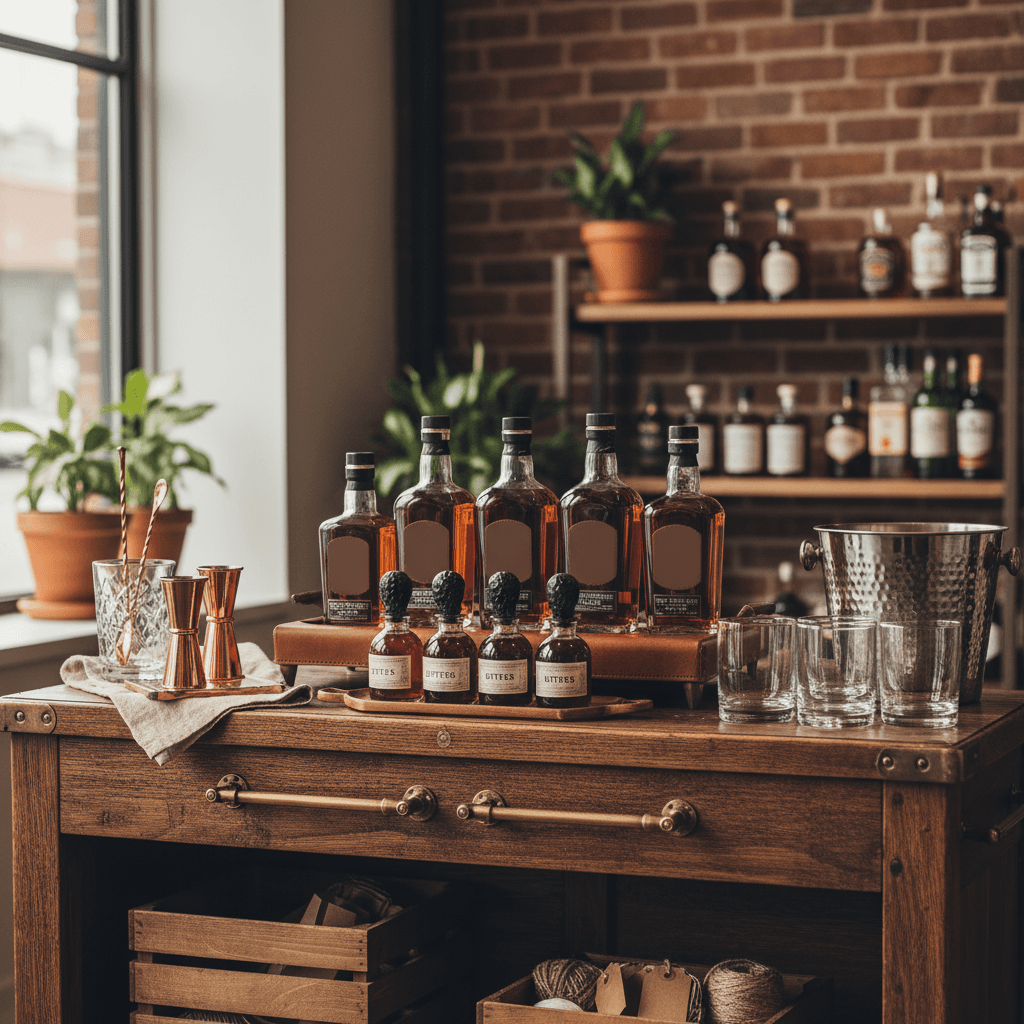
How to Build an Old Fashioned Merchandising Station That Sells Bourbon, Bitters, and Barware in One Display
By Intentionally Creative13 min read
Listen to this article16:04
Schedule a free strategy call and Intentionally Creative will build a custom plan for you.
Schedule Your Free Strategy CallFree audit. No commitment.
Get a Free Audit. No commitment.
Learn how to build an Old Fashioned merchandising display that bundles bourbon, bitters, and barware into one high-converting retail station.
Picture this: a customer walks into your store on a Friday evening. They watched a cocktail video on Instagram during lunch, and now they want to make an Old Fashioned at home this weekend. They need bourbon, bitters, a decent mixing glass — maybe some Luxardo cherries if you've got them. But your bourbon is on aisle two, your bitters are buried near the mixers, and you don't stock barware at all. So they grab a bottle of Bulleit, skip the rest, and spend $32 instead of $70. That gap between what they wanted to buy and what they actually bought? That's money you're leaving on the shelf.
An Old Fashioned merchandising display closes that gap. It bundles everything a customer needs to make the cocktail — bourbon, bitters, barware, garnishes, recipe card — into a single, styled station that sells the experience, not just the product. It's cross-merchandising with a purpose, and it works because it mirrors how people actually think about buying: not by category, but by occasion.
The best part? You don't need a design budget or a retail consultant to pull this off. Everything in this guide — the product mix, the fixtures, the layout, the placement strategy, and the tracking metrics — is built for independent liquor store owners who want results this weekend, not next quarter. Let's build it.
Here's what most liquor stores get wrong: they sell products when customers are buying experiences.
Your bourbon sits on one shelf. Bitters live three aisles over. Barware? You don't even carry it. Meanwhile, your customer is Googling "how to make an Old Fashioned" in the parking lot — ready to buy everything they need in one trip. You're just not making it easy.
A themed cocktail display flips this script. Instead of organizing by category, you build one station that sells the entire cocktail — bourbon, bitters, mixing glass, maybe even the orange peels. One stop. One experience. One significantly larger receipt.
This isn't a gimmick — it's where retail is heading. The physical stores winning right now aren't competing on selection; they're competing on curated, experience-driven moments that give people a reason to walk in. Translation: customers don't drive past Total Wine for another wall of bottles. They come to you for something that feels intentional and worth the trip.
Occasion-centric merchandising means you're selling the cocktail, not just the bottle. Distilleries already get this — brands like Willett merchandise barware and accessories alongside their spirits at their retail locations, validating the bundled bourbon station approach at the brand level.
Effective cross-merchandising turns a $35 bourbon purchase into a $65+ cocktail kit sale. Bitters add $12. A mixing glass adds $18. Multiply that across weekend traffic and the math speaks for itself.
The good news? This post is your step-by-step blueprint — something any independent store can execute this weekend without hiring a designer.
Now let's talk about exactly what goes on that display.
Think of your Old Fashioned merchandising display like a recipe — every ingredient needs to earn its spot. Get the product mix right, and customers build their own cocktail kit without ever leaving the station.
Bourbon (2–4 SKUs, tiered by price). This is where the good-better-best framework does the heavy lifting. Stock a $25 daily drinker (think Buffalo Trace or Evan Williams Single Barrel), a $45 step-up (Woodford Reserve, Four Roses Small Batch), and a $70+ premium pick (Maker's Mark 46, Wild Turkey Rare Breed). Why tier it? Because you're giving the customer a complete decision inside the display instead of sending them wandering down the bourbon aisle — where they might overthink it, get distracted, or walk out empty-handed.
Bitters (2–3 options). Angostura is non-negotiable — it's the backbone of every Old Fashioned. Add a craft option like Regans' Orange Bitters or Fee Brothers Cherry Bark Vanilla to give enthusiasts something to explore.
Barware. Mixing glasses, bar spoons, jiggers, and muddlers. These are the impulse items that turn a bottle purchase into a $60+ transaction. Stations where customers can imagine making the drink — that's what converts browsers into buyers in a physical store.
This is your margin layer. Consider stocking Luxardo cherries, large ice cube molds, demerara sugar cubes, simple syrup, and cocktail napkins or coasters. Free printable recipe cards cost you almost nothing but give the display a reason to exist beyond product shelving.
The real power move? Pre-made Old Fashioned cocktail kit bundles. Package a bourbon, bitters, and a mixing glass together at a slight discount. This approach drives impulse buys and simplifies the decision for gift shoppers — a segment that hates browsing.
Pro tip: Rotate your featured bourbon monthly. Regulars will check back to see what's new, and that repeat foot traffic past your station is worth more than any single bottle sale.
You've got the product mix dialed in. Next up: making sure the fixtures do the cocktail justice.
Here's the thing about an Old Fashioned merchandising display: it needs to feel right. The Old Fashioned is a classic, craft cocktail — muddled sugar, aromatic bitters, quality bourbon, a perfect orange peel. Your display should channel speakeasy shelf energy, not grocery store endcap. That aesthetic gap is the difference between a customer grabbing one bottle and walking out with a full cocktail kit.
The fixture styles that nail this look: rich wooden finishes, classic black ironwork, industrial pipe shelving, and mesh or metal accents. These create the textured, experiential vibe that matches the cocktail's personality.
Before you spend a dollar, hit Pinterest. Search for vintage store displays and cocktail bar shelving — you'll find plenty of curated inspiration boards. Screenshot what catches your eye, then shop with intention instead of impulse.
You don't need to custom-build anything. Retailers like Displays2Go and StoreDisplays.com offer vintage-style display options — industrial pipe, wooden, and mesh fixtures built for exactly this kind of themed station. DGS Retail and similar suppliers carry wine and liquor-specific merchandising fixtures (shelves, bins, case stackers, countertop displays) that adapt easily to a cocktail kit setup.
The budget-conscious move? Repurpose a wooden barrel, crate, or small bookshelf you already own. Rustic imperfection actually enhances the Old Fashioned vibe.
For sizing, aim for a 3–4 foot wide footprint. Place it near checkout or at an aisle endcap where foot traffic peaks — that's where cross-merchandising converts browsers into buyers.
With your fixtures sorted, it's time to arrange everything so the display practically sells itself.
Where you place this station matters as much as what's on it. An Old Fashioned merchandising display needs to interrupt the shopping path — not blend into it. Bury it mid-aisle and it's invisible.
Here are your best options, ranked:
Avoid guessing. Test two locations over two weeks and compare sales data. Let the numbers decide.
Move your station to prime real estate during peak Old Fashioned seasons: fall and winter holidays, Father's Day, Bourbon Heritage Month (September), and Super Bowl weekend. These windows justify your most prominent placement — front of store, window-facing, impossible to miss.
Outside peak season, a strong endcap position keeps it working without monopolizing premium floor space.
You've got the display built and placed. Now let's make sure it's actually earning its keep.
You don't need a dashboard to know if your display is pulling its weight. Track three things weekly using your POS data and a simple spreadsheet:
The clearest ROI signal? Compare bourbon sales velocity for featured SKUs on the display versus their performance when shelved normally. If a bottle moves 3x faster at your bourbon merchandising station, that's your proof point — full stop.
Also watch your attachment rate: how often someone grabbing bourbon also picks up bitters or barware from the same station. That single metric validates whether the concept works.
Refresh every 4–6 weeks. Swap the featured bourbon, update the recipe card (try a Smoked or Maple Old Fashioned), or rotate seasonal barware. Freshness is what keeps a physical display earning — stale stations get ignored.
If sales flatten after 2–3 months, don't scrap it — rotate to a Manhattan or Whiskey Sour theme using the same fixtures. The station concept stays; only the story changes.
Here's everything you need to get your Old Fashioned merchandising display up and running:
10+ years helping liquor retailers and beverage brands grow through data-driven digital marketing. Learn more
Think of your display in three tiers — and every tier has a job.
Top tier (eye level): Your bourbon bottles. These are the anchor. They're the tallest items, they carry the highest price point, and they're what draws the eye first. Place them at the back of the display so they rise above everything else. Two to four bottles is the sweet spot — enough to offer choice, not so many you create decision paralysis.
Middle tier (hand level): Bitters, jiggers, muddlers, mixing glasses, barware. This is where cross-merchandising does the heavy lifting. These items sit in front of and below the bourbon, stepping down so every product is visible at a glance. This vertical hierarchy matters — if a customer can't see it in two seconds, it doesn't exist.
Base tier (countertop level): Recipe cards, garnish kits, cocktail napkins, add-ons. Low-cost impulse grabs that round out the purchase.
Your bourbon merchandising station should feel like a destination — a place customers stop and linger, not walk past.
One lighting tip that punches above its weight: A small battery-powered LED strip or clip-on spotlight dramatically increases visual pull, especially if your store runs standard overhead fluorescents. Warm-toned light makes bourbon glow. Use that.
Your header sign should name the occasion, not the product category. "Build Your Perfect Old Fashioned" outperforms "Bourbon & Accessories" every single time. One clear sign. Big enough to read from ten feet away.
Now, the silent salesperson: a simple, laminated recipe card placed right on the display. Two ounces bourbon, one sugar cube, two dashes Angostura bitters, orange peel. That's it. This removes the knowledge barrier for customers who want to try making an Old Fashioned but don't know where to start. It gives them permission to buy.
Price everything visibly. Every item gets a shelf talker or small tag. Your audience is browsing, not asking — and unclear pricing is the fastest way to kill a sale.
If you offer a bundled kit, give it its own tag and make the math obvious: "Old Fashioned Kit — $59 (save $12)." Don't make customers do arithmetic. Show them the value, and they'll reach for the bundle over the individual pieces almost every time.
Fixtures matter here too. Vintage-style options — industrial pipe, reclaimed wood, mesh — reinforce the Old Fashioned's classic appeal without requiring a custom build. Customers already associate this look with quality. Match that expectation.
Your display looks great and the signage is doing its job. Now let's make sure you're putting it where it'll actually get seen.
Intentionally Creative specializes in digital marketing strategies that drive real results. Let us show you what's possible.
Schedule a CallThat's your bourbon merchandising station — done. No design agency required. No five-figure budget. Just a good eye, the right products, and a willingness to test what works.
Start small. Measure results. Adjust and expand.
An Old Fashioned merchandising display isn't just a weekend project — it's a proof of concept. When you see that first week's numbers and realize a single themed station lifted your average transaction by $20 or more, you'll start seeing your entire store differently. Margarita stations in the summer. Hot Toddy kits in December. Espresso Martini bundles year-round. The fixtures stay. The strategy scales. Only the story on the sign changes.
The stores that win won't be the ones with the biggest selection — they'll be the ones that make buying easy and exciting. You now have the exact blueprint to do both. So grab a wooden crate, pull your best bourbon off the shelf, print that recipe card, and build the station. Your customers are already searching for the Old Fashioned. Make sure they find everything they need — in your store, in one stop.
Need help building cross-merchandising strategies that actually move product? Intentionally Creative works with retailers like you — let's talk.