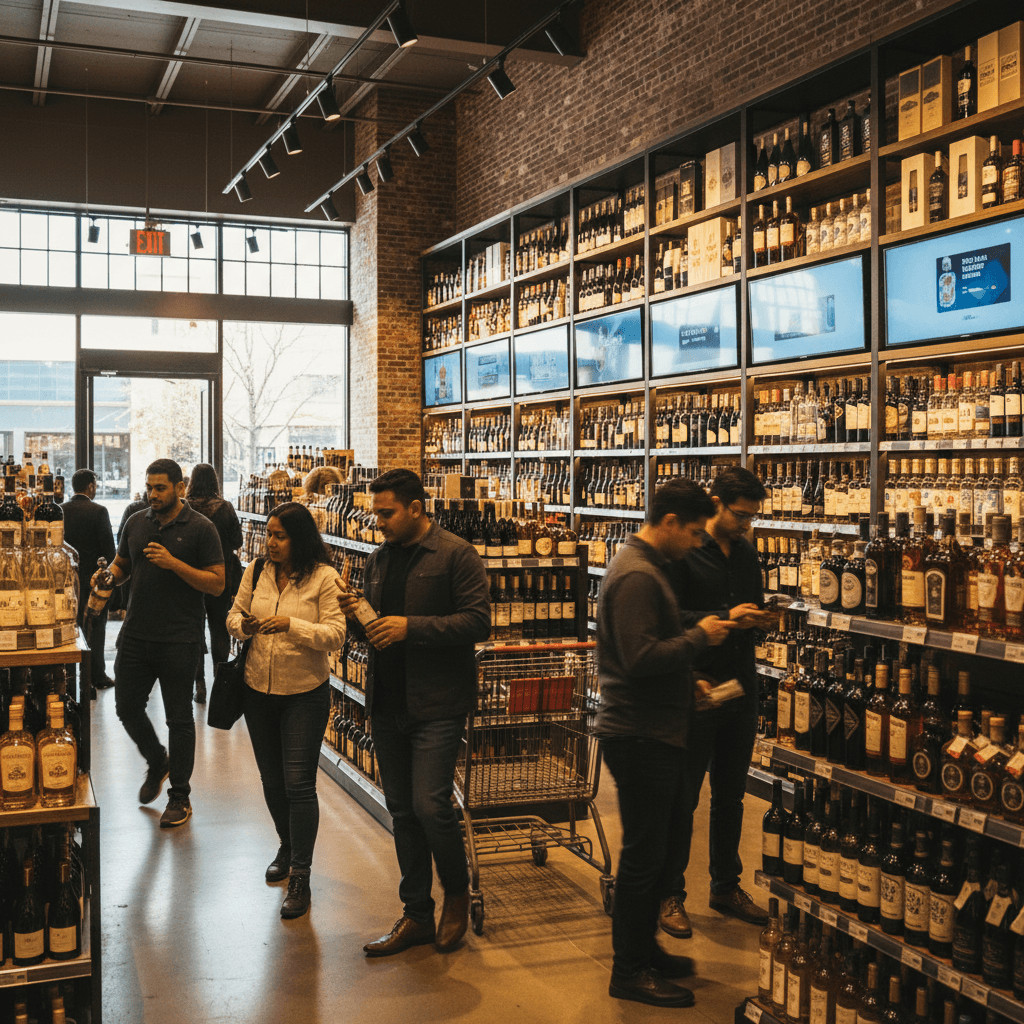
Every liquor store owner knows the feeling. You launch a digital ad campaign — maybe a Facebook promo for a weekend tasting event or Google search ads targeting "bourbon near me" — and the following Saturday, your store is packed. But when you sit down with your numbers on Monday, there's no way to prove those ads had anything to do with it. The sales are real. The ad spend is real. The connection between them? A black hole.
That disconnect isn't just frustrating — it's expensive. If you can't connect digital ads to in-store visits, you can't tell which campaigns deserve more budget and which ones are burning cash. You're making thousand-dollar decisions on gut feel while the data you need sits just out of reach.
The good news: closing that gap is more accessible than most liquor retailers realize. You don't need enterprise software or a data science team. You need the right tools, the right metrics, and realistic expectations about what the numbers will tell you. This guide walks you through all three — from free options you can set up this afternoon to advanced platforms that make sense as you scale.
Most Liquor Stores Are Running Digital Ads Blind — Here's Why That's a Problem (and an Opportunity)
You're spending money on digital ads. People are walking into your store. But can you actually connect those two events?
If you're like most independent liquor retailers, the honest answer is no. And that's not a character flaw — it's an industry-wide blind spot that's costing real money.
See how one independent liquor store used Instagram Reels marketing to boost weekend foot traffic by 40%. Real tactic...
The Attribution Gap in Liquor Retail
Digital touchpoints are shaping where people shop — even for products they overwhelmingly buy in person, like wine and spirits. Your customers are seeing your Instagram ads, opening your emails, and then driving to your store. But without foot traffic attribution, those ad dollars look like they disappeared into thin air.
Most small liquor store owners don't track in-store foot traffic from digital ads because it sounds complicated and expensive. It doesn't have to be either. And the retailers who figure this out first gain a serious competitive edge. We're already seeing stores using coordinated SMS and email campaigns growing 3–5% monthly — even while overall alcohol sales soften. The difference is they're measuring what works and doubling down.
Why 'Not Tracking' Is Costing You More Than You Think
Without foot traffic metrics tied to your campaigns, you're guessing. And guessing means wasting budget on the wrong channels while starving the ones actually driving store visits.
This post will show you how to get from zero visibility to actionable data — no massive tech investment required. It's not about perfection. It's about finally seeing which slice of your marketing efforts is actually driving foot traffic, then making smarter bets with every dollar.
Most liquor store SEO fails because it targets the wrong searches. Learn 5 local search fixes proven to drive foot tr...
The 3 Primary Methods to Track In-Store Foot Traffic From Digital Ads
There's no single perfect way to connect digital ads to physical store visits — but there are three proven methods worth knowing. Each works differently, costs differently, and fits different store sizes. Here's the breakdown.
Google Ads Store Visit Conversions
Google's built-in store visit tracking matches your ad clicks and impressions to actual physical visits. It works by using GPS, Wi-Fi signals, and location history from opted-in users to determine whether someone who interacted with your ad later walked into your store.
The catch: you need a linked Google Business Profile, and Google requires a minimum foot traffic volume before it'll report the data. If you're a single-location store in a smaller market, you may not hit that threshold right away. But for busier locations running consistent search or display campaigns, this is the most accessible entry point — it's already inside your Google Ads dashboard.
Meta (Facebook/Instagram) Offline Conversions
Meta's offline conversions tool takes a different approach. Instead of tracking location, you upload your POS or transaction data, and Meta matches it against people who saw or clicked your Facebook and Instagram ads. It's more manual — you're exporting sales data and uploading it — but it's powerful for liquor stores already investing in Meta campaigns.
Learn how geofencing for liquor stores turns location-based ads into measurable foot traffic and real ROI. A practica...
This method answers a question every store owner asks: "Did that Instagram ad actually bring someone to my register?" With clean transaction data, you can get surprisingly close to a real answer.
Programmatic and Geofencing Platforms Like GroundTruth
Here's where geofencing for liquor retailers gets interesting. Platforms like GroundTruth let you draw a virtual boundary around your store — and optionally around competitor locations. When someone's phone enters that boundary after being served your ad, it counts as a visit.
GroundTruth expanded its attribution capabilities to audio ads in February 2025, which signals that cross-channel measurement is maturing fast. You're no longer limited to display banners — streaming audio listeners can now be tracked to your front door.
Each method has real trade-offs in cost, accuracy, and minimum volume requirements. The next sections break down which tools make sense for your specific store size and budget.