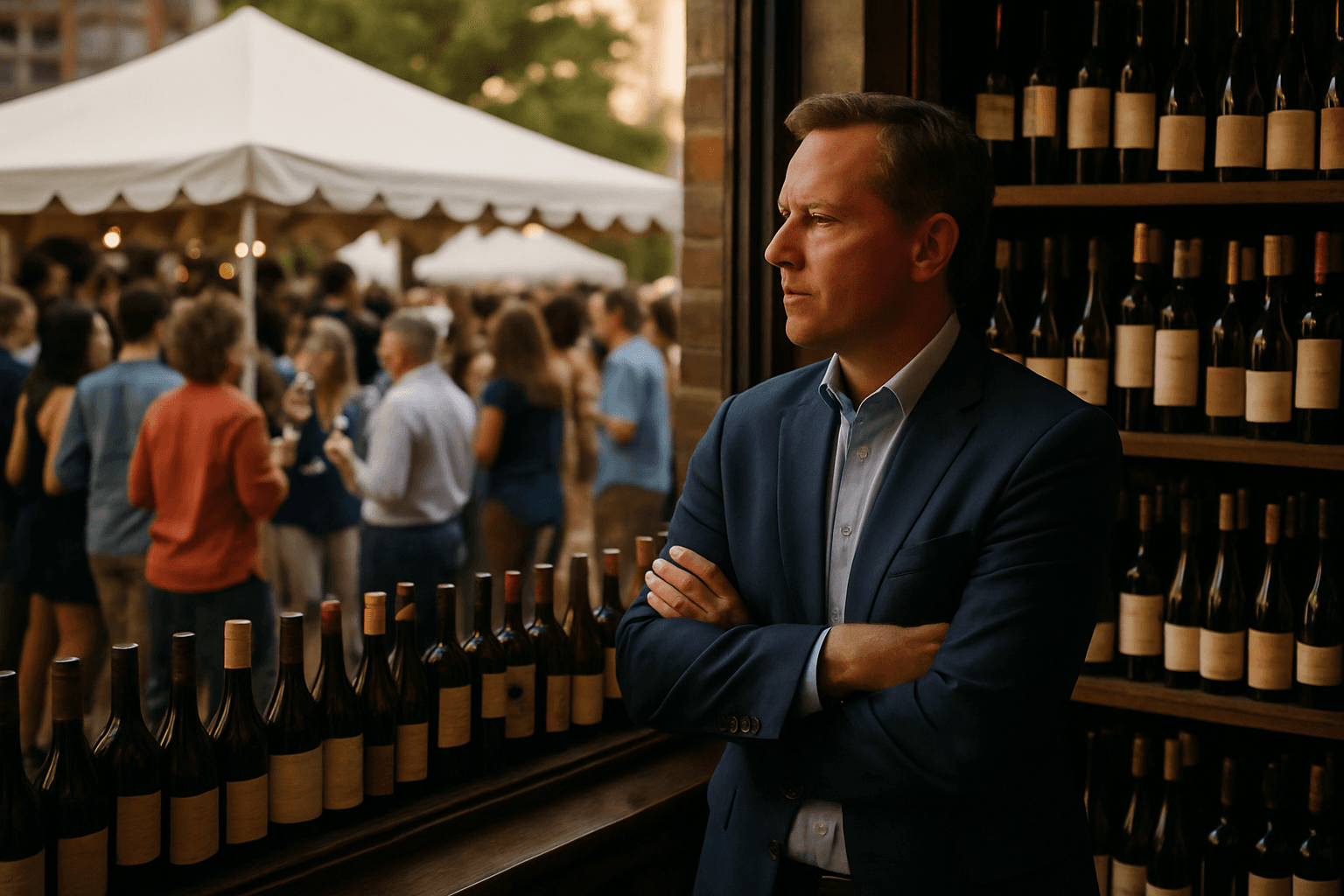
Wine Festivals Are Doubling Down on In-Person Experiences in 2026: How to Leverage Local Event Sponsorships and Tastings to Drive Store Traffic
By Intentionally Creative13 min read
Listen to this article18:04
Schedule a free strategy call and Intentionally Creative will build a custom plan for you.
Schedule Your Free Strategy CallFree audit. No commitment.
Get a Free Audit. No commitment.
Learn how wine festival sponsorship drives liquor store traffic in 2026. Proven tactics for local event marketing, tastings, and ROI-focused partnerships.
Every year, thousands of wine lovers line up at festivals across the country — wallets open, palates curious, and ready to discover their next favorite bottle. The question is: will they remember your store when they get home?
In 2026, the wine festival landscape is expanding fast. More events, more interactive programming, and more sponsorship opportunities designed for local businesses — not just national brands. For independent liquor retailers willing to show up strategically, wine festival sponsorship drives liquor store traffic in ways that digital ads and price-slashing alone simply can't match. It connects your store name to a memorable, sensory experience at the exact moment consumers are most excited about wine.
But showing up isn't enough. The retailers who win festival season are the ones who understand the rules of the game — from three-tier sponsorship restrictions to distributor co-marketing deals — and build a system that turns one weekend of buzz into months of repeat visits. This guide breaks down exactly how to do that, step by step, so you can stop watching from the sidelines and start capturing the customers already looking for what you sell.
Here's the short version: people are tired of screens and ready to spend money in person. Wine festivals across the country are responding by doubling down on live activations heading into 2026 — bigger footprints, more interactive programming, and a growing pool of sponsorship and partnership slots designed specifically for local businesses. If you run a liquor store and you're not paying attention to this, you're leaving money on the table.
Consumers want experiences they can taste, not just scroll past. Regional events like the Hudson Valley Wine Fest put sponsors in front of thousands of wine and food enthusiasts drawn from across the Mid-Atlantic region — real, measurable exposure without requiring a national-brand budget. That's the kind of sponsorship that turns festival foot traffic into store foot traffic in ways a discount promotion simply can't replicate on its own.
Discover 7 proven Instagram content ideas for liquor stores that boost engagement and drive sales. Learn how to promo...
Worth noting: not every festival is equally accessible. Major events like NYCWFF require exclusive distribution through partners like Southern Glazer's Wine & Spirits , which locks out many independent retailers. That's exactly why regional and local event sponsorship is where liquor stores should focus — fewer gatekeepers, more direct access to your actual customers.
Spend five minutes on any wine retail forum or Reddit thread and you'll feel the pessimism. Margins are tight. Big-box competitors undercut on price. Online sales chip away at foot traffic. It's real.
But here's the thing — doom and gloom creates opportunity for stores willing to differentiate. In-store tastings and festival partnerships offer something Amazon and Total Wine's website literally cannot: a personal, local experience with a human behind the counter who knows their stuff.
This isn't about chasing trends. It's about meeting customers where they're already excited to spend money on wine — and making sure your store is the name they remember when they get home.
Learn how to advertise a liquor store online using Reddit. 8 proven strategies to reach local buyers Reddit's communi...
Of course, enthusiasm alone won't get you a sponsorship slot. Before you start reaching out to festival organizers, you need to understand the regulatory framework that determines who gets a seat at the table — and who doesn't.
Before you start chasing festival partnerships, you need to understand the playing field — because it's not a level one.
Here's the short version: America's alcohol industry operates on a three-tier system. Tier one is producers (wineries, distillers). Tier two is distributors (the middlemen who move product). Tier three is retailers — that's you.
Each tier has legally defined roles, and festival sponsorship eligibility often depends entirely on which tier you occupy and who your distribution partners are. Some festivals only open sponsorship to producers and distributors, leaving retailers on the outside looking in. Others actively court retail-tier sponsors because they want local business involvement.
Stop leaving online sales on the table. Here are the 10 most costly e-commerce mistakes liquor stores make and how to...
The distinction matters more than most store owners realize.
Consider the New York City Wine & Food Festival. To qualify as a brand sponsor, you typically must be distributed through a designated partner like Southern Glazer's Wine & Spirits . If your products move through a different distributor, the door is closed — regardless of your budget or brand strength.
This is three-tier gatekeeping in action, and it's more common at major festivals than you'd expect.
But here's the good news: not every event operates this way. Regional festivals actively welcome retail partners, and many local wine events are specifically designed to connect nearby stores with engaged consumers.
Your move: Before pursuing any local event sponsorship, check eligibility rules, confirm which tier the sponsorship targets, and ask whether your distributor partners already have a seat at the table. A quick phone call now saves months of wasted effort later.
So what if the festivals you're eyeing already have distributor sponsors locked in? That's not a roadblock — it's actually your opening.
You don't need a massive budget to benefit from festival season. You just need to know who's already spending the money — and how to ride along.
Major distributors are pouring serious dollars into festival activations. At national events, they're often gatekeeping sponsorship access entirely. At regional events, they're funding booths, tastings, and branded experiences that draw thousands of engaged wine enthusiasts. That's audience access your store probably can't buy alone.
The takeaway? Your distributor is already at the table. Your job is to pull up a chair.
Co-marketing is simple: your distributor funds the activation, and you negotiate a piece of the visibility. That might mean your store name on signage at their booth, handing out coupons redeemable at your location, or hosting a post-festival in-store tasting featuring the same wines attendees just fell in love with. When you connect a memorable tasting experience to a specific place to buy, the conversion path practically draws itself.
Here's your action item: call your distributor reps now and ask which festivals they're sponsoring in 2026. Then pitch a joint activation — not just logo placement, but something that drives measurable retail sales. A coupon with a QR code. A follow-up event. A featured endcap.
Wine festival sponsorship works best for liquor store traffic when it's built on partnerships, not just write-a-check-and-hope marketing.
Whether you land a festival sponsorship or partner with a distributor on a co-marketing deal, there's one traffic-driving tool you already own — and it doesn't require anyone else's permission or budget to activate.
The smartest way to turn a one-time festival buzz into lasting results? Build a weekly promotion that customers can set their watches to — then supercharge it when festival season hits.
"Wine Wednesday" has become a staple for a reason. The formula is simple: pick a slow day, offer a consistent discount (10% off all wines is a common starting point), and promote it every single week. That's it.
But the magic isn't in the discount — it's in the predictability. Customers know exactly when to show up and what they'll get. No hunting for coupons. No checking your Instagram for this week's deal. That predictability reduces decision fatigue and turns a one-time visit into a routine. Tuesday night rolls around, and your customer is already thinking, "I'll grab that bottle tomorrow."
Over time, this kind of recurring promotion does something ads alone can't: it trains behavior. Mid-week foot traffic climbs. Average basket sizes grow as people browse beyond the wine aisle.
Here's where wine festival sponsorship and liquor store traffic strategy intersect beautifully. During festival season, theme your weekly promotion around what's happening locally. Running the same week as a major regional wine fest? Feature wines from the same region or producers appearing at the event.
This ties your store to the cultural moment without requiring a massive sponsorship budget. The festival generates excitement; your themed promotion catches the spillover.
Track the results. Compare mid-week sales during festival-amplified weeks against your standard promotional weeks. That delta is your proof — concrete ROI you can point to when planning next year's local event sponsorship for your liquor store.
Here's where most liquor store owners leave money on the table: they treat the festival as the whole strategy. It's not. The festival is the spark. Your digital marketing is the fuel.
When you integrate wine event marketing for liquor retailers — pairing in-person tastings and local event sponsorship with a deliberate online strategy — you turn a single weekend into weeks of customer engagement. These aren't separate efforts. They're one machine.
Before: Start posting about your festival involvement 2–3 weeks out. Tag the festival account, share what you'll be pouring, and invite followers to find your booth. Regional festivals draw thousands of engaged wine lovers — your social posts tap into that audience before you even set up your table.
During: Capture everything. Short videos of customers tasting, quick testimonials, behind-the-booth moments. Post in real time. This extends your reach far beyond the people physically walking past you, and it keeps driving awareness even after the festival wraps.
After: Share highlights, thank the festival organizers publicly, and repost any content attendees tagged you in.
Every person who visits your booth should leave on your email list. Use a simple signup — a tablet or clipboard works fine.
Within 48 hours, send a follow-up email with a limited-time offer redeemable in-store within 14 days. This is what turns a local event sponsorship into a genuine customer acquisition strategy — not just a line item on a sponsorship invoice.
That digital layer is the difference between spending money and investing it.
10+ years helping liquor retailers and beverage brands grow through data-driven digital marketing. Learn more
You're already sitting on one of the most effective tools in beverage retail — and it doesn't require a massive budget or a marketing degree. In-store wine tastings are how top-performing independent liquor stores learn what their customers actually want, grow their contact lists, and ring up sales they wouldn't have gotten otherwise. This isn't theory. It's what the best operators in the business do consistently.
Here's the psychology: a tasting creates a low-pressure environment where someone can try an $18 bottle of Albariño without committing to it. That "try before you buy" dynamic builds trust — and trust builds basket size. Customers who taste one wine often leave with two or three bottles, plus something they came in for originally.
But the real value goes beyond that single transaction. Every tasting is a data capture opportunity. Offer a small incentive — even a modest percentage off their purchase — in exchange for an email address or phone number. That signup feeds your loyalty program, your mailing list, and your ability to market future events and promotions directly. Over time, that list becomes one of your most valuable business assets.
This is where your festival strategy and your store operations come together. Local wine festivals generate a surge of consumer curiosity — and smart retailers ride that wave.
Schedule your in-store tastings in the weeks immediately before and after nearby festivals. Feature the same producers or wines appearing at the event to create continuity — customers who loved a pour at the festival now have a reason to visit your store. Use the festival as the conversation starter and your tasting as the follow-up.
This kind of wine event marketing for liquor retailers doesn't require exclusive distribution deals or big sponsorship fees. It just requires timing, intention, and a corkscrew.
Once you've nailed the timing on your tastings, the next step is turning that momentum into something customers come back for week after week — not just during festival season.
Intentionally Creative specializes in digital marketing strategies that drive real results. Let us show you what's possible.
Schedule a CallEverything we've covered so far happens in the physical world — booths, bottles, handshakes. But the stores seeing the biggest returns from festival season aren't stopping there. They're layering digital marketing on top to multiply every in-person interaction.
You've got the strategy. You understand the rules, the partnerships, and the tools. Now it's time to put it all into motion — and the window to prepare for 2026 festival season is right now.
The difference between stores that benefit from wine festival season and stores that watch from the sidelines comes down to what you do right now.
Compare foot traffic, email signups, and wine category sales during event-activated weeks versus your baseline. Even a simple spreadsheet works. Wine festival sponsorship only pays off for liquor store traffic if you're measuring the return — so build the habit now.
Bottom line: The stores that thrive in 2026 won't be waiting for customers to wander in. They'll be giving people a reason to show up.
Wine festivals aren't just weekend entertainment — they're a pipeline to your next loyal customer. The retailers who treat festival sponsorship as a traffic strategy, not a one-off expense, are the ones building businesses that grow year over year. They're the stores people talk about at the festival, drive to after the festival, and return to every week in between.
You don't need the biggest budget. You need the right partnerships, smart timing, and a system that connects the festival experience to your front door. Start with one regional event. Make one call to your distributor. Schedule one tasting. Then measure what happens.
The playbook is in front of you. The festival calendar is filling up. And your future customers are already buying tickets.
Ready to build a marketing strategy that actually drives foot traffic? Get in touch with Intentionally Creative — we help liquor retailers turn local opportunities into lasting growth.