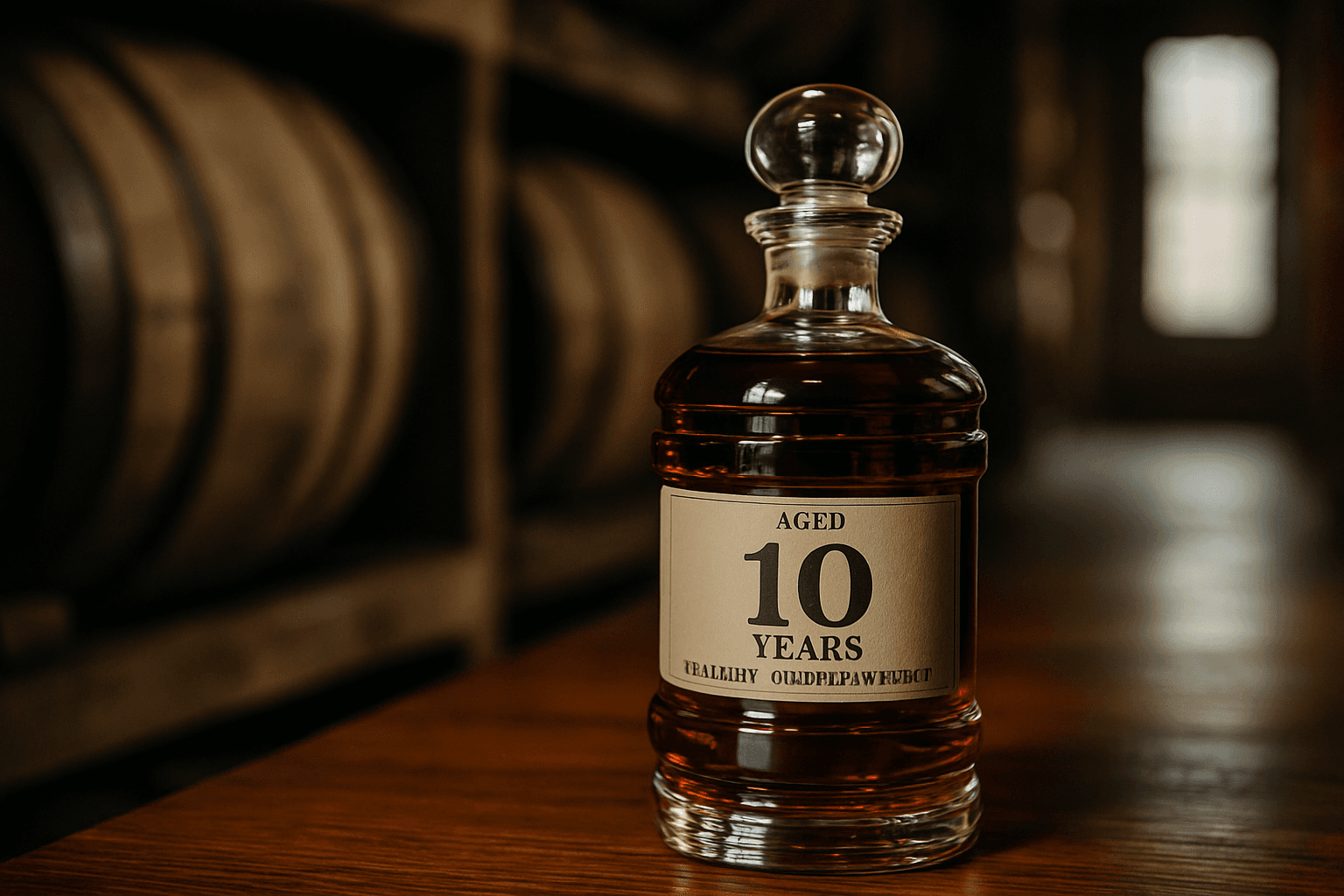
Kentucky Peerless 10 Year Bourbon: What This Historic Release Means for Your Retail Allocation Strategy
By Intentionally Creative11 min read
Listen to this article13:23
Schedule a free strategy call and Intentionally Creative will build a custom plan for you.
Schedule Your Free Strategy CallFree audit. No commitment.
Get a Free Audit. No commitment.
Kentucky Peerless 10 year bourbon drops April 2026. Here's what liquor store owners need to know about allocation strategy for this limited release.
If you run a liquor store, you already know the drill with allocated bourbon: scramble for bottles, argue with your distributor rep, sell out in hours, repeat. But every once in a while, a release comes along that demands more than the usual playbook. Kentucky Peerless 10 year bourbon is that release — and if you're not already thinking about how to position your store for it, you're behind.
Here's why this one is different. Peerless didn't slap a 10-year age statement on some sourced whiskey and call it a day. They shut down in 1917, stayed dark for nearly a century, restarted distilling in 2015, and have been quietly building toward this moment ever since. The barrels that will become their first 10-year bourbon are among the oldest they've ever produced. That's not a marketing narrative — it's a supply constraint with real implications for every retailer hoping to get a bottle on their shelf.
This post breaks down everything you need to know: the product itself, how allocation will likely work, pricing strategy, and how to turn a tiny allocation into a serious brand-building moment for your store. Whether you're an independent shop owner or managing a multi-location operation, the moves you make in the next few months will determine whether you're part of this story — or watching it happen from the sideline.
When Kentucky Peerless 10 year bourbon hits shelves — starting with a distillery-only release on April 22, 2026, at their Louisville location — it won't just be another bottle vying for your allocated shelf space. It'll be the culmination of a decade-long bet that's finally paying off.
Let's break down what you're actually looking at here.
Stop leaving online sales on the table. Here are the 10 most costly e-commerce mistakes liquor stores make and how to...
Henry Kraver's Old Reserve is Peerless's first-ever 10-year-old bourbon. It's bottled at barrel proof (117.6 proof ), non-chill-filtered, and aged using their signature double-barreling process — two new oak casks, not a finishing gimmick . Named after the original founder who built the brand before Prohibition shut it down, this release connects directly to the distillery's pre-1917 heritage.
The specs alone signal premium, no-compromise positioning. But the backstory is where it gets interesting for your allocation strategy.
Here's the math that matters: Peerless restarted distilling in 2015 after a 98-year hiatus. Their oldest barrels are just now crossing the 10-year threshold. We're not talking about a warehouse full of aging stock — we're talking about a genuinely tiny number of barrels.
This is real scarcity, not manufactured hype. And that distinction should change how you approach your allocation decisions.
Discover 10 proven SMS marketing strategies for liquor stores that drive customer loyalty. Learn compliance tips, seg...
When supply is legitimately constrained — not artificially limited for marketing — demand tends to be stickier, and the price premium holds longer. So before this bottle moves beyond the distillery, now's the time to sharpen your playbook.
Before you think about allocation strategy, you need to understand what you're allocating shelf space for — and why this particular bottle will move differently than your typical allocated release.
Most bourbon ages in a single new charred oak barrel. Peerless takes a different path: their double-barreling process ages the whiskey in two separate new oak casks. That's not a barrel finish. That's twice the new oak interaction, which extracts deeper caramel, vanilla, and tannic complexity than a standard single-barrel approach.
For your customers, this means a genuinely distinctive flavor profile. For your sales floor, it means a clear talking point that separates this bottle from the 40 other bourbons on your shelf.
Boost your liquor store's reputation with 10 proven reviews management strategies that convert 4-star ratings into lo...
At barrel strength — uncut, unfiltered — this release targets your highest-spending segment: the serious bourbon drinker who won't flinch at a premium price point.
That number on the label is a trust signal. It tells collectors and enthusiasts exactly what they're getting — no ambiguity, no marketing sleight of hand. In a market flooded with NAS (no age statement) bottles, a 10-year age statement carries outsized credibility.
Combine that credibility with Peerless's growing reputation as a top-tier craft distillery , and you're not hand-selling an unknown brand. You're managing demand for a bottle that collectors already have circled on their calendars.
Understanding the product is step one. Step two is understanding the system that determines whether you even get a bottle — and how to work it in your favor.
Bourbon allocation isn't random — but it's also not purely merit-based. Here's how it typically works for a release like this:
Distributors receive a finite number of bottles from the brand. They then divide that inventory across their retail accounts based on a handful of factors:
For a release this small, the math is brutal. Most independent retailers should expect one to three bottles — if they get any at all.
Distributors describe their allocation approach as "equitable." Translation: everyone gets a little, nobody gets a lot. That's not generous — it's rationed.
With the release date already announced, the window to position yourself is now.
Here's your actionable move: Pull your Peerless sales history and total portfolio purchases from that distributor. Build a one-page summary. Hand it to your rep in person. A data-backed ask beats a casual mention every time — and it signals you'll actually move the bottle, not flip it. That's the kind of retailer distributors want to reward when allocation day arrives.
Once you've secured your allocation — even if it's just a bottle or two — the next question is the one that keeps retailers up at night: how do you actually sell it?
Here's the uncomfortable truth every retailer already knows: this bottle will almost certainly sell on the secondary market for multiples of its MSRP. With genuinely razor-thin supply and a barrel-proof bottling featuring a unique aging process, demand will be intense.
Industry pricing guides consistently show the growing gap between retail and secondary pricing on age-statement allocated bourbon. Bottles in this tier — limited barrel count, established brand credibility, barrel proof — routinely flip for 2–5x retail. The Peerless 10 Year, with its extremely limited production and distillery-only initial launch, fits squarely in that premium category.
You've got two bad options and one good one. Sell at MSRP with no guardrails, and flippers clean you out. Mark up aggressively, and you're the villain on every bourbon forum by lunchtime.
The better approach: sell at or near MSRP, but tie the purchase to your loyalty program or a purchase history threshold. This rewards the customers who shop with you year-round and makes flipping less attractive.
Be upfront about it. Tell customers plainly: "We got three bottles. We're offering them to our regulars at retail because that's how we do business." That kind of transparency builds more lasting trust — and more lifetime customer value — than any single margin play ever will.
With your pricing and allocation strategy locked in, there's one more lever to pull — and it might be the most valuable one: content.
A single bottle of Kentucky Peerless 10 year bourbon can fuel weeks of content if you plan it right. Here's how.
Start teasing 2–3 weeks before your expected delivery. The Peerless backstory sells itself: a family reclaiming a pre-Prohibition legacy, a decade of patience, and an extremely limited first release at barrel proof. Share that story in pieces. One post about the history, one about the double-barreling process, one countdown. No exaggeration needed.
On delivery day, capture everything: unboxing, shelf placement, staff reactions. Tag @PeerlessDistilling — craft distilleries regularly reshare retailer content, putting your store in front of their audience for free.
After it sells, post that too. "Sold out in 3 hours" tells future customers your store secures serious allocated releases — and they'd better pay attention.
This is your hook for building a list. The CTA writes itself: "Want first access to drops like this? Join our SMS alerts." Every allocation strategy should double as a list-building strategy. One bottle, one month of content, a growing audience that's ready for the next drop.
Kentucky Peerless 10 year bourbon isn't just a product — it's a retail event. Treat it like one.
Here's your action checklist:
10+ years helping liquor retailers and beverage brands grow through data-driven digital marketing. Learn more
When you get your hands on Kentucky Peerless 10 year bourbon, your allocation might be two bottles. Maybe four if you're lucky. Every bottle counts.
So how do you play it?
The liquor retail community has largely landed on the same playbook: put one or two bottles on the shelf, first-come-first-serve, and reserve the rest for your loyalty program members or high-value regulars.
Why both? Shelf presence generates buzz. Even if that bottle sells in three hours, every customer who saw it — or heard about it from someone who did — now associates your store with access to premium allocated bourbon. That reputation compounds over time.
For the reserved bottles, consider a raffle or waitlist system. This does two things: it builds your email or SMS list (a marketing asset that outlasts any single bottle), and it creates a sense of fairness that keeps customers coming back instead of feeling shut out.
One critical note: avoid bundling allocated bottles with slow-moving inventory. The "buy this dusty handle of X to qualify for Y" approach erodes trust faster than it clears dead stock. Experienced operators will tell you the math never works out.
Frame this release as a brand-building moment for your store. Post it on social media the moment it hits your shelf. Share the Peerless backstory — a distillery reclaiming a century-old legacy. Have your staff write tasting notes.
The sale itself is one transaction. The story around it drives dozens of future visits.
Of course, you can't talk about allocated bourbon without addressing the elephant in the room: the secondary market and how it shapes every pricing decision you make.
Intentionally Creative specializes in digital marketing strategies that drive real results. Let us show you what's possible.
Schedule a CallThe stores that do this will build reputation, customer loyalty, and email lists that pay dividends long after the last bottle sells.
Here's the bigger picture: as more craft distilleries hit age-statement releases at the 10-year mark over the coming years, having a repeatable allocation strategy won't be optional. It'll be what separates the stores that thrive from the ones that just survive.
Start building that playbook now. Peerless is giving you the perfect reason.
Want more allocation strategies and retail insights for upcoming limited releases? Subscribe to our newsletter — we'll keep you ahead of the next drop.