Publix Liquor Stores Are Coming to Kentucky: What Independent Retailers Need to Know (and Do) Right Now
By Intentionally Creative11 min read
Listen to this article14:55
Schedule a free strategy call and Intentionally Creative will build a custom plan for you.
Schedule Your Free Strategy CallFree audit. No commitment.
Get a Free Audit. No commitment.
Publix liquor stores Kentucky expansion threatens independents. 350+ locations & growing. Here's how independent liquor retailers can compete and win.
If you own an independent liquor store in Kentucky, the ground beneath your business just shifted — and it happened faster than most people expected. Publix liquor stores in Kentucky are no longer a planning-phase headline you can file away for later. They're open. They're expanding. And they're backed by a company that's done this hundreds of times before.
This isn't a story about one new competitor opening down the street. It's about a proven national playbook being deployed in your market, with the supply chain muscle, real estate strategy, and marketing budget to match. The grocery chain alcohol retail expansion hitting Kentucky right now is the same force that's already reshaped competitive dynamics for independent retailers across the Southeast — and it demands a clear-eyed response.
But here's the thing: clear-eyed doesn't mean panicked. Independent liquor stores have real, structural advantages that a compact corporate outpost simply cannot replicate. The question isn't whether you can compete. It's whether you'll take the right steps — starting now — to make sure customers know exactly why they should choose you. This post breaks down what's happening, what it means, and exactly what to do about it.
Publix liquor stores in Kentucky are no longer a rumor or a someday scenario — they're open for business.
10 wine club marketing tactics that reduce the 40% year-one cancellation rate and boost member spending at your liquo...
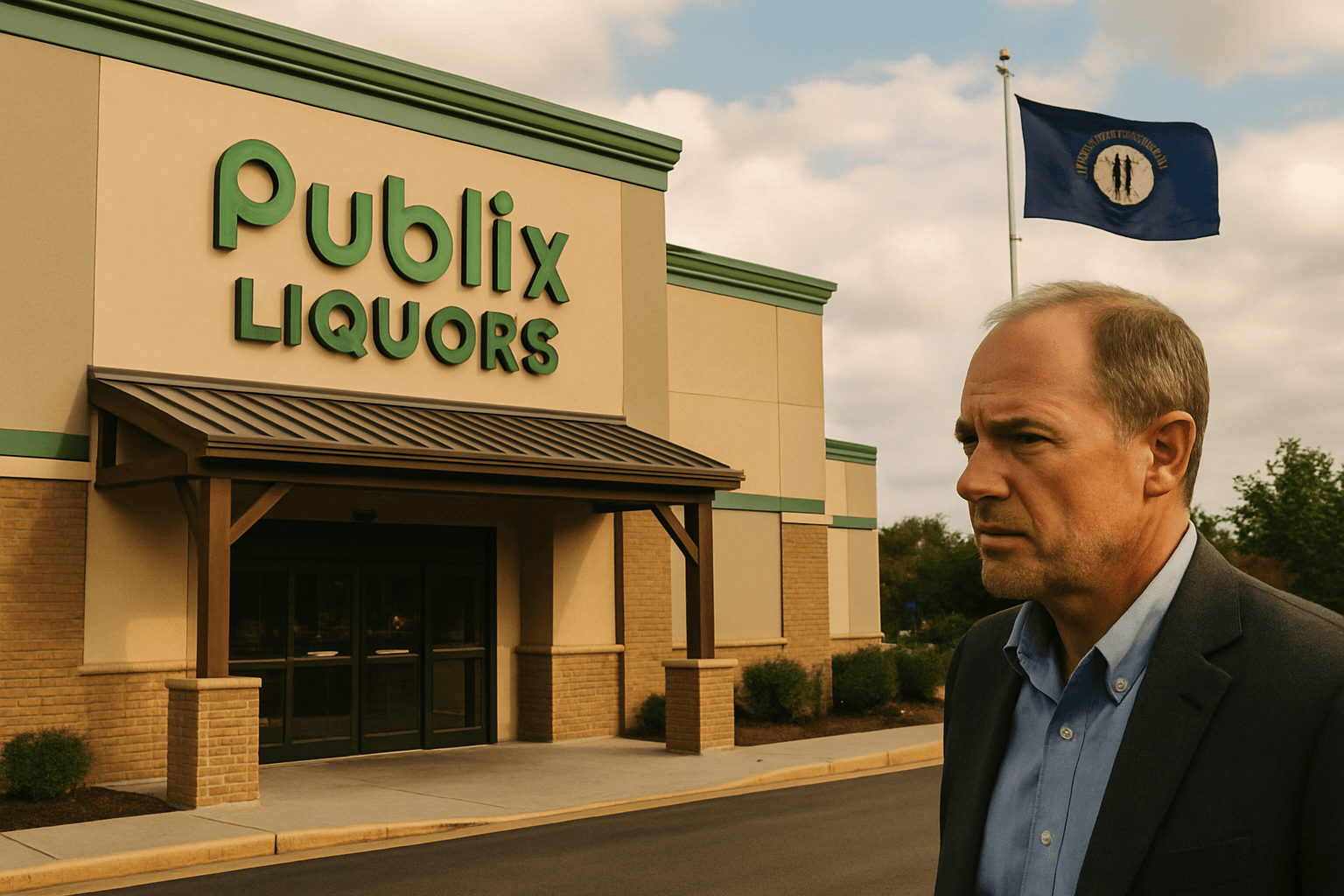
The first Publix Liquors opened at Terra Crossing in Louisville , a purpose-built 3,200-square-foot store sitting right next to its parent supermarket. A second Louisville location is set to follow by September 2025 , and Georgetown has been confirmed as well . That's three locations in rapid succession — not a cautious toe-dip into a new market.
And they're not slowing down. Additional supermarket and liquor store locations have been announced for Richmond, Versailles, and Bowling Green . That's a statewide push, not a Louisville experiment. The Versailles location is especially telling — it's positioned near one of Kentucky's largest Kroger stores , a deliberate move that signals Publix is targeting established grocery markets head-on.
This is aggressive, strategic expansion. If you're an independent retailer anywhere in Kentucky, the competitive landscape just changed.
10 proven liquor store social media content ideas to connect with customers, boost brand visibility, and drive both i...
Here's the detail that makes this more threatening than a typical grocery chain entering your market: Publix doesn't sell spirits inside its supermarkets. Instead, it operates completely separate, adjacent liquor stores — over 350 Publix Liquors locations across the country. This isn't a workaround. It's a proven, scalable playbook refined across multiple states with different alcohol regulations.
In Kentucky, where spirits can't be sold inside grocery stores, this model fits perfectly. Publix didn't need to lobby for law changes or wait for legislation. They simply deployed the same dedicated format they've been perfecting for years.
What that means for you: these aren't afterthought beverage aisles staffed by grocery clerks. They're purpose-built competitors to your store — with national supply chain leverage, corporate marketing budgets, and the foot traffic of a full supermarket next door. Your marketing has never mattered more than it does right now.
Learn proven email marketing strategies for liquor stores that turn subscribers into loyal customers. Build your list...
The arrival of Publix in Kentucky is part of something much bigger. Across the country, grocery chain alcohol retail expansion is reshaping the competitive landscape — and independent retailers are feeling it.
In New York, liquor store owners are warning that expanding wine sales to grocery stores "could crush them" . In Maryland, advocates are actively fighting proposals to allow beer, wine, and liquor in grocery chains . These aren't hypothetical fears — they're real battles happening right now in statehouses and city councils.
Independent operators nationwide report that enhanced grocery and c-store beverage alcohol programs have significantly ratcheted up competition, squeezing both margins and foot traffic. Grocery retailers see alcohol as a high-margin traffic driver, and they have the capital, real estate, and logistics infrastructure to keep expanding.
Here's where it gets painful. One small Texas retailer reported paying $7 more per case at wholesale compared to what Walmart charges at retail . Seven dollars. Per case. That gap compounds across every SKU, every delivery, every week.
You can't out-price that. Which is exactly why your marketing has to focus on what the big boxes can't replicate — but we'll get to that. First, understand this: the pricing disadvantage is structural, and pretending it doesn't exist is the fastest way to lose.
Let's be honest about what you're up against — and where the real opportunity lives.
Publix liquor stores in Kentucky benefit from something you can't replicate: a grocery store next door. Shoppers grabbing chicken and produce will walk into that attached liquor store simply because it's there. That's the power of one-stop shopping, and it's real.
Then there's price perception. Big-box competition doesn't always mean lower prices — but the brand carries a "deals" halo that's hard to shake. Even when your shelf price is competitive, customers assume the chain is cheaper.
Here's what a 3,200-square-foot Publix Liquors can't do: carry depth. That first Terra Crossing location stocks a mainstream-focused selection. Most independent liquor stores carry significantly more SKUs — including local spirits, allocated bourbon, craft products, and niche categories that big-box won't touch.
They also can't match your staff expertise, personalized customer relationships, or ability to pivot on trends in days instead of quarters. Community involvement? Corporate approvals take months. You can sponsor a local event by Friday.
The critical takeaway: you don't win by trying to out-Publix Publix. You win by being what they structurally cannot be.
You can't outspend a national grocery chain. But you can outmaneuver one. Here's how.
Let's address the elephant in every independent retailer's stockroom: you probably can't win a price war against a national grocery chain. The wholesale pricing gap is real and structural, and pretending otherwise will bleed your margins dry.
So stop trying to be the cheapest store on every shelf. Start being the smartest one.
Your marketing needs to tell a different story than "we have low prices too." Try this one instead: "We don't just sell you a bottle — we help you find the right bottle."
That's not fluff. That's a genuine competitive advantage that a compact, chain-operated liquor store staffed by grocery employees simply cannot replicate. Expertise, curation, and personalized recommendations are worth a premium — but only if your marketing actually communicates that clearly and consistently.
Consider bundling, gift sets, and exclusive offerings that make direct price comparison impossible. You're not selling a commodity. You're selling a curated experience.
Be ruthlessly competitive on your top 20–30 traffic-driving SKUs — the Tito's, the Buffalo Trace, the bottles customers actually price-check on their phones. Use those as anchors to get people through the door.
Then let your selection, service, and knowledge close the sale on everything else. That's how you survive big-box competition — not by matching every price, but by winning the moments that matter.
The expansion of Publix liquor stores in Kentucky is accelerating. Here's your playbook.
Fix your digital front door. Audit your Google Business Profile today. Fill in every field, upload current photos, and update your hours. Then start asking happy customers for reviews — this is the single fastest way to outrank a new competitor in local search.
Post to social media at least three times a week. Highlight what makes you you — your staff picks, rare finds, bourbon expertise. Not what makes you "also a liquor store."
Walk your store like a first-time customer. Does your layout communicate curation and expertise? Or does it look like a smaller version of what Publix will offer? Be honest.
Build a 90-day marketing plan covering local SEO, social content, email/SMS list building, and at least one monthly in-store event (tastings, barrel picks, meet-the-distiller nights).
Lock down inventory Publix can't touch. Kentucky is bourbon country — forge relationships with local distilleries, craft producers, and allocated product distributors. A national chain can't replicate your access to limited releases.
Consider a specialized marketing partner. With grocery chain alcohol retail expansion moving this fast, the window to establish your competitive position is narrowing. A partner who knows this industry can compress months of learning into weeks of action.
10+ years helping liquor retailers and beverage brands grow through data-driven digital marketing. Learn more
When someone searches "liquor store near me" in Louisville, Richmond, or Bowling Green, your store needs to show up first — not Publix. They'll invest heavily in brand-level SEO, but they can't dominate hyper-local results the way you can.
Start now: fully optimize your Google Business Profile with accurate hours, photos, and categories. Collect reviews consistently (even five new reviews a month compounds fast). Publish locally relevant content — a blog post about Kentucky bourbon trail picks or a seasonal cocktail guide tied to a local event.
This is independent liquor store marketing at its most cost-effective. The stores that own local search before Publix ramps up will have a structural advantage that's hard to displace.
Publix Liquors branding is polished but generic by design — it has to work across 350+ locations in multiple states. Yours doesn't.
Develop a distinct visual identity, voice, and story that communicates why your store exists. Chains sell products. You sell identity, trust, and taste. Invest in professional branding and maintain a consistent social media presence. That personality becomes a moat.
A simple, trackable rewards program gives customers a tangible reason to choose you over the Publix next door — even when their prices look lower. Points-per-dollar, early access to allocated bottles, birthday discounts — keep it simple. Pair it with SMS or email marketing to stay top of mind between visits.
Publix employees are stocking shelves and processing transactions. Your team should be building relationships and educating customers.
Train staff to be genuine advisors. Highlight staff picks, create curated endcaps, and use signage and social media to showcase your knowledge. Expertise doesn't scale easily — that's exactly why it's your advantage.
Regular in-store tastings, bourbon clubs, meet-the-maker events, and seasonal promotions create experiences a chain simply cannot match. They also generate organic word-of-mouth and social media content you couldn't buy.
Community is your counter-strategy. A customer who attends your monthly bourbon club isn't comparison-shopping at Publix — they're invested in you.
Intentionally Creative specializes in digital marketing strategies that drive real results. Let us show you what's possible.
Schedule a CallPublix liquor stores in Kentucky aren't a rumor anymore. The grocery chain alcohol retail expansion is accelerating, and it will reshape the competitive landscape.
But here's what the data actually shows: independent stores in markets where Publix Liquors already operates haven't vanished. The ones thriving are the ones that leaned into what makes them different — and invested in marketing that communicates that difference clearly and consistently.
The real threat isn't that Publix is better than you. It's that they'll be more visible. They'll have signage on a 50,000-square-foot building. They'll have corporate ad budgets. Marketing is how you close that visibility gap.
If you're a Kentucky liquor store owner watching this unfold, the worst move is waiting. The best move is starting today.
Ready to build a marketing strategy that keeps your store competitive as big-box moves in? Get in touch with Intentionally Creative — we specialize in helping independent liquor retailers stand out, show up in local search, and build the kind of brand loyalty that no chain can buy. Let's talk about what a 90-day plan looks like for your store.