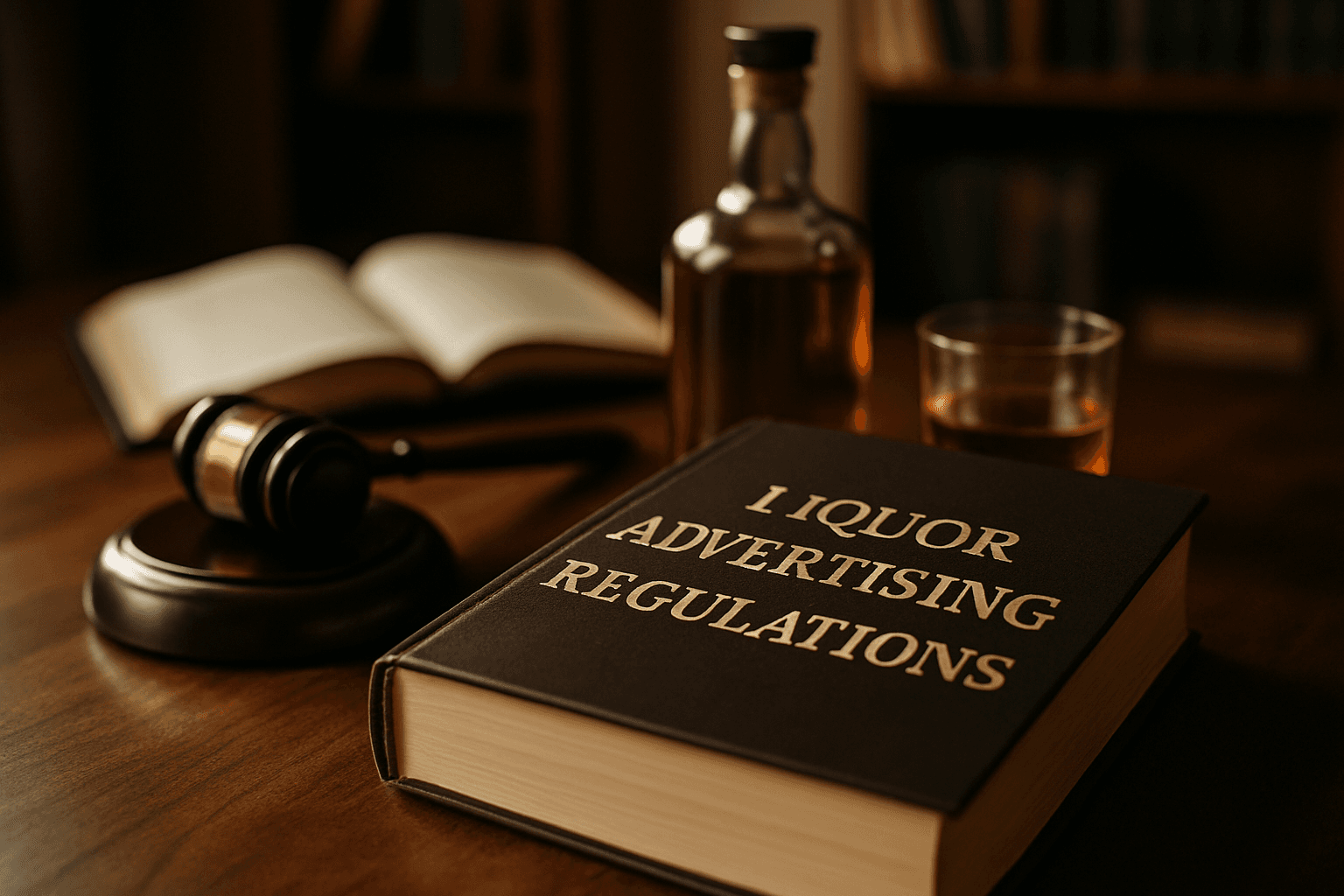
State-by-State Liquor Advertising Rules: A Practical Compliance Breakdown for Digital Campaigns
By Intentionally Creative8 min read
Listen to this article11:57
Schedule a free strategy call and Intentionally Creative will build a custom plan for you.
Schedule Your Free Strategy CallFree audit. No commitment.
Get a Free Audit. No commitment.
Navigate liquor advertising regulations with confidence. Learn federal TTB rules, state-specific alcohol marketing laws, and digital ad compliance for your store.
You've just launched a paid social campaign promoting a new bourbon selection. The creative looks sharp, the targeting seemed right, and you're excited about the reach. Then your ad gets pulled. Worse, you get a notice from your state's alcohol control commission. Suddenly, "liquor advertising regulations" isn't abstract anymore—it's a crisis burning hours you don't have and dollars you can't afford to lose.
This scenario plays out more often than independent retailers expect. The rules governing how liquor stores can market their products operate across multiple layers—federal, state, and platform-level—and unlike industries where a warning letter is the worst-case outcome, violations here can mean serious consequences: FTC scrutiny, regulatory fines, and license revocation that threatens your entire business. The stakes are particularly high in digital spaces, where audience targeting errors can push your content in front of age-restricted audiences without anyone catching it in time.
Most independent liquor retailers either fly blind, hoping their campaigns are compliant, or avoid digital advertising altogether because the rules feel too murky to navigate. But there's a third path: understanding the framework clearly enough to run compliant campaigns with confidence. That's what this guide delivers.
Discover how liquor stores can use Instagram Reels and short-form video to boost sales. Learn content formats, TTB co...
Liquor advertising regulations operate across multiple layers—federal, state, and platform-level—and the responsibility to stay compliant falls on everyone in the chain. Unlike industries where a slap on the wrist is the worst-case scenario, violations here can mean serious consequences: FTC scrutiny, regulatory fines, and even license revocation that threatens your entire business.
The stakes are particularly high in digital spaces. Under industry codes, audience composition is strictly monitored, meaning platforms must ensure the majority of viewers are reasonably expected to be of legal drinking age. If you're running campaigns without understanding these thresholds, you're already exposed.
Learn how to run Facebook and Instagram ads for your liquor store that comply with Meta's alcohol ad policies and dri...
This guide is for independent liquor store owners, beverage retail operators, and marketing managers who need clear, actionable guidance without wading through pages of regulatory jargon.
If you're running digital campaigns—whether on social media, display ads, or search—and you're tired of guessing whether you're compliant, you're in the right place. We'll break down what you actually need to know and do, starting with the federal framework and then diving into what varies by state.
Discover the 10 most costly alcohol marketing compliance mistakes liquor stores make and actionable strategies to mai...
The Federal Alcohol Administration Act serves as the primary federal framework regulating marketing and advertising of alcoholic beverages in America. This legislation establishes the baseline rules that govern how liquor stores and suppliers can communicate with customers—covering everything from digital ads to in-store signage.
Here's the critical reality that surprises many operators: the TTB does not require review and approval of alcohol beverage advertisements prior to broadcast, publication, or printing. This places full responsibility for compliance on advertisers themselves. There is no federal pre-screening process, no waiting period for approval, and no safety net. Your liquor advertising regulations compliance is entirely self-monitored.
The DISCUS Code of Responsible Practices applies to all advertising and marketing activities for distilled spirits, as well as beer and wine marketed by DISCUS member companies. This means major suppliers have committed to standards around responsible messaging, but the FTC monitors alcohol advertising compliance both formally and informally to catch violations.
What does this mean for your store? Compliance with TTB advertising guidelines isn't a checkbox—it's your responsibility. Federal alcohol advertising compliance relies entirely on self-policing, with consequences falling on you if your campaigns violate audience composition rules like ensuring the required percentage of your ad audience is reasonably expected to be of legal drinking age and that the percentage of underage viewers stays within acceptable limits.
When you're navigating liquor advertising regulations, the Legal Drinking Age (LDA) threshold is non-negotiable. Under federal TTB advertising guidelines and industry standards, alcohol advertising may only be placed where a specific percentage of audiences is reasonably expected to be of legal drinking age. This means the percentage of an ad's audience that may be under 21 is strictly limited based on reliable audience data.
This standard applies across digital platforms, display advertising, and programmatic buying—making audience targeting tools your first line of defense for alcohol advertising compliance. Digital platforms often provide demographic reach estimates; use them proactively to document LDA compliance before your campaign launches. Review these estimates before you launch, and keep records as part of your compliance documentation.
When it comes to liquor advertising regulations, one size definitely does not fit all. Each state operates under its own framework for alcohol advertising compliance, creating a patchwork that makes multi-state campaigns particularly tricky. Under the Federal Alcohol Administration Act, states retain significant authority to set additional requirements—and they use it.
This means a campaign that's perfectly legal in one state could land you in hot water in another. Geo-targeting decisions aren't just strategic choices anymore—they're compliance decisions.
Missouri's approach to state alcohol marketing laws makes this real. The state has detailed rules spelling out exactly which entities can legally advertise alcohol products—producers, manufacturers, brewers, bottlers, importers, wholesalers, or retailers. For independent retailers, this raises an immediate question: which advertising entities are you permitted to partner with under your state's specific framework?
This level of specificity isn't unique to Missouri. Many states have their own detailed lists of who can advertise and under what circumstances.
Despite the variation, most states regulate similar areas:
Your liquor advertising regulations compliance checklist doesn't end with federal and state rules. Major digital platforms impose their own policies that can trip up even well-intentioned campaigns.
Major digital advertising platforms have their own alcohol advertising rules. Platforms may require age-gating, restrict certain keywords or drink names in copy, or prohibit depicting consumption in ad creative. Major platforms often restrict promotion for hard liquor entirely in certain regions.
Facebook, Instagram, and other Meta properties have tightened alcohol ad policies significantly. Depending on your business type and location, boosted posts or paid promotion of alcohol products may be restricted or require age-gating. Content depicting people drinking—common in supplier creative—can violate platform standards even when legally compliant elsewhere.
Here's where many retailers get caught off guard. Programmatic ad buying automates placement, which means your carefully vetted campaign could land on websites or apps that violate alcohol marketing standards. Without active management, programmatic platforms optimize for cost—potentially sacrificing compliance.
Whitelist and blacklist strategies combined with brand safety tools aren't optional extras—they're essential for any compliant digital alcohol campaign.
Before launching any campaign:
Your liquor advertising regulations checklist must flag content depicting:
These violations trigger platform removal and potential legal action under state alcohol marketing laws.
Best practices for documentation:
Most independent liquor retailers treat liquor advertising regulations as a necessary evil—something to navigate reluctantly. But here's the shift that changes everything: understanding these rules isn't just risk management, it's your competitive edge. While bigger chains operate on autopilot, you can move confidently into digital campaigns that actually convert because you know exactly where the guardrails are.
10+ years helping liquor retailers and beverage brands grow through data-driven digital marketing. Learn more
Federal TTB advertising guidelines establish a baseline, but state rules often go further. Your state may impose stricter thresholds than federal minimums.
For independent retailers, the takeaway is straightforward: before you launch any campaign, understand your state's specific requirements—not just the federal ones.
Intentionally Creative specializes in digital marketing strategies that drive real results. Let us show you what's possible.
Schedule a CallHere's the reality that puts you ahead: the TTB doesn't require pre-approval for alcohol advertising. That means the burden of compliance falls on you—and that's exactly where you can outperform retailers who treat it as an afterthought. When you build compliant campaigns from the start, you're not just avoiding warnings or fines. You're building trust with your audience and focusing your energy on what actually grows your business.
Your practical starting point: use the legal drinking age audience threshold as your baseline, layer in your state's specific rules, then verify each platform's policies before you launch. It's a three-step checklist that takes compliance from a mystery to a repeatable process.
At Intentionally Creative ↗, we help liquor retailers and beverage brands build compliant, high-performing digital campaigns—because knowing the rules lets you focus on what converts. When compliance becomes part of your process rather than a roadblock, it stops being a constraint and starts being what sets you apart.