The 2025 Guide to Geofencing for Liquor Stores: How to Steal Foot Traffic from Competitors
By Intentionally Creative11 min read
Listen to this article14:30
Schedule a free strategy call and Intentionally Creative will build a custom plan for you.
Schedule Your Free Strategy CallFree audit. No commitment.
Get a Free Audit. No commitment.
Learn how geofencing for liquor stores can target nearby shoppers, intercept competitor traffic, and drive measurable in-store visits in 2025.
Right now, someone is pulling into your competitor's parking lot to buy a bottle of bourbon. They haven't checked prices. They haven't compared selections. They're going there because it's the store that came to mind first — or the one they happened to drive past.
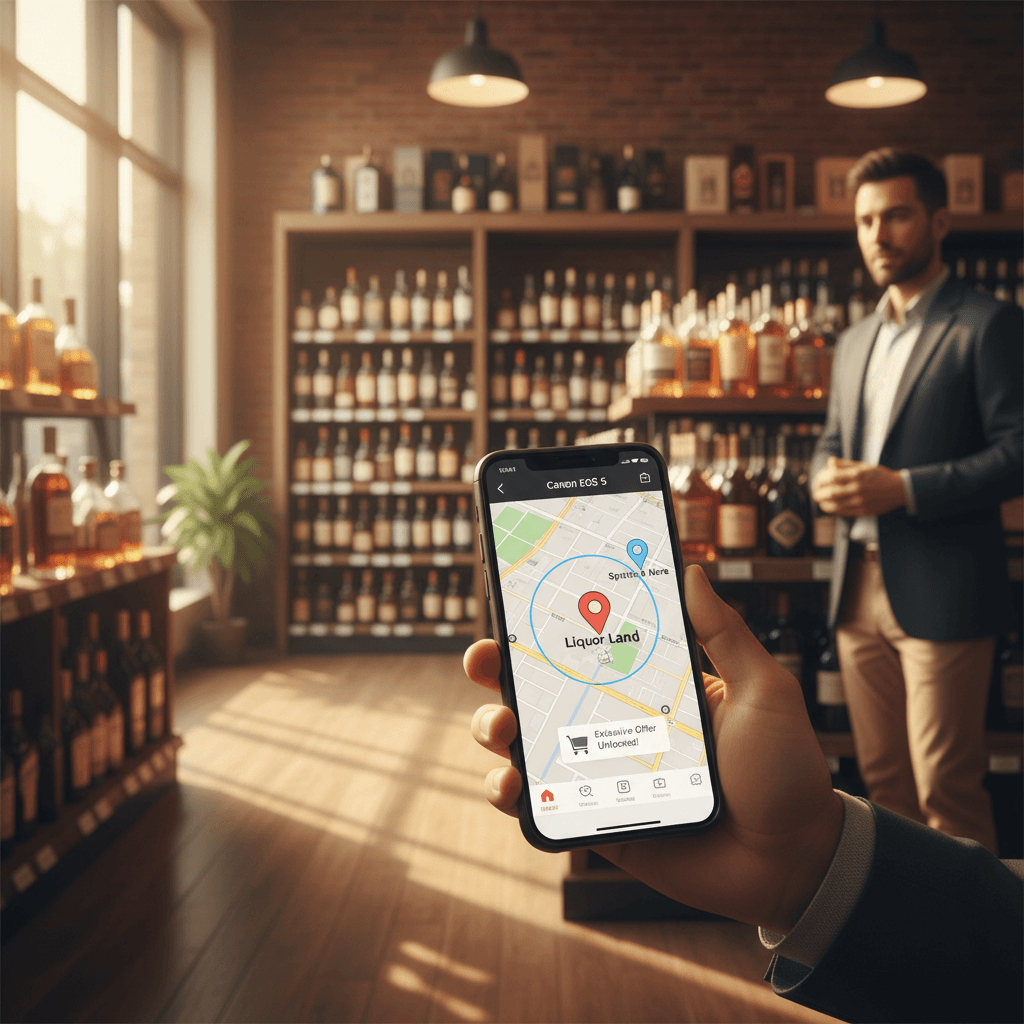
What if you could put your store's name, your offer, and a reason to change course on their phone screen at that exact moment? That's geofencing for liquor stores — and in 2025, it's one of the most effective (and most underused) tools independent liquor retailers have to fight back against competitors with bigger budgets and better locations.
This guide breaks down everything you need to know: how geofencing works, how to target your competitors' customers legally, how to build campaigns that actually drive foot traffic, and how to measure real ROI. Whether you've never heard the term or you've been curious but haven't pulled the trigger, this is your playbook.
Let's cut through the buzzwords. Geofencing is exactly what it sounds like: you draw a virtual fence around a real-world location — your store, a competitor's parking lot, a nearby event venue — and when a consumer's phone crosses that boundary, it triggers a targeted ad or offer on their device.
That's it. No magic. No mystery. Just smart, location-based targeting that puts your store in front of people who are already nearby and likely to buy.
Here's the quick version. You pick a location. You set a radius — most campaigns work within a 1–5 mile range, keeping things hyper-local and relevant. When someone with a smartphone enters that zone, they become eligible to see your ads across apps, mobile browsers, and social platforms. Some campaigns even track whether that person later walks into your store, giving you real foot-traffic attribution that ties your digital ad spend to actual bodies through your door.
Avoid these common geofencing mistakes liquor stores make. Learn how to use geofencing as a liquor store to drive foo...
One thing worth noting: Google's late-2023 policy changes around geofence warrant data have tightened some of the location data available to marketers. That doesn't kill the strategy — but it does mean working with a partner who understands the current landscape matters more than ever.
Think about what makes your business tick. You serve a defined neighborhood. Your customers make impulse-driven purchases — nobody plans a bourbon buy three weeks out. And within a few miles of your store, there are probably two or three competitors fighting for the same wallets.
That competitive density is exactly why this approach works so well. Location-based ads let you intercept customers at the moment of decision — when they're near a competitor, leaving a restaurant, or passing your block on the way home. Every dollar you spend connects to people walking through your door instead of someone else's.
Now that you understand the basics, let's talk about the tactic that makes most liquor store owners lean forward in their chairs.
This is the most aggressive — and most misunderstood — application of geofencing for liquor stores.
Learn how to advertise a liquor store online using Reddit. 8 proven strategies to reach local buyers Reddit's communi...
It's called geoconquesting, and it's exactly what it sounds like.
Geoconquesting means placing a virtual fence around a competitor's location so you can serve your own ads to their customers in real time.
Here's what that looks like on a Tuesday afternoon: A customer pulls into your competitor's parking lot to grab a bottle of Maker's Mark. They open their phone to check a text, and right there — between their inbox and Instagram — they see your ad offering 15% off that same bourbon, at your store, just two miles away. They back out of the parking lot and drive to you instead.
That's not hypothetical. That's geoconquesting doing exactly what it's designed to do.
And before you ask — yes, this is completely legal. Geoconquesting is standard digital advertising practice, used across every retail category from fast food to pharmacy. Think of it as putting a billboard near a competitor's store, except smarter, cheaper, and actually measurable. Foot-traffic attribution lets you track whether those ad impressions actually drove someone through your door — something a billboard will never tell you.
Stop leaving online sales on the table. Here are the 10 most costly e-commerce mistakes liquor stores make and how to...
Here's where strategy matters more than budget. Don't fence every liquor store in the county. That's a waste of money.
Focus on competitors within your realistic trade area whose customer base genuinely overlaps with yours. The store across town with a completely different demographic? Skip it. The competitor three blocks away who carries similar products and pulls from your same neighborhoods? That's your target.
Smart geoconquesting isn't about casting the widest net. It's about intercepting the right customers at the exact moment they're ready to buy — and giving them a reason to buy from you instead.
Pick two or three. Fence them. Measure the results. Then expand from there.
Knowing where to target is half the battle. The other half? Getting your timing, messaging, and campaign structure dialed in so those ads actually convert.
Getting this right isn't complicated — but it does require some intentional decisions upfront. Let's break down the three pillars that separate campaigns driving real foot traffic from ones that just burn budget.
Start by picking your locations. You've got three categories to work with:
In a city, tighten your radius to 1–2 miles. In a suburban or rural area, stretch to 3–5. The goal is reaching people close enough that stopping by your store feels convenient, not like a detour.
Define your audience triggers, too. You can filter by device type, time of day, or even frequency of visits to a location. The more specific you get, the less you waste.
Here's where geofencing gets really powerful. Combine your location fences with event-based and seasonal targeting to catch people during high-intent moments — when they're already thinking about buying.
Super Bowl weekend, Fourth of July, Memorial Day, local festivals, Friday evenings. These aren't just busy times. They're moments when purchasing intent spikes and a well-timed ad feels helpful rather than intrusive.
Layer in zip-code-level targeting around event venues or popular weekend destinations. Someone leaving a concert venue at 9 PM on a Saturday? That's your customer. Serve them an ad before they drive past your competitor.
If you're investing in geofencing, you need to understand the rules — and why they actually work in your favor.
Google's late-2023 policy change to limit geofence warrant data sent a clear signal: consumer privacy protections are tightening. For marketers, this means the granularity of location data available may narrow over time.
But here's what matters practically: geofencing still works. Most campaigns target broad enough zones that current privacy frameworks support them fully. The key is working with platforms and partners that source location data ethically and compliantly. If your provider relies on shady data brokers or gray-area collection methods, you're building on sand.
Choose partners who can explain exactly where their data comes from. If they can't, walk away.
Liquor store advertising carries an extra layer of regulation that generic retail doesn't face. Age-gating requirements, platform-specific restrictions, and state-level advertising rules vary wildly — what flies in Texas might get flagged in Pennsylvania.
Platforms like DoorDash have reportedly tightened alcohol ordering safeguards, reflecting a broader regulatory trend. Your campaigns need to account for these realities before launch, not after a compliance notice lands in your inbox.
None of this is a reason to avoid geofencing. It's a reason to do it right — with a partner who understands beverage alcohol specifically and builds compliance into the strategy from day one.
No need to overcomplicate this. Here's your playbook in four moves:
Step 1: Pick your fences. Identify 3–5 locations — your own store (yes, retarget your own customers), your top 2–3 competitors, and one high-traffic venue nearby like a grocery store or event center. Keep it tight and local.
Step 2: Nail your offer. Define a strong promotion with a clear call to action. "15% off all bourbon this weekend" beats a beautifully designed ad with no hook. Simple wins.
Step 3: Time it right. Launch around high-intent windows — Friday afternoons, holiday weekends, local concerts or game days. Meet people when they're already thinking about buying.
Step 4: Measure and adjust. Run for 30–60 days and track foot-traffic attribution to see which fences and messages actually drive store visits. Cut what's not working and double down on what is.
Here's the reality check: geofencing for liquor stores doesn't require a massive budget. You can start with a few hundred dollars per month to test across a handful of zones. What matters isn't the size of your spend — it's the intelligence behind it. Smart targeting on a small budget will outperform a bloated campaign with lazy fences every single time.
Expect 30–60 days before you have enough data to optimize confidently.
Geofencing puts your message in front of customers at the exact moment they're deciding where to buy — even when they're standing in a competitor's parking lot. You draw a virtual boundary around key locations, and when a potential customer crosses it, they see your ad, your promotion, your reason to drive the extra half-mile.
10+ years helping liquor retailers and beverage brands grow through data-driven digital marketing. Learn more
Your targeting can be flawless, but weak creative kills campaigns. Mobile ads work best when they follow three rules:
Ad formats to consider include mobile display banners, in-app ads, and push-style notifications depending on your platform. Mobile display tends to deliver the most consistent reach, but in-app placements often see stronger engagement.
The real advantage is context. The right message, at the right place, at the right time. That's what makes geofencing outperform generic display ads — and it's what turns a digital impression into a store visit.
Now let's talk about the part that separates geofencing from every "spray and pray" ad tactic you've tried before: actually proving it works.
This is where geofencing for liquor stores leaves traditional advertising in the dust. Foot-traffic attribution closes the loop between your digital campaigns and actual store visits. No more guessing. No more "well, the ad felt like it worked."
The process is straightforward. Someone inside your target area gets served your ad on their mobile device. Later, that person walks into your store and crosses your location's geofence. That visit gets attributed to your campaign.
Ad served, visit recorded, connection made.
Let's be honest: specific conversion rate benchmarks for liquor store geofencing are still emerging. The industry doesn't have a neat "expect X% visit rate" number yet. But here's what matters — you're measuring. Traditional billboard, radio, print? You're essentially hoping. With geofencing, you're tracking real people making real visits tied to real campaigns.
Focus on three numbers:
Ignore vanity metrics like raw impressions or clicks alone. They don't pay your distributor.
Before you launch anything, there's one more piece you need to get right — the regulatory landscape.
Intentionally Creative specializes in geofencing strategies that drive real results. Let us show you what's possible.
Schedule a CallYou've got the strategy, the targeting framework, the measurement playbook, and the compliance guardrails. Now let's put it all into motion.
Unlike billboards or radio spots, this isn't a "trust us, it's working" play. Foot-traffic attribution gives you real numbers tied to real visits. No more guessing.
If you're ready to make geofencing part of your 2025 strategy, reach out to Intentionally Creative ↗. We'll build a plan around your store's specific competitive landscape — your neighborhood, your competitors, your customers.