Geofencing for Liquor Stores: How to Target Competitors' Customers Without Breaking Compliance
By Intentionally Creative13 min read
Listen to this article16:13
Schedule a free strategy call and Intentionally Creative will build a custom plan for you.
Schedule Your Free Strategy CallFree audit. No commitment.
Get a Free Audit. No commitment.
Learn how geofencing for liquor stores lets you intercept competitor foot traffic with location-based ads — while staying fully compliant with alcohol regulations.
Right now, someone is pulling into your competitor's parking lot. They're about to spend $80 on a bottle of bourbon you carry for $10 less — with a better selection and friendlier staff. They have no idea you exist. That's not a hypothetical. It's happening every day, and it's costing independent liquor retailers real revenue.
Geofencing for liquor stores changes that equation entirely. It lets you serve targeted mobile ads to shoppers the moment they walk near a competitor's door, a weekend wine festival, or an upscale restaurant down the street. No billboards. No six-figure media buys. Just precise, location-triggered advertising that reaches people who are already out, already spending, and already in the mood to buy.
But here's the catch — and it's a big one. Alcohol is one of the most regulated advertising categories in the country. Layer in tightening location-data privacy laws, and you've got a strategy that's incredibly powerful when done right and genuinely risky when done wrong. This guide breaks down exactly how geofencing works for liquor retail, how to use it to intercept competitor foot traffic ethically, and how to stay on the right side of every compliance rule that matters.
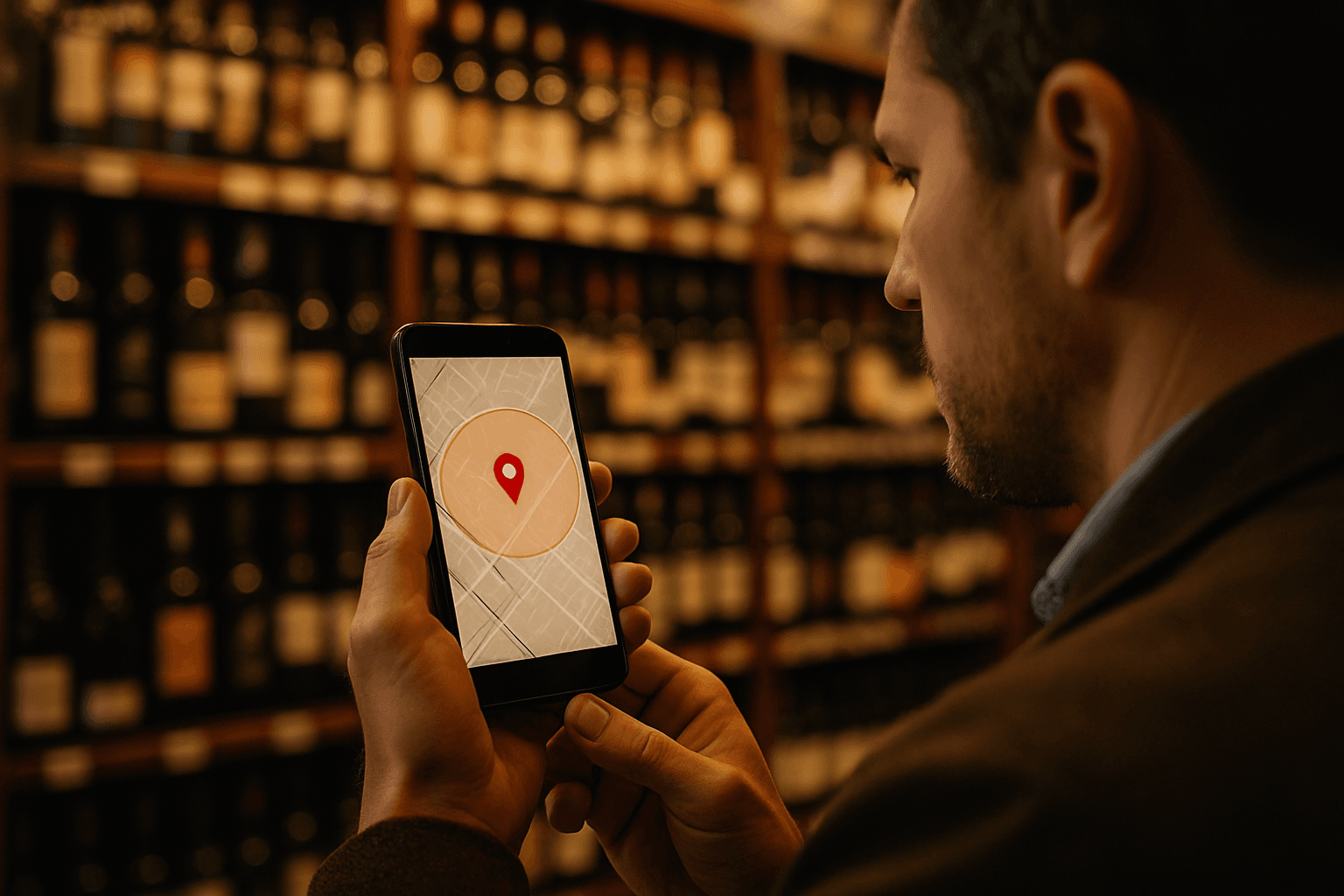
Think of geofencing as drawing an invisible line around a real-world location — say, your competitor's store, a nearby wine bar, or a weekend festival venue. When someone with a smartphone crosses that line, they become eligible to see your ads. That's it. No magic, no mystery. Just smart targeting based on where people physically go.
Geofencing uses GPS data to target consumers within a tight radius — typically one to five miles — of a specific location. When a potential customer walks into your competitor's parking lot or strolls through a shopping center with a bottle shop, their phone's location data registers that visit. Your ad can then appear in their mobile apps, browsers, or social feeds, sometimes within minutes.
Avoid these common geofencing mistakes liquor stores make. Learn how to use geofencing as a liquor store to drive foo...
The key difference from regular digital advertising? You're not hoping the right person sees your ad while scrolling at home on the couch. You're reaching someone who is already out, already nearby, and already in a buying mindset. That's a high-intent moment — and it makes every dollar of your ad spend work significantly harder.
Independent liquor retailers can't outspend Total Wine or big-box chains on billboards, TV spots, or blanket digital campaigns. But location-based advertising levels the playing field. It lets you compete on precision instead of budget, capturing customers at the exact moment they're making purchasing decisions.
Smaller spend, sharper aim, better results.
Now that you understand the mechanics, let's talk about the strategy that makes geofencing most valuable for independent retailers — and the one that tends to raise the most questions.
Meta ads for liquor stores require strict compliance and smart strategy. Learn campaign structure, budget allocation,...
Here's the play: you draw a virtual boundary around a rival liquor store, and when a customer walks into or near that location, your ad shows up on their phone. That's competitor conquesting, and it's one of the highest-impact applications of geofencing for liquor stores.
Before you raise an eyebrow — no, this isn't shady. It's standard practice in retail advertising. You're not hacking anyone's data or stalking shoppers. You're simply making sure nearby consumers know you exist and giving them a compelling reason to visit you instead. Every major retail category from fast food to pharmacy uses this exact strategy.
The setup is straightforward. You identify your top competitors — the stores pulling customers who should be yours — and draw geofences around them. When someone enters that zone, they become eligible to see your ads across apps, mobile browsers, and social feeds.
Here's a practical example: A store owner in Austin geofences three competitor locations plus a weekend wine festival happening across town. She serves mobile ads featuring a 15% discount on featured bottles. The result? She's reaching people who are actively shopping for alcohol at the exact moment they're making buying decisions. Zero wasted impressions on people who don't drink or don't care.
Learn how to launch geofencing campaigns for liquor stores that target competitor locations and local events while ke...
Competitor stores are just the starting point. Smart operators deploy geofencing around wine tasting events, craft beer festivals, luxury hotels, upscale restaurants, and premium retailers like specialty grocers. These locations are packed with consumers who are already interested in niche or aged spirits — exactly the audience that drives your highest-margin sales.
Combining zip code targeting, event-based geofencing, and competitor conquesting into one hyper-local strategy is the most cost-efficient way to eliminate wasted ad spend. You're not broadcasting to everyone in your metro area. You're reaching qualified buyers where and when their purchase intent peaks.
Of course, precision targeting only matters if you can prove it's working. And that brings us to the metric that makes geofencing fundamentally different from every other ad tactic in your playbook.
Here's where geofencing gets genuinely exciting — and where it separates itself from practically every other digital advertising tactic you've tried.
Foot-traffic attribution changes everything. Instead of staring at a dashboard full of impressions and click-through rates wondering if any of it actually moved the needle, you can now trace a direct line: someone saw your ad near a competitor's location, and then they physically walked into your store.
That's not a modeled estimate. That's GPS-verified, real-world behavior.
Traditional digital advertising sells you eyeballs. Geofencing sells you footsteps. When you run context-rich promotions — say, a bourbon deal triggered when someone enters a competitor's parking lot — you're not just hoping for brand awareness. You're measuring whether that person showed up at your door within a defined conversion window (typically 7–30 days).
This is the measurement shift liquor retailers have needed. You served 5,000 ads near Competitor X. 140 of those people visited your store. That's a 2.8% visit rate. Now you can calculate your actual cost per store visit and decide if the campaign earned its keep.
Forget impressions as a primary metric. Here's what actually matters:
If you're investing in location-based advertising, you need to understand the privacy landscape — because it's shifting fast.
Google's late-2023 move on geofence warrants wasn't just a policy update — it reflected growing pressure from consumers, regulators, and legislators who are increasingly uncomfortable with how location data gets used. That kind of scrutiny doesn't stay in the law enforcement lane. It spills directly into advertising, and it shapes how consumers feel about being tracked.
Here's the thing: geofencing isn't surveillance. You're serving ads to anonymized audiences within a defined radius, not tracking individuals. But the public doesn't always draw that distinction. When location tracking makes headlines, consumer trust takes a hit across the board.
Smart liquor retailers are treating privacy compliance as a competitive advantage, not a headache. Here's how to stay ahead:
When you run location-based ads the right way, you build trust. And brands that consumers trust get more engagement — period. Being ahead of regulations now means you won't be scrambling when new rules inevitably hit. The stores that prioritize privacy today will be the ones still running effective campaigns tomorrow.
You've got the strategy, the compliance framework, and the privacy playbook. Now let's put it all together into a campaign you can actually launch.
Ready to put geofencing for liquor stores into action? Here's your no-fluff playbook — even if you've never run a location-based ad before.
Identify 3–5 competitor locations you want to conquest, plus 1–2 complementary spots — think upscale restaurants, wine bars, or event venues where your ideal customer already spends time and money.
Next, set your radius. In urban areas, keep it tight — one to two miles. Suburban or rural? Go wider. The tradeoff is simple: tighter fences capture higher-intent shoppers but smaller audiences, while wider fences give you more reach at the cost of relevance.
This is non-negotiable. Set age-targeting to 21+ and exclude sensitive locations (schools, places of worship, recovery centers) from your geofence zones. Regulatory scrutiny around location data is only intensifying — build compliance into your campaign architecture before you launch, not after.
Your ad creative needs to answer one question instantly: Why should I come to you instead?
Lead with your differentiators — better craft selection, lower prices on top-shelf brands, exclusive products, or a loyalty program that actually rewards people. Keep copy short, action-oriented, and built around a clear CTA: "Visit today," "Shop our weekend deals," or "Join our rewards program."
Start modest. A test budget of $500–$1,500 per month is realistic for independent retailers. Run your campaign for at least 30 days — anything shorter won't give you enough foot-traffic data to make smart decisions.
10+ years helping liquor retailers and beverage brands grow through data-driven digital marketing. Learn more
We get the skepticism. Many store owners have been burned by agencies waving impressive-looking impression counts that translated to exactly zero measurable sales lift. Foot-traffic attribution finally gives you the hard numbers to prove — or disprove — whether your spend is working. That accountability is what makes it worth the investment.
So the targeting is sharp and the measurement is real. But none of it matters if your campaign runs afoul of alcohol advertising regulations — and this is where too many retailers get tripped up.
Let's be direct: alcohol advertising is one of the most heavily regulated categories in marketing. Period. Geofencing for liquor stores doesn't give you a workaround — it layers location data on top of every existing rule you already need to follow.
And those rules are getting stricter. In late 2023, Google moved to eliminate its compliance with geofence warrants, fundamentally changing how location data gets collected and stored on one of the world's largest platforms. That's not a small tweak — it's a signal that the entire industry is recalibrating around stricter privacy standards. Meanwhile, reporting has revealed that Texas law enforcement invested millions in phone-tracking software, underscoring just how seriously regulators and the public treat location data.
The spotlight is on, and location-based alcohol advertising sits squarely in its beam.
First, know your state. State-by-state alcohol advertising rules vary significantly. Some states restrict ad content. Others limit timing or placement. A campaign that's perfectly legal in California might violate regulations in Pennsylvania. Always verify your state's specific alcohol marketing regulations before you spend a dollar.
Second — and this should go without saying — never geofence locations where minors are the primary audience. Schools, playgrounds, youth sports venues. This isn't just an ethical line. It can violate state alcohol advertising laws and expose your business to real legal risk.
Work with ad partners who actually understand alcohol compliance. Not every geofencing vendor has navigated these restrictions before, and inexperience here can cost you.
Any geofencing campaign for alcohol must include age-gating. Your ads should only reach users verified as 21+ based on the targeting platform's data. Most DSPs (demand-side platforms — the software that actually places your ads) offer age-targeting controls. Use them. Confirm them. Don't assume they're on by default.
The compliance bar keeps rising. Alcohol delivery platforms like DoorDash are actively strengthening alcohol ordering safeguards, and digital marketers need to keep pace. Platform-specific restrictions on Meta, Google, and programmatic networks each come with their own opt-in requirements and content policies.
The bottom line: geofencing is powerful, but only when you build campaigns on a compliant foundation. Cut corners here and you're not just risking fines — you're risking your license.
Compliance covers the advertising rules. But there's a broader force reshaping how all location-based marketing works — and ignoring it isn't an option.
Intentionally Creative specializes in geofencing strategies that drive real results. Let us show you what's possible.
Schedule a CallAfter that first month, dig into the numbers. Review foot-traffic attribution, calculate your cost per visit, and optimize ruthlessly. Double down on the geofences driving real store visits. Cut the ones that aren't pulling their weight.
One final reminder: this is not set-it-and-forget-it. Seasonal shifts matter — holiday buying seasons, summer entertaining, football tailgating — and your creative needs regular refreshes to avoid ad fatigue. The stores that treat geofencing as an ongoing strategy, not a one-time experiment, are the ones that see compounding returns.
Independent liquor retailers have been outgunned on marketing budgets for years. Geofencing flips that dynamic. It lets you reach high-intent shoppers within miles of your competitors, measure actual foot traffic — not vanity metrics — and compete with chains that spend ten times your budget.
Compliance isn't optional, but it's not the roadblock people think it is. With privacy standards tightening across the industry, building your campaigns correctly from day one actually protects your investment long-term. The retailers who treat compliance and privacy as foundations — not afterthoughts — will be the ones still running effective campaigns when the next wave of regulations hits.
The real risk isn't complexity. It's waiting. Because if you're not reaching nearby shoppers with location-based ads, there's a good chance someone down the road is already targeting your customers.
Whether you tackle this in-house or partner with a team like Intentionally Creative — one that understands both the technology and the compliance landscape — the time to start is now.