Award-Winning Craft Breweries Are Going Bankrupt: How to Protect Your Store's Tap and Shelf Strategy When Supplier Brands Collapse
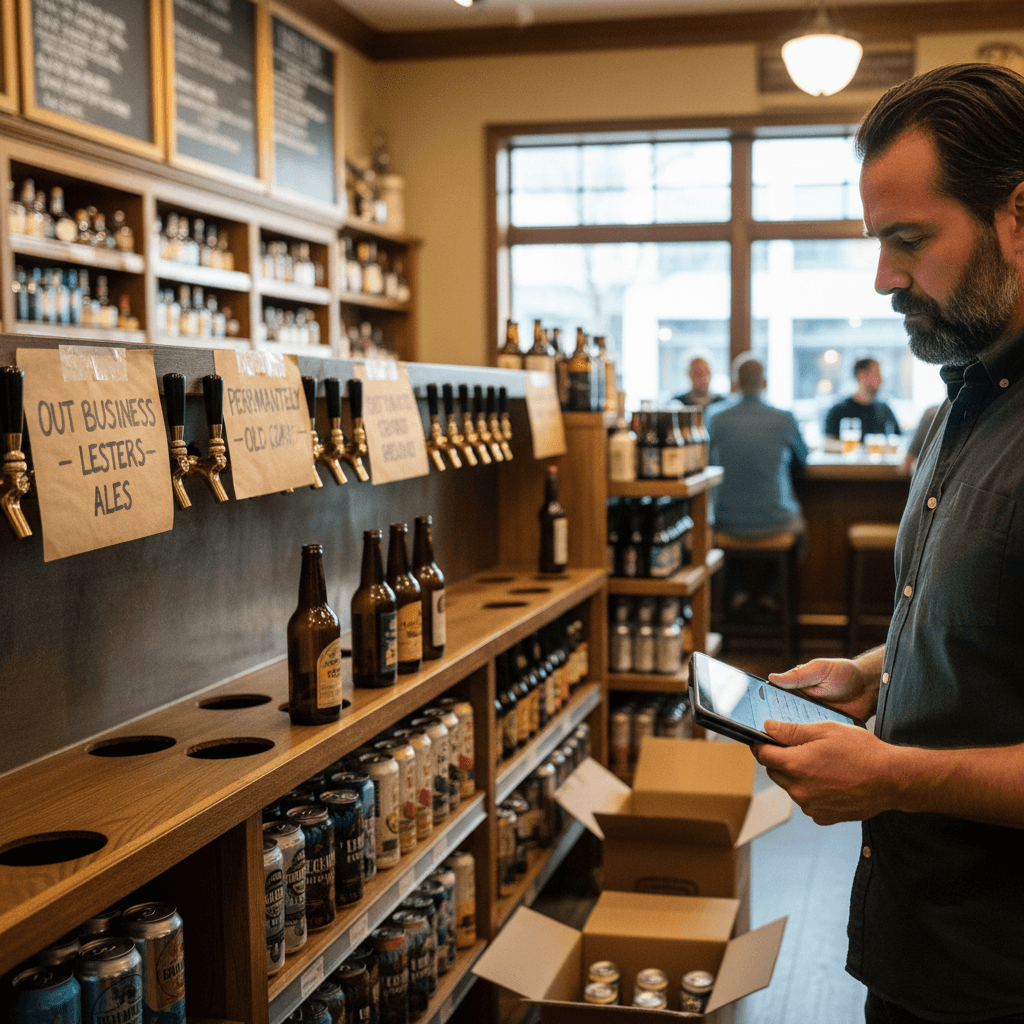
434 craft brewery closures in 2025 are disrupting retailers. Learn craft brewery closures liquor retail strategy to protect your taps, shelves, and margins.
- The Craft Brewery Collapse Is Here — And It's Hitting Retailers Hard
- When Award-Winning Brands Disappear Overnight: What Retailer Risk Actually Looks Like
- Your Tap List Is Your Most Vulnerable Asset
- 5 Moves to Protect Your Shelf and Tap Strategy Right Now
- How to Read the Warning Signs Before a Supplier Goes Under
A brewery you've carried for years files Chapter 7 on a Tuesday. By Thursday, your distributor confirms the brand is gone — no transition, no final shipment, no heads-up. You're staring at a gap on your shelf and a dead tap handle, wondering how a brand that won medals two years ago just vanished.
This isn't a hypothetical. It's happening right now, at scale. In 2025, craft brewery closures outpaced new openings for the first time in the modern craft era — and the gap is widening fast. For independent liquor retailers, every one of those closures carries real operational consequences: disrupted supply chains, lost margin, confused customers, and a scramble to fill holes you didn't see coming.
The retailers who come out of this contraction stronger won't be the ones who predicted which breweries would fold. They'll be the ones who built a craft brewery closures liquor retail strategy before they needed one. This post gives you the data, the warning signs, and the concrete moves to protect your taps, your shelves, and your bottom line — starting today.
The Craft Brewery Collapse Is Here — And It's Hitting Retailers Hard
You've probably noticed it already. A rep stops returning calls. A delivery gets delayed, then canceled. A brand you've carried for years quietly disappears from your distributor's portfolio.
It's not your imagination. It's a market shift — and the data backs it up.
Avoid TTB violations and Google Ads suspension with this guide to alcohol advertising rules for liquor stores. Expert...
The Numbers Tell a Stark Story
In 2025, 434 U.S. craft breweries closed their doors while only 268 new breweries opened, according to the Brewers Association. That's the first time in the modern craft beer era that closures have outpaced openings. Not by a little — by a lot.
What makes this more alarming is the acceleration. Earlier in the year, interim numbers showed 399 closures against 335 openings — a concerning gap, but a narrower one. By year's end, closures jumped while openings fell off a cliff. The trend didn't stabilize. It got worse.
Today, roughly 9,778 small and independent breweries still operate across the U.S. Those 434 closures represent 4.4% of the entire operating base — wiped out in a single year.
This Isn't a Correction — It's a Contraction
For years, people waved off brewery closures as normal market churn. Too many players, not enough taps. Some pruning was healthy.
Discover the 7 essential marketing budget benchmarks for liquor stores. Learn how top performers allocate spend for m...
This is different. U.S. alcohol consumption has been trending toward historic lows. Gen Z is drinking less — period. THC beverages are carving out real shelf space and mindshare. These aren't temporary headwinds. They're structural forces reshaping how Americans spend their discretionary dollars.
If you run an independent liquor store, every supplier brand collapse threatens your product pipeline, your tap handles, and your margins. That craft beer selection you built around emerging local brands? It needs a stress test.
Because this isn't just industry news you can scroll past. It's a direct operational risk — and it demands a plan.
When Award-Winning Brands Disappear Overnight: What Retailer Risk Actually Looks Like
Raw numbers don't capture what this actually feels like when it hits your store. Let's get specific.
Learn how email segmentation for liquor stores drives repeat sales with a 4,200% ROI. List-building tactics, purchase...
Chapter 7 Means Gone — Not Restructuring
The Brewer's Art operated for over 30 years. Olfactory Brewing had built a loyal following. Both filed Chapter 7 liquidation — not Chapter 11 restructuring.
Here's the difference in plain language: Chapter 11 means a company is reorganizing its debts and trying to survive. You might lose a SKU temporarily, but there's a path back. Chapter 7 means the lights are off, the doors are locked, and the brand no longer exists. There's no transition plan. No "we'll honor existing orders." No six-month wind-down that gives you time to adjust.
For retailers who carried those products, the phone just stops ringing.
The Downstream Cascade: Craft Beer Cellar's Bankruptcy Warning
Think supplier collapse only hurts suppliers? Craft Beer Cellar — an entire retail franchise built around craft — also filed Chapter 7, citing lingering COVID aftereffects. A retailer, gone, because it over-indexed on a volatile category.
The craft brewery bankruptcy impact on retailers isn't theoretical. It cascades — from producer to distributor to your register.
So here's the question: if a brewery supplying two of your eight tap handles goes dark next month, what's your plan? Most store owners need an honest answer. And most don't have one.
Your Tap List Is Your Most Vulnerable Asset
If you run taps, the financial exposure is even sharper than what's happening on your shelves.
Why Draft Pours Carry Outsized Financial Risk
Independent bottle shops and taprooms know the math. Draft pours carry your best margins — often significantly better than canned or bottled product. When a brewery supplier collapses, you're not just losing a SKU. You're losing a profit center.
With overall beer consumption declining, every tap handle matters more than it used to. You can't afford dead lines, and you definitely can't afford the scramble of replacing a popular pour with whatever your distributor has available on short notice. A solid craft brewery closures liquor retail strategy treats your tap list like what it is: your most margin-sensitive asset.
The Distribution Law Wrinkle Most Retailers Don't See Coming
Here's what catches people off guard. Most states have franchise laws that prevent breweries from terminating wholesaler contracts without demonstrating "good cause." During a bankruptcy, these laws create legal tangles that delay product availability before a brewery officially shuts down.
The practical implication? You'll likely notice supply getting spotty weeks or months before any closure announcement. And your wholesaler can't quickly pivot either — they're legally bound too.
Your tap list needs a contingency plan the way your business needs insurance. The retailers who build redundancy into their draft programs now will be the ones still thriving when the next supplier collapse hits.
5 Moves to Protect Your Shelf and Tap Strategy Right Now
Enough about the problem. Here's your playbook.
1. Audit Your Supplier Concentration Risk
Pull your POS data and list every craft brand on your shelves and taps. Calculate what percentage of your craft category revenue and margin each one represents. This takes maybe an hour, and it's the most important hour you'll spend this quarter.
The rule of thumb: if any single craft brewery accounts for more than 10–15% of your craft category margin, you've got concentration risk. That's not a reason to drop them — it's a reason to have a plan B ready before you need one.
2. Build a Rotating Tap Framework (Not Just a Rotating Tap List)
Stop scrambling every time a brand disappears. Designate 2–3 of your taps as permanent "rotation" slots. Build a waitlist of local and regional breweries ready to fill those slots on short notice. Stores with systems recover from a lost supplier in days. The ones without systems recover in weeks — if they recover that revenue at all.
3. Diversify Beyond Craft Beer Without Abandoning It
Surviving breweries are simplifying their portfolios and leaning into flagships. Fewer novelty releases means fewer reasons for adventurous drinkers to browse your craft section. Combine that with declining overall consumption, and you've got a clear signal.
Allocate some of that freed-up shelf space to adjacent categories — craft spirits, RTDs, or THC-infused beverages where legal. You're not gutting your craft beer identity. You're evolving it into a broader "discovery" destination.
4. Strengthen Relationships With Your Strongest Surviving Suppliers
The breweries that survive this contraction will emerge leaner and more reliable. Identify your top 5–7 craft suppliers with the healthiest business fundamentals — consistent delivery, stable ownership, growing or steady volume. Then invest: better shelf placement, co-marketing commitments, volume deals. When a supplier collapse hits your competitors, these partnerships become your moat.
5. Monitor the Pipeline — Fewer SKUs Are Coming
With fewer breweries and tighter portfolios from the survivors, your new-product pipeline will slow down. Plan for it. Build your seasonal and promotional calendars around what's confirmed, not what's rumored. Don't hold shelf space open for launches that may never arrive — fill it with proven performers or those adjacent categories from Move #3.
The stores that thrive through this contraction won't be the ones who predicted every closure. They'll be the ones who built systems that made any single closure survivable.
Let our team show you what's possible.
our team specializes in branding strategies that drive real results. Let us show you what's possible.
Schedule a CallHow to Read the Warning Signs Before a Supplier Goes Under
Those five moves will protect you when a closure hits. But the best defense is seeing it coming before it does. Supplier collapses rarely happen overnight — the warning signs are there if you know where to look.
Red Flags in Your Day-to-Day Operations
Start paying attention to the small stuff. Inconsistent delivery schedules are often the first crack. A brewery that used to hit your dock like clockwork now shows up late — or short. Then SKUs start vanishing without explanation. Your sales rep stops calling. You notice their social media, once buzzing with new releases and taproom events, goes quiet for weeks.
And watch the pricing. There's a difference between a strategic promotion and a fire sale. When a brand suddenly slashes prices across the board, that's not generosity — that's desperation to move inventory.
Here's a subtler signal: the simplification pattern. A brewery that used to release 15 seasonal SKUs suddenly drops to 3 flagships. That's either smart business or survival mode. Ask which.
Questions to Ask Your Distributor
Your wholesaler reps are your best early warning system. They know which brands are struggling months before retailers do. Ask directly: "Which craft brands should I be worried about?"
A strong distributor relationship means honest intel — and honest intel is what separates a proactive strategy from a reactive scramble. Don't wait for the bankruptcy filing. By the time closures hit the news, your shelf gap already exists.
Turn Market Contraction Into a Competitive Advantage
Here's the part most people miss: market contractions don't just create risk. They create opportunity — if you're positioned for it.
Why Fewer Breweries Can Mean Better Retail Curation
With nearly 9,800 small and independent breweries still operating, your customers aren't short on options — they're drowning in them. And the customers who are buying want quality, not quantity.
A craft brewery closures liquor retail strategy built around curation beats a wall of 400 random SKUs every time. Fewer suppliers means less noise. Less noise means you can build a tighter, more intentional selection that earns loyalty instead of confusion.
Marketing the Story Your Customers Actually Want to Hear
Your customers are reading the same brewery bankruptcy headlines you are. Get ahead of it. Use email, social, and in-store signage to explain why you carry what you carry. Spotlight the healthy local breweries on your shelves. Position your store as the trusted guide — not the shop with empty tap handles and no explanation.
Stores that communicate their curation philosophy now will capture every customer walking away from competitors who just look... abandoned.
The Bottom Line: Plan for More Closures, Not Fewer
The trend line isn't stabilizing — it's accelerating. Layer on declining alcohol consumption, Gen Z's well-documented moderation habits, and THC beverages eating into beer's occasion share, and 2026 isn't shaping up to be a recovery year.
So here's your move this week: audit your supplier risk. Identify which brands on your shelves and taps come from breweries showing warning signs. Have a blunt conversation with your top distributor about their at-risk producers. Build a contingency plan for your shelf and tap strategy — before the next bankruptcy headline features one of your brands.
The stores that thrive through market contraction aren't luckier. They planned for it.
Your craft brewery closures liquor retail strategy shouldn't be reactive. If you want help building a resilient retail marketing plan that accounts for supplier volatility, reach out to our team at Intentionally Creative ↗. We work with retailers who'd rather lead than scramble.
10+ years helping liquor retailers and beverage brands grow through data-driven digital marketing. Learn more