California's Down to Earth Month: How Liquor Retailers Can Ride the Sustainability Marketing Wave in April
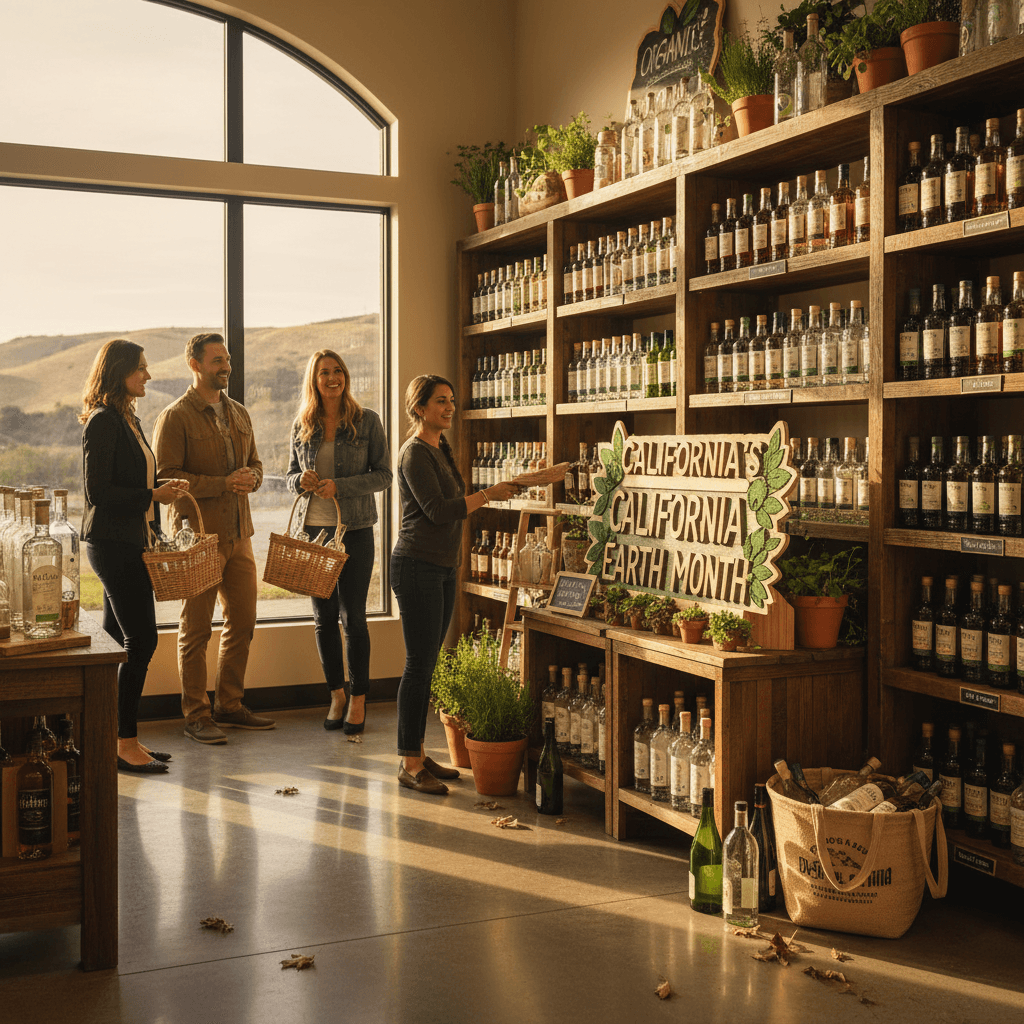
Discover how sustainability marketing in liquor retail can drive April sales. Use Down to Earth Month for in-store tie-ins that boost loyalty and revenue.
- What Is Down to Earth Month — and Why Should Liquor Retailers Care?
- The Business Case for Sustainability Marketing in Liquor Retail
- 5 In-Store Sustainability Tie-Ins You Can Launch This April
- How to Market Your Sustainability Push Without Greenwashing
- Beyond Wine: Extending the Sustainability Story Across Your Whole Store
April is one of the quieter months on the retail calendar — no major gift-giving holidays, no big sporting events driving beverage sales. But if you're a liquor store owner in California (or anywhere paying attention to California trends), April actually hands you something better than a holiday: a ready-made marketing framework with real consumer momentum behind it. And most of your competitors will sleep right through it.
Here's the opportunity: the Wine Institute's Down to Earth Month, Earth Day, and a growing wave of sustainability investment from the biggest names in spirits are all converging in the same four-week window. Sustainability marketing in liquor retail isn't about putting a recycling bin by the register and hoping someone notices. It's about aligning your store with where consumer spending is already headed — and April gives you the perfect on-ramp.
Whether you run a single-location shop or a small chain, this guide breaks down exactly what Down to Earth Month is, why the business case is stronger than you think, and how to execute in-store tie-ins that actually move product. No fluff, no guilt trips — just a practical playbook for turning a cultural moment into measurable revenue.
What Is Down to Earth Month — and Why Should Liquor Retailers Care?
The Wine Institute's April Initiative, Explained
Every April, the Wine Institute coordinates Down to Earth Month across California wineries — a full month of eco-friendly vineyard experiences, organic garden tours, and sustainability-focused events designed to connect consumers with the story behind what's in their glass. In 2026, specific vineyard tour dates land on April 12 and 25 , giving the initiative concrete calendar anchors.
10 wine club marketing tactics that reduce the 40% year-one cancellation rate and boost member spending at your liquo...
Here's the part that matters for your bottom line: the Discover California Wines portal actively promotes Down to Earth events and offers, including Earth Day discounts and special tastings. That's a ready-made, institutional marketing hook you don't have to build from scratch. When a statewide organization is already driving consumer awareness around sustainable wine, smart retailers draft behind that momentum rather than creating campaigns from zero.
And with Earth Day falling on April 22 — right in the middle of Down to Earth Month — you've got two distinct promotional moments to build campaigns around. That's rare in April, a month that otherwise lacks major retail hooks.
Why This Matters Beyond Wine Country
This isn't just a wine thing anymore. Diageo — parent company to Johnnie Walker, Smirnoff, and Guinness — is among the major spirits manufacturers investing heavily in sustainability initiatives. When a company that size signals a direction, it tells you where consumer demand is heading.
10 proven liquor store social media content ideas to connect with customers, boost brand visibility, and drive both i...
That shift makes sustainability relevant across every aisle in your store, not just the wine section. Down to Earth Month gives you the framework. Smart merchandising gives you the edge. The brands are investing. The consumers are paying attention. The only question is whether your store is ready to meet them.
The Business Case for Sustainability Marketing in Liquor Retail
Let's skip the kumbaya and talk numbers. If you're an independent liquor store owner, you don't need another lecture about saving the planet. You need to know what moves the register. So here's the straight talk: sustainability marketing isn't charity work — it's a competitive advantage with measurable returns.
It's Not Just Feel-Good — It's Profitable
Sustainable retail practices — local sourcing, green packaging, community-aligned promotions — tend to drive bigger baskets, more repeat visits, and sharper brand differentiation .
Learn how email segmentation for liquor stores drives repeat sales with a 4,200% ROI. List-building tactics, purchase...
Eco-friendly packaging alone is becoming a key differentiator in alcohol marketing. Brands that adopt sustainable packaging aren't just reducing their environmental footprint — they're winning younger consumers who increasingly vote with their wallets. When you stock and promote those products, you inherit that goodwill.
Diageo is pouring real money into this space. When a company that size sees ROI in going green, that's not idealism — that's a market signal. The good news? You don't need a corporate budget to ride the same wave. You just need to align with what's already happening.
What the Calendar Gives You
With three built-in promotional anchors in April — the two vineyard tour dates and Earth Day — you've got a ready-made framework for sustainable liquor store marketing. No agency required. Smart in-store tie-ins during these dates let you tap into existing consumer momentum, differentiate from the chain down the road, and build the kind of community connection that turns one-time buyers into regulars.
This isn't a trend. It's a business strategy hiding in plain sight.
5 In-Store Sustainability Tie-Ins You Can Launch This April
These five tactics are designed for real stores with real constraints — no six-figure budgets required.
1. Curated Eco-Friendly Endcaps and Shelf Displays
Create a dedicated "Down to Earth" endcap or feature display that does the storytelling for you. Stock it with wines from participating California wineries (the Wine Institute's website lists participants), spirits from brands with verified sustainability practices, and craft beverages in eco-friendly packaging. You likely already carry qualifying products from Diageo's portfolio and other major producers. The key is making it visible and shoppable — not buried in a back-aisle afterthought.
While you're at it, build a "Green Bundle" discount into the display. Pair a sustainable wine with an eco-conscious spirit at a slight markdown. Bundles increase your average transaction value while giving customers a low-risk reason to try something new. It's a margin play disguised as a feel-good promotion.
2. Tasting Events Tied to Down to Earth and Earth Day Dates
Schedule in-store tastings around April 12, April 22, and April 25. Three events in one month gives you a recurring reason to drive foot traffic without overextending staff. Cross-promote with the Discover California Wines portal — link to their Down to Earth events page from your social media and in-store signage. You're borrowing credibility from an institutional framework that already has consumer awareness. That's smart marketing, not extra work.
3. Shelf-Talkers That Tell the Sustainability Story
This is where in-store tie-ins live or die. Build simple, informative shelf-talkers that highlight tangible facts: "This distillery repurposes 100% of its casks." "Packaged with 30% less plastic." "Sourced from a family vineyard using solar energy."
Specificity sells. Vague green claims don't. Customers are skeptical — rightfully so — and a concrete number or verifiable practice earns trust faster than any "eco-friendly" badge ever will. Keep them short, factual, and positioned at eye level next to the price tag where buying decisions actually happen.
4. Social Media Storytelling With Supplier Content
You don't need to create content from scratch. Major producers publish sustainability reports, behind-the-scenes vineyard footage, and packaging innovation stories. Repurpose that material with a local angle: "We carry this because..." or "Our customers asked for more options like this." One post per day during the week of Earth Day is plenty. Consistency beats volume.
5. A Customer Feedback Loop
Put a simple card or QR-code survey near your Down to Earth display: "Which sustainable products would you like us to carry?" This costs almost nothing and gives you two things — customer engagement data and a reason to reorder what's working. It also signals that your sustainability push is customer-driven, not performative.
How to Market Your Sustainability Push Without Greenwashing
Here's the uncomfortable truth: your customers have built-in BS detectors, and they're getting sharper every year.
With Down to Earth Month promotions ramping up and Earth Day around the corner, there's real temptation to slap a green leaf on your signage and call it a day. Don't. The payoff for honest eco-messaging is significant — but the blowback from hollow claims can torch the trust you've spent years building.
The Credibility Line: What Customers Actually Trust
Customers trust specifics. They distrust vibes.
"We recycle all cardboard packaging from deliveries" lands. "We're committed to a greener future" doesn't. When featuring products, lean on verifiable certifications — organic, B Corp, SIP Certified for California wines. The Wine Institute's Down to Earth framework gives you an institutional reference point rather than forcing you to invent your own claims.
For spirits, major producers like Diageo publish detailed sustainability reports. Use that supplier-provided data as source material for your in-store signage. You're curating verified information, not doing original research.
Simple Rules to Keep Your Eco-Messaging Honest
Three guidelines that won't backfire:
- Only claim what you can document. If someone asks for proof, you should have it.
- Borrow credibility from certified brands rather than making sweeping store-level declarations.
- Match your tone to your audience. Your customers are adults buying bourbon and wine — they want to feel good about a purchase they were already making. Frame sustainability as a bonus, never a guilt trip.
Straightforward beats preachy. Every time.
Let our team show you what's possible.
our team specializes in digital marketing strategies that drive real results. Let us show you what's possible.
Schedule a CallBeyond Wine: Extending the Sustainability Story Across Your Whole Store
Down to Earth Month centers on wine, but your customers don't shop in a single category. When someone walks in looking for a sustainably made Paso Robles red, they're probably open to hearing about the eco-friendly gin on the next shelf over.
Spirits, Beer, and RTDs With Eco Credentials
Use April as your launchpad. The sustainability conversation has exploded across every beverage alcohol category, and the big players are backing it with real dollars — from Diageo's portfolio-wide initiatives to independent craft distilleries running carbon-neutral operations.
Start pulling together your eco-credentialed products: spirits in recycled glass bottles, craft beers brewed with local sourcing and water conservation practices, RTDs in recyclable cans with reduced packaging. Each one deserves a shelf-talker, a social post, or both.
Highlighting the Full Sustainability Spectrum
Effective sustainability marketing in liquor retail goes beyond "green" labels. You've got multiple angles to work with: distilleries repurposing casks, breweries running on alternative energy, brands eliminating plastics, and transparent supply chains your customers can actually trace.
Feature local and regional producers especially. Shorter supply chains mean a genuinely smaller carbon footprint — and that supports your local economy. It's a story that practically tells itself.
Don't let these tie-ins expire in May. Consider making sustainability a permanent section or rotating feature. The brands investing here aren't stopping after April — your merchandising shouldn't either.
Your April Sustainability Marketing Calendar: A Quick-Start Plan
You don't need a massive budget or a marketing team. You need a plan. Here's your week-by-week roadmap for turning Down to Earth Month into real revenue.
Week-by-Week Action Items
Week 1 (April 1–6): Build your Down to Earth endcap or dedicated display. Post a social announcement teasing your April sustainability focus. Contact distributors for co-op marketing materials — brands investing in sustainability often have assets ready to share.
Week 2 (April 7–13): Host a tasting event tied to the April 12 vineyard tour date. Feature California wines front and center. Add shelf-talkers highlighting specific eco-credentials (organic, biodynamic, dry-farmed).
Week 3 (April 14–22): Build toward Earth Day on April 22 with a "Green Bundle" promotion pairing eco-certified wines and spirits. Share one supplier sustainability story per day on social media — short and simple. Consider a modest Earth Day discount on certified products.
Week 4 (April 23–30): Run a second tasting tied to the April 25 vineyard tour date. Recap the month on social — share what sold, what customers loved. Then make the critical decision: what earns a permanent spot on your shelves?
Low-Effort, High-Impact Moves for Busy Retailers
If the full calendar feels like too much, prioritize these wins:
- One endcap display with Down to Earth Month signage (30 minutes to set up)
- Two social media posts per week — not per day
- One tasting event around Earth Day
- Shelf-talkers on your top five eco-friendly products
These require minimal effort but signal to customers that you're paying attention — and that's often enough to shift buying behavior.
The Bottom Line: Sustainability Sells When You Keep It Real
Down to Earth Month gives liquor retailers a turnkey promotional framework — minimal investment, meaningful results in foot traffic, basket size, and loyalty throughout April.
The key is authenticity. Use verifiable claims, lean on supplier data from companies already investing heavily in this space, and let the products tell the story. Your job isn't to save the planet — it's to give customers a compelling reason to choose you over the competition.
Start small. Measure what works. Build from there. Sustainability marketing in liquor retail isn't a passing trend — it's becoming table stakes.
Ready to make April your strongest month yet? Pick one tactic from this guide — just one — and put it into action this week. Build the endcap. Print the shelf-talkers. Schedule the tasting. The framework is already built for you. All you have to do is show up. And if you want help turning these ideas into a full marketing strategy tailored to your store, get in touch with Intentionally Creative — we'll make sure your sustainability push drives results long after April ends.
10+ years helping liquor retailers and beverage brands grow through data-driven digital marketing. Learn more