Craft Breweries Are Gathering at CBC 2026: How Independent Liquor Retailers Can Build Direct Relationships With Brewers Outside the Distributor Tier
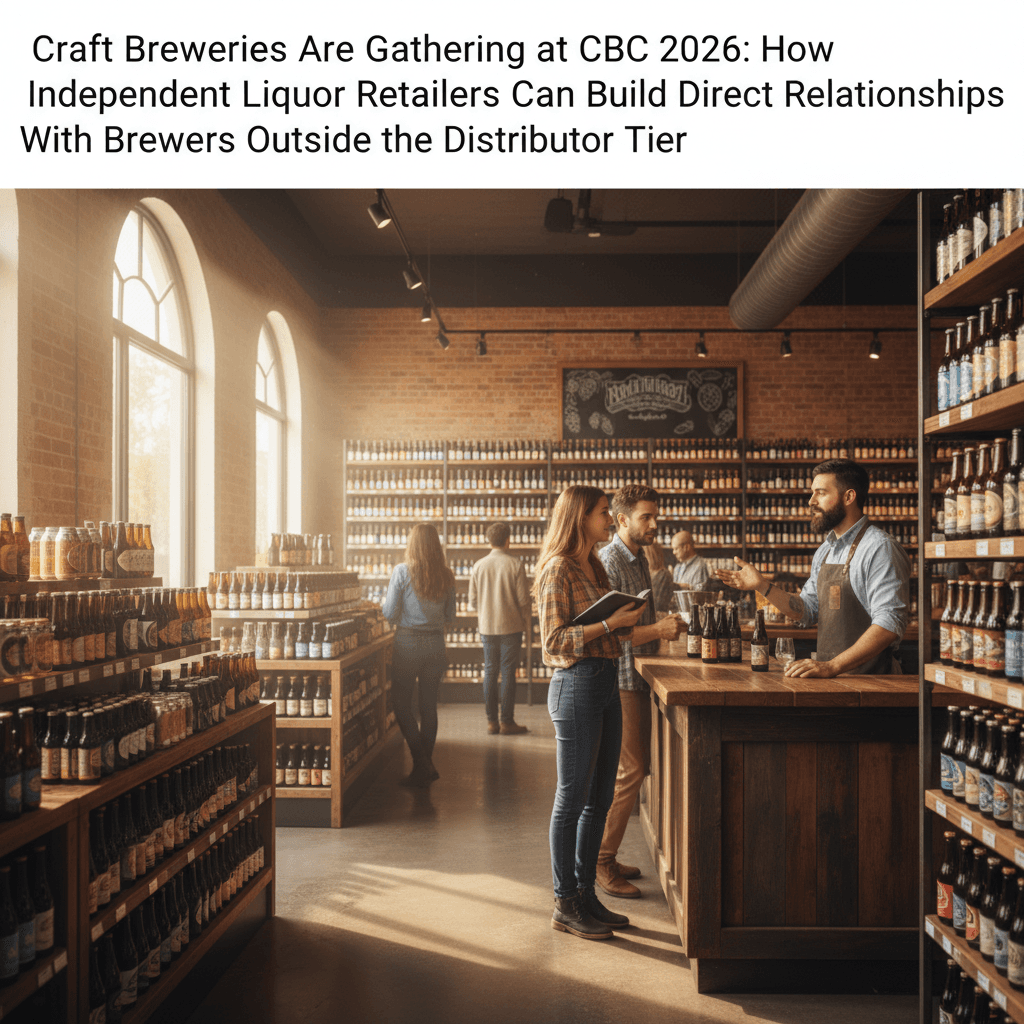
Learn how independent liquor retailers can build craft brewery direct relationships at CBC 2026 and beyond — without relying solely on traditional distributors.
- CBC 2026 Is the Biggest Craft Beer Networking Event of the Year — And Retailers Should Pay Attention
- Why the Traditional Three-Tier System Is Losing Its Grip on Craft Beer
- New Platforms and Legal Shifts Are Making Direct Brewery-Retailer Relationships Possible
- 5 Ways Independent Liquor Retailers Can Build Brewery Partnerships Outside the Distributor Tier
- What Brewers Actually Want From Retail Partners (And How to Position Your Store)
Every April, thousands of craft brewers converge on one city to talk shop, pour samples, and find new partners. This year, it's Philadelphia — and if you're an independent liquor retailer who's tired of stocking the same products as every other store in your zip code, you should be paying very close attention. The craft beer landscape is shifting underneath the traditional distribution model, and the retailers who build craft brewery direct relationships with liquor retailers now — not next year, not "when things settle down" — are the ones who'll own the competitive edge.
Here's the reality: your customers are already seeking out small-batch, hard-to-find craft beer. They're driving to taprooms, ordering online where they can, and asking you why you don't carry that brewery they discovered on vacation. The demand is there. The regulatory environment is loosening. And the biggest networking event in craft beer is happening in less than a month. The only missing piece is you in the room.
This guide breaks down exactly how independent liquor retailers can start building direct partnerships with craft breweries — legally, strategically, and starting right now. Whether you're planning to attend CBC 2026 or just want to rethink your sourcing strategy from behind the counter, every section below gives you something actionable.
CBC 2026 Is the Biggest Craft Beer Networking Event of the Year — And Retailers Should Pay Attention
What Is the Craft Brewers Conference?
CBC 2026 runs April 20–23 at the Pennsylvania Convention Center in Philadelphia — the largest craft beer industry gathering in the country. We're talking brewers, importers, distributors, and yes, buyers all under one roof.
But here's what most independent liquor store owners miss: CBC isn't just a brewer-to-brewer hangout. The event includes structured Importer Meetings with formal registration deadlines (March 6) and sample submission cutoffs (March 20). That level of structure exists for one reason — it's built as a relationship-building platform between producers and the people who sell their products.
12 proven craft beer store marketing strategies to boost foot traffic, engagement, and revenue in 2026.
Translation? This is where craft brewery direct relationships with liquor retailers actually begin. Not over email. Not through a distributor's rep who's juggling 200 SKUs. Face to face, over samples, with decision-makers on both sides of the table.
Why Philadelphia Matters for Retailers Right Now
Philadelphia's mid-Atlantic location isn't a coincidence worth ignoring. New Jersey signed liquor modernization legislation (S4265/A5912) on January 16, 2024 — regulatory change happening literally in CBC's backyard. And the consumer appetite is undeniable: 83% of regular craft beer drinkers support updating laws to allow direct beer shipping in more states, with 64% of all legal-age Americans agreeing.
The regulatory landscape is shifting. Your sourcing strategy needs to shift with it.
Most retailers assume CBC is someone else's conference. The ones who show up get first-mover advantage on unique products their competitors won't see for months.
Learn how independent liquor stores can win against Total Wine & More with smart marketing, local SEO, and customer l...
Why the Traditional Three-Tier System Is Losing Its Grip on Craft Beer
Here's how alcohol gets to your customers: producers sell to distributors, distributors sell to retailers, retailers sell to consumers. Three tiers. It's been federal law since Prohibition ended in 1933, and for decades it worked fine.
But it wasn't designed for a market with thousands of craft breweries competing for shelf space. [VERIFY: The Brewers Association reported 9,761 craft breweries in 2023 — confirm current count before publication.]
The Distributor Bottleneck for Small Breweries
Large distributors carry hundreds — sometimes thousands — of SKUs. A small craft brewer producing 2,000 barrels a year simply can't compete for rep attention against a portfolio anchored by macro brands moving millions of cases. The result? Their products never reach your shelves, even when your customers are actively asking for them.
This is the core problem with craft beer sourcing for independent liquor stores right now. You're limited to what your distributor decides to push, not what your market actually wants. And the brewers who'd love to work with you directly can't get through the bottleneck to reach you.
Discover 8 proven ways independent liquor stores can outcompete big box retailers without cutting prices. Expert tact...
Consumer Demand Is Pushing the Supply Chain to Evolve
This isn't just an industry gripe — consumers are driving the shift. That 83% support figure among craft beer drinkers isn't a fringe opinion. It's a consumer mandate for shorter supply chains.
We've already seen what happens when the traditional system breaks. [VERIFY: During the 2025 BCGEU strike in British Columbia, distributors went offline — confirm this event occurred and details are accurate.] When distribution channels stalled, craft brewers pivoted fast. Small producers leaned into direct sales channels, proving that alternative pathways don't need to be invented. They already exist. They just need a reason to activate.
And the legal walls are thinner than most people think. Brewpub laws in many states already let a single business operate as both producer and retailer — merging the tiers under one roof. New Jersey's liquor modernization law signals that regulatory attitudes are shifting, particularly in the mid-Atlantic region.
The question for liquor retail operators isn't whether the system is changing. It's whether you're positioned to benefit when it does.
New Platforms and Legal Shifts Are Making Direct Brewery-Retailer Relationships Possible
The three-tier system isn't going anywhere. But it is getting more flexible — and that flexibility is creating real openings for retailers who know where to look.
Micro-Distribution Platforms Are Changing the Game
[VERIFY: LibDib was acquired by Southern Glazer's Wine & Spirits in 2022. Confirm the platform still operates as described — as an independent micro-distributor connecting craft producers with resellers — or update with a current alternative.]
Platforms functioning as "micro-distributors" hold the required distribution license but let craft producers connect with resellers almost directly. Think of it as the middleman getting a lot thinner — not disappearing entirely.
Here's what that looks like for you as a retailer: you browse a digital catalog of small-batch producers, place wholesale orders at your pace, and the platform handles compliance. No cold-calling distributor reps. No begging for allocations on limited releases.
But here's the insight most retailers miss. Park Street's research shows that the most successful direct-to-retail distribution programs require brands to have their own sales force or marketing team to create demand. Many small brewers don't have that. You can be that demand engine for them — and that leverage changes the entire relationship dynamic.
State-Level Liquor Law Modernization You Need to Watch
The regulatory landscape is shifting in your favor. New Jersey's law is just one example. The Illinois Craft Brewers Guild is pushing for direct-to-consumer shipping. Multiple states are revisiting decades-old restrictions that no longer reflect how consumers buy or how producers sell.
The caveat is non-negotiable: every state is different, and compliance isn't optional. Know your state's specific rules before pursuing any direct sourcing. But the trend line is unmistakable — regulations are loosening, not tightening. Building marketing partnerships with craft breweries is becoming a viable growth strategy, not a legal gray area.
5 Ways Independent Liquor Retailers Can Build Brewery Partnerships Outside the Distributor Tier
Building direct relationships with craft breweries doesn't require a massive budget or industry connections. It requires showing up with intention, offering real value, and staying ahead of the regulatory curve. Here are five tactics you can start executing today.
1. Show Up Where Brewers Are (Starting With CBC 2026)
Don't go to CBC as a passive attendee. Go with a pitch. Print sell sheets showing your store's demographics, foot traffic numbers, and local customer base. Brewers at the conference are actively looking for retail partners who can prove they'll move product. A one-page snapshot of your store's craft beer sales velocity and customer profile is more persuasive than a handshake and a business card.
2. Become the Local Marketing Arm Brewers Don't Have
Most small brewers can't afford a dedicated sales team, let alone a marketing department. That's your opening. Offer to run in-store tastings, feature their brand on your social media, and create shelf talkers that tell their story. When you position your store as both a sales floor and a marketing channel, you become indispensable. You're not just buying product — you're building a partnership where both sides win.
3. Use Micro-Distribution Platforms to Source Directly
Platforms built for craft-to-retail connections were designed specifically for retailers who want access to products that big distributors won't carry. Sign up, explore what's available in your state, and start conversations with brewers already listed there.
4. Host Collaborative Events That Benefit Both Sides
Co-host tap takeovers, meet-the-brewer nights, or exclusive release events. These generate buzz and build the personal relationships that lead to preferential allocation when a hot release drops. Craft brewery marketing partnerships work best when they're experiential — give customers a reason to show up and a story to share.
5. Monitor Your State's Regulatory Landscape Quarterly
Set a quarterly calendar reminder to check your state's liquor law updates. New Jersey's 2024 law wasn't an anomaly — it's part of a national trend. The retailer who knows the new law first gets first-mover advantage on new sourcing channels. Regulations are changing fast. Don't be the last to find out.
Let our team show you what's possible.
our team specializes in digital marketing strategies that drive real results. Let us show you what's possible.
Schedule a CallWhat Brewers Actually Want From Retail Partners (And How to Position Your Store)
Here's something most retailers get wrong: they approach brewers like vendors. But if you want to build craft brewery direct relationships with liquor retailers — real ones that last — you need to think like a partner, not a purchaser.
Think Like a Brewer: Their Pain Points Are Your Opportunity
Small brewers struggle with three things: getting shelf space, generating local awareness, and moving enough volume to justify production runs. If you can solve even one of those problems, you're a valuable partner — not just another account.
Brewers are actively looking for retail partners who understand where the market is heading. But here's the catch: they're skeptical of retailers who just want exclusive products to mark up. Lead with what you'll do for them — dedicated shelf space, social media promotion, tasting events, staff training on their brand story.
The Pitch That Gets a Brewer's Attention
Come with data. Share your store's average weekly craft beer sales, customer demographics, social media reach, and email list size. Small brewers are making bets with limited resources. Give them a reason to bet on you.
Position your store as a "launch pad" for new releases in your market. That framing turns you from a buyer into a strategic partner — and strategic partners get first access. You're not asking for a favor. You're offering a platform.
The Compliance Reality: What You Can and Can't Do (Yet)
Let's be clear: this article is not legal advice. The three-tier system still governs most states, and violations carry serious penalties — including license revocation.
That said, the landscape around direct brewer-retailer relationships is evolving fast.
Know Your State's Rules Before You Make a Move
Before pursuing any direct sourcing arrangement, consult a beverage alcohol compliance attorney. Period. That investment is tiny compared to losing your license.
Brewpub laws, micro-distributor platforms, and state-level modernization efforts are creating new, fully legal pathways for closer brewer-retailer relationships. The key is understanding which pathways are open in your state right now.
Where the Legal Landscape Is Headed
Consumer support for modernized alcohol laws isn't just a data point — it's political pressure. When the vast majority of your customers want shorter supply chains, legislators notice. More states will modernize.
Sourcing strategies built today position you to move the moment rules change. Retailers who understand compliance now won't be scrambling later.
The Bottom Line: Direct Brewery Relationships Are a Competitive Advantage — Start Building Them Now
CBC 2026 is a concrete starting point, but the trend is bigger than one event. With consumer demand for direct access at an all-time high — and states actively modernizing liquor regulations — the distance between craft breweries and independent retailers is shrinking fast.
Independent liquor stores that build craft brewery direct relationships now will stock products competitors can't touch, create experiences chains can't replicate, and develop a sourcing network that compounds year after year.
Your first move: Identify five craft breweries you'd want to partner with. Find out if they'll be at CBC 2026 in Philadelphia this April. Reach out with a one-page sell sheet showing your store's demographics, sales data, and what you'll do to move their product. That's not a cold call — that's a business proposal.
The retailers who start building these relationships today won't be scrambling to catch up tomorrow.
10+ years helping liquor retailers and beverage brands grow through data-driven digital marketing. Learn more