EU Tariff Removal on Australian Wine: How Retailers Can Get Ahead of New Pricing and Availability Shifts Before Competitors Do
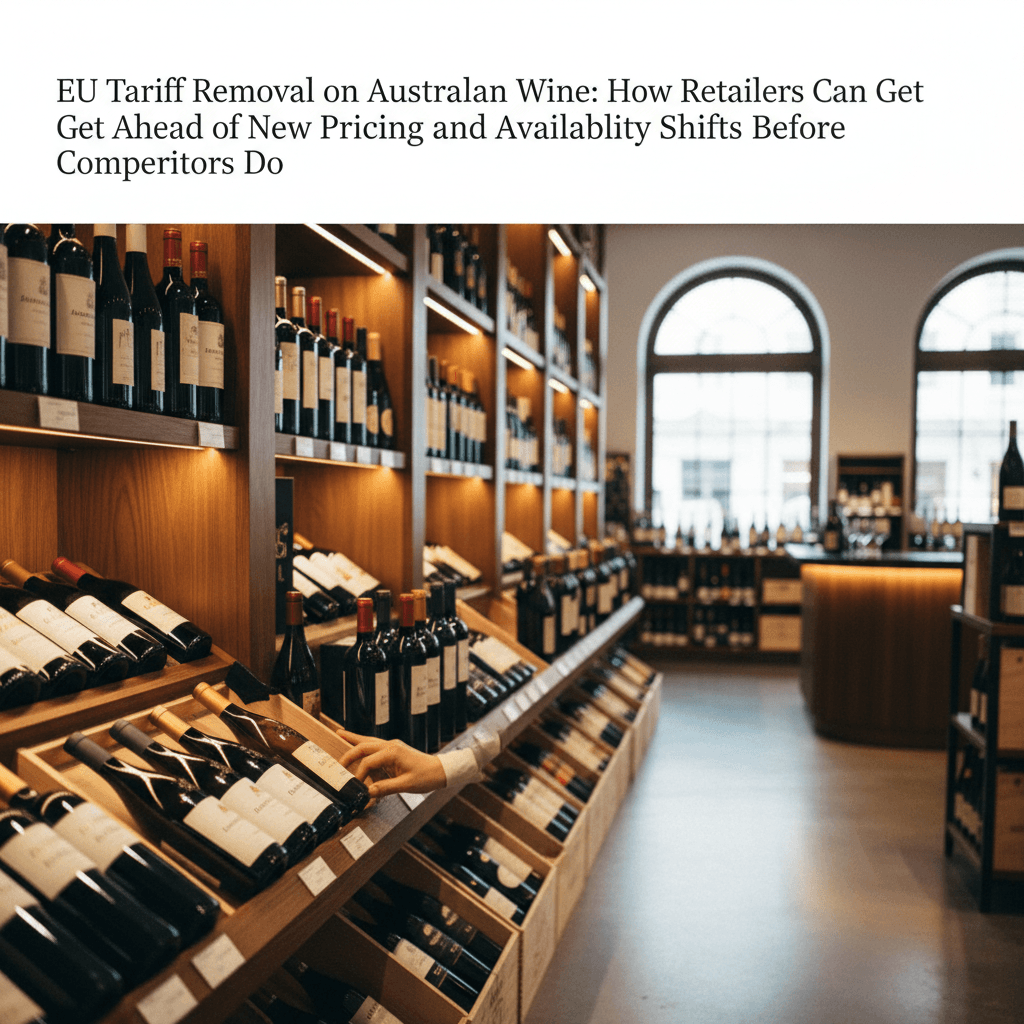
EU tariff removal on Australian wine reshapes retail pricing. Here's how liquor retailers can capitalize on new availability and beat competitors to the shelf.
- What Just Happened: The Australia-EU Free Trade Deal, Explained in Plain English
- The Ripple Effect: How This Tariff Change Reshapes Wine Pricing and Supply Chains
- The US Angle: Why American Liquor Retailers Should Pay Close Attention
- 5 Moves Smart Retailers Can Make Right Now to Get Ahead
- The Labeling Shakeup: A Detail Most Retailers Will Miss
The wine world just got a major shakeup — and most liquor retailers won't see it coming until it's too late. A sweeping free trade deal between Australia and the European Union has eliminated tariffs on Australian wine entering Europe, effective immediately. [VERIFY: Confirm the Australia-EU FTA has been formally ratified and is in force. As of mid-2025, negotiations may still be ongoing.] At the same time, a separate 10% US tariff is making America a less attractive destination for Australian producers. If you're a liquor store owner or operator in the States, these two forces are about to collide on your shelves.
The EU tariff removal on Australian wine gives retailers who pay attention right now a genuine competitive edge. We're talking shifting supply chains, tightening allocations, changing labels, and new European wines entering the market at prices that didn't exist six months ago. This isn't theoretical — the numbers are already moving, and the window to act is narrowing.
This post breaks down exactly what happened, why it matters to your bottom line, and the specific moves you can make this week to get ahead. No policy jargon. No hand-waving. Just the data, the implications, and the playbook.
What Just Happened: The Australia-EU Free Trade Deal, Explained in Plain English
After eight years of back-and-forth negotiations, Australia and the European Union have finalized a comprehensive free trade agreement — and wine is at the center of it.
Here's the short version: tariffs on Australian wine entering the EU drop to zero the moment the deal takes effect. Not gradually. Not over five years. Immediately. In return, Australia is eliminating its 5% tariff on European wine, spirits, and other imports coming the other direction.
The deal is valued at roughly A$8 billion in annual economic benefit to Australia [VERIFY: source for this figure], and officials on both sides are calling it a landmark agreement. But if you're a liquor retailer reading policy headlines and wondering "so what?" — stay with me. The ripple effects on pricing and availability extend far beyond Europe's borders and are already taking shape.
The Key Numbers You Need to Know
- Zero tariff on Australian wine entering the EU — effective immediately upon entry into force
- 5% tariff eliminated on European wine and spirits flowing into Australia
- 10–20% projected increase in European wine exports to Australia in the first few years [VERIFY: source for projection]
- A$2.34 billion — the current value of Australian wine exports, which fell 8% in 2025 [VERIFY: confirm against Wine Australia export report]
- A$8 billion in estimated annual economic benefit to Australia's broader economy
Those numbers tell a story of a market about to shift — in both directions.
Why This Deal Took 8 Years — and Why It Matters Now
Trade deals move slowly. This one stalled over agricultural protections, geographic indications (think: who gets to call sparkling wine "Prosecco"), and political timing on both sides. But the Australian wine tariff changes in 2025 land at a particularly interesting moment. Australian wine exports have been declining in value, and producers are hungry for new volume. Meanwhile, European winemakers see Australia as a growth market with loosening barriers.
For US retailers, this isn't just a transatlantic policy story. It's a liquor retail pricing strategy story. When Australian producers gain frictionless access to 450 million European consumers, supply allocations shift. When European wines flow into Australia more cheaply, competitive dynamics change globally. Australian wine availability for US retailers could tighten on popular labels — or new pricing pressure could create unexpected opportunities.
The retailers who understand this now have a head start. The ones who wait for their distributors to explain it will be playing catch-up.
Wine shops are becoming experience destinations by adding tastings, classes, and events. See how real retailers are d...
Now that you understand the deal itself, let's talk about what it actually does to the prices on your invoices and the bottles on your shelves.
The Ripple Effect: How This Tariff Change Reshapes Wine Pricing and Supply Chains
The EU tariff removal on Australian wine isn't just a headline for trade policy nerds — it's a pricing earthquake that's going to hit your shelves whether you're ready or not.
What Happens to Australian Wine Prices in the EU (and Eventually Your Market)
Here's the math that matters: Australian wine now enters the EU at zero tariff. That's an overnight competitive advantage in a market of 450 million consumers. And Australian producers are paying attention — especially since they're simultaneously staring down a new 10% US tariff on exports. [VERIFY: Confirm the 10% US tariff rate and effective date.]
Put yourself in an Australian winemaker's shoes. You can ship to Europe tariff-free, or ship to the US and eat a 10% hit. Where are you sending your best allocations?
This dual pressure is real for US-based retailers. Australian wine exports were already declining before this deal landed, and the incentive to prioritize EU distribution over US distribution just got significantly stronger. If you're counting on steady Australian wine availability, your pricing strategy needs to account for potential tightening of supply stateside.
The European Wine Flood Going the Other Direction
The deal cuts both ways. Australia is dropping its 5% tariff on European wine and spirits, and European wine exports to Australia are projected to surge 10–20% in the first few years. That's EU producers redirecting volume toward Australia — volume that might otherwise have competed for shelf space in your store.
Trade officials describe the agreement as "leveling the competitive landscape." Translation: the Australian wine tariff changes in 2025 create new pricing dynamics that reward retailers who move first and punish those who wait.
So the global picture is clear: Australian wine is being pulled toward Europe, and European wine is being pushed toward Australia. But what does this mean specifically if you're running a liquor store in the United States?
The US Angle: Why American Liquor Retailers Should Pay Close Attention
Here's where this deal hits closer to home for retailers stateside — and it's not the angle most people are talking about.
The 10% US Tariff on Australian Wine Changes the Math
While the EU just rolled out the red carpet — zero tariff on Australian wine entering the European market — the US went the other direction. A separate 10% tariff on Australian exports, including wine, now makes America a more expensive destination for Australian producers at the worst possible time.
Think about it from a winery's perspective: you can ship to 27 EU countries tariff-free, or you can ship to the US and absorb a 10% cost hit. That's not a hard decision. The tariff math is creating a clear pull toward Europe and away from us.
Australian Wine Exports Were Already Declining Before Any of This
This isn't happening in a vacuum. Australian wine exports fell 8% in value to A$2.34 billion and 6% in volume to 613 million litres in 2025 — driven largely by a global decline in drinking. There's simply less Australian wine moving around the world, period.
Now layer on the tariff math. Less production interest in the US market plus higher costs equals reduced availability and rising wholesale prices.
The retailers who win here are the ones who move first. Lock in supplier relationships now. Secure inventory positions before competitors wake up to the shift. Your pricing strategy over the next few months will determine whether you're holding strong Australian shelf sets at solid margins — or scrambling for scraps at premium prices.
The window is open, but it won't stay that way.
Enough about the problem. Here's your playbook.
5 Moves Smart Retailers Can Make Right Now to Get Ahead
The EU tariff removal on Australian wine is going to reshape trade flows — that's not speculation, it's economics. When zero tariffs open up a massive new market for Australian producers, volume follows the money. Here's how to stay ahead of the shift instead of reacting to it six months too late.
Move 1: Talk to your Australian wine distributors today — not next quarter.
Call them this week. Ask directly: Are you expecting allocation changes? Are producers signaling they'll redirect volume toward the EU? What does pricing look like for the next 6–12 months? Get commitments in writing where you can. Supply dynamics are already tightening. This deal accelerates that pressure.
Move 2: Audit your Australian wine margins right now.
Between the existing 10% US tariff and shifting wholesale costs, your cost basis is a moving target. Recalculate your pricing before competitors figure it out and undercut you — or worse, before margins silently erode while you're not paying attention. Pull your top 10 Australian SKUs and run the numbers today.
Move 3: Stock up on key Australian SKUs that could get harder to source.
When a deal eliminates tariffs on wine entering a market of 450 million consumers, producers have every incentive to shift volume. Popular labels — the Penfolds, the Yellow Tails, the mid-tier gems your customers love — may see tighter US allocation within 6–12 months. Australian wine availability for US retailers isn't guaranteed at current levels. Build pricing flexibility into your strategy now so you're not scrambling later. Buy smart now.
Move 4: Explore the European wine opportunity on the other side of this deal.
Australia is removing its 5% tariff on European wine and spirits, and European producers are ramping up. That kind of production increase means more European wine hitting global markets — including yours. There may be excellent new labels worth adding to your shelf at competitive price points. The same deal that pulls Australian wine toward Europe pushes European wine into new opportunities.
Move 5: Use this moment in your marketing.
Your customers who love Australian Shiraz and Barossa Valley blends will notice when bottles get harder to find or prices shift. Be the retailer who tells them why. A simple shelf talker, an email, a social post explaining what's happening positions you as the knowledgeable shop — not just another store with a wine aisle. That trust converts to loyalty, and loyalty converts to margin.
The retailers who act on these five steps now won't just survive the shift — they'll use it as a competitive advantage.
Beyond pricing and inventory, there's one more detail buried in this deal that could trip up retailers who aren't paying attention.
Let our team show you what's possible.
our team specializes in digital marketing strategies that drive real results. Let us show you what's possible.
Schedule a CallThe Labeling Shakeup: A Detail Most Retailers Will Miss
Here's something flying under the radar amid all the pricing talk: the labels on some of your best-selling Australian bottles are about to change.
What's Changing on the Label
The new trade deal doesn't just eliminate tariffs — it also forces Australia to phase out European geographical terms on domestic products. The big one? "Prosecco." Australian sparkling wines that have used this term for years will need to rebrand. Transitional provisions buy some time, but the direction is unmistakable. Other European-origin terms face similar restrictions.
With producers already navigating declining export values, expect label redesigns to roll out gradually — and sometimes quietly.
How This Affects What You Can Stock and How You Sell It
This is a merchandising problem disguised as a trade policy detail. If a loyal customer's go-to "Australian prosecco" suddenly has a new name and unfamiliar packaging, you've got about three seconds before they walk past it — or walk out.
Be the store that bridges that gap. Update shelf signage proactively. Train staff to connect old favorites to new labels. A small "formerly known as" tag costs nothing but saves the sale.
All of this knowledge is only valuable if your customers feel the benefit. Here's how to translate trade policy into trust — and sales.
How to Talk About This With Your Customers (Without Sounding Like a Policy Wonk)
Turn Trade News Into a Sales Conversation
Your customers don't care about trade agreements. They care about what's on your shelf and what it costs. So keep it simple.
For retailers aware of the EU tariff removal on Australian wine, the message writes itself: "Trade deals are shifting where Australian wine goes — we've stocked up on your favorites so you don't miss out."
That's it. That's the whole pitch. Zero tariffs into the EU mean more product heading east, and overall Australian exports are declining. Scarcity and relevance sell — use them.
Simple Messaging That Works In-Store and Online
Use shelf talkers, email newsletters, and social posts to frame Australian wines as a timely, limited-opportunity buy. If you're adding European wines because of new trade access, introduce them with context: "New trade deals mean we can bring you wines that weren't available at this price before."
Story beats jargon every time.
The Bottom Line: Move Now or Play Catch-Up Later
Trade deals don't wait for retailers to get comfortable. The EU tariff removal on Australian wine is already reshaping where producers send their best bottles, what those bottles cost, and even what the labels say. The 10% US tariff on Australian exports only accelerates the pull away from American shelves.
Here's what we know for certain: Australian wine availability in the US is likely to tighten. Wholesale costs are a moving target. New European wines are entering global markets at better price points. And label changes will confuse customers who aren't guided through the transition.
None of this is a crisis — it's an opportunity, but only for retailers who act on it. The five moves outlined above aren't complicated. They don't require a trade policy degree. They require a phone call to your distributor, an hour with your margin spreadsheet, and the willingness to move before your competitors do.
Retailers who act decisively right now gain a real, measurable edge — in inventory, in pricing, in customer trust, and ultimately in profit. The ones who wait for the market to sort itself out will be the ones paying more for less and explaining empty shelf spots to disappointed customers.
Start with Move 1. Pick up the phone. The rest follows from there.
10+ years helping liquor retailers and beverage brands grow through data-driven digital marketing. Learn more