How Brewpubs Are Becoming Community Hubs — And What It Means for Retail Liquor
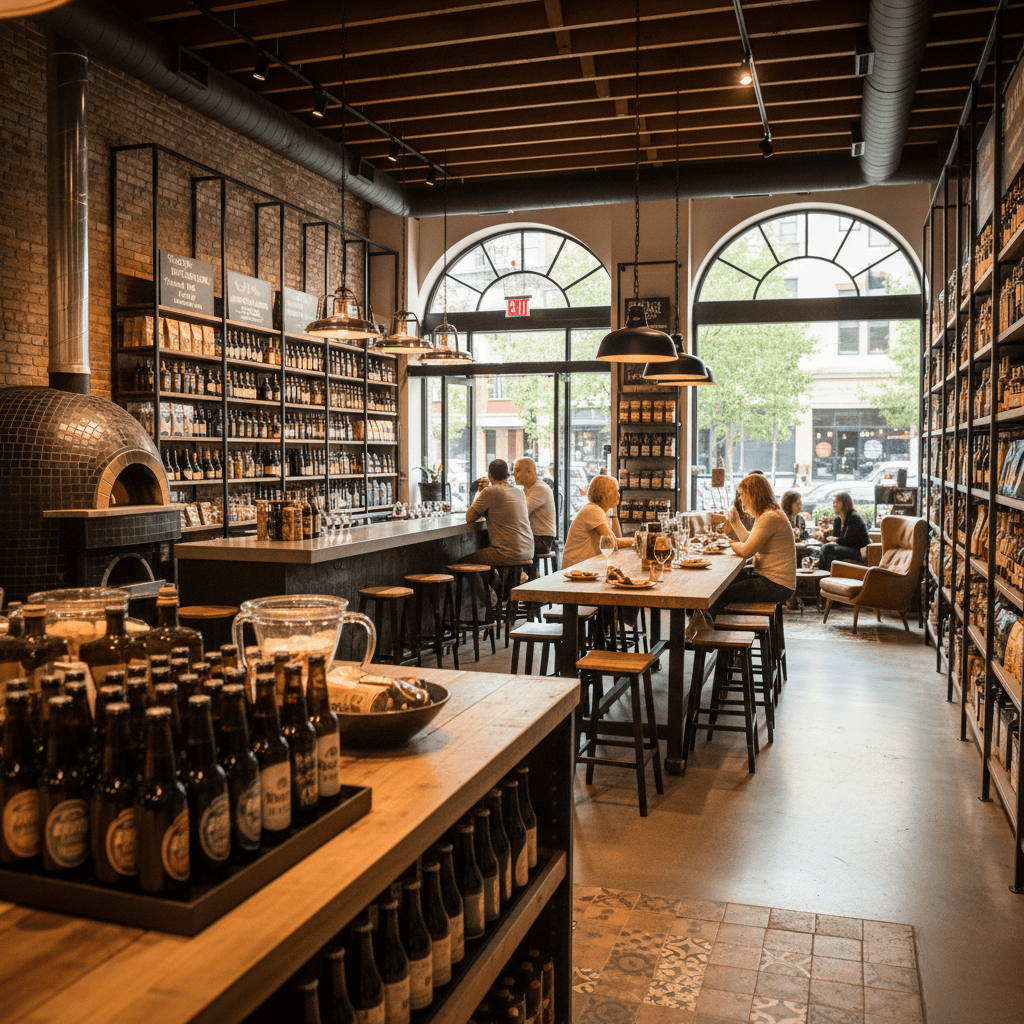
Brewpubs are evolving into full community spaces with dog-friendly areas, sports viewing, and neighborhood programming. IC analyzes what this on-premise shift means for independent liquor retailers — and how to adapt before you're left behind.
- The Brewpub Next Door Isn't Just Selling Beer Anymore
- What Exactly Is the Brewpub Community-Hub Model?
- Why Brewpubs Are Winning the Community Game — and What Retail Is Missing
- The Distribution Shake-Up Makes This Even More Urgent
- 5 Brewpub Tactics Independent Liquor Stores Can Steal Today
The Brewpub Next Door Isn't Just Selling Beer Anymore
From Taproom to Town Square
The brewpub stealing your regulars doesn't have a better beer list — it has a better reason to show up.
Picture this: a 4,000-square-foot taproom in suburban Denver running Saturday morning yoga on the patio, a rotating food truck lineup, a fenced dog park out back, and every NFL game on twelve screens. They don't sell a single bottle to go. They don't need to. They've become the default gathering spot for a two-mile radius — and every hour a customer spends there is an hour they're not browsing your shelves.
This isn't a cute side hustle for craft brewers. It's a fundamental rethinking of what alcohol retail means. On-premise operators are rebuilding their value proposition around community, while most off-premise retailers are still competing on price, selection, and Thursday tasting pours. The gap is widening fast.
Here's the thesis you need to sit with: the community-hub model isn't a brewpub fad. It's a consumer behavior shift that retail liquor ignores at its peril.
Why This Story Matters Right Now
Brewpubs are evolving beyond traditional beer service by transforming into multi-purpose community destinations that bundle experiences — fitness classes, live events, family-friendly spaces, farmers' markets, and curated food programs — alongside their core drink offering. This model works because modern consumers, particularly those under 40, increasingly choose where to spend time based on social connection and experience rather than product alone. According to Penn State Extension ↗, U.S. adult alcohol consumption dropped from 67% to 54% in just three years. People aren't rejecting drinking — they're rejecting commodity transactions. The brewpubs thriving against on-premise contraction trends have figured this out. They sell belonging. Meanwhile, the average liquor store still offers four walls, fluorescent lights, and a rewards card nobody checks. The retailers who survive the next five years will borrow from this playbook and give customers a reason to walk through the door that has nothing to do with price.
Discover the 7 essential marketing budget benchmarks for liquor stores. Learn how top performers allocate spend for m...
The numbers sharpen the urgency. Bloomberg reports the alcohol industry has shed $830 billion in market value over four years. U.S. spirits volume dropped 2.7% in early 2024, according to industry data tracked by Brand Innovators ↗. Restaurants and bars are closing at accelerating rates — yet brewpubs running the community model are bucking that trend, growing foot traffic while the rest of on-premise contracts around them.
The takeaway isn't "become a brewpub." It's simpler than that. Start building a reason for people to show up that goes beyond what's on the shelf. Host a local chef for a spirit-and-food pairing. Partner with the CrossFit gym next door. Screen the playoff game. The stores treating their square footage as community real estate — not just retail space — will own the next decade.
What Exactly Is the Brewpub Community-Hub Model?
Why are brewpubs thriving while traditional bars bleed accounts?
The answer isn't better beer. It's a fundamentally different business model — one that treats the taproom as a community living room, not a transaction counter.
Discover the 10 most costly alcohol marketing compliance mistakes liquor stores make and actionable strategies to mai...
Defining the Shift: Experience Over Transaction
The brewpub community-hub model transforms a beverage-focused business into a neighborhood gathering point by adding non-drinking programming — dog-friendly patios, live sports viewing parties, community events, food truck partnerships, and family-friendly spaces. It monetizes dwell time and loyalty rather than per-transaction volume, creating repeat visits driven by belonging rather than thirst. The old taproom sold pints. The new brewpub sells membership in a place.
That distinction matters. The traditional model depended on a simple equation: more people drinking more beer equals more revenue. But that equation broke when an industry worth $830B less than it was four years ago, according to Bloomberg ↗, started hemorrhaging volume. U.S. spirits alone declined 2.7% in early 2024. You can't grow by pouring more when people are drinking less.
Community hubs flip the script with three structural pillars:
- Inclusive access — Dogs, kids, non-drinkers all welcome. A couple where one person is sober-curious and the other wants an IPA? Both walk through the door. Traditional bars lose that visit entirely.
- Programmed experience — Trivia nights, yoga on the patio, Little League watch parties, craft classes. These aren't gimmicks; they're scheduled reasons to return on a Tuesday.
- Third-place positioning — Neither home nor work. A place with Wi-Fi, good coffee, and a beer list. The brewpub becomes the neighborhood default.
The Numbers Behind the Movement
The non-alcoholic beverage market is projected to surge from $298.4B to $457B by 2030, growing at a 7.4% CAGR, per market research cited by OhBev ↗. Community hubs capture that sober-curious dollar that a traditional bar never sees. Your NA seltzer drinker still orders food, still tips, still brings four friends who do drink.
Discover 7 proven distribution strategies for liquor stores facing supply chain changes. Boost your liquor delivery m...
Here's the contrarian Gen Z angle most people miss: 18–21% of Gen Z still order wine or spirits when dining out. They're not anti-alcohol — they're anti-boring. They pick where to go based on identity and experience, not drink selection. A brewpub with a mural wall, a rescue-dog adoption event, and a rotating food vendor? That's an Instagram story. A dark bar with sticky floors and SportsCenter on mute? That's invisible to them.
Experiential brewpub concepts are growing even as overall on-premise accounts contract. The model works because it diversifies revenue away from pure alcohol sales — the one line item under the most pressure industry-wide. Dwell time goes up. Per-visit spend goes up. Visit frequency goes up. And your customer base widens to include people who would never set foot in a traditional bar.
The direct answer: brewpubs winning right now aren't brewing better — they're building better reasons to show up.
Why Brewpubs Are Winning the Community Game — and What Retail Is Missing
Picture this: a Saturday afternoon in a mid-sized college town. A brewpub three blocks from campus has a two-hour wait. Families, couples, remote workers with laptops — all camped out, ordering $8 pours of a hazy IPA they could grab in a four-pack for $14 at the bottle shop down the street. That bottle shop? Empty except for a guy grabbing a handle of vodka on his way to a party. In and out in three minutes. No conversation. No connection. No reason to come back tomorrow.
That scene plays out in thousands of communities across the country, and it tells you everything about where beverage alcohol revenue is headed.
The Experience Economy Has Reached Beverage Alcohol
The premiumization thesis — the idea that consumers will perpetually trade up to more expensive bottles — cracked in 2024. According to Brand Innovators' 2026 outlook ↗, premiumization revenue fell between 4.3% and 6.3% in the back half of that year. People didn't stop spending on alcohol. They reallocated. The dollars moved from products sitting on shelves to experiences worth showing up for. A customer will happily pay $8 for a single pour of a bourbon they could buy by the bottle for $25 — if the bartender knows their name, the room smells like fresh grain, and there's live music on the patio. The setting is the product.
RTDs tell the same story from a different angle. With the global RTD market projected to hit $76 billion by 2035 and already growing at a +14% CAGR in the U.S. between 2019 and 2024 ↗, the winning SKUs aren't just convenient — they're occasion-built. A ranch water in a slim can at a tailgate. A canned espresso martini at a rooftop party. The occasion is the product. The format just shows up dressed for it.
The On-Premise Contraction Is a Warning, Not Just a Headline
Restaurant and bar closures grabbed headlines throughout 2024 and into 2025, but the data tells a more specific story. Generic on-premise — your copy-paste sports bars, your uninspired wine-and-tapas spots — those are dying. The U.S. spirits market saw a 2.7% volume decline in early 2024, and the categories bleeding hardest are the ones with zero narrative: commodity well spirits, mid-shelf wines priced between $10 and $15, and mainstream domestic lagers. No story. No reason to order it anywhere specific.
Brewpubs that survive and expand share one trait: they made themselves essential to the neighborhood. They host trivia nights that pack the house on a slow Tuesday. They pour collaboration beams with the distillery two towns over. They sell crowlers to-go with handwritten tasting notes. They're not competing on price or selection — they're competing on belonging. The alcohol industry has shed an estimated $830 billion in market value over the past four years, per Bloomberg, and a meaningful slice of that value migrated to operators who understood that community isn't a marketing buzzword. It's a revenue model.
Retail Liquor's Blind Spot
Brewpubs succeed as community spaces because they give people a reason to stay — a pint poured in front of you, a conversation with the brewer, a seat at a communal table where regulars know each other by name. Liquor stores struggle to attract repeat traffic because the average customer visit lasts under five minutes, barely enough time to scan a shelf and grab what's familiar. Selection and price, the two levers most independent retailers pull hardest, are now fully commoditized by e-commerce giants and big-box chains like Total Wine. Brewpubs built their model around dwell time, sensory engagement, and social proof — you see a crowd, you walk in. Retail liquor built its model around transactional efficiency, which trained customers to optimize for speed and convenience, the exact behavior that makes online ordering a better option. The stores that break this pattern — through tastings, local partnerships, curated experiences, and staff who act more like sommeliers than cashiers — are the ones holding margin and building loyalty. Everyone else is slowly becoming a warehouse with a register.
Here's the blunt version: if your store doesn't give customers a reason to linger, you're training them to buy from Drizly. Every three-minute transaction is a missed chance to build the kind of loyalty that a brewpub earns with a single well-pulled pint and a "welcome back." The U.S. spirits market is projected to grow from $37 billion to $40 billion by 2030 — modest, not explosive. That growth won't be distributed evenly. It'll concentrate in the hands of retailers and operators who figured out that selling a bottle is table stakes. Selling an experience, a relationship, a reason to drive past two competitors to get to your door — that's where the margin lives. Research from Penn State Extension's 2026 beverage trends report ↗ confirms that experiential retail and on-premise hybrid models are outperforming pure transactional formats across nearly every category. The brewpubs already know this. The question is whether retail will figure it out before the gap becomes permanent.
The Distribution Shake-Up Makes This Even More Urgent
Eleven markets. That's how many RNDC territories Reyes Beer Division is absorbing in what amounts to the largest structural shift in U.S. liquor distribution in over a decade. If you run an independent liquor store, this number should keep you up at night — because the math just changed on how you get product on your shelves and at what price.
Reyes-RNDC and the New Distribution Reality
The Reyes-RNDC deal isn't a rumor or a projection. It's happening now, and it's redrawing the map of who controls product flow across the country. Fewer distribution partners means less negotiating leverage on pricing, tighter allocation windows, and — here's the gut punch — potential loss of access to the niche and craft brands that made your store worth driving past a Total Wine for.
Liquor distribution consolidation directly threatens independent retail liquor stores by shrinking the number of wholesale partners available in any given market, which reduces pricing leverage and limits access to small-batch and craft brands. When two or three mega-distributors control the pipeline, they prioritize high-volume SKUs that move through chain accounts. Independent retailers lose the ability to curate distinctive selections — the very thing that differentiated them from big-box competitors. According to Brand Innovators' 2026 outlook ↗, the spirits industry is already navigating a 2.7% volume decline in the U.S., and consolidation pressure compounds that pain for smaller operators who can't compete on throughput alone. The only sustainable response is building value that distributors can't take away: local reputation, community trust, and demonstrated sell-through that makes you a priority account regardless of your size.
Think about that against the backdrop of an industry that's already shed $830B in market value over four years, per Bloomberg. The margin for error is gone.
How Community Positioning Becomes a Competitive Moat
You can't out-price Total Wine. You can't out-allocate a chain with 200 doors. So stop trying.
Brewpubs figured this out years ago. Their value was never the cheapest pint — it was being the place people want to be. The local spot with the bartender who knows your name and the Thursday trivia night that fills 60 seats. That model translates directly to retail. Tastings, local partnerships, staff picks with actual personality behind them, events that turn your store into a neighborhood anchor.
Here's what most retailers miss: community positioning isn't just a marketing play. It's a distribution play. When you can demonstrate consistent sell-through on a product — because your customers trust your recommendations and show up for your events — you become a priority account. Distributors allocate to stores that move bottles. A 1,500-square-foot shop with a loyal following and a packed tasting calendar gets better treatment than a 5,000-square-foot store with dead inventory and no foot traffic.
The U.S. spirits market is projected to grow from $37B to $40B by 2030. That growth won't be distributed evenly. It'll flow to retailers who've built something distributors and brands actually want to be part of — not the ones waiting by the phone hoping their rep calls back.
Let our team show you what's possible.
our team specializes in digital marketing strategies that drive real results. Let us show you what's possible.
Schedule a Call5 Brewpub Tactics Independent Liquor Stores Can Steal Today
The myth that kills independent liquor stores faster than anything else? That you need a massive budget and a liquor license remodel to compete with the experiential retail trend. You don't. Brewpubs cracked the community-hub code years ago with shoestring budgets and repurposed warehouse space — and the five tactics below translate directly to a retail bottle shop without a single permit change in most states.
1. Create a 'Third Place' Tasting Area
Dedicate 10–15% of your floor space to a tasting bar. That's it. A butcher-block countertop, four stools, and a rotating pour program. The cost is negligible compared to the return: customers who taste buy, and customers who sit down and taste with other people buy more and come back weekly.
Stop running tastings like sales pitches. Nobody wants to stand awkwardly next to a folding table while a brand rep recites tasting notes from a sell sheet. Instead, theme your weekly pours around something people actually care about — a Thursday NFL watch party with bourbon flights, a Saturday afternoon pairing session with the taco truck parked outside, a "Whiskey & Vinyl" night where customers bring records. The tasting bar pays for itself in incremental sales within 60 days. I've seen it happen across dozens of stores.
2. Program Your Space Like a Venue
Build a monthly events calendar and treat it like programming, not promotions. Spirits education classes. Cocktail workshops where customers make their own old fashioneds. Meet-the-maker nights with local distillers. Charity fundraiser tastings that give your store a reason to exist in the community beyond transactions.
Partner with local restaurants, food trucks, and artisan cheesemakers for cross-promotional events — they bring their audience, you bring yours. Suddenly you've doubled your reach for zero ad spend.
Make every event discoverable: post it to Google Business (free), run Instagram Stories with countdown stickers, and list it on local event platforms. According to Brand Innovators' 2026 outlook ↗, the brands winning right now are the ones building genuine community touchpoints — and that applies to retailers just as much as producers.
3. Welcome the Non-Drinker (Seriously)
Here's the contrarian take nobody in this industry wants to hear: your next growth customer might not drink alcohol at all. The non-alcoholic beverage market is projected to surge from $298.4B to $457B by 2030 at a 7.4% CAGR, according to market research data. Ignoring that number is malpractice.
Gen Z isn't killing alcohol — they're killing the idea that every social occasion requires it. Mixed-drinking-preference groups are the norm now. A group of four walks into your store: two want mezcal, one wants a craft NA spirit like Lyre's or Seedlip, one wants a premium ginger beer. If you only serve three of them, you've lost the fourth — and probably the group.
What to do instead:
- Create a dedicated NA section with staff-pick shelf talkers — treat it like your craft beer cooler, not an afterthought endcap
- Stock premium NA spirits (Ritual Zero Proof, Monday, Free Spirits), NA wines (Surely, Proxies), and craft sodas
- Train staff to recommend NA products with the same confidence they'd recommend a $50 bourbon
4. Leverage Technology for Personalized Community
Most independent liquor stores run tech from 2011. A basic POS, maybe a punch-card loyalty program, and an email list nobody opens. Meanwhile, AI-powered recommendation engines and CRM tools exist right now that can suggest products based on a customer's purchase history and send curated event invitations automatically.
You don't need enterprise software. Even simple moves — a loyalty app like City Hive, text-message tasting invites, QR-code shelf talkers linking to tasting notes and cocktail recipes — create differentiation that 90% of your competitors haven't attempted. As Ansira's 2026 alcohol trends report ↗ notes, AI adoption in beverage alcohol remains in early stages, which means first movers get outsized returns. Demand-forecasting tools can also optimize event inventory so you never over-order for a tasting or run dry on a featured product mid-event.
5. Make Your Store Dog-Friendly and Family-Accessible
Brewpubs discovered that dog-friendly patios increase dwell time by 30–40%. The same principle holds in retail. Where local regulations permit, a water bowl by the door, a small bench outside, or a simple "dogs welcome" sign removes a friction point that sends potential customers to the next store — or to an app.
Family accessibility matters just as much: stroller-friendly aisle widths, a tiny kids' corner with coloring sheets, weekend events that welcome families. These choices normalize the liquor store visit as a neighborhood errand, not something to feel weird about. Your store becomes a place people go to, not a place they rush through.
Independent liquor stores can adopt the brewpub community-hub model by converting 10–15% of floor space into a tasting bar, programming monthly events like spirits classes and meet-the-maker nights, and partnering with local food vendors for cross-promotional experiences. Stocking a dedicated non-alcoholic section captures the fast-growing $457B NA beverage market and makes your store relevant to mixed-drinking-preference groups. Simple technology adoption — loyalty apps, QR-code shelf talkers, text-message event invitations, and AI-powered product recommendations — creates personalization most competitors haven't attempted. Dog-friendly policies and family-accessible layouts increase dwell time and reframe the liquor store as a neighborhood destination. These tactics require minimal capital investment and translate directly from the brewpub playbook that already proved the model works at scale across hundreds of taprooms nationwide.
What to do today — the short list:
- Clear a corner, install a countertop, and schedule your first themed tasting for next week
- Build a monthly events calendar and post it everywhere — Google Business, Instagram, your front door
- Order five NA spirits and build a dedicated shelf section with handwritten staff picks
- Set up a free or low-cost loyalty/text platform and start collecting customer phone numbers at checkout
- Put a water bowl outside and a "well-behaved dogs welcome" sign on the door
None of these require a renovation. None require a consultant. They require a decision — and an owner willing to steal what already works.
The Premiumization Trap: Why 'Affordable Indulgence' Is the Real Play
Premium Revenue Is Declining — the Data Is Clear
Pick up a bottle of Teremana Blanco. At $28, it drinks clean, bright, with a peppery finish that punches well above its weight. Now ask yourself: would your average Tuesday-night customer reach for the $65 añejo sitting two shelves up? The data says no — and the gap is widening.
SipSource Q4 2024 data tells a story the industry doesn't want to hear: premium spirits revenue dropped 4.3% while RTDs surged at a +14% CAGR from 2019 to 2024 ↗. The premiumization playbook — stack the top shelf, watch margins climb — is cracking. U.S. spirits volume declined 2.7% in early 2024, and the brands still shouting "premiumization" are talking past their own consumers.
Here's what's actually happening: bifurcation, not premiumization. SVB's wine data ↗ shows the top quartile of wines growing 8% while the bottom quartile collapsed 10.2%. The middle didn't shift up. It split. Consumers either trade way up for a special occasion or grab something fun, accessible, and shareable for everything else. That $830B in market value the alcohol industry has shed over four years (per Bloomberg) didn't evaporate because people stopped drinking premium — it evaporated because retailers over-indexed on premium and ignored where the volume actually lives.
No, premiumization is no longer the best growth strategy for most spirits retailers. The smarter play is what I call "affordable indulgence" — the $20–$35 range where perceived quality meets impulse-buy psychology. SipSource data shows premium revenue falling 4.3% while ready-to-drink cocktails grew at a 14% CAGR over five years, projected to hit $40B globally by 2027 ↗. Retailers who double down on discovery-friendly formats — spirits-based RTDs, value-premium bottles, curated mixed packs — capture both margin and frequency. The winning strategy isn't chasing the top shelf; it's owning the sweet spot where customers buy without overthinking and come back next week to try something new.
How Community-Hub Retailers Win the Middle
Spirits-based RTDs now represent 79.8% of RTD volume. That's not a trend — that's a structural shift. And it hands community-focused retailers an enormous advantage.
Think about it: a $12 four-pack of canned cocktails is the perfect tasting-event product. Low commitment, high trial rate, zero intimidation factor. Your customer doesn't need to know the difference between mezcal and sotol to enjoy a well-made paloma in a can. That accessibility drives foot traffic, and foot traffic drives discovery across your entire store.
The $20–$35 "value-premium" range is where this model thrives. It's affordable enough that someone grabs a bottle on the way to a neighbor's cookout. It's premium enough that you're not racing to the bottom on margin. According to research from Penn State Extension ↗, consumer preference is shifting toward experiences and community connection over status purchases — which means your store doesn't need to be a luxury destination. It needs to be the place people trust, enjoy visiting, and talk about.
The practical move: Run a monthly "$30 and Under" tasting focused on spirits-based RTDs and value-premium bottles. Feature three products, keep it casual, collect emails at the door. You'll move more cases in that single evening than a dusty top-shelf display moves all quarter — and you'll build the kind of repeat behavior that no amount of premiumization marketing can buy.
IC's Take: The Stores That Become Gathering Places Will Outlast the Rest
Before: A store owner in suburban Ohio runs a clean shop, keeps shelves stocked, prices competitive. Foot traffic drops 15% in two years. He blames the economy. After: His competitor three miles away installs a 12-foot tasting bar, hosts a monthly bourbon club, and builds a text list of 1,400 locals. That store's revenue is up 22%. Same town. Same economy. Different value proposition.
The difference isn't capital. It's clarity about what a liquor store actually is in 2026.
The Hard Truth About Retail Inertia
U.S. spirits volume declined 2.7% in early 2024, and the bleeding hasn't stopped. The alcohol industry has shed $830 billion in market value over four years ↗, according to Bloomberg. E-commerce is commoditizing selection. Distribution is consolidating — Reyes just acquired 11 RNDC markets in the biggest structural shift in decades. If your only value proposition is "we have bottles on shelves," you're already losing.
Brewpubs didn't reinvent alcohol. They reinvented the reason to show up. That's the playbook.
We've spent 10+ years working across all three tiers of this industry. We've watched stores survive every previous disruption — big box entry, online retail, craft explosions — by becoming indispensable to their communities. This wave is no different, but the clock is ticking faster than anything we've seen.
Key takeaways:
- Selection alone is a losing game when Total Wine and Drizly can undercut you on price and breadth
- Community positioning is a moat that algorithms can't replicate
- The stores thriving right now treat square footage as experience space, not just shelf space
The Window Is Open — But Not Forever
Independent liquor retailers who fail to adopt experiential retail face a stark, accelerating decline. With the non-alcoholic beverage market alone projected to reach $457 billion by 2030 — a 7.4% CAGR according to market research ↗ — the competitive set isn't just other liquor stores anymore. It's coffee shops, NA bars, wellness brands, and direct-to-consumer spirits clubs. Retailers who define themselves solely by product selection and price will lose on both fronts to larger chains and digital platforms. The survivors will be stores that own a role in their community — a gathering point, a discovery engine, a trusted advisor. Those who don't make this shift within the next 18 to 24 months risk permanent irrelevance as first-movers in their markets lock up the "neighborhood spot" positioning that, once established, proves almost impossible to displace.
First-mover advantage here is real and durable. Once your competitor becomes the store where people go on Thursday nights, you're not winning that crowd back with a shelf talker and a stack discount.
And the cost of experimenting? Trivially low.
- A tasting bar: $2,000–$5,000 to build out
- One monthly event: a few cases of samples and a social media push
- A loyalty text list: free with most POS platforms
Compare that to the cost of irrelevance.
"The retailers who will dominate the next decade aren't the ones with the best inventory — they're the ones who gave people a reason to belong," says Alden Morris, founder of Intentionally Creative. "Stop thinking like a store. Start thinking like a venue."
So here's the direct challenge: What are you doing this month to give someone a reason to walk through your door that has nothing to do with price? If you don't have an answer, your competitor will.
Key Takeaways: Your Brewpub-Inspired Action Plan
Spring 2026 is handing you a choice. The alcohol industry has shed $830 billion in market value over four years ↗, spirits volume dropped 2.7% in early 2024, and premiumization — the strategy everyone banked on — saw revenue fall up to 6.3% by year's end. The stores that survive the next five years won't be the ones with the best shelf selection. They'll be the ones people actually want to walk into.
The 5-Point Checklist
Here's your brewpub-inspired action plan. Print it. Tape it behind the register. Execute it.
1. Audit your floor plan this week. Find 50 square feet — a dead corner, an underperforming endcap — and turn it into a tasting or gathering area. Every square foot that doesn't generate revenue or foot traffic is dead weight.
2. Schedule your first community event within 30 days. A tasting, a food pairing night, a local charity pour. Pick one and put it on the calendar today, not "sometime next month."
3. Stock at least 10 premium NA products and merchandise them where people can't miss them. The non-alcoholic beverage market hits $457 billion by 2030 at a 7.4% CAGR ↗. That's not a trend — that's a parallel industry forming inside your store. Give it prime real estate.
4. Implement one tech tool this quarter. A loyalty program, a text list, an AI-powered recommendation engine — pick one. Stores running loyalty programs see 20–30% higher repeat visit rates. You're leaving money on the counter without one.
5. Visit your closest successful brewpub. Sit there for two hours. Write down everything they do that makes people stay — the lighting, the music, the way staff engages, the merch near the door. Then adapt it to your store.
Independent liquor store owners should immediately transform their retail space into a destination by adding a small tasting area, launching monthly community events, and prominently stocking non-alcoholic options — three moves that mirror why brewpubs keep customers for hours instead of minutes. The U.S. spirits market is projected to grow from $37 billion to $40 billion by 2030, but that growth concentrates around stores that deliver experiences, not just transactions. According to research from IWSR and OhBev ↗, the RTD category alone will reach $40 billion by 2027, capturing 12.5% of all beverage alcohol sales — meaning your product mix must evolve fast. Pair these inventory shifts with at least one tech tool (loyalty app, SMS list, or AI recommendations) to capture customer data and drive repeat visits. The operators winning right now treat their stores like hospitality venues that happen to sell bottles.
Your competition isn't the liquor store across town. It's every other place your customer would rather spend their Saturday afternoon. Act like it.
Frequently Asked Questions
What is happening to the alcohol industry?
The alcohol industry is undergoing a fundamental transformation, not a simple decline. Over $830 billion in market value has been erased as the share of Americans who drink has fallen from 67% to 54%, while trade disruptions—including Canada's boycott of U.S. spirits—and major distribution consolidation by players like Reyes and RNDC are reshaping the competitive landscape. Ready-to-drink (RTD) products are surging, premiumization is stalling in key segments, and Gen Z is rewriting the rules of alcohol consumption entirely. The industry isn't disappearing; it's restructuring around new consumer behaviors, fewer but higher-value occasions, and a radically different channel mix.
What is the 80/20 rule in alcohol?
While some associate the "80/20 rule" with wellness guidelines suggesting 80% of your week should be alcohol-free, the far more consequential 80/20 in the industry is this: roughly 20% of drinkers account for approximately 80% of all alcohol volume sold. This concentration has massive implications for brand strategy and marketing spend, as the heaviest consumers disproportionately drive revenue. As the moderate-drinking segment grows and heavy consumption faces increasing social and regulatory scrutiny, brands that over-index on that core 20% face real vulnerability—making diversification toward casual and low-ABV occasions a strategic imperative.
What are the biggest trends in the liquor industry in 2026?
The RTD category continues its explosive growth, while premiumization has hit a plateau as inflation-squeezed consumers trade down in many segments. Non-alcoholic spirits and functional beverages are no longer a niche—they're a full shelf set—and AI is being adopted across the value chain from demand forecasting to personalized marketing. Distribution consolidation, trade policy disruption from ongoing tariff battles, sustainable packaging innovation, and Gen Z's preference for quality over quantity are all reshaping how spirits are made, sold, and consumed.
Is the spirits industry growing or declining?
The answer depends on whether you're looking at revenue or volume. Revenue continues to grow at a 6.9% compound annual growth rate driven by pricing power and mix shifts, but volume declined 2.7% in 2024 alone—meaning fewer bottles are being sold at higher prices. The industry is effectively consolidating around fewer, higher-value drinking occasions, and the gap between winners and losers is widening sharply: brands that command premium positioning and cultural relevance are thriving while mid-tier labels face mounting pressure.
How are tariffs affecting the liquor industry?
Tariffs are creating serious disruption across global spirits trade. Canada's retaliatory boycott has driven a 78% drop in U.S. wine exports and a 63% decline in spirits exports to one of America's largest trading partners. The EU's own tariff history continues to ripple through pricing and supply chains, with companies like Campari actively restructuring operations to navigate shifting trade barriers. Industry players are scenario-modeling proposed new tariffs and diversifying sourcing and production geographies, but smaller producers without that flexibility are absorbing significant margin hits.
10+ years helping liquor retailers and beverage brands grow through data-driven digital marketing. Learn more