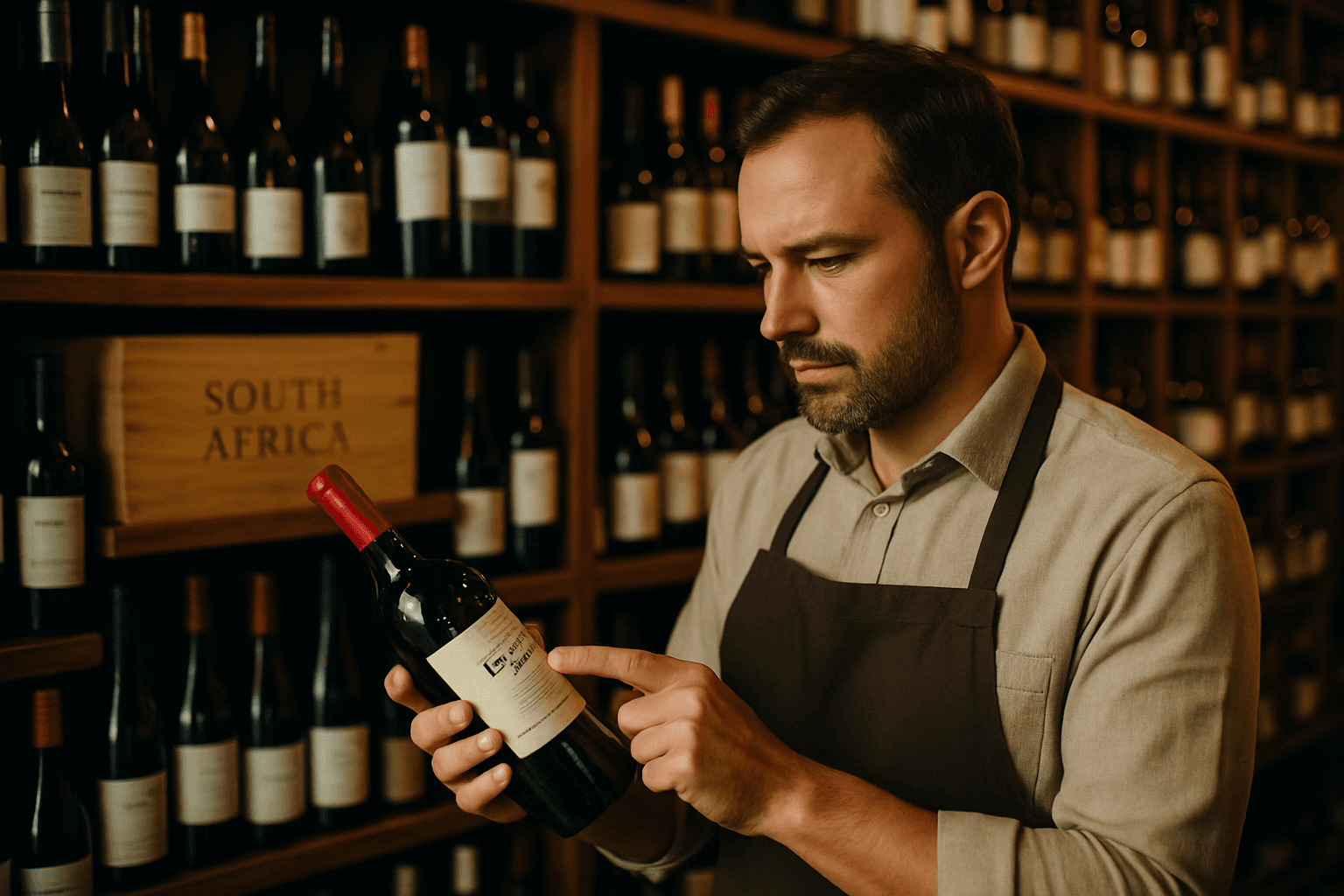
South Africa's Bordeaux Blends Are Back: How to Sell Underrepresented Wine Regions and Diversify Your Shelf
By Intentionally Creative10 min read
Listen to this article14:06
Schedule a free strategy call and Intentionally Creative will build a custom plan for you.
Schedule Your Free Strategy CallFree audit. No commitment.
Get a Free Audit. No commitment.
Discover how underrepresented wine regions retail marketing can diversify your shelf. South Africa's Bordeaux blends offer proven ROI for liquor stores.
Wine is in trouble — and not the kind you fix by running another 10% off endcap on Yellow Tail. U.S. per-capita wine consumption just cratered to a level we haven't seen since the early 1960s, younger drinkers are looking everywhere except the wine aisle, and the stores still winning are the ones who stopped copying each other's shelf sets about three years ago. If your wine strategy in 2025 is the same one you ran in 2019, you're not playing it safe. You're falling behind.
But here's the thing nobody's talking about enough: while overall volume is dropping, curiosity among the consumers still buying wine is actually climbing. They want stories. They want value. They want to feel like they discovered something. That gap — between shrinking demand and rising adventurousness — is exactly where underrepresented wine regions retail marketing lives. And it's where independent retailers have a genuine, structural advantage over chains.
South Africa's Bordeaux blends are the sharpest example of this opportunity right now. Wines scoring 90+ points, going head-to-head with elite French estates in blind tastings, retailing at prices that make your customers feel like geniuses — and virtually absent from your competitors' shelves. What follows is a complete playbook: why these wines matter, how to merchandise them, and how to turn the same strategy into a repeatable system for any emerging region that deserves space on your floor.
Here's the headline you can't ignore: U.S. per-capita wine consumption in 2025 has fallen to its lowest level in over sixty years.
The causes are stacking up — oversupply is crushing margins, younger drinkers are reaching for RTDs (ready-to-drink cocktails) and seltzers, cannabis legalization is pulling discretionary dollars in new directions, and the cultural shift toward moderation isn't slowing down. The wine category is under real pressure, and if your sales floor feels it, you're not imagining things.
Learn how to run compliant, high-performing Google Ads for liquor stores. Covers campaign setup, bidding strategies, ...
But here's what most retailers miss: the problem isn't just that people are drinking less wine. It's that they're bored with the wine they're being offered.
If your wine merchandising strategy still revolves around the same Napa Cabs, Marlborough Sauv Blancs, and Proseccos that line every shelf in every big-box store within ten miles — you're not playing it safe. You're competing on price alone. And that's a race to the bottom that independent stores simply cannot win.
Stocking what everyone else stocks is contributing directly to category fatigue among consumers. They see the same labels everywhere, so they either grab the cheapest option or skip the aisle entirely.
Differentiation isn't a luxury anymore — it's a survival strategy. When you diversify your wine shelf with underrepresented regions, you create something your competitors literally don't have. Retail marketing built around discovery — think South African Bordeaux blends scoring 90+ points at a fraction of Napa pricing — gives customers a reason to choose your store.
12 wine and spirits content marketing ideas for liquor stores that drive foot traffic, boost engagement, and move inv...
The old playbook is broken. Time for a new one.
So if the old shelf set is broken, what do you replace it with? Not everything at once — you start with one region that checks every box. And right now, underrepresented wine regions retail marketing doesn't have a better poster child than South Africa's Bordeaux blends.
Here's the headline number: in a blind tasting conducted by Winemag.co.za, South African Bordeaux blends — specifically Stark Condé Oude Nektar 2015 and Kanonkop Paul Sauer 2015 — landed in the same top tier as Château La Mission Haut-Brion 2015. These wines went toe-to-toe with one of Bordeaux's most elite estates, blind.
Beyond that single tasting, multiple South African Bordeaux blends carry 90–93 point ratings from recognized critics and platforms like WineWorks. That gives you a concrete quality narrative for shelf talkers, staff picks, and social media posts. And the price gap? It's enormous. You can stock critically acclaimed bottles that retail for a fraction of their French counterparts — giving your customers a genuine "why didn't I know about this?" moment.
Discover how Provence transformed into a lifestyle brand. Learn provençal wine marketing tactics to boost regional Fr...
Here's what makes this an easy sell compared to, say, stocking an obscure Georgian orange wine: your customers already know what a Bordeaux blend is. Cabernet Sauvignon, Merlot, Cabernet Franc — familiar grapes, familiar structure. You're not educating anyone on a new variety. You're introducing a new origin for a style they already enjoy. That's a fundamentally different (and easier) conversation.
Vivino maintains a regularly updated "Top 25 South African Bordeaux Blend" list, signaling real, trackable consumer interest — not a niche curiosity. And Decanter has explicitly called South Africa's Bordeaux blends "back in form," handing you third-party credibility to lean on in your merchandising.
The discovery story practically writes itself. Your job is just putting the bottle where they can find it.
Quality and story are great — but you run a business, not a wine blog. So let's talk numbers. Because the case for stocking these wines isn't just compelling from a customer experience standpoint. It's a straight-up better deal for your P&L.
Wines from established regions like Bordeaux and Napa suffer from compressed wholesale pricing. Every distributor carries them, every competitor stocks them, and your customers already have a price anchored in their heads. Good luck making margin on an $18 Napa Cab when the shop down the street runs it at $16.
South African Bordeaux blends don't carry that baggage. Critically rated bottles can sit comfortably at $20–$35 — the independent retail sweet spot — with strong perceived value and margins that actually let you keep the lights on. You're also reducing dependence on any single region's vintage swings, tariff exposure, or supply chain disruptions when you spread your shelf across more origins.
Today's wine buyers want to explore. When a South African blend holds its own against top-flight Bordeaux in a blind tasting, that's a story your staff can tell — and a discovery customers will pay a premium for, especially when guided by a retailer they trust. Consumer interest in these wines is trackable and growing; Vivino's South African Bordeaux Blend rankings are proof that this isn't wishful thinking.
Alright — you're convinced the wines are worth stocking. Now the real question: how do you actually get them off the shelf and into shopping bags? Because a great bottle buried in the wrong section with no context is just dead inventory. Here's how to actually move these bottles.
Shelf placement and staff training will get you trial. But if you want to build a category — not just sell a few bottles — you need to create moments around these wines. Events turn one-time buyers into repeat customers and give you a marketing engine that feeds itself.
Try this: host a "Bordeaux Blends Around the World" tasting. Pour a French Bordeaux, a Napa Meritage, and a South African blend side by side. Let customers taste the value proposition themselves. When the South African entry is scoring 90+ points and costs half as much, the wine does the selling for you. This format moves bottles the same night — no hard pitch required.
Want to push the discovery angle even further? Ask your distributor rep about exclusive allocations or limited-time releases from lesser-known regions. These partnerships give your store something nobody else nearby has — a proven strategy for driving foot traffic and urgency.
Here's where the real ROI lives. Track who attends these events and what they buy. These are your "wine explorer" customers — and they spend more per transaction than your average buyer. They respond to email or text alerts about new arrivals from emerging regions. A quick note like "New South African blend just landed — 93 points, $26" is all it takes to drive a return visit.
Build the list. Feed it consistently. Watch the repeat sales follow.
Once you've proven the model with South African Bordeaux blends, you've got something more valuable than a few new SKUs — you've got a repeatable system. Here's how to keep the momentum going.
Before you commit shelf space to a new region, run it through four filters:
If it checks all four, test it. Three to four SKUs, one endcap, one tasting event. Measure velocity over 60 days. Moves? Expand. Doesn't? Rotate. That's underrepresented wine regions retail marketing done right — low risk, high upside.
Greek Assyrtiko, Croatian whites, and Portuguese reds beyond port are all gaining traction with adventurous drinkers. Each offers the same margin and differentiation advantages that make South African Bordeaux blends so compelling right now. Start scouting.
U.S. per-capita wine consumption just hit a generational low — but consumer curiosity is actually rising. That's not a contradiction. It's an opportunity for retailers who curate rather than just stock.
10+ years helping liquor retailers and beverage brands grow through data-driven digital marketing. Learn more
Train your team first. Before a single South African Bordeaux blend hits the shelf, hold a 15-minute staff tasting. Pour, talk, done. No training deck, no PowerPoint. Just let them taste the wine and hear the story — that these blends competed with elite Bordeaux estates in blind tastings and retail for a fraction of the price.
Employees who've experienced the wine will handsell it naturally. That's the fastest path to trial when you're introducing any new region.
Your merchandising strategy can make or break an emerging category. Rule one: don't bury South African Bordeaux blends in a "Rest of World" section nobody browses.
Instead, cross-merchandise them next to your Bordeaux or Napa Cab section with a simple shelf talker: "Love Bordeaux blends? Try this 92-point South African version for $28."
Then create a small "Staff Picks" or "Hidden Gems" endcap display. This is prime real estate for emerging regions, and it signals the kind of curation your customers value from an independent store over a chain. Consider a "Buy One Napa Cab, Get $5 Off a South African Bordeaux Blend" promotion to bridge the familiarity gap and drive trial without devaluing the new category.
Lean on the data — skeptical customers need permission to try something new. Put the scores, the blind tasting comparison, and the price point on your shelf talkers. That's your closing argument. Let the numbers do the convincing.
Intentionally Creative specializes in digital marketing strategies that drive real results. Let us show you what's possible.
Schedule a CallSouth African Bordeaux blends are your perfect entry point: wines scoring 90+ points, competing with elite Bordeaux estates in blind tastings, at price points that make customers feel smart. The story practically sells itself.
Investing in underrepresented wine regions retail marketing isn't charity — it's strategy. Your shelf is your storefront. Make it say something your competitors' shelves don't. That's how independent stores win in 2025.
Ready to start? Pick one South African Bordeaux blend this week. Get it on an endcap with a shelf talker. Pour it for your staff. Then watch what happens when you give your customers something worth discovering.