Moët's Schiphol Pop-Up Proves Experiential Data Capture Works—Here's How DTC Brands Can Replicate It With Post-Event Email Sequences
Moët's airport pop-up nails experiential marketing email capture DTC brands should steal. Here's the post-event email sequence playbook to turn tastings into revenue.
- Moët Turned an Airport Terminal Into a Data Capture Machine—And Most DTC Brands Are Ignoring the Playbook
- Why Experiential Data Capture Beats Every Other List-Building Tactic Right Now
- The Post-Event Email Sequence Framework: 5 Emails That Turn a Tasting Into a Customer
- The Alcohol Brand Caveat: Compliance Constraints That Change the Playbook
- How to Capture Data at Your Next Pop-Up Without Killing the Vibe
Most DTC brands treat pop-ups like expensive photo ops. They drop $15K–$50K on a weekend activation, post a few Instagram stories, pat themselves on the back for "brand awareness," and move on. Meanwhile, the email list they could have built—full of people who physically touched, tasted, and experienced their product—evaporates into nothing. No follow-up. No sequence. No revenue.
Moët & Chandon didn't make that mistake. Their Schiphol Airport pop-up wasn't a branding exercise. It was a first-party data engine disguised as a champagne bar. And the playbook they used—experiential marketing email capture DTC brands can deploy at any scale—is hiding in plain sight while almost nobody copies it.
Here's the thing that should make every DTC founder uncomfortable: you probably have 10+ automated email flows running right now. Abandoned cart. Welcome series. Win-back. Post-purchase. But a dedicated post-event sequence for the warmest leads you'll ever collect? Almost certainly not. This piece breaks down exactly what Moët built, why it works, and the five-email post-event framework you can deploy before your next activation.
Moët Turned an Airport Terminal Into a Data Capture Machine—And Most DTC Brands Are Ignoring the Playbook
What Moët Actually Did at Schiphol (And Why It Matters Beyond Brand Awareness)
Picture this: you're killing time at Amsterdam's Schiphol Airport, one of Europe's busiest travel hubs, and you walk into a full-blown Moët & Chandon tasting lounge. Immersive. Beautifully branded. Free champagne.
Looking to hire an email marketing agency? Here are the exact criteria DTC brands should demand—and the red flags tha...
Most marketers look at this and think "brand awareness play." That's the wrong read.
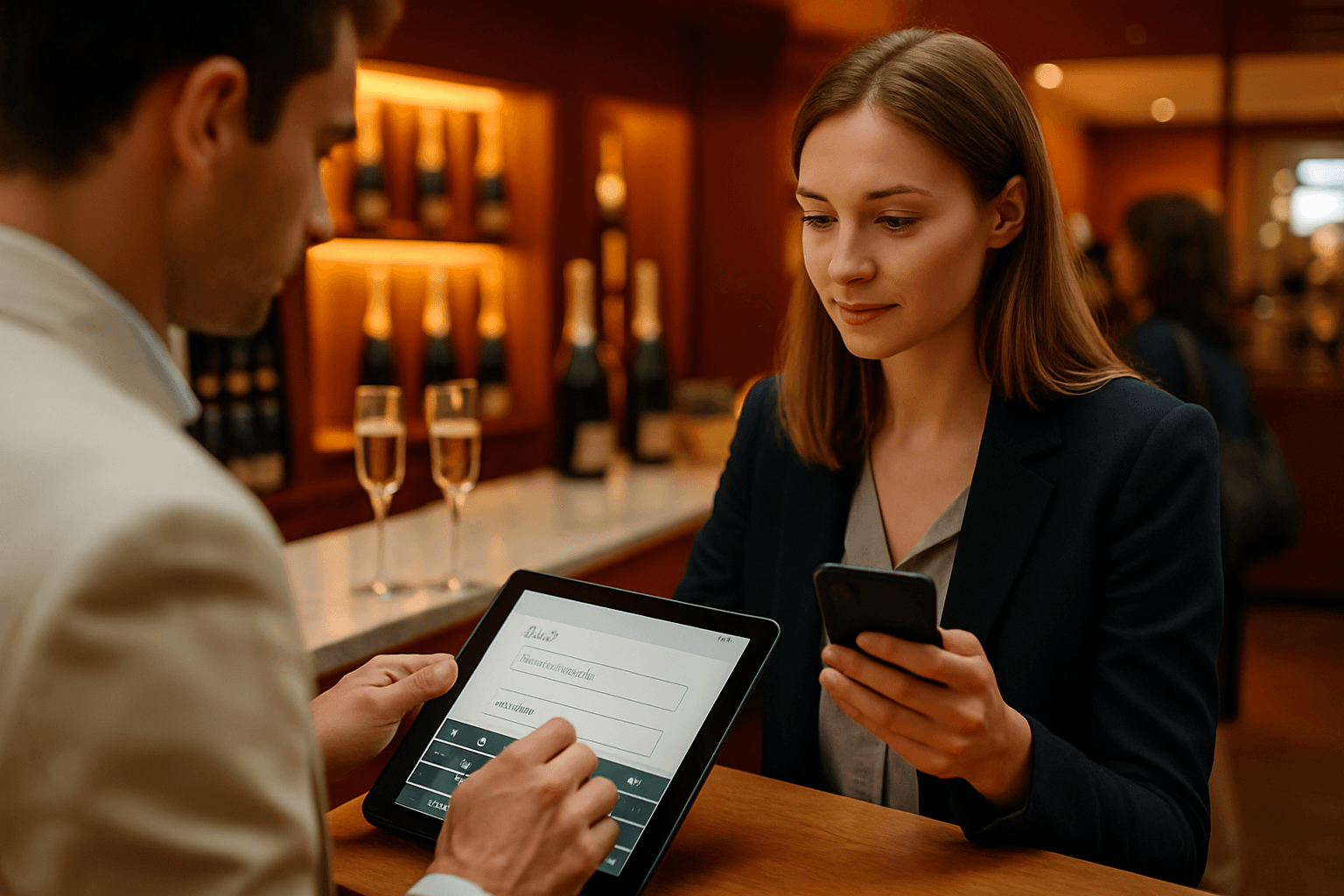
Moët built a high-traffic experiential data capture machine. Every traveler who engaged—tasted, scanned a QR code, entered a giveaway, opted in—handed over first-party data. Names. Emails. Purchase intent signals. All from consumers who literally self-selected by walking up to a luxury champagne bar in an international terminal.
This isn't vanity marketing. This is the experiential marketing email capture DTC brands should be studying.
Customer lifecycle email marketing broken down stage by stage. The exact email flows DTC brands need at every point t...
The Real Asset Isn't the Photo Op—It's the Email List
Here's what the "brand awareness" crowd misses: the Instagram content from a pop-up has a shelf life of 48 hours. An email list of high-intent consumers who physically engaged with your product? That prints revenue for months.
The big DTC players already know this. Parachute Home doubled its experiential investment in early 2024—not because pop-ups are trendy, but because digital ad costs and cookie deprecation made buying that same data from Meta unsustainable [VERIFY]. Purple scaled its experiential showroom strategy across 57 locations by spring 2025 [VERIFY]. The pattern is clear: brands are going offline to capture the data they used to rent from ad platforms.
Yet here's the gap almost nobody talks about. Your automation stack probably includes abandoned checkout, win-back, post-purchase, sunset, and half a dozen other triggered flows. Post-event email sequences? Almost never on the list. It's essentially a blind spot across the industry.
SMS marketing DTC brands see 98% open rates vs. 20% for email. Here's how to build an SMS strategy that drives revenu...
The brands winning right now aren't just doing pop-ups for content. They're building post-event email sequences that turn a five-minute tasting into months of revenue. The pop-up is the top of the funnel. The email sequence is where the money lives.
Why Experiential Data Capture Beats Every Other List-Building Tactic Right Now
The First-Party Data Crisis Is Real—Pop-Ups Solve It
Third-party cookies are dying. iOS privacy updates gutted Meta targeting. If you're still leaning on pixel-based retargeting as your primary strategy, you're watching CPAs climb year over year and pretending it's fine. It's not fine.
Experiential data capture gives you verified, opted-in, high-intent contacts with zero platform dependency. No algorithm shift can take them from you. And the behavioral data you collect at events—flavor preferences, product interests, real purchase intent signals—is volunteered willingly in exchange for an experience. Try getting that level of detail from a popup form offering 10% off.
Event Attendees Are a Segment Most Brands Don't Even Have
Here's the whitespace nobody's talking about. Someone who touched your product, tasted it, and talked to a real human at your pop-up is a fundamentally different contact than someone who clicked a Facebook ad. Treating them identically in your flows ignores everything we know about segmentation-driven email revenue. Event attendees deserve their own lane—and the brands that build it first own the advantage.
Now that we've established why these leads are different, here's the exact email framework that turns them into customers.
The Post-Event Email Sequence Framework: 5 Emails That Turn a Tasting Into a Customer
These people touched your product. They tasted it, felt it, experienced it in a physical space. And you're dumping them into the same generic welcome flow as someone who clicked a Facebook ad? No.
Here's the five-email post-event sequence that actually converts.
Email 1: The "We Met" Follow-Up (Send Within 2 Hours)
Two hours. Not two days. Subject line: "That Rosé at Terminal 2 wasn't a dream." Reference the specific event, location, and what they interacted with. No "thanks for subscribing" garbage. The goal is triggering a sensory memory while it's still fresh. Confirm the relationship, tell them what's coming next, and make them glad they handed over their email.
Email 2: The Personalized Recommendation (Day 2)
This is where experiential data capture becomes a revenue weapon. Use the tasting preferences or product interactions you logged at the event to send a hyper-relevant recommendation. AI concierge tools and flavor-profiling tech can automate this at scale. "You gravitated toward the dry brut—here are three bottles you'll love" beats "check out our bestsellers" every single time.
Email 3: Social Proof + Scarcity (Day 4–5)
Drop UGC from the event—photos, attendee quotes, behind-the-scenes content. Layer in scarcity: limited-edition products they sampled, event-exclusive bundles. Make them feel like insiders, not subscribers.
Email 4: The Education Play (Day 7–10)
Don't sell. Teach. Origin stories, production processes, pairing guides tied to what they experienced. This kind of brand depth justifies premium pricing and separates you from commodity competitors.
Email 5: The Direct Ask With an Event-Exclusive Offer (Day 12–14)
Now you sell—but not with a generic 10% off. Offer something that rewards the in-person experience: early access, bundled tasting kits, membership invitations. Platforms like ActiveCampaign and Klaviyo offer event-triggered automation templates [VERIFY], making post-event flows plug-and-play even for lean teams.
The principle: event-captured leads need their own segmented nurture track with specific subject lines and clear automations. Period. One-size-fits-all blasts are where experiential leads go to die.
That framework works for most DTC categories out of the box. But if you're in alcohol, there's a critical wrinkle you can't afford to ignore.
The Alcohol Brand Caveat: Compliance Constraints That Change the Playbook
If you're in alcohol, the rules are fundamentally different—and ignoring them doesn't just kill your conversions, it kills your business.
Three-Tier System and State Shipping Laws Aren't Optional Fine Print
Experiential marketing email capture DTC strategies work beautifully for most categories. But alcohol ecommerce requires a deep understanding of the three-tier system and state-by-state shipping laws that most marketers have never even heard of.
You build a gorgeous post-event email sequence that drives someone to "Buy Now"—except you can't legally ship to their state. That's not a conversion problem. That's a compliance problem disguised as a marketing one.
Your post-event sequences must include fulfillment logic. That means geo-segmenting your list at the moment of capture, routing purchase CTAs to compliant fulfillment partners, and building fallback content—retailer locators, in-store pickup options—for restricted states. Every email needs conditional logic baked into the infrastructure, not bolted on as an afterthought.
How Platforms Like Bottlecapps Are Removing the DTC Barrier for Spirits Brands
The good news? The infrastructure is finally catching up. Platforms like Bottlecapps are enabling alcohol brands to transform their websites into DTC ecommerce shops, removing the traditional barrier that prevented spirits brands from owning the customer relationship and capturing first-party data post-event [VERIFY].
If you're a non-alcohol DTC brand in food, beauty, apparel, or home goods? You don't face any of these constraints. You have fewer barriers and fewer excuses. Build the sequence.
Let our team show you what's possible.
our team specializes in email marketing strategies that drive real results. Let us show you what's possible.
Schedule a CallHow to Capture Data at Your Next Pop-Up Without Killing the Vibe
Here's the tension most brands never resolve: they either collect zero data (turning a $20,000 pop-up into an expensive brand awareness exercise with no measurable ROI) or they shove a clipboard in someone's face mid-sip and kill the moment entirely.
The middle ground is intentional, frictionless capture built directly into the experience itself. Not bolted on. Baked in.
The 3 Non-Negotiable Data Points to Collect
You need exactly three fields to power your entire post-event email sequence:
- Email address. Obviously.
- Product or flavor preference—whatever they actually interacted with at your activation.
- Geographic location.
That's it. These three data points fuel every automated sequence we outlined above. Everything else is gravy. Stop overcomplicating your forms.
Capture Mechanisms That Feel Like Part of the Experience
The mechanisms that actually work:
- QR codes tied to "unlock your tasting notes" or "get your personalized recommendation"
- Tablet-based flavor quizzes at tasting stations
- NFC-enabled product cards that trigger a landing page on tap
- Text-to-join with an event-specific keyword
Here's the key insight: the data capture IS the experience when you do it right. A flavor profile quiz isn't a form—it's engagement. A personalized recommendation isn't a lead magnet—it's genuine value.
Stop thinking about capture as extraction. Start thinking about it as an extension of the experience your customer already wants.
Stop Treating Pop-Ups as Brand Plays. Start Treating Them as Email Plays.
The Moët Takeaway for DTC Brands Doing $50K+/Month
Moët didn't build a pop-up at Schiphol just to look cool in a terminal. They built a data capture engine wrapped in champagne.
Every DTC brand running events, pop-ups, or showrooms should think the same way. The economics demand it: digital ad costs keep climbing, cookie-based targeting keeps degrading, and first-party data is the only reliable growth lever left. Brands like Parachute Home and Purple have already shifted significant budget toward physical touchpoints for exactly this reason.
Yet most automation stacks still have zero post-event flows. If you're spending $50K+/month on Meta and Google with no experiential marketing email capture DTC strategy in place, you're subsidizing platforms that are making your business less profitable. Customers you've met in person are your cheapest, highest-converting revenue channel—if you actually email them properly.
What to Build This Week
- Audit your automation stack. Do you have a post-event flow? If not, that's your gap.
- Build the 5-email sequence outlined above.
- Set up a capture mechanism (tablet signup, QR code, NFC tap) for your next in-person touchpoint.
- Segment event attendees separately from every other list source. These people shook your hand. They don't belong in the same bucket as a random popup opt-in.
This isn't optional anymore.
If you're a DTC brand doing pop-ups or events and your post-event email strategy is "add them to the newsletter," you're leaving five figures on the table. We build post-event email sequences for brands like yours. Let's talk.