Napa Winery Closures Are Accelerating: What a Shrinking Supplier Landscape Means for Your Wine Buying Strategy in 2026
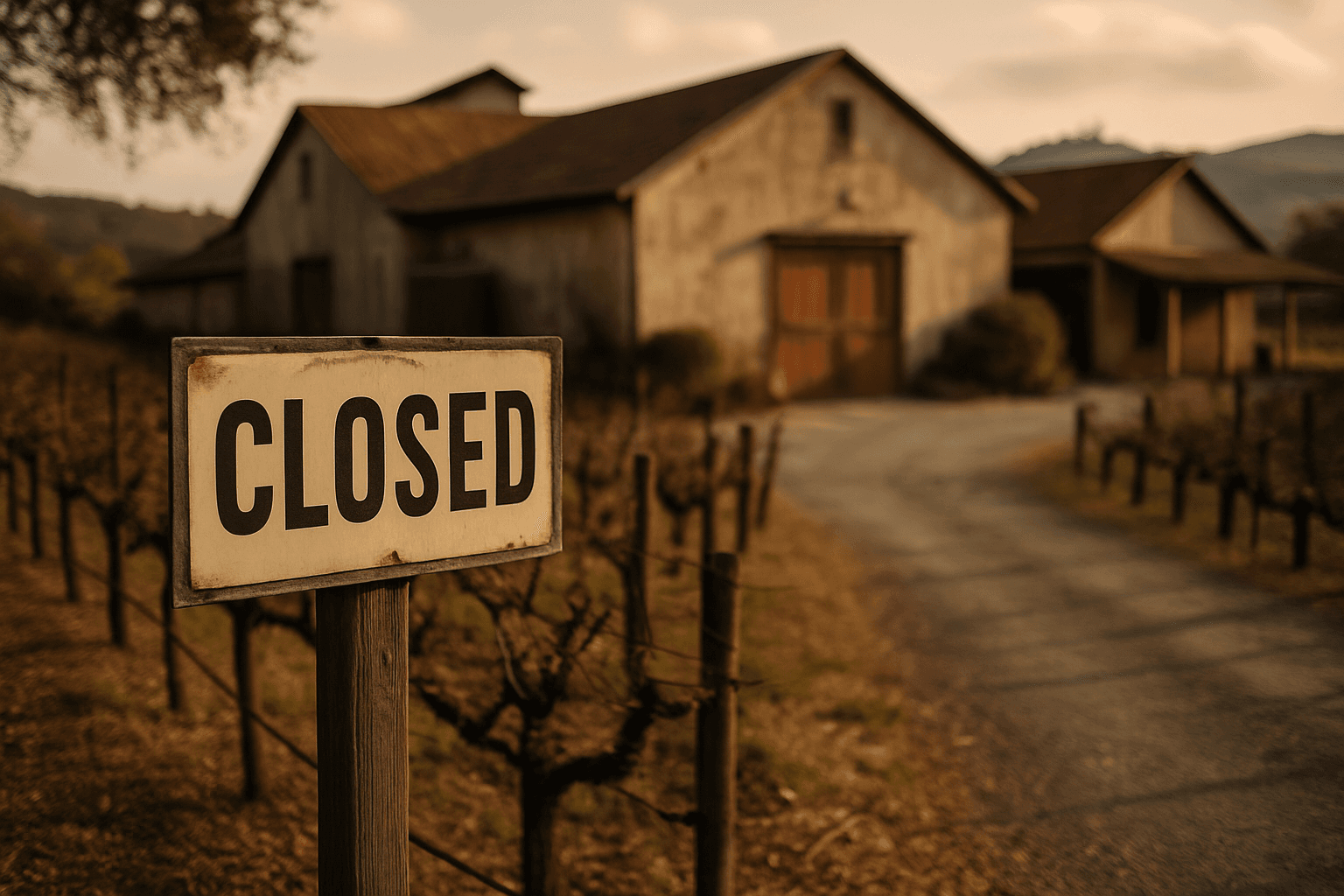
Napa winery closures 2026 are reshaping wine supply. Here's what liquor store owners need to know to adapt their wine buying strategy and protect margins.
- The Numbers Don't Lie: Closures Are Picking Up Speed
- Why This Is Happening: The Triple Threat Hitting Wine Suppliers
- It's Not Just Wineries — Distribution Is Consolidating Too
- What This Means for Your Store's Wine Shelves Right Now
- 5 Wine Buying Strategy Moves to Make Before Year-End
If you run a liquor store, you've probably noticed something unsettling in the trade press lately: familiar names disappearing. Wineries that have been on your shelves for years — solid, reliable producers — quietly shutting down or slashing operations. It's not your imagination. Napa winery closures in 2026 are accelerating at a pace that should have every independent retailer rethinking how they buy wine.
This isn't a story about a few small operations that couldn't hack it. We're talking about heritage producers, industry giants, and the distribution networks that connect them to your store — all contracting at the same time. The forces driving this shakeout have been building for years, but the speed of the correction in early 2026 has caught even seasoned buyers off guard.
Here's what you need to know: the wine supplier landscape your business was built around is actively reshaping itself. That affects your sourcing, your margins, your shelf sets, and your negotiating power. The good news? If you understand what's happening and why, you can get ahead of it. Let's walk through the numbers, the causes, and — most importantly — what to actually do about it.
The Numbers Don't Lie: Closures Are Picking Up Speed
What's Happened So Far in 2026
We're barely into the year, and the pace of closures is already outstripping what we saw in prior years. At least 8 California wineries have closed or significantly downsized in just January and February alone [VERIFY]. That's not a slow bleed — that's acceleration.
And these aren't nameless labels you've never carried. Iconic and heritage wineries are among those shutting doors — the kind of producers that built Napa Valley's reputation over decades. When operations with that much history and brand equity can't make the math work, it tells you something fundamental has shifted.
10 wine club marketing tactics that reduce the 40% year-one cancellation rate and boost member spending at your liquo...
Four major California wine companies have confirmed layoffs so far in 2026 [VERIFY]. This isn't a story about undercapitalized startups or hobbyist vintners getting squeezed out. This is structural.
Even the Giants Are Cutting Back
Here's where it gets hard to ignore: E. & J. Gallo — the single largest wine supplier in the United States — is closing a major Napa Valley winemaking facility [VERIFY]. The move will eliminate 90-plus jobs across multiple locations, with 56 employees losing their positions at the Napa facility alone. That includes more than 36 wine technicians — the people who actually make the wine. The layoffs are rolling out in phases from April 15 through early 2027 [VERIFY].
Read that again. Gallo isn't trimming a marketing budget. They're shutting down production capacity and letting go of the skilled workers behind it.
They're not alone. Jackson Family Wines, the 6th-largest U.S. wine company [VERIFY], has also confirmed layoffs. When companies at that scale are pulling back simultaneously, you're not looking at a rough quarter — you're looking at a market correction.
Discover how Provence transformed into a lifestyle brand. Learn provençal wine marketing tactics to boost regional Fr...
For anyone shaping their wine buying strategy for 2026, these shutdowns aren't background noise. They're a signal. And the smartest retailers are already adjusting.
Why This Is Happening: The Triple Threat Hitting Wine Suppliers
The closures and layoffs aren't happening in a vacuum — they're the predictable result of several market forces that have been building pressure for years and are now hitting producers all at once.
Oversupply, Declining Demand, and Shifting Drinking Habits
First: oversupply. California planted aggressively during the boom years, and now there's simply too much wine chasing too few buyers. Warehouses are full, barrels are sitting, and vineyard removals are only just starting. The correction in supply won't catch up to reality for at least another year or two.
Second: declining demand. Americans are drinking less wine, period. Volume sales have been sliding for several consecutive years, and the trend is accelerating rather than flattening.
Independent stores can capture Syrah's momentum with smart displays, staff storytelling, and Old World/New World tast...
Third: a generational shift. Younger legal-drinking-age consumers are reaching for spirits, ready-to-drink cocktails, and non-alcoholic options instead of wine. This isn't a temporary fad — it's a fundamental change in what your customers want on their shelves.
Trade Pressures Are Making It Worse
Layer on tariff uncertainty and intensifying international competition, and domestic producers are getting squeezed from both sides. Imported wines keep competing aggressively on price while trade policy remains unpredictable.
Industry insiders expect these difficult conditions to persist through 2026 and likely into 2027, with too much inventory still working through the pipeline.
Here's the takeaway: the changes happening right now aren't a blip. This is a structural correction. The supplier network your store depends on is actively shrinking. Planning accordingly isn't pessimism. It's good business.
It's Not Just Wineries — Distribution Is Consolidating Too
While winery closures dominate the trade press, there's an equally disruptive shift happening one level down in the supply chain — and it might hit your store even harder.
Johnson Brothers Liquor's acquisition of most of Maverick Beverage Company's business [VERIFY] is reshaping distribution dynamics in key markets across the country. This isn't a minor portfolio shuffle. It's a structural change in who controls what wines reach your shelves and on what terms.
What the Johnson Brothers–Maverick Deal Means for Retailers
In practical terms, distribution consolidation means fewer reps calling on your store. The rep who used to show up with a Maverick book and the one carrying Johnson Brothers? They might be the same person now — with a bigger portfolio, less time per account, and priorities dictated by volume targets you probably don't meet.
Fewer Suppliers + Fewer Distributors = Less Leverage for You
Here's where your wine buying strategy needs a serious rethink.
When both production and distribution consolidate simultaneously, independent retailers get squeezed from both sides:
- Fewer sourcing options. Winery shutdowns and downsizing mean the pool of available wines is literally shrinking. Unique, small-production bottles that differentiated your shelves? Harder to find.
- Less negotiating leverage. When your distributor has fewer competitors, they have less incentive to fight for your business on pricing or terms.
- Deprioritization. Larger distributors focused on volume accounts will naturally allocate their best inventory, their sharpest pricing, and their most attentive service to chain accounts and big-box retailers. Not you.
This isn't speculation — it's the math of consolidation. Fewer players on both sides of the transaction means the remaining players hold more power. And independent retailers, by definition, don't bring the volume that commands attention in that environment.
The practical impact? Fewer bottles on your allocation list, longer lead times, and a distributor rep who used to visit weekly now showing up twice a month — if you're lucky.
What This Means for Your Store's Wine Shelves Right Now
Here's the tension every wine buyer needs to sit with: the market feels like a buyer's paradise today, but the structural shifts behind these Napa winery closures in 2026 are quietly setting up a much tighter market within 12–18 months.
Let's break that down into what you should actually be doing.
Short-Term: Deals and Closeout Opportunities
Right now, there's product that needs to move. Closeout inventory. Bulk pricing. Distributors with motivated sales reps who need to clear warehouse space. If you're a smart buyer, this is your window to stock up strategically on California wines — particularly mid-tier Napa and Sonoma bottles — at margins you won't see again.
Don't sleep on this. These deals have a shelf life.
Medium-Term: Supply Gaps and Allocation Risks
Here's where the conversation gets uncomfortable. Vineyards are being ripped out. Smaller producers are exiting permanently. By late 2026 into 2027, these production cuts will start showing up as real gaps on your shelves.
Certain California appellations — especially Napa — will see reduced availability of mid-tier and premium wines as the supplier landscape reshapes who's actually making wine. Allocation-based wines and cult labels? Even harder to access. The wineries that survive will tighten distribution to their most profitable channels, and independent retail isn't always at the top of that list.
The retailers who only react to today's glut without planning ahead are the ones who'll be scrambling for popular SKUs next year. Buy smart now. Plan smarter for what's coming.
Let our team show you what's possible.
our team specializes in digital marketing strategies that drive real results. Let us show you what's possible.
Schedule a Call5 Wine Buying Strategy Moves to Make Before Year-End
The Napa winery closures of 2026 aren't just headlines — they're signals. And smart retailers act on signals before they become emergencies. Here are five moves to make now — not next quarter, not next year.
1. Diversify Your Sourcing Beyond Napa and California
If your wine program leans heavily on Napa or California, you're building on increasingly unstable ground. Start conversations with suppliers from Oregon, Washington, Virginia, Texas, and other emerging domestic regions. International producers — particularly from Portugal, South America, and southern France — are actively courting U.S. retail accounts right now. They see the gap these shutdowns are creating, and they want your shelf space. Let them earn it.
2. Lock In Relationships with Surviving Suppliers Now
As the field shrinks, the suppliers who make it through will hold more leverage. Companies like Jackson Family Wines aren't going anywhere — but their attention will go to the accounts that showed up as reliable partners during the hard times. Be that account. Have honest conversations with your reps about their company's stability. Ask the uncomfortable questions now so you're not blindsided later.
3. Use the Glut to Your Advantage — Strategically
Yes, there's discounted inventory flooding the market. Closeout and overstock pricing can be genuinely attractive. But here's the rule: buy what your customers actually want, not just what's cheap. Deeply discounted wine that sits on your shelf for 8 months isn't a deal — it's dead capital. Use your POS data to guide these purchases.
4. Reassess Your Wine Category Mix
If consumer demand is shifting toward spirits and RTDs, your shelf space should follow the data, not your instincts. Pull your sales reports. Look at what's actually moving versus what you think should be moving. A smart wine buying strategy in 2026 means right-sizing the category, not defending it out of habit.
5. Watch Distribution Consolidation Like a Hawk
If your primary distributor gets acquired or restructured, your account terms, rep relationships, and portfolio access can change overnight. Have a backup distributor relationship in place before you need one. The retailers who navigate this shakeout most successfully won't be the ones with the best taste — they'll be the ones with the best contingency plans.
The Silver Lining: A More Balanced Market Is Coming (Eventually)
It's easy to read all of this and feel like the sky is falling. It's not. But the ground is shifting — and that distinction matters.
Why the Pain Now Could Mean Opportunity Later
Vineyard removals are already underway across California. Industry analysts expect that reduced planting — combined with gradually improving grape demand — will eventually create a more balanced market. But "eventually" isn't tomorrow. We're likely looking at 18–24 months before supply meaningfully tightens.
The shakeout is real. But retailers who act now — diversifying sources, deepening supplier relationships, and right-sizing their wine programs — will be best positioned when margins stabilize.
Your strategy shouldn't be "wait and see." That's how you get caught flat-footed when supply finally contracts and pricing leverage shifts back to producers.
Bottom Line: The Wine Aisle Is Changing — Your Strategy Should Too
Napa winery closures in 2026 aren't a blip. With at least 8 California wineries closing or downsizing in just the first two months of the year, 4 major companies confirming layoffs, and industry giants like Gallo eliminating production capacity, this is a structural shift — not a temporary correction.
These changes will directly impact how you source, price, and merchandise wine. Full stop.
The retailers who come out ahead won't be the ones scrambling after their best-selling Napa Cab vanishes from the distributor's book. They'll be the ones who paid attention to the supply side of the business before the gaps showed up on their shelves.
If you're not sure how these shifts affect your specific market, have that conversation now. Not next quarter.
Need help building a wine buying strategy for 2026 that accounts for what's actually happening in the industry? Intentionally Creative ↗ helps beverage retailers stay ahead of shifts like these through smarter marketing and data-driven strategy. Let's talk.
10+ years helping liquor retailers and beverage brands grow through data-driven digital marketing. Learn more