Napa Winery Closures Are Accelerating: Why DTC Brands That Own Their Customer Data Will Outlast Those That Don't
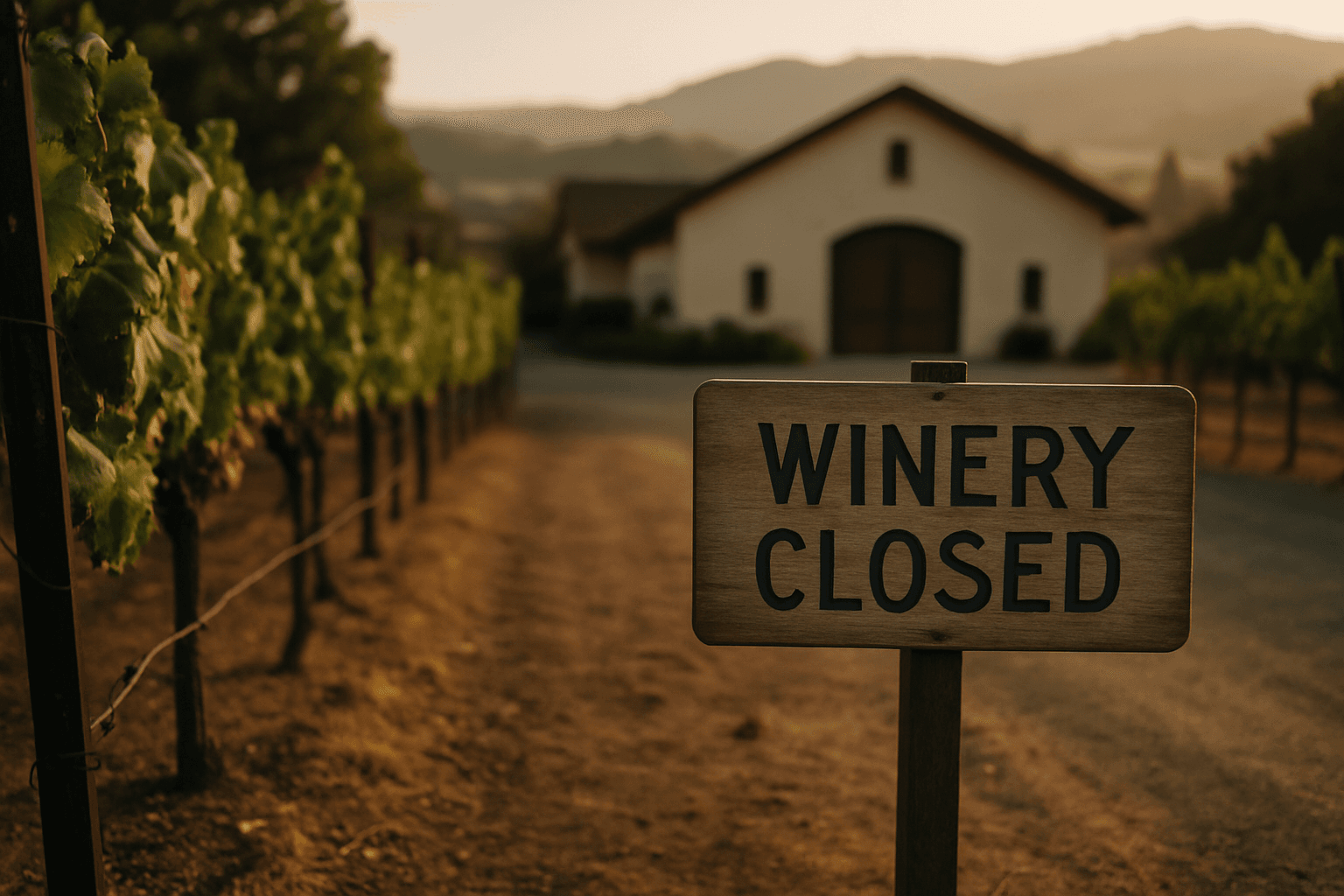
Napa winery closures DTC brands face a reckoning. Tasting room orders dropped 24%. Here's why owning your customer data is the only real survival strategy.
- Napa Is Contracting Fast — And the Numbers Are Brutal
- The Real Problem Isn't Foot Traffic — It's What Happens After the Visit
- The 65/35 Rule: What Surviving Wineries Actually Look Like
- The Industry Is Shifting to a Unified DTC Model — But Most Brands Are Too Slow
- What DTC Ecommerce Brands Should Steal From the Winery Playbook (and What to Avoid)
The wine industry is bleeding out in public, and most people are reading the wrong autopsy report.
The standard narrative goes like this: consumers are drinking less, tourism is soft, tariffs are looming. All true. All incomplete. The real story behind Napa winery closures DTC brands should be paying attention to isn't about shifting consumer preferences or macroeconomic headwinds. It's about a fundamental infrastructure failure — thousands of businesses that spent decades perfecting their product while completely ignoring the system that turns a customer into a repeat customer. They built world-class tasting rooms and forgot to build a database.
Here's why this matters if you've never set foot in a vineyard: the pattern destroying Napa wineries right now is identical to the one quietly hollowing out Shopify brands across every category. Single-channel dependence. Unactivated customer data. Retention treated as a "Phase 2" project that never arrives. The wine industry is just further along the curve — which means it's showing you exactly what happens at the end of that road. Pay attention.
Napa Is Contracting Fast — And the Numbers Are Brutal
Let's skip the euphemisms. Napa winery closures aren't a "correction." They're not a "market recalibration." What's happening right now is an industry watching its primary revenue channel collapse in real time — and most operators have no Plan B.
Tasting Room Orders Dropped 24% — That's Not a Dip, It's a Structural Shift
As of January 2026, Napa tasting room orders are down 24% [VERIFY — source and exact timeframe needed]. Nearly a quarter of the in-person revenue engine — the channel most wineries built their entire business model around — just evaporated.
South African red blends wine merchandising strategies for liquor stores. Build high-margin shelf sets with data-back...
Foreign tourism is declining. Domestic visitor traffic is softening. And this trend didn't start last quarter. It's been accelerating since 2023.
Meanwhile, U.S. wine prices jumped 11% in the past year [VERIFY — source needed] — the highest spike since the pandemic. Sounds like good news until you realize it's not driven by demand. It's driven by supply contraction. Struggling producers raising prices to survive isn't a growth story. It's a death spiral with better packaging.
Layoffs, Closures, and a Giant Like Gallo Pulling Back
At least four major California wine companies announced layoffs in 2026 [VERIFY — confirm specific companies]. But the real signal? Gallo — the single largest wine company in the world — is closing a facility and cutting workers at four other locations [VERIFY — confirm details]. When the biggest player in the industry is contracting, smaller wineries should be treating this as a five-alarm fire.
The Wine Service Cooperative downsized its largest Napa Valley warehouse and outsourced DTC fulfillment entirely [VERIFY — source needed]. Even the shared-resource models designed to help smaller producers can't paper over what's really broken: weak customer relationships with no system to monetize them.
Wine tourism marketing for liquor retailers: how Netflix's new Napa Valley series 'Uncorked' could drive wine sales a...
Here's the core argument most industry coverage misses: the wineries going under aren't necessarily making bad wine. Many make exceptional wine. They're the ones who never owned their customer data — never built the flows, the segments, the automated systems that turn a one-time tasting room visitor into a repeat buyer spending $200+ per quarter from their couch.
A wine direct-to-consumer strategy isn't a nice-to-have anymore. It's the difference between surviving and becoming a cautionary tale.
But the collapse in foot traffic is only half the story. The other half — the more damaging half — is what was already broken before visitors stopped showing up.
The Real Problem Isn't Foot Traffic — It's What Happens After the Visit
That 24% drop in tasting room orders isn't actually the crisis. The crisis is what was already broken before foot traffic fell off a cliff.
The wine industry oversupply crisis cost producers $1B+ in 2025. Here's what smart liquor store owners need to know —...
Most Wineries Treat Tasting Rooms Like a Cash Register, Not a Data Engine
A visitor walks into a tasting room, buys two bottles, maybe joins the wine club, and leaves. If that winery didn't capture their email, purchase preferences, and visit context — what they tasted, what they loved, who they were with — that customer is gone. Forever. Multiply that by thousands of visitors per year and you're staring at millions in lost lifetime value.
This is the pattern driving Napa winery closures DTC brands should be studying closely. Wineries that maintain roughly a 65/35 DTC-to-distribution ratio consistently outperform — but that ratio only works when you're actually building the DTC side, not just ringing up transactions.
Data Silos Are Killing Repeat Purchases
Most wineries fragment their customer relationships across POS systems, wine club software, email platforms, and shipping tools that don't talk to each other. The result? No unified view of the customer. No personalized re-engagement. No systematic way to turn a one-time visitor into a lifetime buyer.
Sound familiar? If you're running a Shopify brand spending heavily on Meta or Google to acquire customers — then sending one generic discount blast a month — you're making the same mistake. You're renting attention instead of building an asset.
Even regulatory infrastructure is retreating. The Napa County Board voted to end its winery code compliance program after eight years [VERIFY — source needed]. The old model is collapsing from every direction.
So if the problem is clear — fragmented data, no retention system, over-reliance on a single channel — what does the solution actually look like in practice?
The 65/35 Rule: What Surviving Wineries Actually Look Like
Why the Best Wineries Keep 65% of Revenue in DTC
Here's the number that separates the wineries weathering this storm from the ones boarding up tasting rooms: 65/35.
According to the Silicon Valley Bank State of the Wine Industry Report [VERIFY — confirm this is the correct source; original post cited "InnoVint's State of the Wine Business survey"], the most successful wineries maintain approximately a 65/35 DTC-to-distribution ratio. That's 65% of revenue flowing through channels they own — email, SMS, wine clubs, their own ecommerce — and only 35% through wholesale, restaurants, and retail.
Why does this ratio work so well? Because DTC channels deliver dramatically higher margins and generate first-party data that compounds over time. Every purchase, every click, every wine preference becomes fuel for the next sale. When tasting room traffic craters, wineries with deep customer data and owned channels can pivot. They can send a targeted email campaign by Tuesday morning. They can activate their wine club. They can survive.
Contrast that with the distribution-heavy, data-poor wineries driving the current wave of closures: scrambling to build DTC infrastructure in a downturn when it's already too late and too expensive.
Distribution Dependence Is the Wine Industry's Version of Meta Ad Dependence
If you're running a DTC ecommerce brand and this sounds eerily familiar, it should.
Wineries over-reliant on distributors lose control of their margins, their pricing, and their customer relationships. They're at the mercy of retailer shelf placement and wholesale negotiations. It's the exact same trap ecommerce brands fall into when 70-80% of revenue comes from paid acquisition on Meta or Google. You don't own the channel. You don't own the data. And when costs spike, you have zero cushion.
The winery DTC customer data lesson is clear: own the relationship or rent it at an ever-increasing price.
Knowing the ratio is one thing. Building the infrastructure to actually hit it is another — and this is where most brands, wine or otherwise, stall out completely.
The Industry Is Shifting to a Unified DTC Model — But Most Brands Are Too Slow
The wineries that will survive aren't just "doing DTC." They're building systems around it.
Breaking Down Silos to Build Real Customer Relationships
The smartest operators in wine are unifying their customer experience across every touchpoint using a framework built on three pillars: Personalization, Connection, and Segmentation. No more marketing team sending one thing while the tasting room says another. No more treating a first-time visitor the same as a five-year club member.
When DTC is your primary revenue engine — not a side channel — it needs fuel. That fuel is customer data, activated through automation.
Why "Sending a Newsletter Once a Month" Isn't a DTC Strategy
Here's the direct parallel every Shopify founder needs to hear: a winery that collects email addresses at the tasting room and never follows up is making the exact same mistake as a brand sending one monthly discount blast to 40,000 subscribers. Both are sitting on a goldmine and treating it like a junk drawer.
Zero segmentation. Zero automation. Zero personalization based on actual purchase behavior.
As Napa winery closures accelerate and DTC becomes the survival channel, "blast and pray" isn't a strategy — it's a countdown clock.
The frameworks are clear. The data is clear. Now let's get specific about what to actually do — and what traps to avoid — whether you're selling Pinot Noir or protein powder.
Let our team show you what's possible.
our team specializes in branding strategies that drive real results. Let us show you what's possible.
Schedule a CallWhat DTC Ecommerce Brands Should Steal From the Winery Playbook (and What to Avoid)
The Napa winery closures DTC brands should be studying aren't just a wine industry story. They're a preview of what happens to any product business that builds its revenue on rented ground.
The Winery Mistakes That Mirror Shopify Brand Mistakes
Mistake #1: Single-channel dependency. For Napa wineries, the "sure thing" was foot traffic and wholesale distribution. Then tasting room orders cratered overnight. For Shopify brands, the sure thing is Meta and Google — until CPMs spike 40% in Q4 and your CAC eats your margin alive. Same trap, different channel.
Mistake #2: Collecting customer data and doing nothing with it. Wineries gathered emails at every tasting and let them gather dust. You've got 30,000 past customers sitting in Klaviyo right now receiving the same "20% OFF EVERYTHING" blast once a month. Both scenarios leave 30-40% of potential revenue completely untouched. That's not a rounding error. That's your profit margin.
Mistake #3: Treating retention as a "someday" project. The wineries closing now aren't the ones that built their direct-to-consumer strategy in 2023. They're the ones that said "we'll get to email eventually" while distribution margins quietly eroded beneath them.
Three Moves That Separate Survivors From Closures
The current wave of Napa Valley winery closures reveals a clear pattern. Survivors do three things differently:
- Build automated lifecycle flows that convert one-time buyers into repeat customers without anyone touching a keyboard. No manual effort. No "we'll send a campaign when we have time."
- Segment ruthlessly by purchase behavior — not just demographics. What someone bought and when matters infinitely more than their zip code.
- Shift budget from pure acquisition to retention. Target a 65/35 split between owned channels (email, SMS) and rented ones (paid ads, wholesale). That ratio isn't just a wine industry benchmark — it's a survival framework for any brand selling direct.
Every customer interaction is a data capture opportunity, and every piece of that data should fuel the next automated, personalized touchpoint. The brands that internalize this — wine or otherwise — will outlast the ones still hoping their single acquisition channel holds up.
Still think this is a wine industry problem? Let's run the numbers on your business.
The Uncomfortable Math: What Happens When You Don't Own Your Revenue
The most successful wineries keep roughly two-thirds of revenue flowing through channels they own. Most DTC ecommerce brands? They're running closer to 80/20 — in favor of rented channels.
That means if your primary acquisition source hiccups — an algorithm change, a CPM spike, a platform policy shift — you don't have a business. You have a dependency.
A Simple Exercise for Any DTC Brand Doing $50K+/Month
If Meta shut off your ads tomorrow, what percentage of last month's revenue could you regenerate from owned channels alone — email, SMS, direct site traffic?
If it's under 30%, you're in the same position as a Napa winery that just watched its tasting room traffic vanish. Your past buyers, your browse-abandoners, your VIPs — they're sitting there, unmonetized.
The brands that outlast market contractions — whether in wine or ecommerce — built retention before they needed it. Not after the ad costs doubled. Not after the traffic disappeared.
Before.
Own Your Data or Become a Closure Statistic
Napa winery closures aren't random — they follow a predictable pattern: channel dependence, data neglect, delayed retention investment. With tasting room orders down sharply and major players contracting across California, the shakeout is accelerating.
This is a preview for every DTC brand renting its audience instead of owning it.
The Window to Build Retention Infrastructure Is Closing
Whether you're selling Cabernet or skincare, the math is identical: owned customer data compounds, rented attention depreciates. The wineries surviving this contraction built retention infrastructure before the crisis hit.
The lesson is brutally simple: the product was never the problem. The system was. Great wine didn't save wineries that couldn't re-engage their own customers. And a great product won't save your brand either — not without the automated, data-driven retention engine to match.
If you're a DTC brand doing $50K+/month and your email and SMS channels are underperforming, the time to fix it isn't after acquisition costs spike another 30%. It's now. [Book a free retention audit →]