Non-Alcoholic Spirits Are Booming: How Smart Liquor Retailers Are Capitalizing on the Trend
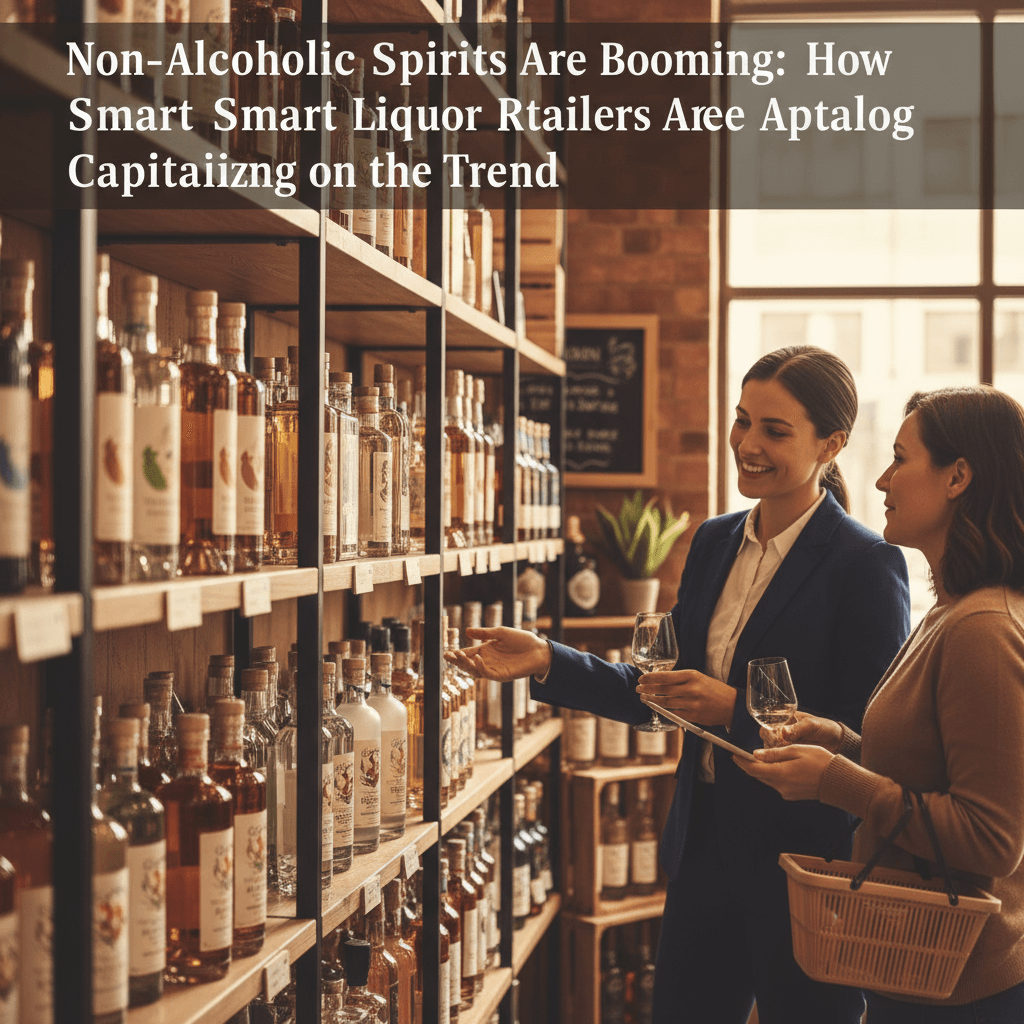
Non-alcoholic spirits retail is surging at 18% CAGR. Learn how independent liquor stores are turning zero-proof products into real profit opportunities.
- This Isn't a Fad — Non-Alcoholic Spirits Are a Billion-Dollar Movement
- Why Liquor Stores — Not Grocery Stores — Are Positioned to Win This Category
- What to Stock: Building a Non-Alcoholic Spirits Selection That Actually Sells
- Merchandising and Placement: Where You Put It Matters More Than You Think
- Marketing Non-Alcoholic Spirits: Reaching the Right Customers Without Alienating Your Core
Here's a number that should stop you mid-inventory count: IWSR projects no-alcohol spirits will grow at 18% volume CAGR from 2024 through 2028. Not beer. Not wine. Spirits — the category you already know how to sell better than anyone. Non-alcoholic spirits retail isn't some wellness-aisle curiosity anymore. It's a high-margin, fast-growing segment landing squarely in your wheelhouse, and the independent retailers who recognize that are already pulling ahead.
But let's be honest — most liquor store owners are still figuring out what to do with this category. Maybe you've stocked a bottle or two, watched them sit, and written off the whole thing. Or maybe you've been waiting for a signal that the demand is real before committing shelf space. The consumers are spending, the products have matured, and the playbook for doing this profitably is clearer than it's ever been.
This guide breaks down everything you need to move — from the market data that makes the case, to what to stock, where to put it, how to market it, and how to avoid the pitfalls. Whether you're starting from zero or looking to sharpen a selection you've already built, there's a concrete action plan waiting at the end.
This Isn't a Fad — Non-Alcoholic Spirits Are a Billion-Dollar Movement
Let's skip the part where we debate whether this trend has legs. NielsenIQ has already settled that conversation — they're calling non-alcoholic beverages a "billion-dollar movement." Not a trend. Not a moment. A permanent market shift that's reshaping how consumers think about what goes in their glass.
If you're an independent liquor store owner still treating NA spirits as a novelty — a few dusty bottles tucked next to the mixers — you're leaving real money on the table.
Learn how to optimize your Google Business Profile for liquor stores with tips on photos, posts, reviews, and categor...
Beyond Dry January: What's Actually Driving the Shift
Yes, Dry January gets the headlines. But the demand drivers here run much deeper than a single month of good intentions.
Millennials are prioritizing health and wellness in their purchasing decisions. Gen Z is drinking measurably less alcohol than every generation before them. And the "sober-curious" movement has gone fully mainstream — it's no longer a niche identity, it's a shopping behavior.
What matters for your business isn't why people are buying fewer alcoholic drinks. What matters is that they're still walking into stores, still spending money, and still looking for something worth putting in a cocktail glass. Premium NA spirits retail at $30–$40 per bottle — think Pathfinder at $39.99 or Lapo's Aperitivo at $31.99. These aren't bargain-bin impulse buys. They're high-margin products with serious consumer intent behind them.
The Numbers That Should Have Your Attention
That 18% CAGR projection is driven by a wave of new product launches and rising consumer awareness. The category isn't slowing down — it's accelerating.
Learn how to run a liquor store website SEO audit that fixes page speed, schema markup, and technical errors killing ...
Even more striking: the spirits, RTD, and mocktail NA segment saw 70% growth year-over-year in recent tracking periods, according to Forbes. That makes it the fastest-growing non-alcoholic category on the market. And here's the kicker — it's still the smallest category by market share. The runway ahead is enormous.
Dedicated retailers like The Zero Proof already carry 30+ non-alcoholic brands in their online store, proving the depth of product now available. The supply side has caught up. The consumer demand is there. The only question left is whether your shelves reflect the opportunity — or ignore it.
Why Liquor Stores — Not Grocery Stores — Are Positioned to Win This Category
Here's something most liquor store owners haven't considered: the biggest threat to your NA spirits opportunity isn't competition from grocery chains. It's assuming grocery chains will own this category before you even try.
They won't. And here's why.
Learn how email segmentation for liquor stores drives repeat sales with a 4,200% ROI. List-building tactics, purchase...
The Grocery Merchandising Gap You Can Exploit
Walk into most grocery stores and try to find a premium NA spirit. Good luck. You'll find Seedlip wedged between the kombucha and flavored sparkling water — if it's there at all. Grocers are treating $35 bottles of Ritual Zero Proof the same way they treat LaCroix.
That's a merchandising disaster for a category posting double-digit growth. Premium NA spirits need the shelf context of a spirits wall, not a beverage aisle.
Your Credibility Advantage as a Spirits Expert
Your customers already trust you to curate quality. A staff recommendation on a bourbon alternative carries real weight in a liquor store. On a grocery endcap? It's just another SKU.
Look at what Boulder's Hazel's is doing — expanding into nonalcoholic drinks alongside food and coffee to broaden their appeal as grocery stores encroach on traditional wine sales. It's both defensive and offensive, and it's working.
Non-alcoholic spirits retail represents a natural category extension for your store. You already have the foot traffic, the shelf logic, and the customer relationships. This isn't a pivot — it's an expansion into territory you're already built to serve.
What to Stock: Building a Non-Alcoholic Spirits Selection That Actually Sells
Let's get one thing straight: a single bottle of Seedlip gathering dust on a bottom shelf is not an NA spirits strategy. It's a missed opportunity sitting in plain sight.
Start With the Core Categories
Think about your NA section the same way you think about your alcoholic shelves. Customers navigate by category, so give them the same structure:
- Zero-proof gin (the most established NA spirit category)
- Bourbon and whiskey alternatives (growing fast with the cocktail-at-home crowd)
- Tequila alternatives (perfect for margarita season — which, let's be honest, is year-round now)
- Aperitivos and amaro-style bottles (the spritz isn't going anywhere)
- Ready-to-drink mocktails (grab-and-go convenience for the curious buyer)
You don't need to carry everything. Dedicated online retailers stock 30+ brands, but you're not trying to be them. Start with 8–12 SKUs spread across categories, then expand based on what actually moves.
Premium Positioning Is the Play — Not Bargain Bins
Here's where many retailers get this wrong: they treat NA spirits like afterthoughts instead of what they are — premium purchases. Brands like Free Spirits and Ritual Zero Proof market complex, small-batch alternatives to specific spirit categories. These bottles command $30–$40 at retail, and customers are paying willingly.
Position these products at eye level, near their alcoholic counterparts or in a dedicated display — not buried in the mixer aisle.
One more move worth making: talk to your distributors about their NA portfolios. Many major distributors now carry these lines, and some NA brands offer direct-to-retail programs that can improve your margins. Your rep probably has options you haven't seen yet. Ask the question.
Merchandising and Placement: Where You Put It Matters More Than You Think
With this category growing as fast as it is, you can't afford to toss a few bottles on a random shelf and hope for the best. Where and how you present NA spirits directly impacts whether they move.
Dedicated Section vs. Integrated Shelving: The Debate
There are two schools of thought here, and both have merit.
A dedicated "Zero Proof" or "Non-Alcoholic Spirits" section creates destination shopping. It signals to customers — especially the sober-curious crowd — that you take this category seriously.
The alternative? Place that NA gin right next to your London Drys. This lets curious shoppers discover it naturally while they're already browsing a familiar category.
Our suggestion: test both. Or go hybrid — a featured endcap highlighting the category plus integrated shelf placement where it makes sense. Track what sells and adjust.
Signage and Education That Drives Trial
Customers won't buy what they can't find or don't understand. And when a bottle costs $35, they need a reason to take the leap.
Use shelf talkers that do the heavy lifting: "This is a zero-proof bourbon alternative — mix an Old Fashioned without the alcohol." Simple. Clear. Actionable.
Then remove the final barrier with Saturday afternoon tastings. Many customers are curious but hesitant to spend on something untested. A quick sample converts skeptics into buyers.
This is your competitive edge. Grocery stores won't invest in this level of curation and education. That gap is yours to exploit.
Let our team show you what's possible.
our team specializes in digital marketing strategies that drive real results. Let us show you what's possible.
Schedule a CallMarketing Non-Alcoholic Spirits: Reaching the Right Customers Without Alienating Your Core
Let's address the elephant in the room: you sell alcohol for a living, and promoting non-alcoholic products feels… contradictory. We get it. But here's the reframe — you're not anti-alcohol, you're pro-choice.
And here's what most retailers miss: your NA spirit buyer is your core customer. They're the same person grabbing a bottle of bourbon on Friday and a bottle of Pathfinder on Monday. Different occasion, same shopping cart.
Your Messaging Framework: Inclusive, Not Preachy
Effective marketing for this category focuses on quality, flavor, and occasion — never sobriety lectures. Compare these two approaches:
- ❌ "Choose health. Choose alcohol-free."
- ✅ "Premium zero-proof spirits for when you want the cocktail without the hangover."
The second sells an experience. Your messaging should match the premium positioning of the products themselves.
Digital Tactics That Work for This Category
The non-alcoholic spirits trend is driving real search volume — and smart retailers are capturing it. Specific moves to make:
- Social content: Post mocktail recipes on Instagram and TikTok featuring brands you stock. The audience is already there and this content performs well.
- Seasonal email campaigns: Time them around Dry January, Sober October, and summer entertaining season.
- Local SEO: Update your Google Business Profile to include "non-alcoholic spirits" in product descriptions. People are actively searching for these products near them.
- Cross-promotion: Partner with local restaurants, wellness influencers, or mocktail bars. These audiences are already primed — you're just meeting them where they are.
The retailers winning this category aren't choosing between their traditional customers and new ones. They're serving both.
A Reality Check: Not Every NA Brand Will Survive (And That's Fine)
Double-digit annual growth sounds incredible — and it is. But overall category growth doesn't mean every brand makes it. At least two notable NA spirits companies — including an Oregon-based producer and what was billed as the country's first zero-proof distillery — have recently shut down. Sound familiar? It should. Traditional spirits work the same way.
Learning From the Failures
The category is still maturing. Some brands lack distribution muscle. Others can't justify premium price points without strong marketing behind them. That's not a reason to avoid the category — it's a reason to be selective.
How to Manage Risk as a Retailer
Start with established brands that have real distribution support. Don't overcommit shelf space before you understand local demand. Track velocity closely in the first 90 days.
Smart retailers test, measure, and scale. They don't bet the store on any single trend — no matter how fast it's growing.
Your Action Plan: Getting Started With Non-Alcoholic Spirits This Quarter
You've seen the data. Now let's turn insight into action.
The 30-Day Launch Checklist
Week 1 — Research & Reach Out
Audit your current NA selection (even if it's just tonic water and O'Doul's). Research 8–12 SKUs spanning gin, whiskey, tequila, and aperitivo alternatives. Call your distributors and ask what NA portfolios they carry — you'll be surprised how much has changed in the last year.
Week 2 — Plan Your Merchandising
Choose your approach: dedicated section, integrated alongside traditional spirits, or a hybrid. Order signage and shelf talkers that educate customers. Start planning a launch tasting event.
Week 3 — Go Live
Stock shelves. Update your Google Business Profile and website to reflect your new selection. Post 2–3 social media announcements featuring mocktail recipes — this content performs exceptionally well.
Week 4 — Measure Everything
Host your tasting event. Track sales from day one. Set a 90-day review to evaluate which SKUs earn their shelf space.
Here's the big picture: stocking non-alcoholic spirits retail isn't about cannibalizing your core business. It's about expanding your total addressable market. This category is bringing new customers through your door — designated drivers, sober-curious shoppers, Dry January participants who never had a reason to visit before. The margins are strong, the demand is accelerating, and the retailers who move this quarter will own this category locally before competitors even place their first order.
The Bottom Line
Non-alcoholic spirits retail isn't coming — it's here, it's growing fast, and it's rewarding the retailers who take it seriously. You don't need to overhaul your store or rethink your identity. You need 8–12 well-chosen SKUs, a smart merchandising plan, and the willingness to treat this category with the same expertise you bring to everything else on your shelves.
The playbook is straightforward. The data is overwhelming. And the window to establish yourself as the local destination for premium zero-proof spirits is still wide open — but it won't stay that way.
Pick up the phone, call your distributor, and ask what's in their NA portfolio. That single conversation is the fastest path from reading about this opportunity to profiting from it. The retailers who move this quarter will set the standard in their markets. Make sure you're one of them.
10+ years helping liquor retailers and beverage brands grow through data-driven digital marketing. Learn more