The Hybrid Liquor Store Model Is Growing: What Restaurant-Inside-a-Bottle-Shop Concepts Mean for Independent Retail Differentiation
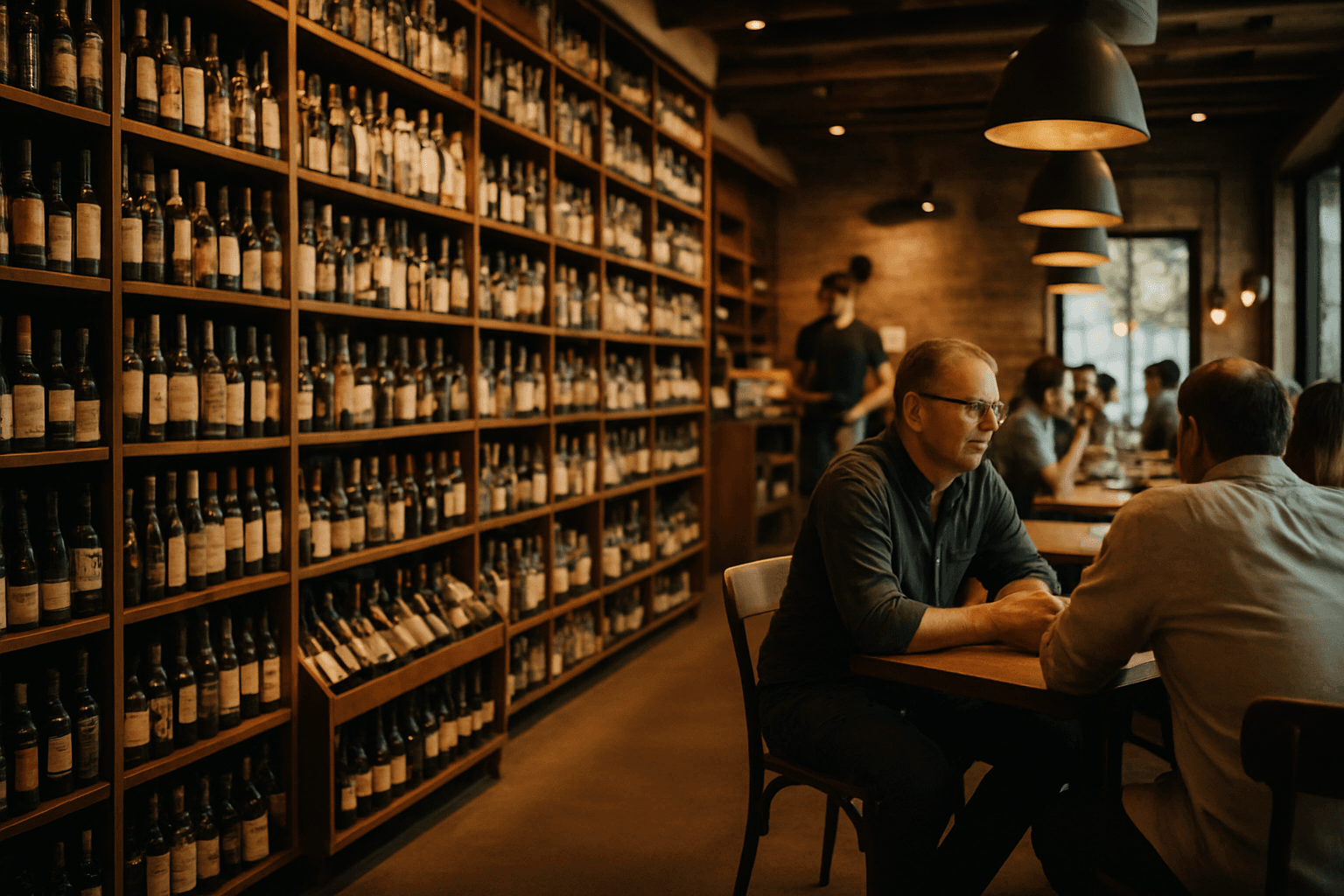
The hybrid liquor store model is reshaping independent retail. Learn how bottle shop bar concepts drive revenue, loyalty, and differentiation.
- The Liquor Store With a Bar Inside Isn't a Gimmick — It's a Growth Strategy
- How the Hybrid Bottle Shop Bar Concept Actually Works
- Real-World Examples: What's Working (and What's Tricky)
- Why This Model Is a Natural Fit for Independent Liquor Retailers
- Practical Steps to Go Hybrid
Independent liquor stores are facing a familiar squeeze from every direction — big-box pricing wars, declining alcohol consumption among younger demographics, and a consumer base that increasingly values experiences over transactions. If your store's competitive advantage starts and ends with what's on the shelf, the math is getting harder every year. But a growing number of independent operators are rewriting that math entirely by turning their bottle shops into destinations. The hybrid liquor store model — part retail, part bar, part community gathering space — is emerging as one of the most compelling differentiation strategies in beverage alcohol retail.
This isn't about slapping a few barstools next to the register and calling it innovation. The operators getting this right are building dual-revenue businesses that drive higher margins, deeper customer loyalty, and organic marketing that no ad budget can buy. From Chicago's battle-tested "slashies" to curated bottle shop experiences in Franklin, Tennessee, the model is proving itself in real markets with real numbers.
In this post, we'll break down exactly how the hybrid concept works, what it looks like when it's executed well (and when it's not), and the practical steps independent retailers can take to start testing the model without betting the whole business. If you've been wondering whether there's a way to compete that doesn't involve matching Total Wine's prices, keep reading.
The Liquor Store With a Bar Inside Isn't a Gimmick — It's a Growth Strategy
Why the Traditional Bottle Shop Model Is Under Pressure
Let's be honest about what most liquor stores still look like: fluorescent lighting, floor-to-ceiling shelves, maybe a handwritten sale sign taped to the register. It's purely transactional. Walk in, grab a bottle, walk out.
That model worked for decades. It's not working as well anymore.
Discover 7 proven Instagram content ideas for liquor stores that boost engagement and drive sales. Learn how to promo...
Alcohol consumption trends are shifting — younger consumers are drinking less, and when they do spend, they're spending on experiences, not just products. Meanwhile, big-box retailers and grocery chains keep chipping away at your margins with volume pricing you can't match. Total Wine isn't slowing down. Neither is Costco.
The result? Independent bottle shops are caught in a squeeze: shrinking margins, fewer repeat visits, and a consumer base that increasingly sees your store as interchangeable with the one down the street — or the app on their phone.
Something has to change. And for a growing number of independent operators, it already has.
What 'Hybrid' Actually Means in Liquor Retail
The hybrid liquor store model is straightforward: one location that combines retail packaged goods sales with on-premise consumption — a bar, a restaurant, or a tasting lounge — all under one roof.
Avoid TTB violations and Google Ads suspension with this guide to alcohol advertising rules for liquor stores. Expert...
Think of it as a bottle shop bar concept. Customers can browse your shelves, buy a bottle at retail, and pay a flat corkage-style fee to drink it on-site. Or they grab a craft cocktail from your bar while discovering a new spirit they'll take home. The goal is to turn a five-minute transaction into a 45-minute experience — and capture more revenue per visit in the process.
This isn't a fad. It's a direct response to structural industry shifts. And here's what matters most: independent retailers, with their flexibility and community roots, are uniquely positioned to execute it.
How the Hybrid Bottle Shop Bar Concept Actually Works
Here's where the model gets interesting — and where the math starts making a lot of sense.
The Corkage-Style Pricing Model
The most common pricing mechanic is elegantly simple. Customers browse your retail shelves, pick a bottle, and pay a flat corkage-style fee — typically around $10 — to open and enjoy it on-site.
Discover the 7 essential marketing budget benchmarks for liquor stores. Learn how top performers allocate spend for m...
No separate bar inventory. No complex cocktail program. No sommelier-level markup that makes customers feel gouged. Just a transparent, easy-to-understand fee that customers are genuinely happy to pay for the experience of drinking a great bottle in a curated space.
Dual Revenue Streams From the Same Inventory
This is what makes the concept financially elegant: you're monetizing the same inventory two ways. Every bottle on your shelf is simultaneously a retail product and an on-premise offering. That means reduced waste, simplified purchasing, and a built-in reason for customers to linger — and spend more.
The barrier to entry is dramatically lower than opening a full restaurant. You don't need a commercial kitchen or a massive staff. Start with a seating area, some glassware, and the license to serve.
Want to layer in more revenue? Small plates, charcuterie boards, or partnerships with local food vendors can add margin without full restaurant overhead.
The financial logic is clear. But does it hold up in the real world?
Real-World Examples: What's Working (and What's Tricky)
Theory is great. Let's talk about what's actually happening on the ground.
Chicago's 'Slashies' Proved the Model Has Staying Power
Chicago's "slashies" — hybrid establishments with a bar on one side and packaged goods on the other — have become a quiet proving ground for the hybrid liquor store model. These spots were already popular pre-2020, but the pandemic turned them into a case study in resilience. When on-premise revenue disappeared overnight, the retail side kept cash flowing. When bars reopened, the dual revenue streams compounded.
The model didn't just survive economic disruption — it thrived because of its built-in diversification. For independent retailers watching from the sidelines, that's a powerful data point.
The Bottle Shop, Franklin, TN: Experiential Retail Done Right
If you want to see a restaurant-inside-a-bottle-shop concept executed with real intention, look at The Bottle Shop in Franklin, TN. The presentation is stunning — curated selections, easy-to-navigate layouts, and a hospitality-grade ambiance that makes customers want to linger (and spend).
Their online review presence tells the story: dozens of consumer-uploaded photos and strong review engagement on Yelp signal serious visual-social appeal. People aren't just buying bottles — they're photographing the experience and sharing it. That kind of organic engagement is the holy grail of independent retail differentiation, and it doesn't happen by accident.
The Dual-Review Challenge: Bottle Cap Nashville
Now for the honest part. Bottle Cap in Nashville carries a middling rating on TripAdvisor and ranks in the bottom half of the city's restaurant listings. That ranking isn't necessarily a reflection of a bad business — but it illustrates a real challenge every hybrid concept faces: you're being evaluated in two ecosystems simultaneously. Customers judge you as a retail store and a dining experience. That raises the bar considerably.
The takeaway? Execution quality matters enormously. A half-hearted bar bolted onto a liquor store won't cut it. If you're going hybrid, the experience side needs to be genuinely good — not an afterthought.
These real-world examples point to a consistent theme: the hybrid model rewards operators who already have strong product knowledge, community relationships, and a willingness to invest in the customer experience.
Why This Model Is a Natural Fit for Independent Liquor Retailers
The beverage alcohol industry is entering a new era. Retail is no longer a static endpoint — it's becoming a dynamic, experience-driven ecosystem. And independents who lean into this shift can differentiate in ways that Total Wine simply cannot.
You Already Have the Inventory and the Expertise
Here's what most independent liquor store owners don't realize: you're already sitting on the foundation of a hybrid concept. You have deep product knowledge, existing supplier relationships, curated selections, and authentic community ties. Those aren't soft advantages — they're the raw materials for hard revenue.
Adding on-premise consumption doesn't require you to become a restaurateur overnight. Many successful operators use simple pricing structures — like a flat corkage-style fee added to the retail bottle price — and build from there. You're not reinventing your business. You're extending it.
Community and Curation: Your Built-In Competitive Moat
This is where differentiation gets real. Hybrid models create gathering spaces. Customers who come in for a glass stay for a bottle. Tastings convert to purchases. Education builds loyalty. This is relationship-driven retail at its best.
And this isn't a U.S.-only trend. Globally, more retailers are adopting hybrid bar-and-bottle-shop models specifically to drive incremental sales and deepen customer relationships. The independents who move now aren't chasing a fad — they're claiming territory the big boxes can't follow them into.
Let our team show you what's possible.
our team specializes in digital marketing strategies that drive real results. Let us show you what's possible.
Schedule a CallPractical Steps to Go Hybrid
You don't need to gut your store and install a commercial kitchen to compete. The most effective hybrid strategies start lean, test smart, and scale based on real customer demand.
Start Small: The Tasting Bar as a Minimum Viable Hybrid
Think of a tasting bar as your minimum viable hybrid — a few seats, a curated by-the-glass program, and a reason for customers to linger. A flat corkage-style fee on top of the retail bottle price for on-premise consumption keeps the model transparent and easy to manage.
Before committing to a full buildout, run weekend tastings, host pop-ups with local food trucks or caterers, and gauge foot traffic. Partnering with local chefs keeps costs low, reduces risk, and builds community goodwill — without the burden of a kitchen.
Licensing, Layout, and Logistics to Consider
Let's address the biggest hurdle first: licensing. Most states maintain separate requirements for on-premise and off-premise alcohol sales. Research your state's dual-license options early. This single regulatory question will shape everything else.
Layout is your next priority. Successful hybrid spaces feel connected but distinct — customers flow naturally from browsing shelves to sipping at the bar. Invest in ambiance: lighting, signage, comfortable seating. Visually appealing spaces generate organic social content and word-of-mouth without a marketing budget. The Bottle Shop in Franklin, TN is a great example — their Instagram-worthy environment practically markets itself.
One honest reality check: hybrid concepts live in two review ecosystems simultaneously. You'll be rated as both a store and a dining spot. Set expectations accordingly and nail the experience from day one.
The Marketing Angle: How Hybrid Models Fuel Your Digital Presence
More Experiences = More Content = More Visibility
Here's what makes the hybrid liquor store model genuinely exciting from a marketing standpoint: you stop having to manufacture content because your customers create it for you.
Tastings, food pairings, curated flights, a beautiful space where people actually want to hang out — these are inherently shareable moments. Every phone that comes out is a piece of organic content that algorithms reward with reach. Experiential retail generates attention that shelf displays simply can't.
A restaurant-inside-a-bottle-shop setup gives customers a reason to photograph, tag, and talk about your business without you spending a dime on content production. That's the kind of marketing advantage that compounds over time.
The broader trend is clear: consumers are searching for experiences, not just products. A bottle shop bar concept gives you something worth talking about — and something worth Googling.
Managing Your Reputation Across Two Review Categories
When you operate a hybrid concept, you show up in both restaurant and retail search categories. That's a dual-review challenge worth acknowledging.
Hybrid operators like Bottle Cap in Nashville get measured against dedicated restaurants with full kitchens and career chefs. The comparison isn't exactly apples to apples — and the ratings can reflect that mismatch.
But here's how to reframe it: more surface area for discovery means more potential customers finding you. You're now appearing in searches that a traditional bottle shop never would. Someone looking for a casual dinner spot stumbles onto your curated wine wall. A craft beer enthusiast searching for retail finds out you pour flights on-site.
The key is actively managing both review profiles — responding promptly, setting expectations clearly, and making sure your hybrid identity is obvious in your listings. Two categories means twice the work, yes. But it also means twice the doors into your business.
The Bottom Line: Hybrid Isn't the Future — It's Already Here
Declining alcohol consumption, rising competition from big-box and DTC, and experience-hungry consumers aren't trends to fear — they're signals pointing toward the hybrid liquor store model as a logical next step, not a gamble.
The evidence is already on the ground. Chicago's slashies proved the model's resilience through an economic crisis. Franklin's Bottle Shop demonstrated that experiential retail generates the kind of organic buzz money can't buy. And even the cautionary examples — like navigating dual review ecosystems — come with clear, manageable solutions for operators willing to commit to execution quality.
Here's what independents need to remember: you already have the inventory, the product knowledge, and the community trust. Chains can't replicate that. Whether it's a tasting bar, a weekend pop-up partnership, or a full restaurant-inside-a-bottle-shop buildout, your differentiation strategy starts with what you've already built.
The time to explore is now — before your competitors figure it out first.
Need help marketing a hybrid concept? Reach out to Intentionally Creative ↗ — we build strategies that turn innovative retail models into measurable growth.
10+ years helping liquor retailers and beverage brands grow through data-driven digital marketing. Learn more