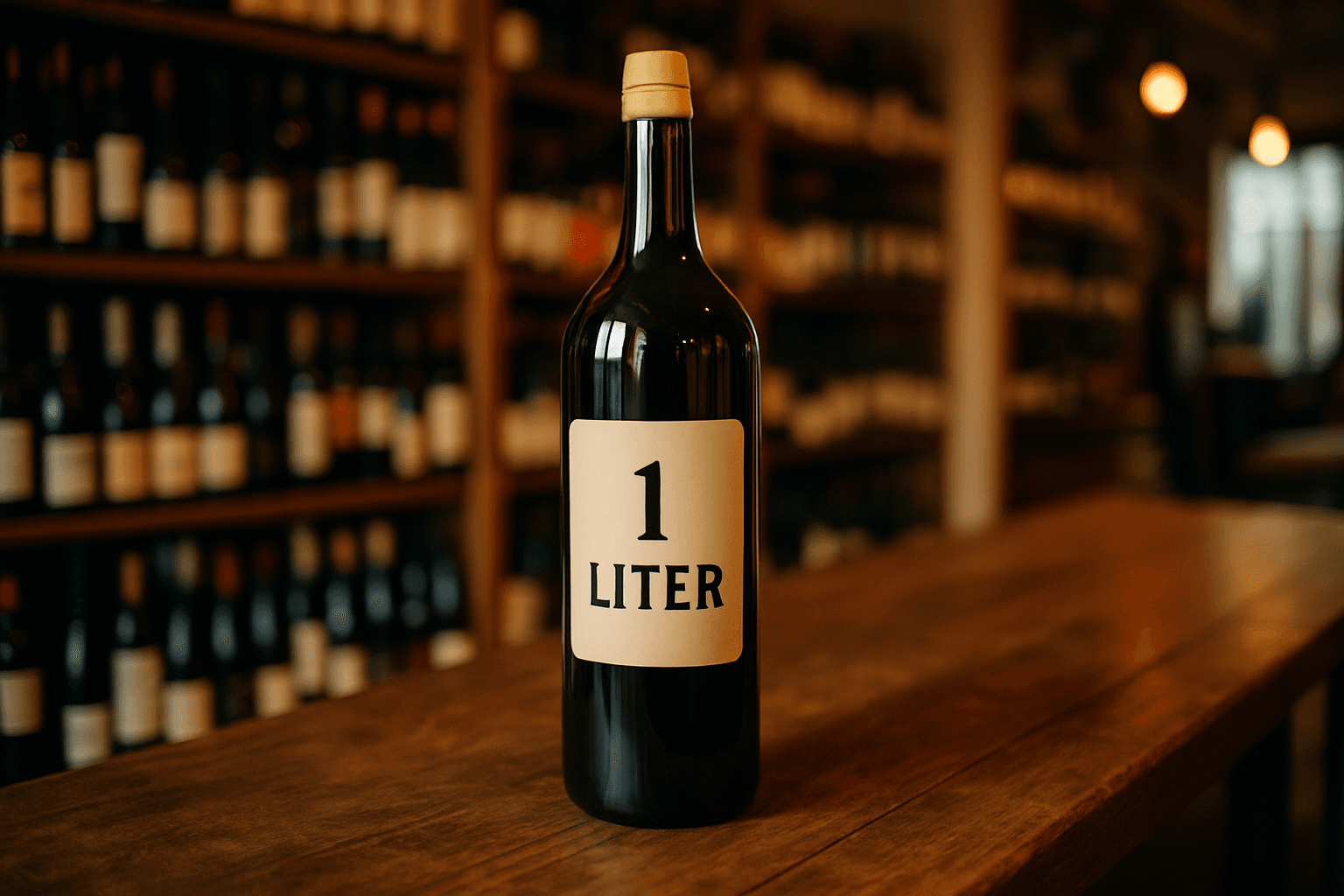
The 1-Liter Wine Format Is Having a Moment: What Retailers Should Know About Packaging Trends Driving Volume Sales
By Intentionally Creative, Editorial Team12 min read
Listen to this article16:11
Schedule a free strategy call and Intentionally Creative will build a custom plan for you.
Schedule Your Free Strategy CallFree audit. No commitment.
Get a Free Audit. No commitment.
The 1-liter wine format is gaining momentum. Learn how this packaging trend offers volume sales opportunities for independent liquor stores.
Picture this: A customer walks into your store on a Tuesday evening, dinner plans half-formed, no special occasion in sight. They bypass the premium Pinot Noir display and the case-stack sale endcap. Instead, they gravitate toward something different, a bottle that's just slightly larger than the usual 750ml, easy to carry, practical for two people over a weeknight meal. They're not buying wine for a celebration. They're buying wine for life.
That shift, from wine-as-event to wine-as-lifestyle, is exactly what's fueling the 1 liter wine format's emergence from the specialty aisle into the mainstream. For independent liquor retailers, this isn't just another packaging experiment to watch from the sidelines. It's a potential category shake-up that could reshape how customers think about buying wine at home, and the window to get positioned correctly is opening now.
Let's dig into what the 1-liter format offers, who's already moving with it, and what you can do today to make the most of this trend before it becomes a full-blown wave.
Discover how Provence transformed into a lifestyle brand. Learn provençal wine marketing tactics to boost regional Fr...
The 1 liter wine format is stepping out of the specialty aisle and into the spotlight. A 1-liter bottle holds 1⅓ standard bottles or 7 glasses of wine, according to Wine Enthusiast ↗, positioning itself neatly between your everyday purchase and something more premium.
Industry coverage points to a "new era of everyday drinking" driving this shift in wine packaging trends. Shannon Family of Wines introduced a 1-liter "Big Buck" Cabernet Sauvignon under the Buck Shack label, while other well-known names are exploring their own takes on the format.
Independent stores can capture Syrah's momentum with smart displays, staff storytelling, and Old World/New World tast...
This isn't a flash-in-the-pan gimmick. The wine packaging market is forecasted to expand from USD 7.32 billion in 2026 to USD 12.57 billion by 2035, growing at a compound annual growth rate of 6.19%, according to Toward Packaging ↗. This growth creates breathing room for experimentation, and for retailers willing to test new formats, the timing is right.
The timing matters. Getting ahead of this wave means you're not chasing the trend once it's already saturated your market. Watch how your wholesale partners respond in the coming months, their moves will tell you plenty about where this is heading.
Discover how Rocks District of Milton-Freewater wines can transform your shelf strategy with terroir-driven storytell...
The producers are signaling interest, but what exactly does the 1-liter format offer consumers? And more importantly, where does it fit in your current wine bottle sizes retail mix?
The 1 liter wine format delivers a straightforward value proposition that resonates with shoppers seeking flexibility. According to Wine Enthusiast ↗, these bottles contain 1⅓ standard 750ml bottles or approximately 7 glasses of wine, making them an efficient middle-ground option. This positioning bridges the gap between single-serve convenience and multi-bottle value buys.
Unlike traditional 750ml bottles or case-stack bulk wine packaging, the 1-liter size carves out its own niche in wine bottle sizes retail. It gives customers more wine per purchase without requiring the storage commitment of a full case. This format signals a "new era of everyday drinking", it's practical for weeknight dinners yet substantial enough for casual entertaining.
Right now, there's no formal industry name for this format, which means retailers have room to define how it appears in their stores and marketing. Early adopters like Shannon Family of Wines are already testing the waters with their Buck Shack Cabernet Sauvignon in 1-liter "Big Buck" bottles, signaling retailer curiosity about filling this market gap. As wine packaging trends continue evolving, this format offers a differentiated shelf presence that stands apart from conventional offerings.
So the format makes sense for consumers. But why is it gaining traction now, after decades of the 750ml bottle dominating wine retail?
The wine packaging market is on a clear upward trajectory. According to Toward Packaging ↗, the market is forecasted to expand from USD 7.32 billion in 2026 to USD 12.57 billion by 2035, growing at a compound annual growth rate of 6.19%. This growth creates breathing room for experimentation, and for retailers willing to test new formats, the timing is right.
The 1 liter wine format fits neatly into this wave of innovation. These bottles hold 1⅓ standard bottles, or roughly 7 glasses of wine according to Wine Enthusiast ↗, offering a practical middle ground between single servings and full-format cases. Industry coverage has described the 1-liter option as signaling "a new era of everyday drinking," reflecting how consumers increasingly value flexibility over tradition.
Alternative wine packaging trends are reshaping shelf dynamics. Cans, pouches, and bag-in-box have gained ground as consumers seek convenience and portion control for settings beyond the dinner table. These formats challenge the traditional 750ml bottle's dominance and push producers to think differently about positioning.
Alongside this, the "naked bottle" movement, removing foils and shrink wraps, reflects consumer demand for sustainability and simplicity, according to Bergin Glass ↗. This trend aligns naturally with the streamlined positioning of the 1 liter wine format, which already carries an unpretentious, waste-conscious appeal. For retailers managing wine bottle sizes retail across categories, the message is clear: consumers want choice, and the market is finally delivering it.
Producer enthusiasm is one thing. But what actually makes shoppers reach for a 1-liter bottle? Understanding the consumer mindset here is key to stocking, positioning, and selling this format effectively.
The 1 liter wine format sits at a sweet spot that retailers can't afford to ignore. It's larger than a standard 750ml bottle, holding 1⅓ of a standard bottle or roughly 7 glasses of wine, yet doesn't require the commitment of a full case purchase. This positioning aligns perfectly with what industry coverage calls a "new era of everyday drinking," where consumers are shifting toward more casual, frequent consumption at home rather than saving wine for special occasions.
This format gives your customers permission to open something enjoyable on a Tuesday without feeling like they need to justify it. For retailers, that's a powerful positioning tool. When stocking shelves, think about how the 1-liter format fits into meal occasions, weeknight dinners, casual entertaining, or just unwinding after a long day.
Here's where it gets interesting for your bottom line. Early adopter signals show consumers are responding positively to the 1-liter format's value proposition. They're not just buying it because it's novel, they're buying it because the math makes sense. More wine for a per-glass price that feels reasonable, without the pressure of committing to multiple bottles.
The wine packaging market is projected to grow significantly, according to Toward Packaging ↗, with alternative formats gaining ground. That growth signals shifting consumer preferences, and retailers who stock 1-liter options now position themselves ahead of the curve. Whether you're a boutique shop or a high-volume retailer, this format opens doors to new customer segments, people who might have previously grabbed a six-pack of beer or a pre-mixed cocktail because wine felt like too much of a commitment.
Theory is valuable. Action is where you make your money. Here's how to bring the 1 liter wine format into your store with intention.
Start your 1 liter wine format test by stocking recognizable varietals that already move well in your store, Cabernet Sauvignon, Chardonnay, and Pinot Noir are safe bets. Customers familiar with these wines in standard bottles are more likely to try them in a new size. If you carry any mid-tier brands with strong customer loyalty, prioritize those first. For instance, Shannon Family of Wines recently introduced a 1-liter "Big Buck" Cabernet under the Buck Shack label, demonstrating how established producers are responding to wine packaging trends favoring flexible formats.
Your staff is your best marketing tool here. Train them to explain the value proposition clearly: the 1 liter wine format delivers 1⅓ standard bottles or about 7 glasses of wine, making it ideal for weeknight dinners or small gatherings. Position this as the "just right" option, more than a single bottle, but less commitment than a full case. Simple talking points at the shelf edge or on shelf talkers can shift customer perception from novelty to necessity.
Reinforce everyday drinking occasions by pairing 1-liter wines with complementary items. Place them near meal kit sections, charcuterie boards, or party supplies to signal their versatility. A customer grabbing crackers and cheese shouldn't have to walk across the store for wine, the proximity does the work for you and drives incremental volume per visit.
You've tested the waters. You've told the story at point of sale. So what does the road ahead look like for the 1 liter wine format in independent retail?
The macro trends set the stage. But who's actually putting skin in the game? Two producers are demonstrating that the 1 liter wine format works across different channels and price points, and they're creating real opportunities for retailers to get ahead of wine packaging trends.
Austin Hope, a recognized luxury Cabernet Sauvignon brand, made a strategic move by introducing their 1-liter bottle exclusively for on-premise accounts, according to Drinks Intel ↗. This wasn't a cautious test, it was a bold statement that the format has graduated from niche to mainstream for premium producers.
By choosing on-premise as their launch channel, Austin Hope signals confidence that restaurateurs and bars understand the value proposition: a format that holds 1⅓ standard bottles or 7 glasses of wine, giving servers flexibility while maintaining perceived quality. For retailers, this on-premise success story suggests consumer comfort with the size and price point is already established, and demand may follow those customers home.
While Austin Hope built momentum in restaurants, Shannon Family of Wines took a different approach with their Buck Shack label. They introduced a 1-liter "Big Buck" Cabernet Sauvignon specifically designed for off-premise, bringing the format directly into retail consideration.
This retail-focused launch closes the loop for independent operators. When customers encounter a format at their favorite restaurant, having it available on shelves satisfies that "I want that at home" moment. The Shannon Family approach demonstrates that bulk wine packaging doesn't have to mean budget positioning, the Big Buck keeps quality intact while offering practical value.
These two examples reveal a pattern worth noting: producers are targeting different channels and price points with the same format. Austin Hope owns luxury on-premise; Buck Shack owns quality-driven retail. For independent retailers, carrying both creates a complete story around the 1 liter wine format, meeting customers wherever they encountered it first.
Intentionally Creative specializes in digital marketing strategies that drive real results. Let us show you what's possible.
Schedule a CallStocking the 1-liter format isn't just about following wine packaging trends, it's about meeting customers where they already are, with a product that fits their lifestyle.
Major producers are increasingly diversifying their format offerings, which means the 1 liter wine format is likely to gain more shelf space and consumer familiarity. Austin Hope, a recognized luxury Cabernet Sauvignon brand according to Drinks Intel ↗, has already expanded into alternative packaging formats, and where large producers lead, smaller brands often follow. Shannon Family of Wines recently introduced a 1-liter "Big Buck" Cabernet Sauvignon under their Buck Shack label, demonstrating how mid-tier producers are also experimenting with this size. As the wine packaging market continues to expand, with growth projected from USD 7.32 billion in 2026 to USD 12.57 billion by 2035, according to Toward Packaging ↗, expect more suppliers to test the waters with 1-liter SKUs.
Early positioning in your store builds category authority before wine packaging trends go mainstream. Start tracking which suppliers are quietly exploring bulk wine packaging options, and be ready to adjust your SKU mix as the format evolves. Here's the opportunity: no formal industry standard exists yet for how retailers should display or stock the 1 liter wine format, giving you flexibility to experiment and carve out your own category identity before the mainstream arrives.
The 1 liter wine format isn't a question of if it'll gain traction, it's a question of when. Producers like Austin Hope and Shannon Family of Wines have already proven the format works across price points and channels, from luxury on-premise tables to off-premise shelves. The "new era of everyday drinking" isn't coming; it's already here, and customers are actively seeking the flexibility that 1-liter offers over traditional 750ml bottles or full case commitments.
For independent retailers, this moment represents a genuine competitive advantage. You can define the category in your store before the majors standardize it. You can tell the story, train your staff, and build customer loyalty in a space where the big chains are still figuring out their strategy.
The move is yours. Watch your wholesale partners, test the format with proven varietals, and start positioning the 1 liter wine format as a staple rather than an experiment. The customers who want it are already out there, looking for something just right for their Tuesday night dinner. Make sure you have it on your shelf when they find it.