Dealcoholized Wine and Spirits Are Becoming a Real Category: How to Stock, Merchandise, and Sell No-ABV Products Without Cannibalizing Your Core Sales
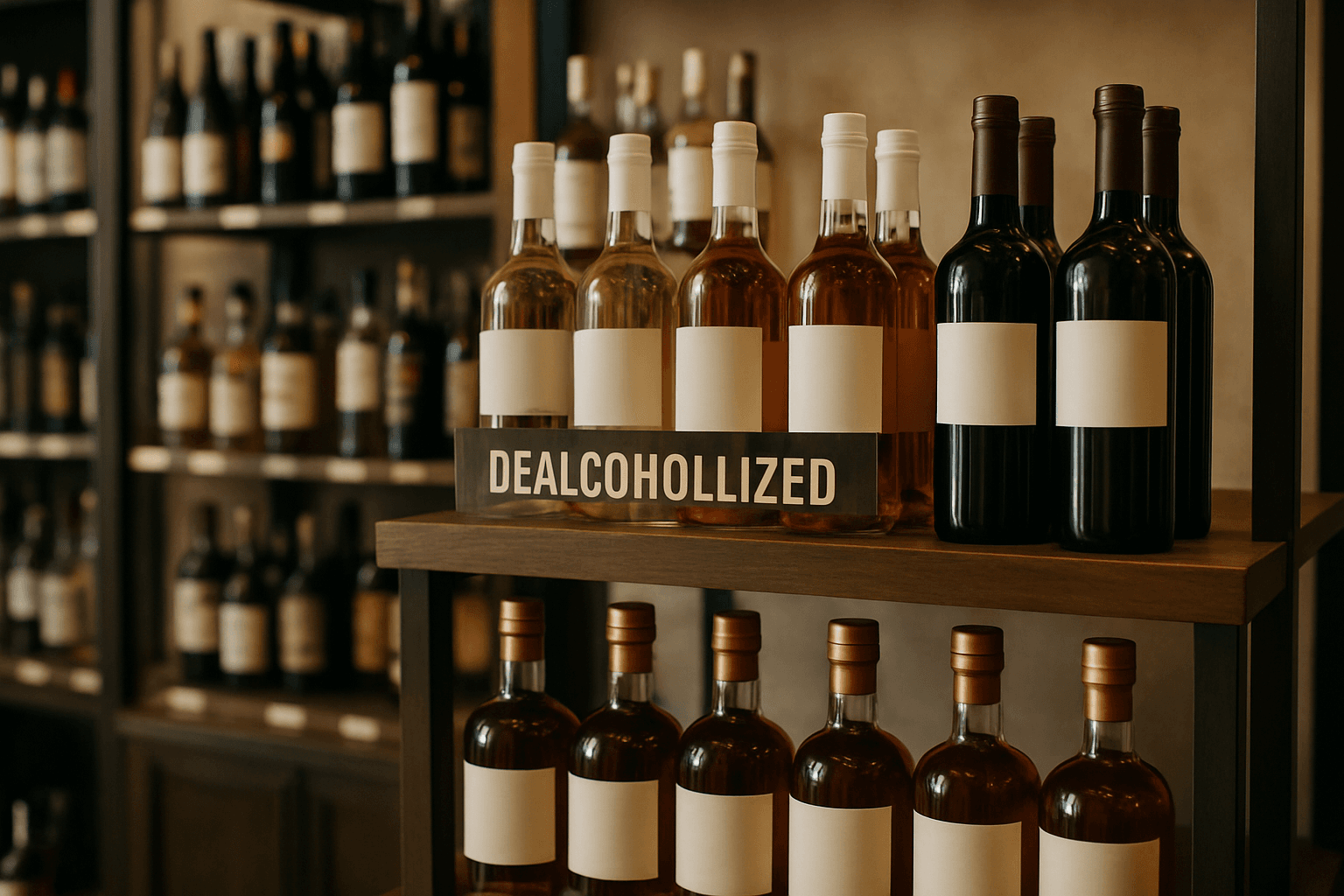
Dealcoholized wine and spirits retail is booming. Learn how to evaluate, stock, and merchandise low- and no-ABV products without hurting your core sales.
- This Isn't a Trend Piece — It's a Category Brief
- The Cannibalization Question: Will No-ABV Products Steal Sales from Your Top Shelf?
- Know Your Regulatory Landscape Before You Order a Single Case
- How to Evaluate and Select NA Products Worth Your Shelf Space
- Merchandising Dealcoholized Beverages: Where to Put Them and How to Sell Them
The no-alcohol shelf isn't coming — it's already here. And the liquor store owners paying attention are quietly adding a revenue stream that doesn't require a single new license, a bigger footprint, or a radical shift in identity. They're just capturing sales they used to lose.
Dealcoholized wine and spirits retail has moved past the curiosity phase. Dedicated NA bottle shops are opening in major metros. Online retailers are shipping thousands of bottles a month. Suppliers are building real portfolios with real margin. And the customers driving this growth aren't the ones you'd expect — they're already in your store, browsing your aisles, and walking out without buying because you didn't have what they needed for a Tuesday night, a baby shower, or a round of cocktails where half the table isn't drinking.
This post is your category brief. We'll walk through the cannibalization question with actual data, map the regulatory landscape you need to navigate before ordering a single case, lay out a product selection framework, cover merchandising strategies that convert, and give you a 30-day action plan to test the category with minimal risk. Whether you're skeptical or already convinced, the goal is the same: give you the information to make a smart business decision, not an emotional one.
This Isn't a Trend Piece — It's a Category Brief
Here's the uncomfortable truth: while you're debating whether NA products deserve shelf space, someone else is already selling them to your customers.
Dedicated non-alcoholic bottle shops — Spirited Away in NYC, plus online retailers like The Zero Proof (carrying 30+ NA brands and growing) — are capturing dollars that could be flowing through your register. These aren't pop-up experiments. They're funded, branded, and building loyal customer bases in real time.
Discover 7 proven Instagram content ideas for liquor stores that boost engagement and drive sales. Learn how to promo...
From Niche Curiosity to Mainstream Retail Viability
Food & Wine has documented what many in the industry already feel: the "explosive growth of zero-alcohol cocktails, beer, and spirits" is spurring an entirely new class of retail outlet. This isn't a Dry January blip or a wellness fad that peaks in Q1 and disappears. It's a sustained buying pattern with real supplier infrastructure behind it. NA spirit price points land between $31.99 and $39.99+ per bottle — squarely in mid-shelf territory. That's meaningful margin, not novelty pricing.
And the competitive landscape is shifting fast. Consider New York: it's one of a handful of states that prohibit grocery and convenience stores from selling wine and spirits [VERIFY exact current count]. That restriction has historically protected liquor store revenue. But here's the wrinkle — a significant number of states currently prohibit wine and liquor stores from selling non-alcoholic products altogether [VERIFY: commonly cited as 17 states, but this is changing rapidly — confirm current count before publication]. That regulatory gap could hand your natural advantage to specialty NA retailers and e-commerce players who face no such limits.
The Numbers That Should Get Your Attention
So let's be direct about what this blog is and isn't. We're not here to convince you the NA category matters — the market already decided that. We're here to give you a practical playbook: how to stock no-ABV products, where to merchandise them, and how to sell them profitably.
We'll also tackle the fear you're probably already thinking about — that stocking NA cannibalizes your core sales. It's a legitimate concern, and we'll address it with data, not cheerleading. Let's get into it.
Avoid TTB violations and Google Ads suspension with this guide to alcohol advertising rules for liquor stores. Expert...
The Cannibalization Question: Will No-ABV Products Steal Sales from Your Top Shelf?
This is the first objection every store owner raises: "Why would I give shelf space to something that competes with my bread and butter?"
Fair question. But the data and the early movers tell a different story.
What the Data Actually Shows
New York liquor stores aren't adding NA sections out of curiosity — they're doing it to capture revenue they've been leaving on the table. And because New York's grocery restrictions funnel wine and spirits shoppers through liquor stores, NA products aren't a threat to that position — they're an extension of it.
The customer buying Seedlip or The Pathfinder at $35–$40 is often not your Friday-night bourbon buyer. She's the designated driver. He's three weeks into Dry January. They're the pregnant partner browsing while their spouse picks out a Barolo. These are shoppers who would otherwise leave your store empty-handed — or never walk in at all. They're not trading down. They're adding a purchase.
Discover the 7 essential marketing budget benchmarks for liquor stores. Learn how top performers allocate spend for m...
Think about it like mixers and bitters. Nobody panicked that stocking Fever-Tree would cannibalize gin sales. It expanded the basket. NA spirits function the same way.
The Additive Revenue Argument
Could some cannibalization happen? Sure. Maybe a customer swaps their weekly Pinot Noir for a dealcoholized version on weeknights. But here's why the margin math still works: NA bottles retail at mid-shelf price points, often with better margins for the retailer because most 0.0% ABV products carry no excise tax (verify this by state — that tax savings can flow straight to your bottom line).
With suppliers offering dozens of brands across multiple subcategories, the category has real depth. This isn't a novelty endcap. Smart category management means you're capturing occasions and customers you were previously losing — not redistributing the ones you already had.
The revenue is additive. The data supports it. The only real risk is leaving the shelf space empty while your competitor fills theirs.
Know Your Regulatory Landscape Before You Order a Single Case
The margin math checks out and the cannibalization risk is manageable. But there's a critical step that too many retailers skip — and it can turn a smart category bet into an expensive compliance headache.
Here's the thing nobody talks about at trade shows: a significant number of U.S. states currently prohibit wine and liquor stores from selling non-alcoholic beer, wine, and spirits [VERIFY current count before publication]. That's not a footnote — it could affect whether you can participate in this category at all.
Before you build a planogram, before you call a distributor, before you dedicate a single shelf foot to this category, check your state's rules. Full stop.
The Regulatory Patchwork
The state-by-state variation creates winners and losers. In states where grocery can't sell wine and spirits, liquor stores have a built-in traffic advantage. But if pending NA legislation allows grocery to carry non-alcoholic alternatives while your license doesn't cover them, you lose a foot-traffic driver to the supermarket down the street. People shopping for no-ABV options will simply stop coming through your door.
That's not a hypothetical. That's the competitive math of stocking NA products in a shifting regulatory environment.
The Ultra-Low-ABV Workaround
Good news: some vintners and distillers are producing products in the 0.5%–3% ABV range that liquor stores can legally stock even in restrictive states. These ultra-low-alcohol options still qualify as alcoholic beverages under most state definitions, keeping them squarely in your lane. This spectrum — from 0.0% to low-ABV — gives you real options without waiting for legislators to catch up.
Your action step: Contact your state liquor authority or trade association this week to confirm exactly what you can and can't carry. One phone call now saves you from a costly inventory mistake later.
How to Evaluate and Select NA Products Worth Your Shelf Space
Once you've confirmed what your state allows, the next question is straightforward: what should you put on the shelf? Not everything in this category deserves your linear feet, and a scattershot approach — grabbing one of everything — is the fastest way to end up with dead inventory.
The Category Taxonomy: What's Actually Out There
The no-ABV landscape is broader than most retailers realize:
- NA spirits — bourbon, tequila, and gin alternatives designed for cocktail mixing
- Dealcoholized wines — real wine with the alcohol removed, spanning reds, whites, and sparkling
- NA beers — the most mature subcategory, though not every store can carry them depending on state rules
- Aperitifs and bitters — think Campari alternatives and cocktail modifiers
- Ready-to-drink NA cocktails — canned and bottled, grab-and-go format
- Functional mixers — adaptogen-infused, botanical-forward products that blur the line
You don't need all of these on day one. Pick 2–3 subcategories and stock them well enough that customers see a real selection, not an afterthought. Depth almost always beats breadth early on.
Curating for Your Customer, Not the Hype Cycle
Start with what you already sell well. If wine drives your revenue, lead with dealcoholized wines. If cocktail culture defines your store's identity, NA gin and aperitif alternatives are your entry point.
In states where grocery can't compete on wine and spirits, getting your NA assortment right could be a genuine competitive advantage — if the regulations allow it.
Supplier Landscape and Margin Expectations
The supplier landscape is deep enough to be selective. Retailers like The Zero Proof carry 30+ brands, which means you can prioritize partners offering marketing support, tasting samples, and proven sell-through data rather than taking a flyer on every new launch.
NA spirits typically retail at $31.99–$39.99+ per bottle — this is not a discount category. Your margin percentage should be comparable to or better than traditional spirits, especially since most 0.0% ABV products carry no excise tax (verify by state).
Here's the approach I'd recommend: run a 90-day trial. Bring in a curated selection of 8–12 SKUs across your chosen subcategories. Track velocity at the register weekly. After 90 days, expand what's moving and cut what isn't. Real sales data beats gut feeling every time.
Let our team show you what's possible.
our team specializes in digital marketing strategies that drive real results. Let us show you what's possible.
Schedule a CallMerchandising Dealcoholized Beverages: Where to Put Them and How to Sell Them
Where you place these products matters almost as much as whether you carry them. Get the merchandising right, and dealcoholized wine and spirits retail becomes a legitimate revenue stream. Get it wrong, and you've got premium bottles gathering dust in a forgotten corner.
Dedicated Section vs. Integrated Placement
There's a real debate here, and both sides have merit.
A dedicated NA section — even a small endcap — creates destination shopping. It signals to curious customers that you take the category seriously. This is the model that specialty retailers like Spirited Away have built their entire business around, and it works because it gives shoppers permission to browse without feeling self-conscious.
On the other hand, integrating NA products alongside their alcoholic counterparts encourages discovery. Put the non-alcoholic gin next to your London Drys and you catch the shopper who wasn't even thinking about zero-proof options. It also drives cross-purchasing — someone grabs a bottle of each for a dinner party.
Our recommendation: If space allows, do both. A small dedicated endcap AND integration on the main shelf. With dozens of brands now available, you have enough product to make dual placement work without overcommitting inventory.
In-Store Tastings Are Your Best Conversion Tool
Most of your customers have never tried these products. And at mid-shelf price points, nobody's impulse-buying something they've never tasted.
In-store tastings are the single most effective way to move NA products. Spirited Away offers daily tastings. Retailers in Philadelphia's growing NA scene call it essential for consumer education. You don't need to go daily — start with weekend tastings, track your conversion rates, and adjust from there. The data will speak for itself.
Signage and Staff Education
On signage: Keep it clear and judgment-free. Skip terms like "sober" or "alcohol-free lifestyle." Use straightforward language — "Non-Alcoholic Spirits & Wine" or "Zero-Proof Options." The customer buying these products doesn't want to feel categorized. They want a good drink.
Cross-merchandise with mixers, garnishes, and cocktail tools to boost basket size. A simple shelf talker — "Pair with Fever-Tree tonic for a zero-proof G&T" — does the selling for you.
On staff education: This is non-negotiable. Your team needs to confidently speak to at least 3–5 NA products by taste profile, suggested use case (cocktail base, wine alternative, straight sipper), and price point. If a customer asks "What's good here?" and your staff shrugs, that sale is dead. Run a 15-minute training session, let your team taste the top sellers, and give them a simple cheat sheet. That's all it takes to turn a dusty shelf into a performing category.
Protecting Your Position: Why Ignoring This Category Has a Cost
You have the playbook — the product knowledge, the merchandising strategy, the staff training framework. But there's one more angle worth considering: what happens if you decide to do nothing at all.
The Competitive Threat You Can't Afford to Ignore
Dedicated online NA retailers, specialty bottle shops, and — depending on your state — grocery stores are all moving into this space. Every bottle they sell is a customer who didn't walk through your door. At mid-shelf pricing, that's real margin leaving your market.
If you're in a state where you can stock NA products and simply choose not to, you're handing the weeknight-no-alcohol occasion, the January reset, and the pregnant-partner shopping trip to competitors with less expertise and worse curation.
Owning the Full Spectrum of Drinking Occasions
Smart NA category management isn't about replacing your core business — it's about completing it. Position your store as the authority on everything drinkable, not just everything alcoholic. The store that covers every occasion becomes the default destination. Period.
Your 30-Day Action Plan to Test the NA Category
You don't need to overhaul your store. You need four weeks and a willingness to let the data speak.
Week 1: Research and Source. Confirm your state's regulations — this is non-negotiable. Once you're clear on legality, contact 3–5 NA distributors or brands for samples and wholesale pricing. Identify 6–10 SKUs across 2–3 subcategories (NA wine, NA spirits, NA aperitifs). Prioritize products in the $31.99–$39.99 range where your margins should hold or improve.
Week 2: Merchandise and Train. Set up a small dedicated display — an endcap or a 4-foot section works fine. Don't bury these products in a random aisle. Give them visibility without surrendering prime real estate. Then train your staff on taste profiles, price points, and suggested serves. Create simple shelf talkers that highlight flavor notes and occasion — "pairs with dinner," "great for Dry January," "zero hangover."
Week 3: Activate and Promote. Host your first in-store NA tasting event. Promote it on social media and with in-store signage at least five days out. Track foot traffic and conversion. Note who's showing up: sober-curious millennials? Pregnant women? Designated drivers? Health-conscious Gen X? That data shapes your assortment going forward.
Week 4: Evaluate and Decide. Pull your sales data. Calculate margin per SKU. Survey your staff on customer feedback — they're hearing things the register doesn't capture. Decide whether to expand, adjust, or hold your assortment based on what the numbers actually say, not assumptions about whether "your customers would buy this stuff."
The Bottom Line
Dealcoholized wine and spirits retail isn't asking for your permission to grow. The suppliers are funded, the customers are buying, and the specialty retailers who took this category seriously two years ago are now building the loyal customer bases you'll have to win back.
But here's what those specialty shops and online retailers don't have: your foot traffic, your relationships, your local credibility, and your ability to put a zero-proof gin right next to the London Dry that's been your best seller for a decade. That's an advantage no e-commerce brand can replicate. You just have to use it.
The 30-day plan above is designed to be low-risk and data-driven. You're not betting the store — you're running a test. Four weeks, a handful of SKUs, one tasting event, and a clear-eyed look at the numbers. If the category performs, scale it. If it doesn't, you've spent less than the cost of a bad pallet buy and you've learned something real about your customer base.
Either way, you'll have made the decision based on evidence, not inertia. And in a retail environment that's shifting this fast, that's the only way to protect your position.
Ready to get started? Here's your first move: Call your state liquor authority this week to confirm what you can legally stock. Then request samples from two NA distributors. By this time next month, you'll have real data — not opinions — to guide your next decision.
10+ years helping liquor retailers and beverage brands grow through data-driven digital marketing. Learn more