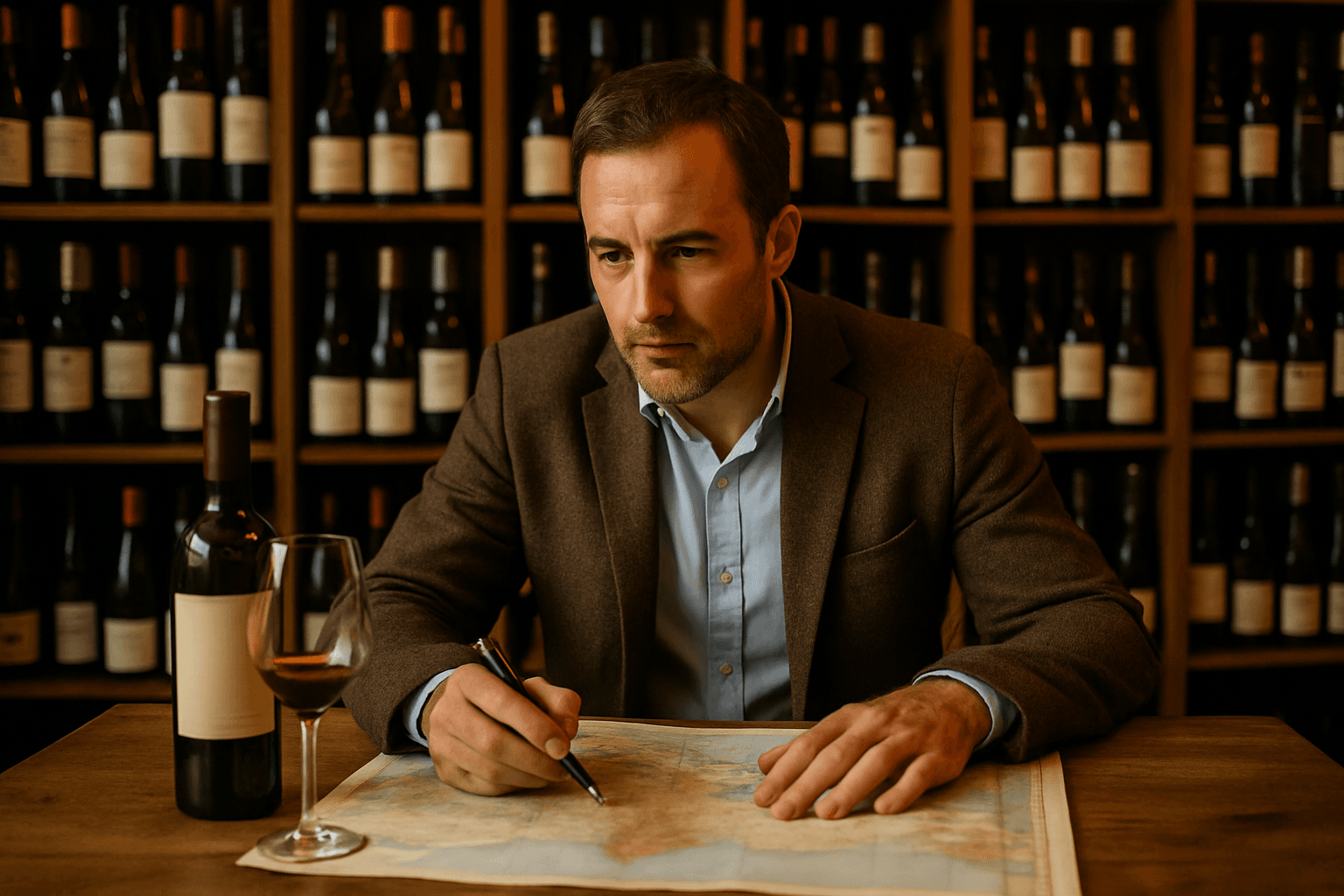
Beyond the Usual Suspects: How Uruguay's Japan Strategy Offers a Blueprint for Independent Stores Marketing Lesser-Known Wine Regions
By Intentionally Creative11 min read
Listen to this article14:21
Schedule a free strategy call and Intentionally Creative will build a custom plan for you.
Schedule Your Free Strategy CallFree audit. No commitment.
Get a Free Audit. No commitment.
Discover how Uruguay's emerging wine export strategy can help independent liquor stores market lesser-known wine regions and drive new sales.
You've seen it happen. A customer walks into your store, eyes scanning the same familiar sections, and asks for something different. You want to help. But when the conversation starts and stops at "anything but another Napa Cab," the options feel limited — and so does your ability to deliver.
This is the challenge facing independent liquor stores across the country. Most wine buyers default to the same proven regions, which means independent retailers often find themselves selling the same bottles as every chain location nearby. You're not just competing on price or selection anymore; you're competing on discovery. And for smaller stores with limited shelf space and tighter budgets, that discovery moment is everything.
The good news? Some of the most compelling opportunities in wine right now are hiding in plain sight — in regions that haven't yet captured mainstream attention but have everything needed to capture your customers' interest. Uruguay's emerging wine export strategy, particularly its recent push into markets like Japan, offers a practical playbook for how smaller regions can compete with established players. And that playbook is exactly what independent liquor stores need to market lesser-known wine regions with confidence and purpose.
For years, most wine buyers defaulted to the same familiar regions. That's starting to change. Chile, Argentina, and Uruguay are all actively renewing their global wine marketing strategies — signaling a broader industry shift toward regional diversity. Uruguay exported two million litres in recent years (Gilbert Gaillard), showing this smaller player is serious about competing on the world stage.
Stop leaving online sales on the table. Here are the 10 most costly e-commerce mistakes liquor stores make and how to...
Beyond South America, there's a wider reality at play: there are more than 100 different grapes, plus sparkling, red, white, rosé and even dessert wine (Wine Enthusiast). That's a lot of variety that never makes it to mainstream retail shelves.
Wine merchants are reporting growing sales from lesser-known regions, confirming that consumers have an appetite for discovery. When customers get bored of the familiar, they look for something new — and someone has to point them there.
Independent liquor stores have something chain retailers can't easily replicate: flexibility and storytelling potential. Chain stores prioritize shelf-stable bestsellers. Independent stores can take a chance on a region like Uruguay and own that narrative before anyone else does.
Discover 10 proven SMS marketing strategies for liquor stores that drive customer loyalty. Learn compliance tips, seg...
For smaller markets, the opportunity is even sharper. Independent retailers in smaller markets benefit from less competition and more novelty when marketing lesser-known regions (Get Creative). That's the kind of positioning that builds customer loyalty and drives repeat visits.
Uruguay's approach to breaking into markets like Japan offers a masterclass in marketing lesser-known wine regions. Rather than competing head-on with established South American producers, Uruguay positioned itself as an emerging player — emphasizing its unique story alongside its quality. Uruguay exported two million litres (Gilbert Gaillard), a relatively modest volume that the country leveraged strategically by leaning into authenticity and discovery.
This brings us to a critical question: how exactly did Uruguay pull this off, and what can independent retailers learn from it?
Boost your liquor store's reputation with 10 proven reviews management strategies that convert 4-star ratings into lo...
The strategy centered on three ideas: lead with narrative, highlight genuine points of difference, and let quality speak through story rather than volume. Uruguay couldn't outspend Chile or Argentina on marketing, so it out-storytelling them instead. For independent retailers facing similar challenges — limited budgets, competing against big-box retailers, and promoting regions customers don't yet know to ask for — this is a proven playbook.
With more than 100 different grapes available to customers (Wine Enthusiast), standing out requires more than just variety. The stores winning with lesser-known regions aren't just stocking interesting bottles — they're giving customers a reason to care.
Your shelf talkers might mention the varietal and score. Uruguay's strategy teaches that customers buy the story before they buy the bottle. When staff can briefly explain why Uruguay's coastal climate influences its Tannat, or why this particular region matters, you shift the conversation from price comparison to discovery.
For liquor stores marketing lesser-known wine regions, this means investing in staff education and display storytelling — not just better signage. Your customers aren't just buying wine; they're buying a reason to try something new.
Younger wine buyers aren't just chasing trends—they're making values-driven purchasing decisions. For independent retailers focused on marketing lesser-known wine regions, Uruguay checks multiple boxes that this demographic cares about: sustainable production, high quality, and lower alcohol options that fit modern palates and lifestyles.
This values-driven shift matters more than ever for stores looking to attract the next generation of wine customers.
Uruguay's commitment to sustainability and high-quality production positions it as a rising star in the global wine market (City Vino). While that's modest compared to regional giants, the country's production values signal opportunity for retailers. With more than 100 different grapes available across still, sparkling, rosé, and dessert styles (Wine Enthusiast), Uruguay offers genuine variety without the saturated competition of traditional regions.
Younger consumers are driving demand for premium, sustainable, and low-alcohol wines—and Uruguay's production values align with these emerging preferences. This makes Uruguay wines a natural fit for wine region marketing strategy conversations with customers seeking something different.
When it comes to marketing lesser-known wine regions, the opportunity for independent retailers is clear: most customers stick to familiar names, which means your store becomes the trusted guide when they venture somewhere new. Here's how to make that happen on the ground.
Not every emerging wine region is retail-ready, even when the bottles look promising on paper. Before you commit shelf space, check whether distributor support exists—can they provide translated point-of-sale materials? Is there basic consumer awareness already building, or are you starting from zero? If the region can't answer those questions, you'll be doing all the educational heavy lifting yourself.
This evaluation step separates successful discovery sections from well-meaning experiments that fizzle out.
Be cautious of regions where the wine looks good but the infrastructure falls short. If a country lacks a coordinated export push, you're likely dealing with inconsistent availability and no marketing backing. Regions without clear regulatory standards or quality certification can also create headaches when customers ask questions you can't answer.
Ask yourself: Does this region have a clear point of difference? Whether it's climate, a distinctive grape variety, sustainable certification, or a price-to-quality ratio that stands out, there needs to be a compelling reason for customers to care.
This is why Uruguay earns consideration for your shelf. The country exported two million litres internationally, signaling a serious export push (Gilbert Gaillard). Beyond volume, Uruguay checks multiple boxes: Tannat as a distinctive grape variety, a growing sustainability narrative, and coordinated national effort behind their wine export strategy. That combination gives independent retailers marketing lesser-known wine regions something rare—momentum you can ride rather than build from scratch.
It's tempting to throw everything at customers at once. Here's the thing, though—when you start marketing lesser-known wine regions without giving shoppers a reason to care, you create confusion, not curiosity. An unfamiliar region with no story is just a bottle with a funny label. And when customers can't connect the dots, they put it back. Or worse, they buy it, hate it, and return it frustrated.
The truth? There are more than 100 different grapes available across the world's wine regions (Wine Enthusiast). That's a lot of ground to cover. Overloading your staff and your customers with too many unfamiliar regions at once is a fast track to overwhelm—for everyone.
The Uruguay wine export strategy offers a useful model here. Uruguay exported two million litres (Gilbert Gaillard) while keeping focus tight—building depth before breadth. You can apply the same principle: pick one region, master it, then expand.
Keep pricing accessible for first-time buyers, too. A high price point on an unknown region is a hard sell, even with the best story. Make it easy to say yes.
Education should feel like discovery, not a lecture. Tastings, staff conversations, and shelf talkers that tell a story work better than pushing a sale. Get that right, and your customers will actually look forward to the next lesser-known region you introduce.
Ready to put this into practice? Here's a realistic roadmap that won't overwhelm your team or your inventory budget.
10+ years helping liquor retailers and beverage brands grow through data-driven digital marketing. Learn more
Create a dedicated display featuring two to three lesser-known regions that actually have a story worth telling. Uruguay, Portugal's Alentejo, or Greece's Nemea are strong starting points because each offers something genuinely different from your standard French-Italian-Spanish lineup. Position this section at eye level near your checkout or tasting area where customers naturally browse. Rotate selections monthly to give repeat customers a reason to check back.
Host monthly tasting events that focus on one region at a time. Consumers are increasingly seeking immersive retail experiences, and a guided tasting transforms a bottle purchase into something more memorable. The growing interest in wine experiences signals that customers value the journey, not just the product. Frame your events around discovery rather than expertise. Nobody wants to feel like they're being lectured; they want to feel like they're finding something special.
Your team doesn't need to be sommeliers, but they do need to open with the story. Teach them to lead with geography and personality: where is this from, what makes it different, and who is drinking it right now. Skip the tasting notes as the opening line. Shelf talkers help — include the country of origin, a nod to sustainable production if applicable, and one compelling fact. Most customers only know a handful of grape varieties, so discovery itself becomes your value proposition. A short social media post introducing Uruguay's Tannat grape or a Portuguese regional specialty typically outperforms generic promotion content because it gives people something specific to talk about.
The common thread across all three tactics? Lead with story, not specs. Customers buy based on connection — your job is making the introduction.
Intentionally Creative specializes in digital marketing strategies that drive real results. Let us show you what's possible.
Schedule a CallMarketing lesser-known wine regions doesn't require a massive budget or a complete store overhaul. It requires intention. Uruguay built a credible presence in competitive global markets by leading with story, leaning into what made it different, and giving customers a reason to pay attention. Your independent store can do the same — one region, one shelf, one conversation at a time.
Start this week. Pick one region with a real story, brief your team on why it matters, and create a single display that gives your customers something the big boxes can't: a genuine recommendation from someone who actually knows the bottle. That's how you turn discovery into loyalty — and loyalty into repeat visits.