Napa Wineries Take the County to Federal Court Over Land-Use Rights: What First Amendment Permitting Battles Mean for Wine Supply and Pricing
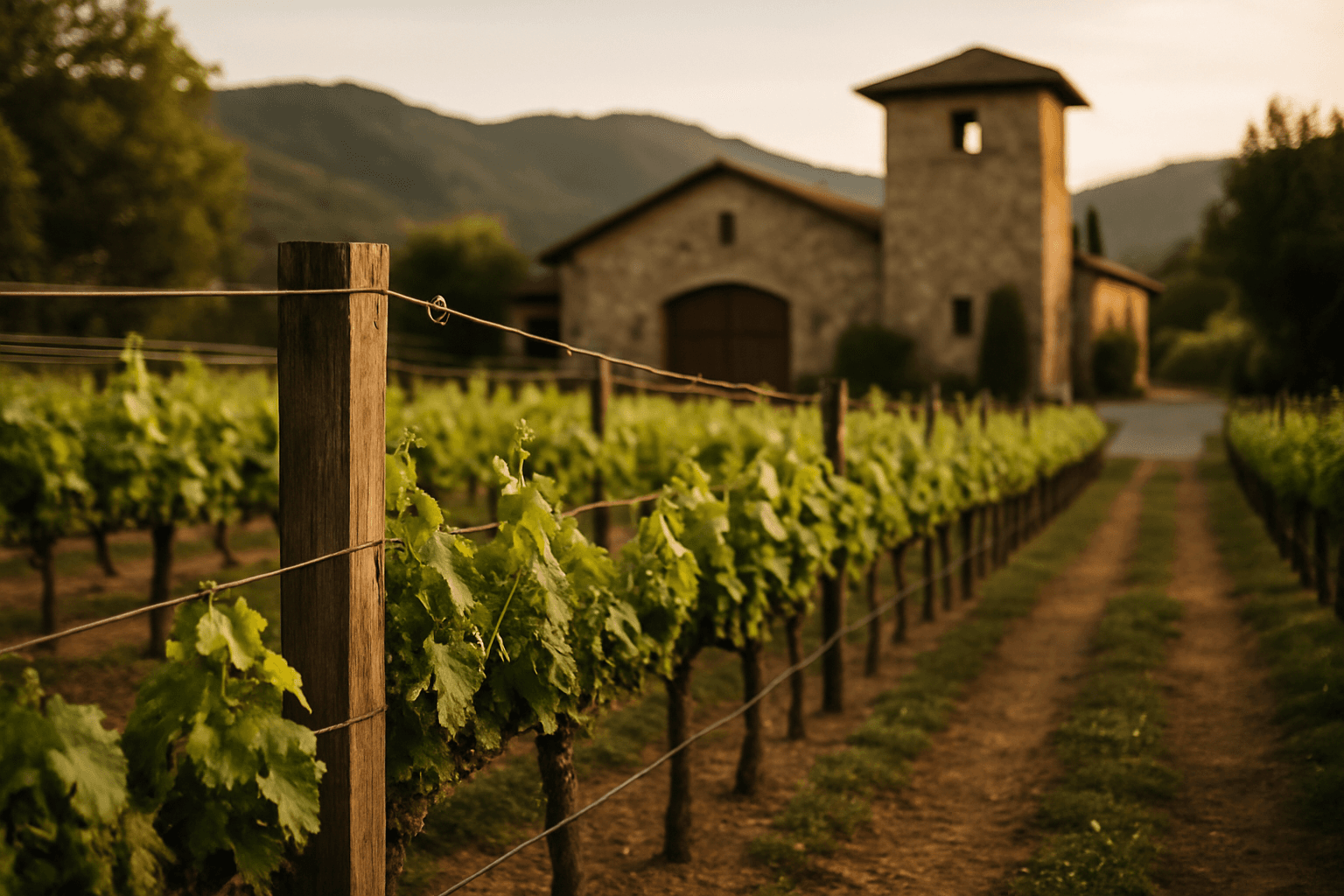
Napa winery land-use rights are heading to federal court. Here's what the permitting battles mean for wine supply, pricing, and your store's shelves.
- The Winery Definition Ordinance: 35 Years of Rules That Shape What You Can Stock
- The Hoopes Vineyard Case: When 'Following the Rules' Still Lands You in Court
- The First Amendment Angle: Are Tastings and Events Protected Speech?
- Enforcement Without Audits: The Uneven Playing Field Nobody Talks About
- State vs. County: Deregulation Momentum Meets Local Resistance
When a multi-generational Napa vineyard family takes its own county to federal court, that's not just a wine country headline — it's a signal flare for every independent liquor retailer in the country. The fight over Napa winery land-use rights has jumped from local planning meetings to constitutional litigation, and the outcome could reshape how much Napa wine gets made, how it's priced, and how easily it reaches your shelves.
Most industry coverage treats these permitting battles as inside-baseball for lawyers and land-use nerds. But the regulatory machinery governing Napa's wineries — production caps, sourcing mandates, event restrictions — is the same machinery that determines whether your distributor can fill your next allocation or whether your customers start seeing higher price tags on the Cabernets they love. If you sell Napa wine, you have skin in this game.
Here's the full picture: what's actually happening in the courts, why it matters for supply and pricing, and what you should be doing about it right now.
The Winery Definition Ordinance: 35 Years of Rules That Shape What You Can Stock
To understand why this fight matters, you need to understand the rulebook at the center of it.
Napa County's Winery Definition Ordinance (WDO) has governed every permitted winery in the valley since 1990. For over three decades, it has dictated how much wine gets made, how many visitors can walk through the door, and what kind of events a winery can host on its own property.
Discover how Provence transformed into a lifestyle brand. Learn provençal wine marketing tactics to boost regional Fr...
For liquor retailers, this isn't background noise. It's the regulatory machinery that determines how much Napa wine actually reaches your shelves.
What the WDO Actually Controls
The WDO sets production ceilings, visitation caps, and event limits for every winery operating under a use permit. Want to expand production? New permit. Want to host a harvest dinner? You may need approval for that, too. The framework is so granular that California passed AB 720 to create a separate Estate Tasting Event Permit specifically for vineyard parcels without production facilities. That's how layered Napa's regulatory environment gets.
And here's what makes the current fight so significant: a Napa County Civil Grand Jury report found there are zero random audit processes for permit compliance. Enforcement is complaint-driven, which creates real uncertainty for operators trying to plan years ahead.
The 75% Rule and Why It Limits Production Flexibility
The most consequential provision for your inventory? Napa's 75% rule requires wineries to source at least three-quarters of their grapes from local Napa vineyards. In plain terms: a Napa winery can't just truck in Central Valley fruit to fill a production gap after a bad harvest or a demand spike.
Independent stores can capture Syrah's momentum with smart displays, staff storytelling, and Old World/New World tast...
Compliance with this rule faces increasing scrutiny at the use-permit application stage, meaning new projects and expansions hit higher hurdles before a single bottle is produced.
The retail impact is direct. These rules cap how much wine Napa can produce — period. When your customers ask for specific Napa labels by name, the supply constraints they're bumping into started right here.
The Hoopes Vineyard Case: When 'Following the Rules' Still Lands You in Court
With that regulatory backdrop in place, here's the case that's bringing it all to a head.
What Happened with Hoopes Vineyard
The Hoopes family purchased their Napa vineyard roughly four decades ago. They've grown grapes, made wine, and built a multi-generational operation in one of the world's most celebrated wine regions. By most measures, they did everything right.
Discover how Uruguay's emerging wine export strategy can help independent liquor stores market lesser-known wine regi...
And yet, the family found itself at the center of a landmark dispute — Hoopes Vineyard v. Napa County — that has now escalated to federal court. The case raises fundamental questions about Napa winery land-use rights, specifically whether the county's permitting framework has been applied so arbitrarily that it violates constitutional protections, including First Amendment commercial-speech rights.
Here's what makes this story hit home for any small business owner: the Hoopes family expected a collaborative relationship with their local government. Instead, they got litigation. If you've ever walked into a city hall meeting feeling like you followed every rule on the books and still walked out with a violation notice, you understand the frustration.
A Pattern of Permitting Friction Across Napa
The Hoopes case didn't emerge in a vacuum. In April 2024, reporting under the headline "Napa Valley Versus Itself" documented a growing wave of winemakers who described feeling "confused and frustrated at county officials who won't let them do business — even when they follow the rules."
This matters well beyond one family. When established, rule-following operations get dragged into federal court, it sends a clear signal to anyone considering investment, expansion, or new development in the valley: proceed with caution. That chilling effect doesn't just impact producers — it ripples downstream to supply, pricing, and ultimately, the bottles on your shelves.
The First Amendment Angle: Are Tastings and Events Protected Speech?
The Hoopes case would be significant on its own. But the constitutional argument at its core is what could make this a game-changer — not just for Napa, but for wine regulations nationwide.
The wineries suing Napa County aren't just arguing about zoning maps and permit fees. They're making a constitutional claim: that hosting tastings, pouring wines for visitors, and marketing directly to consumers are forms of commercial speech protected by the First Amendment. If a federal court agrees, the implications for wine regulations across the country could be substantial.
How Commercial Speech Doctrine Applies to Winery Operations
Commercial speech — advertising, marketing, sales activity — gets First Amendment protection, though not as much as political speech. The legal test asks whether government restrictions on that speech directly advance a substantial interest and aren't more extensive than necessary.
The wineries' argument? Napa's permitting has become so layered and restrictive that it effectively silences their ability to communicate with consumers. When you need a special permit category just to pour wine where you grow grapes, the regulatory burden starts looking like a speech restriction.
What Free-Market Advocates Are Arguing
The R Street Institute frames these disputes as a property-rights and free-market issue. Their position: local restrictions are choking economic activity without meaningful oversight — pointing to the complaint-driven enforcement model and the absence of systematic auditing.
Why this matters for your store: If wineries win expanded rights to sell direct, DTC competition increases. But expanded events also build brand awareness that sends curious consumers into your aisles looking for those wines. Watch both sides of this coin carefully.
Enforcement Without Audits: The Uneven Playing Field Nobody Talks About
The constitutional arguments are compelling. But the on-the-ground enforcement reality might be even more consequential for your day-to-day business.
Complaint-Driven Enforcement and What It Means
As noted above, the Civil Grand Jury found no random audit processes in place for winery permit compliance. The county maintains one of the most complex regulatory frameworks in American agriculture but has no systematic way to verify who's actually following the rules. Production caps, the 75% grape-sourcing rule, visitation limits — all enforced on paper, essentially honor-system in practice.
How Inconsistent Enforcement Distorts the Market
This creates a real market distortion that affects every retailer buying Napa wine. Compliant producers operate under genuine constraints — they cap production, limit tastings, source locally. Meanwhile, non-compliant operations may quietly exceed those limits without consequence — until an enforcement crackdown reshuffles the deck overnight.
For your store, this means some brands are artificially scarce because they play by the rules, while others operate in a gray area that could evaporate with a single audit initiative. And the compliance costs keep stacking — each new regulatory layer adds cost that gets baked into bottle prices. These aren't just legal headlines. They're pricing signals you should be watching.
Let our team show you what's possible.
our team specializes in digital marketing strategies that drive real results. Let us show you what's possible.
Schedule a CallState vs. County: Deregulation Momentum Meets Local Resistance
As if the federal court battle and enforcement gaps weren't enough, there's a third force at play — and it's pulling in the opposite direction from Napa County.
Governor Newsom's Push to Expand Winery Privileges
While Napa County tightens its grip through permitting battles and enforcement actions, Sacramento is moving toward deregulation. Governor Newsom signed legislation expanding winery off-site tasting room privileges — a clear signal that state-level momentum favors broader consumer access.
Consider the contrast: Napa County's permitting framework has only gotten more granular over three decades, while the state wants to cut red tape. That's a collision course.
Why the State-County Tension Creates Pricing Uncertainty
For retailers, this regulatory tug-of-war matters because it directly impacts supply. If the county wins and regulations stay tight — with rules like the 75% local grape sourcing requirement firmly enforced — expect constrained production and firmer pricing. If state deregulation prevails, more wine reaches more consumers through more channels.
The smart move? Monitor this — don't panic over it. These battles will unfold over months and years, giving you time to adjust sourcing and pricing strategies accordingly.
What Smart Liquor Retailers Should Do Right Now
The fight over Napa winery land-use rights isn't just a legal story — it's a supply chain signal. Here's how to act on it.
Three Practical Moves to Stay Ahead of Supply Shifts
- Diversify your Napa sourcing relationships. Don't over-index on a single producer whose operations could get disrupted by permitting battles or enforcement actions. With complaint-driven enforcement and no systematic auditing, disruptions could arrive unevenly — and suddenly.
- Watch for allocation changes over the next 12–18 months. Smaller estates are most vulnerable. If established producers like the Hoopes family are tangled in federal litigation, newer and smaller operations will feel the pressure even harder.
- Use this story as a conversation starter with customers.
How to Talk to Customers About Napa Pricing
When a customer asks why their favorite Napa label is limited or priced up, explain the regulatory dynamics driving it. That builds trust and positions you as a knowledgeable source — not just a shelf-stocker.
Regulatory battles at the production level always trickle down to retail. The retailers paying attention to upstream supply signals are the ones who protect their margins and keep customers coming back.
The Bottom Line
The battle over Napa winery land-use rights is no longer a local zoning dispute. It's a federal case with First Amendment implications, a state-versus-county regulatory collision, and an enforcement system running on the honor code. Every one of those threads connects directly to your inventory, your pricing, and your customer conversations.
You don't need to become a constitutional law expert. But when production constraints tighten at the source — through permitting battles, inconsistent enforcement, or regulatory uncertainty — the pressure doesn't stay in Napa. It shows up in your next allocation sheet and on your price tags.
Start here: Review your current Napa exposure. Identify which producers are most vulnerable to permitting disruption. Build relationships with two or three alternative sources so you're not caught flat-footed. And keep an eye on the Hoopes case as it moves through federal court — we'll cover the supply and pricing implications as they develop.
The retailers who treat regulatory news as business intelligence — not background noise — are the ones who stay ahead.
10+ years helping liquor retailers and beverage brands grow through data-driven digital marketing. Learn more