Selling Premium Argentine Wines Retail: What Awasi Mendoza's Luxury Hospitality Model Teaches Liquor Store Owners About Storytelling That Moves Bottles
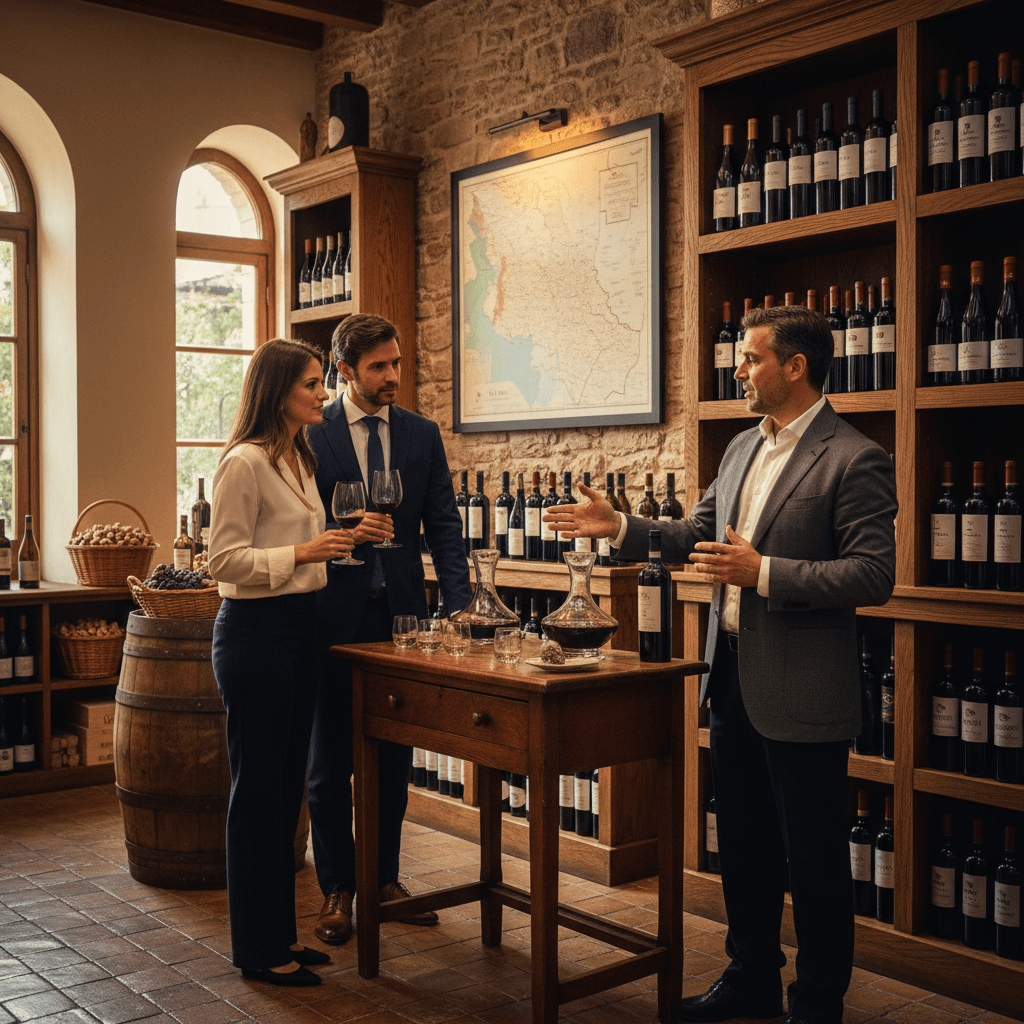
Learn proven strategies for selling premium Argentine wines retail by adapting luxury vineyard hospitality into in-store experiential storytelling that justifies price.
- Argentina's Wine Export Crisis Is a Retail Opportunity in Disguise
- What Awasi Mendoza Gets Right: The Experiential Hospitality Model Explained
- Beyond Malbec: Educating Customers on the Broader Argentine Wine Story
- Bringing Experiential Wine Storytelling Into Your Store
- Your Luxury Wine Marketing Strategy Goes Digital (Even Without a Vineyard)
Argentina's wine industry is in freefall — exports just hit a 16-year low, tariffs are squeezing margins, and the mass-market giants keep tightening their grip on shelf space. If you're an independent liquor store owner stocking premium Argentine bottles, you've probably felt the pressure. The old playbook — competitive pricing, familiar labels, maybe a shelf talker with a score — isn't cutting it anymore.
But here's what most retailers are missing: the same crisis that's crushing volume sales has created a wide-open lane for stores willing to sell differently. Selling premium Argentine wines retail in 2025 isn't about moving more cases. It's about moving better stories. And the blueprint for how to do that already exists — not in another retail store, but in a luxury vineyard hotel in Mendoza called Awasi.
What follows is a practical, data-backed framework for translating the experiential storytelling model that luxury hospitality properties use to justify premium prices into something that works on your shelves, in your tastings, and across your social media — without spending luxury money to do it. Whether you stock three Argentine SKUs or thirty, this approach gives you margin protection that no discount strategy can match.
Argentina's Wine Export Crisis Is a Retail Opportunity in Disguise
Argentina's wine industry is in serious trouble, and most retailers are watching it happen from behind stacked cases of $9 Malbec. But if you're paying attention, this crisis is actually your opening.
The Numbers Tell a Stark Story
Argentina's wine exports cratered to roughly $661 million in 2025 — the lowest since 2009. That's not a dip. That's fifteen years of growth, gone. Tariff pressures, global demand slumps, and a weakening peso have created a perfect storm that's squeezing margins on every imported bottle that hits your shelves.
Discover how Provence transformed into a lifestyle brand. Learn provençal wine marketing tactics to boost regional Fr...
For independent retailers, this means the old model of stocking recognizable labels at competitive prices and hoping for the best is crumbling. The math doesn't work anymore.
Why Volume-Driven Strategies Are Failing Premium Wines
You already know who wins the volume game — and it's not you. Barefoot, owned by E&J Gallo, dominates U.S. table wine sales. Gallo moves roughly 90 million cases annually with about 7,000 employees worldwide. That's an infrastructure machine built for scale. Competing on price against that kind of operation isn't a strategy. It's a slow exit plan.
Meanwhile, Argentine Malbec is everywhere — grocery aisles, big-box stores, specialty shops like 67 Wine and The Liquor Barn. When the same category shows up in every channel, differentiation through storytelling isn't a nice-to-have. It's the only competitive move left.
Research on luxury wine consumers shows they buy across four dimensions — financial (investment value), functional (quality and taste), social (status and gifting appeal), and individual (personal pleasure and identity). A marketing strategy that speaks to all four gives you pricing power that no discount can match. We'll come back to this framework with specific shelf tactics later.
Independent stores can capture Syrah's momentum with smart displays, staff storytelling, and Old World/New World tast...
The retailers who figure out Argentine wine marketing through narrative — not just shelf placement — are the ones who'll actually move premium bottles while everyone else races to the bottom.
What Awasi Mendoza Gets Right: The Experiential Hospitality Model Explained
How does a premium Argentine Malbec compete against a volume machine? Not on price. On story. And nobody tells that story better than Awasi Mendoza.
More Than a Hotel — A Full Sensory Wine Narrative
Awasi Mendoza isn't just a luxury vineyard property where guests happen to drink wine. It's a full immersion into terroir, winemaking, land, and culture. Every touchpoint — the private villa nestled among the vines, the guided harvest walks, the meals paired with single-vineyard pours — builds a narrative that makes the wine unforgettable.
When someone pays upward of $1,500 a night to sleep next to the vines, they're not buying a bed. They're buying a story they'll retell at every dinner party for the next five years. And that story follows them straight into your store when they scan the Argentine Malbec shelf looking for something that brings them back to that moment.
Discover how Uruguay's emerging wine export strategy can help independent liquor stores market lesser-known wine regi...
That's experiential wine storytelling at its most powerful — and it's the engine behind premium Argentine wine sales at retail.
Why This Translates to Retail
The obvious objection: you're not a luxury hotel. You don't need to be. The principle transfers directly to your shelf, your signage, and your staff conversations. Awasi activates all four dimensions of luxury wine value — financial, functional, social, and individual — simultaneously. You can do the same with a well-written shelf tag and a knowledgeable team member.
The next sections show you exactly how to echo even a fraction of that narrative — and capture the same psychology that moves premium bottles.
Beyond Malbec: Educating Customers on the Broader Argentine Wine Story
Even the best storytelling falls flat if you're telling the same story as everyone else. And right now, most retailers are stuck telling exactly one Argentine wine story: Malbec.
The Malbec Trap (and How to Escape It)
Wine enthusiasts on Reddit describe Argentina's near-total association with Malbec as a "true pity." That's not frustration — that's unmet demand. Real consumer appetite for discovery exists, but someone has to lead the way. Retailers like The Liquor Barn already curate hand-selected Argentine varietals across every price tier, yet few leverage the broader terroir narrative to actually move those bottles. That's the gap.
Here's the practical fix: build a small "Beyond Malbec" endcap featuring Torrontés, Bonarda, Cabernet Franc from Mendoza's Uco Valley, or high-altitude blends. Pair each bottle with a one-sentence origin card connecting it to a specific place and practice. Something like: "Cabernet Franc, 4,500 feet, Uco Valley — hand-harvested from volcanic soils where day-night temperature swings exceed 40°F."
Terroir as a Selling Tool, Not a Buzzword
This is where Awasi Mendoza's approach becomes your blueprint. The property doesn't just pour wine — it contextualizes every glass within a specific altitude, microclimate, and philosophy.
You don't need a luxury lodge to replicate this. A well-written shelf tag and thirty seconds of staff knowledge accomplish the same thing: they transform your Argentine wine section from a wall of labels into a guided tour. You're not selling a grape. You're selling a mountain, a climate, a decision a winemaker made at harvest. That's what moves premium bottles.
Bringing Experiential Wine Storytelling Into Your Store
Now let's bring the narrative to life inside your four walls. Here's where the Awasi model gets translated into concrete, low-cost retail tactics.
Interactive Tastings That Actually Drive Sales
Stop doing "Argentine Wine Tasting, Saturday 2-4pm."
Instead, try: "Wines from 5,000 Feet: A Guided Tour of Mendoza's High-Altitude Vineyards." That's experiential storytelling. It gives customers a narrative to attach to the bottle — and to repeat when they pour it for friends. A great tasting theme hits the social, individual, and functional dimensions all at once.
And no, you don't need to be a sommelier. You need a one-page cheat sheet and genuine enthusiasm. Customers spending $30+ want a reason to feel good about the purchase. Give them one.
Low-Cost, High-Impact In-Store Experience Ideas
Three things you can implement this month:
- QR codes on shelf tags linking to 60-second vineyard videos. Cost: free.
- A printed "passport" card where customers collect stamps as they explore different Argentine regions. Cost: $20 at a copy shop.
- A quarterly "Winemaker's Story" night featuring a Zoom call or recorded message from an Argentine producer. Cost: one email to your distributor.
A themed tasting with printed story cards runs under $100 in materials and can move a full case of premium wine in a single afternoon. Compare that margin to selling the same revenue in volume Malbec. It's not even close.
These aren't gimmicks. They're the retail version of what luxury hospitality properties charge thousands for — and they cost you almost nothing.
Let our team show you what's possible.
our team specializes in digital marketing strategies that drive real results. Let us show you what's possible.
Schedule a CallYour Luxury Wine Marketing Strategy Goes Digital (Even Without a Vineyard)
The best in-store experience in the world only reaches the people who walk through your door. To capture the customers who are searching, scrolling, and deciding before they ever set foot in your shop, you need to take the story digital.
Amplifying the Story Through Social Media and Content
Start simple. Hand your phone to a knowledgeable staff member and record a 30-second Instagram Reel about the featured Argentine bottle on your shelf this week. Where it's from. What makes the soil different. Why it drinks like a $60 bottle at $35.
Repost the vineyard's own content with your take layered on top. Use their golden-hour vineyard shots, their close-ups of terroir and vines. That aspirational visual language sells. Your content should touch on value, quality, status, and personal discovery — the same dimensions that drive premium purchases in-store.
SEO, Influencer Partnerships, and Email That Converts
If you're selling premium Argentine wines retail, those exact words should appear in your website's product descriptions and blog posts. Make Google work for you.
The email play: Launch a monthly "Bottle with a Story" email. One premium Argentine wine, its origin narrative, plain-language tasting notes, and a limited-time in-store offer. You're building a list of high-intent premium buyers who want to spend $25–$50.
The local influencer play: Invite a food blogger to your next tasting. Their content reaches your exact target buyer — and it costs you one bottle and some charcuterie. You're not competing on volume. You're competing on narrative. That's a marketing strategy that fits in your pocket.
Premium Wine Brand Storytelling: A Framework Retailers Can Use Today
You've got the in-store tactics and the digital amplification. Now let's tie it all together into a repeatable framework your team can use on every premium bottle — not just Argentine wines.
The Four-Dimension Shelf Strategy
Remember those four dimensions of luxury wine value? Here's how to put them to work on your actual shelf talkers and displays:
- Financial: "Limited production, collectible vintage." Position it as a bottle that holds value.
- Functional: Specific tasting notes and food pairings. "Dark cherry, leather, smoked paprika — perfect alongside grilled short ribs."
- Social: Gift-ready positioning. "This is the bottle you bring when you want to impress."
- Individual: "You found this before everyone else." Personal discovery sells.
This framework fights commoditization. You can't compete on scale — but you can compete on story.
Staff Training in 15 Minutes or Less
Create a one-page story card for each premium bottle covering: Origin (where), Maker (who), Method (how), Moment (when to drink it). Run through it in a pre-shift huddle.
The goal isn't creating sommeliers. It's giving every team member one confident sentence per bottle that transforms the sales conversation from "it's on sale" into "let me tell you about this one." That single sentence is the difference between a customer buying something special and just picking a price point.
The Bottom Line: Story Is Your Margin
With tariff pressures mounting, exports shrinking, and mass-market brands swallowing shelf space, selling premium Argentine wines retail comes down to one advantage the big guys can't replicate: your story.
Awasi Mendoza proved that wrapping a product in experience makes people pay more — and remember it longer. Your version doesn't require a boutique hotel. It requires a shelf tag, a tasting event, a social post, and one staff member who can say something true and interesting about what's in that bottle. That's experiential wine storytelling at the retail level.
Start this week. Pick one premium Argentine Malbec. Write its story on a card. Place it at eye level. Tell every customer about it. Track what happens.
Your Next Move
Every strategy in this post comes down to one principle: the story is the margin. Not the score, not the discount, not the endcap placement. The story.
You have tools that cost almost nothing, a consumer base hungry for discovery, and a competitive landscape where the big players physically cannot do what you do: look a customer in the eye and tell them something real about what's in the bottle.
So here's your action plan for this week:
- Pick one premium Argentine bottle currently underperforming on your shelf.
- Write its story card using the Origin, Maker, Method, Moment framework.
- Brief your team in a 15-minute huddle.
- Post a 30-second video about it on social media.
- Track the results — bottles moved, customer conversations, repeat purchases.
Then do it again next week with another bottle. Build the muscle. Build the margin.
If you found this useful, share it with a fellow store owner who's tired of racing to the bottom. And if you want more strategies for turning premium inventory into your biggest competitive advantage, subscribe to the Intentionally Creative newsletter — where we break down the marketing moves that actually move product.
10+ years helping liquor retailers and beverage brands grow through data-driven digital marketing. Learn more