US Tariffs Are Squeezing Italian Wine Imports: How Independent Retailers Should Adjust Pricing and Sourcing Strategy
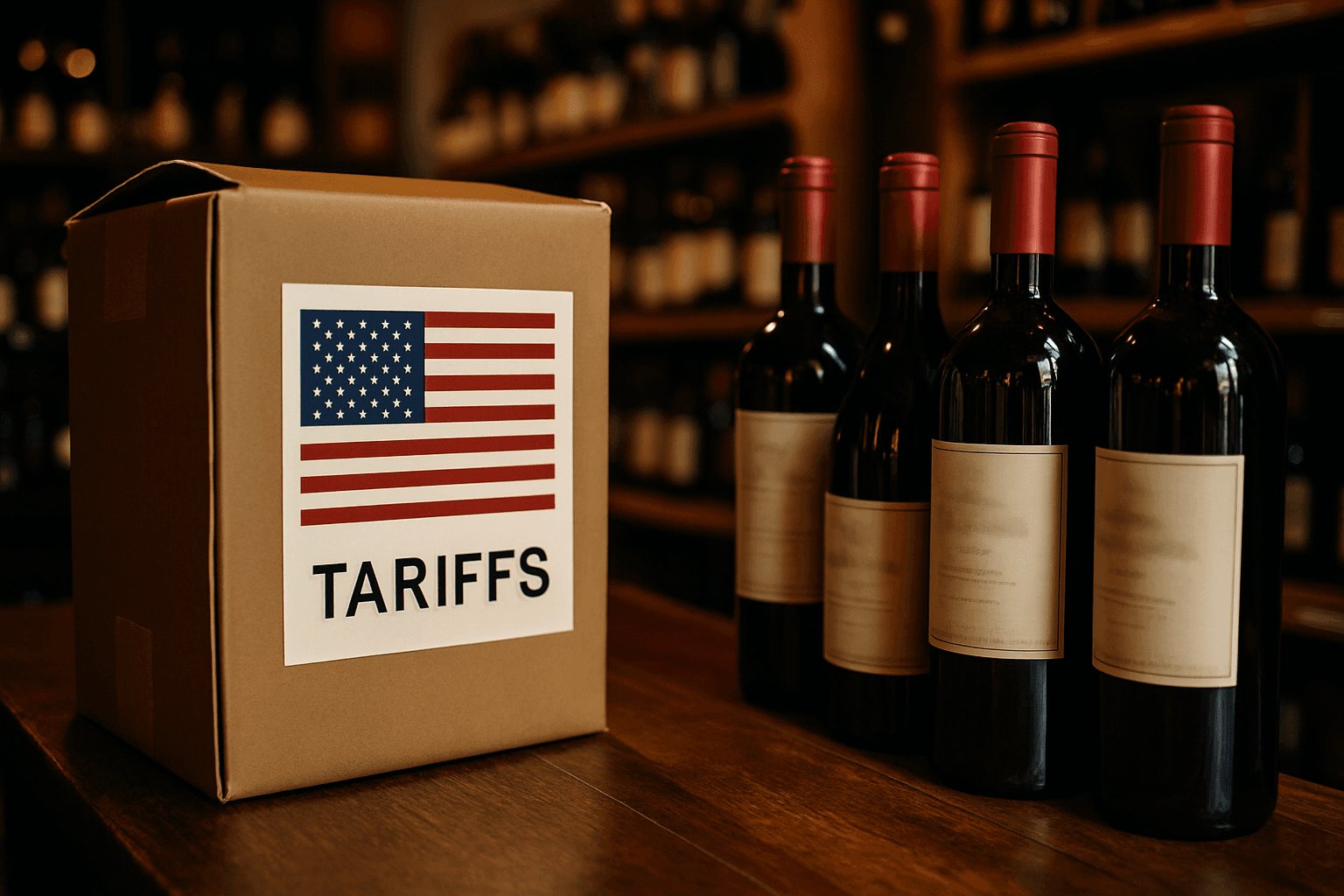
US tariffs on Italian wine imports are reshaping retail margins. Learn pricing and sourcing strategies independent liquor stores need to stay competitive in 2025.
- The 15% Tariff on Italian Wine: What Happened and Where Things Stand
- How the Tariff Is Reshaping Margins Across the Supply Chain
- Pricing Strategy: How to Adjust Without Losing Customers
- Sourcing Strategy: Leverage Italian Producers' Incentive to Deal
- What This Means for Your Customers (and How to Talk About It)
If you run an independent liquor store with any kind of Italian wine program, the last several months have probably felt like a slow-motion punch to the gut. US tariffs on Italian wine imports have rewritten the economics of one of your most important categories — and the uncertainty about what comes next is making it worse. Margins are thinner, your distributor reps are hedging, and your customers are starting to notice the price tags.
But here's what we keep seeing when we work with retailers navigating disruption: the ones who move early and move smart don't just survive — they come out ahead. The tariff environment is painful, no question. It's also creating openings for independent stores willing to rethink their pricing, renegotiate with suppliers, and get strategic about what goes on the shelf.
This post breaks down exactly what's happening with the tariffs, how they're reshaping margins at every level of the supply chain, and — most importantly — what you should actually do about it. We'll cover pricing tactics, sourcing moves, customer communication, and contingency planning for the scenario nobody wants but everyone should prepare for.
The 15% Tariff on Italian Wine: What Happened and Where Things Stand
If you're an independent liquor store owner watching your margins on Italian bottles shrink, you're not imagining things. US tariffs on Italian wine imports have fundamentally changed the math on every Chianti, Barolo, and Prosecco you stock.
Stop leaving online sales on the table. Here are the 10 most costly e-commerce mistakes liquor stores make and how to...
The Timeline: From Threat to Reality on August 1, 2025
On August 1, 2025 [VERIFY], the 15% U.S. tariff on EU wines went into effect. As of early 2026, there's no exemption, no rollback, and no meaningful negotiation in sight. Worse, the Trump administration continues to float a potential 200% tariff as a pressure tactic [VERIFY] — keeping the entire supply chain in a state of low-grade panic.
That uncertainty alone is enough to disrupt your sourcing strategy. Distributors are hedging. Importers are cautious with inventory. And you're left trying to plan a buy sheet on shifting ground.
The Numbers That Matter for Your Bottom Line
Here's what the tariff means for retailers in real terms:
Discover 10 proven SMS marketing strategies for liquor stores that drive customer loyalty. Learn compliance tips, seg...
- Italian wine exports to the U.S. dropped nearly 12% in value by year's end, settling around €5.5 billion — with over €300 million in losses tied directly to the tariff. [VERIFY]
- The cumulative markup from winery to retailer jumped from 123% to 186% under the new regime. That's not a rounding error — it's a completely different pricing conversation with your customers.
- Import values fell 7.5% even when volumes held relatively steady — meaning you're paying more for the same wine. [VERIFY]
For context, German wine exports to the U.S. plunged nearly 20% under identical pressure. Italy's 12% drop shows relative resilience, but don't mistake "less bad" for "fine." The pain is real, and your pricing strategy needs to account for it.
Those top-line numbers paint the picture, but to figure out where you can actually make moves, you need to understand how the tariff is hitting each layer of the supply chain — and where the pressure points are.
How the Tariff Is Reshaping Margins Across the Supply Chain
The 15% tariff isn't just a line item on a customs form. It's a margin destroyer that's rippling through every level of the supply chain — and independent retailers are feeling it most acutely.
Boost your liquor store's reputation with 10 proven reviews management strategies that convert 4-star ratings into lo...
The Markup Jump: From 123% to 186% — and Who's Absorbing the Hit
Before the tariff landed, the cumulative markup from Italian winery to U.S. retail shelf sat around 123%. Under the new regime, that number has ballooned to 186% — a fundamental restructuring of the economics behind every Italian bottle you stock.
Here's the thing: nobody at any level can comfortably absorb a 63-point markup increase. Italian producers are already taking hits — average import prices per liter for bottled still wines actually fell from $7.07 to $6.44 in the January-through-October comparison [VERIFY], meaning wineries are cutting into their own margins to stay competitive. U.S. importers and distributors are doing the same, with many warning of closures and layoffs. This isn't abstract trade policy. For parts of the Italian wine trade, it's existential.
Why Stable Volumes but Falling Value Tells the Real Story
The real signal shows up in one stat: import volumes have held relatively steady, but value dropped 7.5%. Consumer demand for Italian wine persists — people still want their Montepulciano — but they're trading down.
For your store, this gap between stable volume and falling value is worth watching closely. Your customers still want Italian wine. They just won't pay whatever you ask for it.
Understanding the margin squeeze is step one. Step two is doing something about it — starting with how you price the bottles already on your shelves.
Pricing Strategy: How to Adjust Without Losing Customers
The 15% tariff isn't a small bump — and that cost has to land somewhere. The question is where, and how much your customers will notice.
Tiered Repricing: Don't Apply a Flat Increase Across the Board
Resist the urge to spread a uniform percentage increase across every Italian bottle on your shelves. Instead, segment your Italian wine inventory into tiers.
Your $30+ premium bottles? Customers buying Brunello and Barolo are less price-sensitive. Protect your margins there. But your $10–$15 entry-level Pinot Grigios and Chiantis? A $2 increase at that price point sends shoppers straight to a California or Chilean alternative. Absorb more of the tariff impact on those everyday bottles.
With volume already softening industry-wide, don't accelerate that trend in your own store.
Use Anchor Pricing to Protect Your Best-Selling Italian SKUs
Identify your top 3–5 Italian sellers and hold them at or near their pre-tariff price — even if margins get thin. These are your traffic drivers. Customers who come in for their usual Montepulciano d'Abruzzo will buy other things while they're there.
Consider bundling: pair a tariff-affected Italian bottle with a domestic or non-EU wine at a slight discount. You move volume, protect the Italian SKU's perceived value, and introduce customers to new options that aren't tariff-exposed.
Communicate Price Changes Transparently
When prices do go up, say why. Simple shelf talkers — "Due to new U.S. tariffs on European wines, this bottle's cost has increased. We're working to keep prices as fair as possible." — go a long way.
Transparency builds loyalty. Silent price hikes breed resentment.
One more thing: review your pricing monthly, not quarterly. The tariff landscape is shifting fast — a threatened 200% tariff still looms — and you need to stay nimble or get squeezed.
Pricing adjustments protect your margins on what you're already carrying. But the bigger opportunity — and the one most retailers are underestimating — is on the sourcing side.
Sourcing Strategy: Leverage Italian Producers' Incentive to Deal
Here's something worth remembering when tariffs feel like they've backed you into a corner: you have more negotiating power right now than you probably realize.
Why Italian Wineries Are More Willing to Negotiate Than You Think
The U.S. is Italy's single most lucrative wine export market — roughly $2 billion in annual sales. With the 15% tariff in effect, Italian producers are staring down significant sector-wide losses and a projected 12% drop in export value to the U.S. by year's end.
They cannot afford to lose American shelf space.
The data backs this up. Despite stable import volumes, the average price per liter fell from $7.07 to $6.44 — meaning Italian producers are already absorbing costs on their end. Use this as concrete leverage in conversations with your distributors and importers. There's room in the chain for someone to give. Make sure it's not only you.
Explore Direct-Import and Cooperative Buying Opportunities
If you're a single-store operation, your individual order volume probably won't turn heads in Tuscany. But cooperative buying groups with other independent retailers? That changes the math entirely. Larger combined orders give you the purchasing power to negotiate better case pricing — the kind of deals typically reserved for larger chains. Several regional buying cooperatives already exist. If there isn't one near you, this is the moment to start one.
Diversify Without Abandoning Italian Wine
Smart sourcing during tariff disruption means diversifying — not panicking. Look at tariff-exempt or lower-tariff regions like Chile, Argentina, Australia, and South Africa for comparable styles (think Malbec for Sangiovese drinkers, or South African Chenin Blanc for Pinot Grigio fans).
But don't gut your Italian section. Consumer demand remains strong. The stores that maintain a curated, well-chosen Italian selection while competitors slash theirs will build the kind of customer loyalty that outlasts any trade policy. Be the shop that kept the good Barolo on the shelf.
Your pricing and sourcing strategy only work if your customers understand what's happening — and your team knows how to talk about it. This is where the human side of retail makes the difference.
Let our team show you what's possible.
our team specializes in digital marketing strategies that drive real results. Let us show you what's possible.
Schedule a CallWhat This Means for Your Customers (and How to Talk About It)
Consumer Demand Is Resilient — But Price Sensitivity Is Real
Here's the good news: your customers still want Italian wine. Stable import volumes despite falling value tell us they're not abandoning the category — they're trading down or buying fewer bottles. Demand is resilient, but wallets are tighter.
That creates a real opportunity. Consider building a "Best Italian Values Under $20" endcap or hosting a tasting event around it. Some producers have absorbed significant tariff costs to protect their U.S. market share, and those bottles represent genuine deals right now. Highlight them.
One thing to avoid: the "buy American instead" pitch. The tariffs haven't meaningfully boosted domestic producers [VERIFY], and pushing that angle risks alienating your Italian wine loyalists without offering a credible alternative.
Staff Training: Equip Your Team to Have the Conversation
Your floor staff will field questions about rising prices. Equip them. A simple explanation — "there's a 15% tariff on European wines now, so costs went up across the board" — goes a long way. When that explanation comes paired with a knowledgeable value recommendation, you turn a potential lost sale into a trust-building moment.
That trust compounds over time. Invest in it now.
Everything we've covered so far addresses the current 15% tariff. But there's a scenario on the horizon that demands a different level of preparation entirely.
Scenario Planning: Preparing for the 200% Tariff Threat
The current 15% tariff has already reshaped the category. But Washington has floated the possibility of tariffs as high as 200% on European goods [VERIFY]. If you're not scenario planning for that, you're already behind.
What a 200% Tariff Would Actually Mean for Your Store
Let's keep this simple. A $12 wholesale Italian bottle that currently lands on your shelf around $18–20 after the 15% tariff? Under a 200% tariff, you're looking at $30+ before you've added a dime of margin. That prices most Italian wines completely out of the mainstream retail market. A 200% rate wouldn't just squeeze the category — it would gut it.
Build Your Contingency Plan Now, Not Later
Smart retailers act before the crisis hits. Here's your playbook:
Identify non-EU alternatives for every major Italian category now. Prosecco substitutes? Look at domestic sparkling, Cava (if Spain gets an exemption), or Argentine and Brazilian options. Pinot Grigio drinkers can pivot to domestic versions or Albariño. Chianti lovers? Explore Argentinian Malbec blends or South African reds with similar structure.
Diversify your importer relationships. Build connections with importers carrying broad, multi-region portfolios so you can pivot quickly as tariffs shift — without scrambling for new vendors mid-crisis.
Stock up strategically. If your cash flow and storage allow it, keep 60–90 days of your best-selling Italian inventory on hand. Pre-tariff stock becomes a genuine competitive advantage if rates escalate further. That softening in import value we're already seeing accelerates fast when retailers panic-buy ahead of rate increases.
The retailers who survive tariff volatility aren't the ones who react fastest — they're the ones who planned earliest.
The Bottom Line: Smart Retailers Will Come Out of This Stronger
The impact of US tariffs on Italian wine imports is real — a projected €300+ million hit to the Italian wine sector and markups ballooning from 123% to 186% aren't small numbers. But here's the thing: this is a forcing function for better business.
Smarter pricing. Stronger supplier relationships. More strategic inventory management. These aren't temporary fixes — they're permanent upgrades.
Independent liquor stores have a genuine edge here. You move faster than chains. You negotiate more creatively. You build relationships with importers and customers that big-box competitors simply can't replicate.
The retailers treating this as a strategic opportunity — not just a cost problem — will gain market share while competitors scramble. That's not optimism. That's how disruption has always worked.
Start this week. Review your Italian wine margins. Identify your anchor SKUs. Call your distributor and ask what deals are on the table. Talk to a neighboring store about cooperative buying. Put a shelf talker next to every bottle that's gone up in price. These are small moves that compound — and the window for making them ahead of the competition is closing.
The tariff landscape will keep shifting. Your strategy should too. If you want help thinking through your store's specific pricing and sourcing approach, reach out to us at Intentionally Creative — this is exactly the kind of challenge we help independent retailers navigate.
10+ years helping liquor retailers and beverage brands grow through data-driven digital marketing. Learn more